A Pforzheim-born investor and partner who drove a Benz Patent-Motorwagen from Mannheim to Pforzheim in 1888 and proved the automobile could travel far.
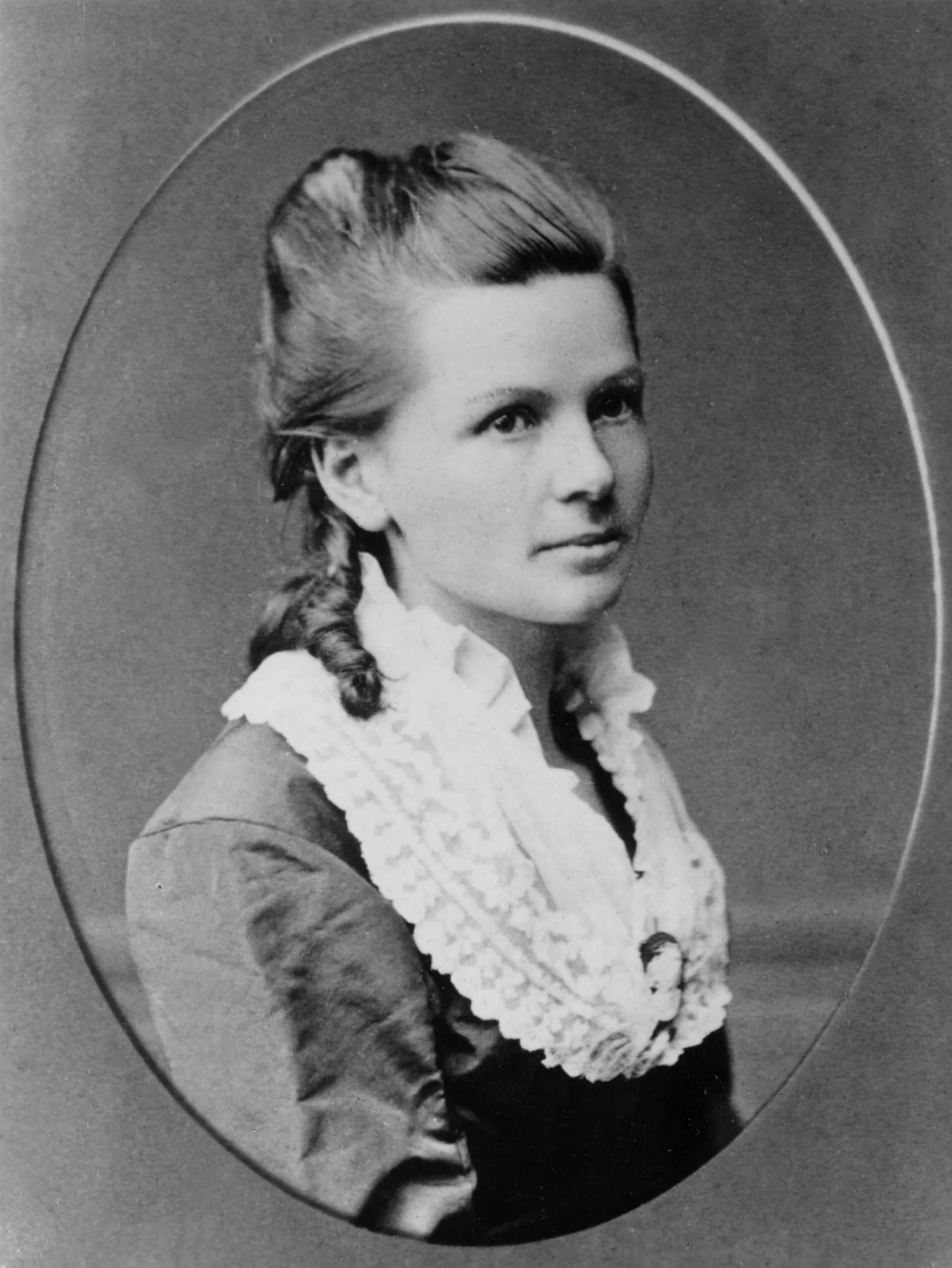
Bertha Benz, born Bertha Ringer in 1849, was the wife, investor and business partner of Carl Benz. In August 1888 she drove a Benz Patent-Motorwagen about 106 km from Mannheim to Pforzheim, proving the car could cover real distances and helping its sales.
Bertha Benz was a German automotive pioneer and the business partner of the inventor Carl Benz. On 5 August 1888 she set off from Mannheim in a Benz Patent-Motorwagen and drove to Pforzheim, becoming the first person to cover a long distance by automobile.
Who was Bertha Benz?
Bertha Benz was a German investor and practical partner to the inventor Carl Benz. Born into a prosperous family in Pforzheim, she is remembered for making the first long-distance automobile trip, an achievement that also helped the car's commercial future in its early years.
Bertha Ringer was born on 3 May 1849, the third of nine children in a family of wealthy carpenters and builders in Pforzheim, then part of the Grand Duchy of Baden. Her father had grown rich through property speculation, and the family put substantial money into their children's education. Bertha attended a boarding school for ten years. She was ambitious and fascinated by technical innovation, yet women could not enter university at that time, so her formal schooling ended there.
On 27 June 1869 she met Carl Benz at an excursion organised by the Eintracht Club. He was five years older, had little money and a mind full of unusual ideas. Two years before the wedding, in 1870, she put some of her dowry into his ailing iron business. Once she became his wife, German law removed her legal standing to act as an investor, so her early role in the business rested on the money she had committed as an unmarried woman.
Her trip also showed the nascent automobile industry that test drives were essential to selling cars.
Why did she make the long-distance drive?
Bertha Benz wanted to show that the Patent-Motorwagen could serve ordinary customers rather than remain a machine for short trials. Her husband had struggled to market his invention, and she set out to prove that the money the couple had sunk into the car would eventually come back to them.
The Patent-Motorwagen was first shown to the public in Mannheim on 3 July 1886. Karl Benz was an uncertain salesman, and he faced competition from Gottlieb Daimler, which made a public demonstration more pressing. Her declared purpose was a visit to her mother in Pforzheim, but the journey had a wider aim: to reassure her husband that his work had a commercial future.
Karl had completed the first horseless carriage in December 1885, and he applied for the patent on his own. The law did not allow Bertha to file alongside him, although her financial and practical contributions to the project were considerable. She therefore held no formal place in the patent, but she was willing to take the car onto the open road herself.
What was the Patent-Motorwagen like?
The Model I Patent-Motorwagen is regarded as the world's first automobile. It had three wheels, driven rear wheels, a steerable front wheel and a folding top, and it was shown in Mannheim in 1886 with two gears on its transmission.
Built with bicycle-style construction, the car used rings of steel fitted with solid rubber, and its driving wheels were set at the rear. The Model II was converted into a four-wheeler for test purposes, which made it the only car of that model to be built in that form.
Karl Benz had worked on the engine for years. In 1875 and 1876, while Bertha was expecting their third child, he got a two-stroke engine to run for the first time. The first horseless carriage was finished in December 1885, thirteen years into the marriage.
How far did the first long-distance trip go?
On 5 August 1888 Bertha Benz drove about 106 km (66 miles) one way from Mannheim to Pforzheim, accompanied by her two sons, who were thirteen and fifteen years old. She travelled in the three-wheeled Model III and reached her destination after dusk, after a day on tracks that were rough and poorly signposted.
Her sons Richard and Eugen rode with her, and the car had only two gears. She set out around dawn without telling her husband and without official permission. The trip was technically forbidden, so she risked a penalty for taking it. She notified Karl of her success by telegram once she arrived, and she made the return trip to Mannheim several days afterwards.
The roads were a poor match for the vehicle. The Patent-Motorwagen had three wheels, while most traffic on the tracks was four-wheeled horse-drawn carriages, so its narrow front wheel jolted across clumps of grass, twigs and stones. The journey was dangerous because of the car's fragility and the state of the road, and the signposts were few.
What problems did she solve on the road?
She cleaned a blocked fuel line with a hatpin, used her garter as insulating material and had a cobbler fit leather to the failing wooden brakes, which are widely described as the first brake linings. Her improvised fixes kept the car moving.
The car had no fuel tank, only a 4.5-litre supply held in the carburettor. Ligroin, a petroleum solvent the engine needed, was sold only by pharmacies at that time, so she stopped at a pharmacy in Wiesloch to buy it. That purchase is often described as the first fuel sale at a filling point.
Water supply was another worry, because the engine was cooled by evaporation and the crew refilled at each stop. The two gears were not enough for steep hills, so Richard and Eugen often had to push the vehicle up inclines. At one point a blacksmith had to mend a chain.
Effects on the company and the car
The journey drew press attention, which Bertha had hoped for. She reported what happened on the road and offered practical suggestions, including an extra gear for climbing hills and brake linings for better stopping power. The couple introduced several improvements based on her experience. Her trip also showed the nascent automobile industry that test drives were essential to selling cars.
The publicity brought the Patent-Motorwagen worldwide attention and helped the company secure its first general sales. The historic record credits the family with turning the trip into a commercial turning point, and Benz & Cie is recorded as becoming the largest automobile company in the world after the journey.
What happened to the family business after 1888?
The Benz family moved to Ladenburg in 1906 and started Benz Sons, a family-owned business that folded in 1924 during years of inflation. In 1926 Benz & Cie merged with the Daimler and Maybach companies to create Daimler-Benz, the home of Mercedes-Benz. Karl Benz died in 1929.
In his memoirs of 1925, Karl Benz recalled that his wife had been the one person who stood by him when the venture seemed on the point of sinking. He wrote that she had set new sails of hope, a remark that shows how much weight he gave her support through the years of inflation and war.
Bertha spent her later years in her villa in Ladenburg. Her fortune had shrunk after the First World War and hyperinflation, but she had always lived modestly, and she was moved by the unemployment around her. She wrote to a journalist offering her books for a library so that jobless readers could at least read.
Did Bertha Benz support Adolf Hitler?
In 1933, at the age of 84, she reportedly welcomed Adolf Hitler with praise. Her family took part in a National Socialist memorial for Carl Benz in Mannheim that Easter. She later distanced herself from Hitler once she understood that his policies were leading towards a new war.
Her family was quickly drawn into Nazi propaganda, and the Benz name was used in commemorations at the time. The memorial inaugurated in Mannheim at Easter 1933 included Bertha, which shows how closely the family was connected to the public events of the period.
Family life and the Benz children
The couple had five children: Eugen, born in 1873, Richard in 1874, Clara in 1876, Thilde in 1882 and Ellen in 1890. Eugen and Richard were the two sons who accompanied their mother on the 1888 drive, and both went on to work in the family business.
The Mannheimer Morgen quoted contemporaries calling her an enterprising mother of five who ran a strict household. Karl was described as a serious and just man, while his wife was said to have had a more forceful nature. These accounts help explain how the family's roles were understood at the time.
Honours, memorials and recognition
On her 95th birthday, 3 May 1944, Bertha Benz was named an honorary senator. The honour came from the Karlsruhe institute where her husband had studied. Women had not been allowed to study there during her youth. She died at 95 in Ladenburg on 5 May 1944, two days after that birthday.
In 2008 the Bertha Benz Memorial Route received official approval as part of humankind's industrial heritage. The 194 km of signed route runs from Mannheim through Heidelberg to Pforzheim and back, retracing her 1888 drive. The Bertha Benz Challenge took place on 10 and 11 September 2011, a sustainable-mobility event open to hybrid, electric and hydrogen vehicles.
The year 2016 brought her a place in the Automotive Hall of Fame, which her husband had entered 42 years earlier. In 2019 Daimler commissioned a four-minute advertisement dramatising parts of her 1888 journey, made for International Women's Day. The Benz home is now used by the Daimler and Benz Foundation as a meeting place for science.
A 2011 television drama, Carl & Bertha, dramatised the lives of the couple and was aired by the German broadcaster Das Erste. A 2011 documentary, The Car is Born, centred on the 1888 road trip.
Key milestones in Bertha Benz's life
| Milestone | Detail |
|---|---|
| Born | 3 May 1849, Pforzheim |
| Dowry investment | 1870, Carl Benz's iron construction firm |
| Marriage | 20 July 1872, Pforzheim |
| First car finished | December 1885 |
| Public presentation | 3 July 1886, Mannheim |
| Long-distance drive | 5 August 1888, Mannheim to Pforzheim |
| Benz Sons founded | 1906, Ladenburg |
| Daimler-Benz merger | 1926 |
| Died | 5 May 1944, Ladenburg, aged 95 |
| Memorial route approved | 2008, 194 km of signed route |
| Automotive Hall of Fame | 2016 |