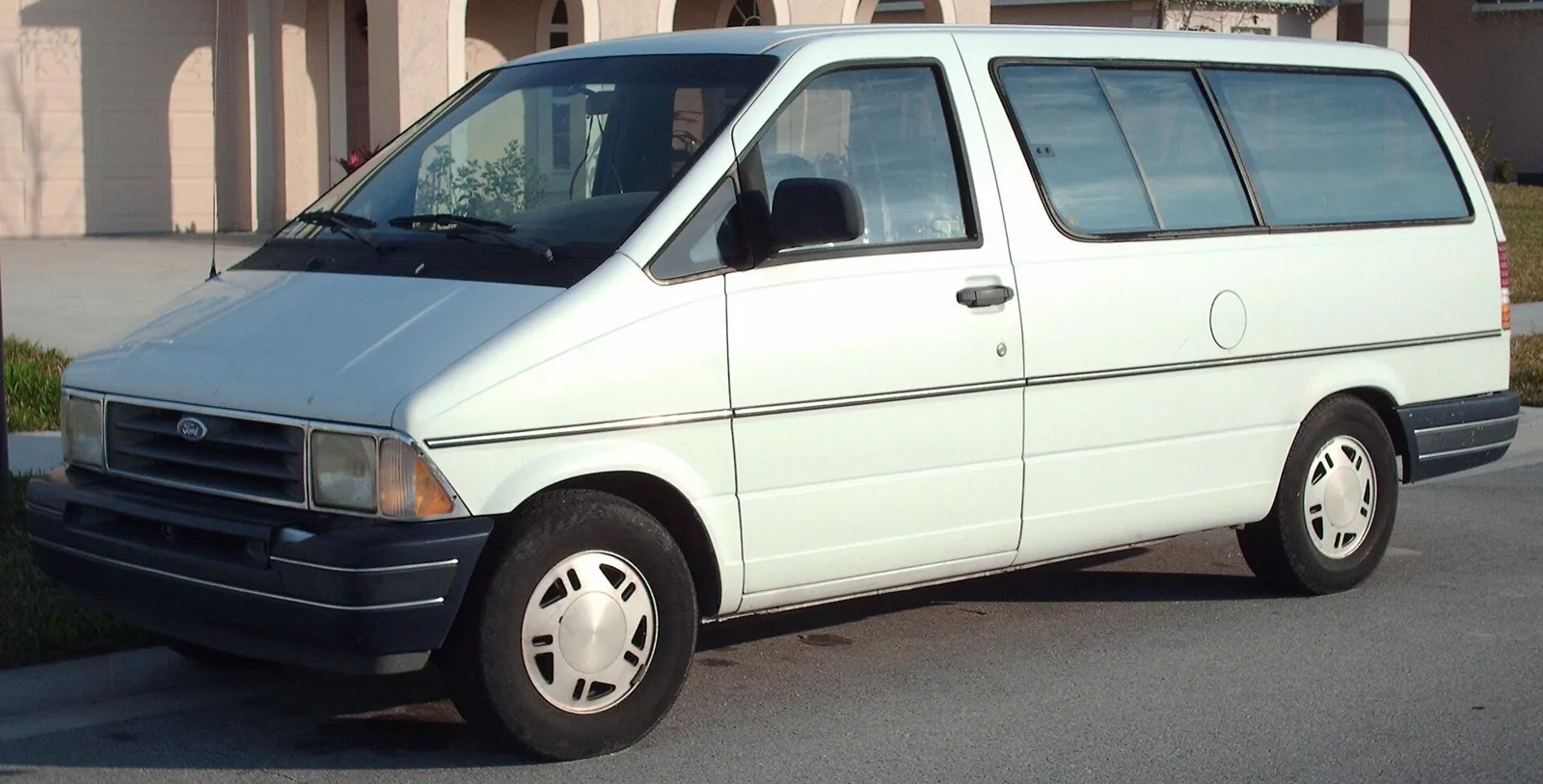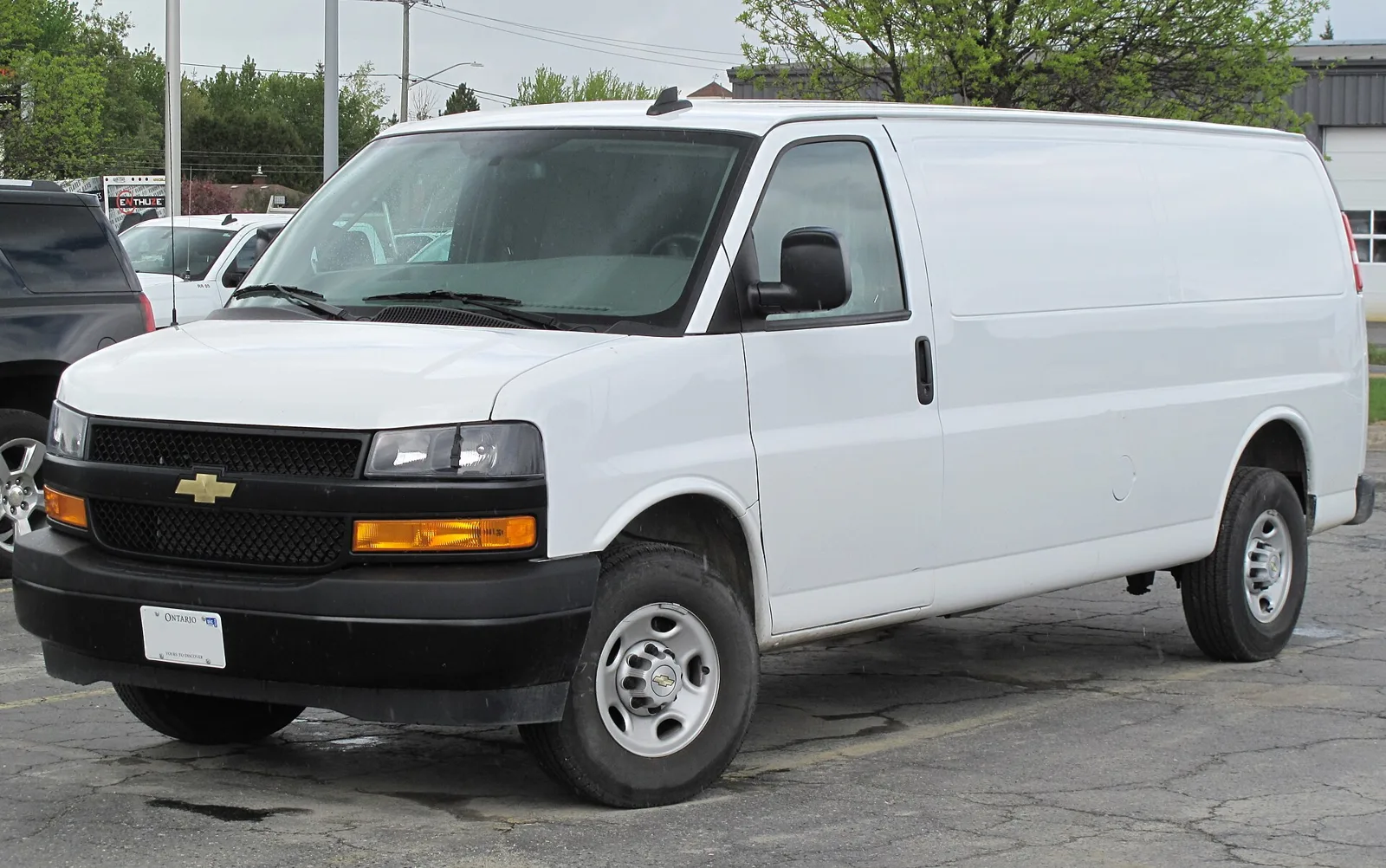
A rear-drive minivan with all-wheel drive, a spaceframe front-drive one with a power sliding door, and a full-size workhorse still in production after three million sales.
The Chevrolet Astro (1985-2005) was GM's first minivan, a rear-drive family and cargo van. The Lumina APV (1990-1996) was its front-wheel-drive successor in spirit, while the full-size Express has served trades and fleets since 1996.
A van designed in the mid-1990s is still being built in Missouri. The Chevrolet Express, launched for 1996, has sold more than three million copies counting its GMC Savana twin, and in 2022 it overtook the van it replaced to become the longest-running Chevrolet van of all. Two other vehicles tell the rest of the story: the Astro, General Motors' first minivan, and the Lumina APV, its first front-wheel-drive one.
What is the Chevrolet Express?
The Chevrolet Express is a full-size van sold by General Motors since 1996, also marketed as the GMC Savana. It replaced the G-series van and comes as a passenger van, a cargo van and a cutaway chassis for ambulances, buses, motorhomes and small trucks.
It has run for a single generation, which puts it alongside the Jeep Wagoneer, Ford Econoline and Dodge Ram Van among the longest-lived designs in American motoring. Wentzville Assembly in Missouri has built it since 1995, and since 2017 GM has bought its commercial cutaway chassis from Navistar, assembled at Springfield, Ohio.
A 1990s van design, still on the line in 2026, outlasted every minivan GM built to beat Chrysler.
How did the 1996 Express change the full-size van?
It was the first all-new GM full-size van since 1971, and the company expected strong growth in the segment through the end of the decade. The biggest change was the front axle, which moved forward 10 inches. That took the front wheels out of the passenger compartment, improving legroom and lowering the step-in height, while a smaller engine cover freed more space for the front seats.
Safety came early. Dual airbags were standard on vans under 8,500 lb gross vehicle weight in 1996 and on every version a year later. The Chevrolet Van name lingered on cargo models until 1999, when it was retired and the cargo van became the Express Cargo Van.
Body styling borrowed from the Astro, including its flush glass, and the grille came from the C/K pickups. Like the APV minivans, the Express carried its taillamps high beside the rear windows. The rear doors swung open nearly 180 degrees, so a van could back right up to a loading dock.
What changed when the Express was facelifted in 2003?
For 2003 the front end grew taller, with a higher bonnet line and an improved crumple zone, bringing the van closer to the GMT800 full-size pickups of 1999 and creating some shared parts. The dashboard was redesigned, with dual-stage airbags and multiplex wiring. Beneath it, the chassis became the GMT610, with a three-section fully boxed frame, front suspension from the GMT800 trucks and four-wheel disc brakes, which made anti-lock brakes standard. It was also the first full-size van to offer full-time all-wheel drive.
The all-wheel-drive option ran from 2003 to 2014 on 1500 and light-duty 2500 vans, always on the 135-inch wheelbase with the 5.3-litre V8. Split 60/40 side doors, standard on the passenger side, could be ordered on the driver side too through 2014 (standard-length bodies only).
The years since have brought steady updates rather than redesigns. The light-duty 2500 left in 2006. Passenger vans gained side-curtain airbags and standard stability control for 2008, Bluetooth and a USB port for 2011, and an optional navigation system, rear camera and parking assist for 2013. A 120-volt outlet joined the dash for 2015. In 2018 the Express dropped sealed-beam headlights, becoming the last passenger vehicle sold in the United States to have them as standard factory equipment, and blind spot monitoring arrived as an option. Lane departure warning and collision alert followed on higher trims for 2019.
What engines has the Express used?
A 4.3-litre V6 was standard in 1996, with 5.0, 5.7 and 7.4-litre V8s and a 6.5-litre turbo-diesel as options; the diesel was a first for a GM full-size van. The range has been reshaped repeatedly since.
- 2001-2002: the 7.4 gave way to the Vortec 8100, at 496 cubic inches the largest engine Chevrolet ever marketed from the factory.
- 2003: Generation III small-block V8s arrived, a 5.3 on light-duty vans and 4.8 and 6.0-litre units on heavy-duty ones.
- 2006: a detuned 6.6-litre Duramax diesel V8 returned the diesel option; the 5.3 gained flex-fuel (E85) capability in 2007.
- 2014: the 4.3-litre Vortec V6, the last engine descended from the original Chevrolet small-block, left with the 1500 series, which GM said sold the least.
- After 2016: a 2.8-litre inline-four Duramax replaced the V8 diesel, the first four-cylinder in a full-size Chevrolet van since 1964.
- 2018 to 2021: an EcoTec3 4.3 V6 became the base engine, the 6.0 gained CNG/LPG capability, and a 6.6-litre V8 replaced the 6.0.
Transmissions followed the same path. The original four-speed automatics, a 4L60-E in light vans and a 4L80-E in heavy-duty ones, gave way to a six-speed on 2500 and 3500 models for 2010 and to an eight-speed for both V6 and V8 in 2024.
Which Express do people actually buy?
Most buyers choose between two bodies. The cargo van is a two-seater; the passenger van seats 5, 8, 12 or 15, the last only on the long 155-inch wheelbase. Chassis come in 135-inch and 155-inch lengths, with the longer one limited to 2500 and 3500 series. There was no short-wheelbase version, because the Astro and Safari had already taken over that job.
Trim names have shifted. The 1996 base model, aimed at fleets, replaced the Sportvan and the LS replaced the Beauville. An LT with body-colour grille, mirrors and bumpers ran from 2001 to 2002. For 2006 the base became the LS and the LS became the LT. GMC's Savana is, apart from the grille and badges, the same van, and it is the only current GMC without a Denali or AT4 version. The Express outsells it by about three to one.
| Model | Years | Drive | Engines | Notable fact |
|---|---|---|---|---|
| Chevrolet Astro | 1985-2005 | Rear-wheel drive, AWD from 1990 | 2.5L four to 4.3-litre V6 | GM's first minivan; about 3.2 million Astros and Safaris built |
| Chevrolet Lumina APV | 1990-1996 | Front-wheel drive | 3.1L, 3.8 and 3.4-litre V6 | Spaceframe with composite panels; first minivan with a remote power sliding door |
| Chevrolet Express | 1996-present | Rear-wheel drive, AWD 2003-2014 | 4.3-litre V6 to 6.6-litre V8, diesels in some years | Over three million built with the Savana |
What was the Chevrolet Astro?
The Chevrolet Astro was a rear-wheel-drive minivan sold from 1985 to 2005 alongside the GMC Safari, and it was GM's first minivan. It was built for twenty years in Baltimore, Maryland, and about 3.2 million Astros and Safaris came off the line.
GM pitched it against the first Chrysler minivans, but chose a different layout. Instead of front-wheel drive, it sized the Astro close to the short-wheelbase Chevrolet G10 van and borrowed engines and transmissions from the S-10 pickup, which allowed a tow rating of up to 2,500 kg (5,500 lb). Ford's Aerostar took the same cost-saving route. The advertising jabbed at Chrysler by suggesting life was too big for a minivan.
The names had history. Astro had been used on a 1967 concept car and, from 1969 to 1987, on a GMC semi-tractor. Safari was borrowed from Pontiac's station wagons, so between 1985 and 1989 dealers in the same network sold both a GMC and a Pontiac Safari.
How did the Astro develop?
The first generation ran from 1985 to 1994 and seated two to eight. Engines started with a 99 PS (73 kW; 98 hp) 2.5L four, which was fitted only to short rear-drive cargo vans and to passenger vans in 1985, and climbed to a 203 PS (149 kW; 200 hp) 4.3-litre V6. The V6 moved from a four-barrel carburettor in 1985 to throttle body injection in 1986 and central port injection from 1992. Underneath was a bolt-on subframe, with front suspension largely shared with GM's B-body station wagons and a leaf-sprung rear.
The 1990 model year brought the headline feature: an all-wheel-drive system developed by FF Developments, the first on a minivan built in the United States. It cost fuel economy, at 17 miles per gallon on the highway against 20 to 21 for rear-drive vans. That year also saw an analogue dashboard, Hydroboost brakes and an extended body. The 1992 option list added Dutch doors, two bi-parting doors with a flip-up window above. The four-speed 4L60E automatic became the only gearbox in 1993, and centre high-mounted stop lamps arrived in 1994.
For 1995 a longer nose borrowed the look of the new full-size Express, and the short body was dropped. A passenger airbag came with the 1996 dash. In 2003 the chassis gained four-wheel disc brakes and 16-inch wheels from the half-ton pickups.
Why did the Astro end?
Falling demand and rising costs did it. Production reached 32,736 in 1998, but sales slid, the second shift was eliminated in the summer of 2000, and Astro sales were only 15,709 in 2003, about 16% below 2002. Meeting new safety standards for 2005 would have been too expensive, so the Baltimore plant, which built nothing else by then, built its last van on 13 May 2005.
The safety record is mixed. The Insurance Institute for Highway Safety rated the Astro Poor in 1996 after its underbody buckled in a 64 km/h (40 mph) offset crash test. The federal NHTSA tests were kinder: the vans climbed from one star in 1991 to three for the driver and four for the passenger by 2000, with five stars for side impacts every year. In 2007 the IIHS reported that the 2001-2004 Astro had the fewest driver deaths per million vehicles of any passenger model in the United States between 2002 and 2005, although driver habits and usage may have played a part.
What was the Chevrolet Lumina APV?
The Lumina APV was the first front-wheel-drive minivan from Chevrolet, sold in a single generation from 1990 to 1996 and sharing its design with the Pontiac Trans Sport and Oldsmobile Silhouette. APV stood for All Purpose Vehicle. It competed against the Dodge Grand Caravan, the Plymouth Grand Voyager, the long Ford Aerostar and the Mazda MPV.
It followed a 1986 Pontiac concept, the Trans Sport, which was the first minivan to adopt Chrysler's front-wheel-drive layout. GM gave each brand a role: the Lumina APV was the volume leader, the Trans Sport the sporty one and the Silhouette the luxury choice. At launch the Lumina APV was sold as a bodystyle of the Lumina line, replacing the Celebrity station wagon. Chevrolet replaced it with the Venture for 1997, and the North Tarrytown plant that built it closed afterwards.
How was the Lumina APV built?
The APV used a galvanised steel spaceframe clothed in composite plastic panels, a method developed for the Pontiac Fiero and later used on the Saturn SL. The panels resisted corrosion and shrugged off minor dents, and they let GM style each brand's van separately at low cost. Its 109.8-inch wheelbase sat between the Lumina sedan and the Astro. At nearly 250 mm (10 inches) lower and 80 mm (3 inches) narrower than the Astro, it was a one-box shape with a big windscreen and a sloped nose, a single sliding door and a rear liftgate. Suspension was MacPherson struts at the front and a coil-sprung beam axle at the rear.
The engine began as a 3.1L V6 with 89 kW (120 hp) and a three-speed automatic. A 127 kW (170 hp) 3.8-litre with a four-speed arrived for 1992, the year ABS was introduced, and for 1996 both gave way to a 3.4-litre V6 of 134 kW (180 hp).
Inside, the layout was modular. Chevrolet offered a two-seat cargo version and five, six and seven-seat passenger layouts, and each 34-pound seat could be lifted out on its own and had a seatback that folded flat. The dashboard, an unusually deep one because of the sloped windscreen, was among the deepest in any mass-produced car.
The 1994 revision shortened the front overhang by nearly three inches, with a new hood, a larger grille, a driver airbag, and the badge changed to Lumina Minivan. That year it also became the first minivan sold in America with a power sliding door operated by remote control, a feature delayed from 1993 by quality problems.
Was there a cargo version of the Lumina APV?
There was, from mid-1990 to 1996, simply called the APV. It had a flat rubber floor, body-colour panels in place of the rear glass and a cargo volume of 3.8 cubic metres (133 cubic feet), with a maximum load of 515 kg (1,135 pounds). It was the only one of the three GM APV vans offered that way.
Chevrolet also sold the APV in China from 1993 to 1996. In 1996 Jiangsu Nushen launched the JB6500, almost identical in size and appearance but rear-wheel drive, with an 87 hp (64 kW) 2.2-litre Chrysler-designed four-cylinder and a five-speed manual. It stayed in production until 2001.
What happens to the Express after 2026?
The current GMT610 platform was expected to continue in its present form through the 2026 model year. The company originally planned to replace it with an electric van using Ultium battery technology and derived from the BrightDrop Zevo, then changed course in favour of a heavy revision of the existing platform, called GMT620, for 2027. No details were released and Ultium was dropped, with petrol and diesel engines kept.
In February 2024 GM abandoned its plans to build an electric full-size van, and the status of the GMT620 redesign is unknown. On 31st August 2026 the company started production of the 2027 model year Express, which is largely unchanged from the 2026 van. The CD player has already gone, and for 2025 an auxiliary 12-volt starter battery could no longer be ordered.