From the brass-trimmed horseless carriages of 1896 to 1915 to the light, tax-friendly cyclecars that filled the gap between motorcycle and car.
A Brass Era car is an American-term early automobile from roughly 1896 to 1915, named for its brass lamps, radiators and fittings. Cyclecars were small, light, cheap vehicles that appeared around 1910, helped by lower taxes, to fill the gap between the motorcycle and the car.
In 1917 there were 127 different makes of American automobile on the market. Thirty years later, according to the trade journalist Fred H. Colvin, there were little more than a dozen. That crowd of makers grew out of the Brass Era.
That crowded, experimental period also produced the cyclecar, a stripped-down vehicle designed to bridge the gap between a motorcycle and a car. Between them, the two show how early motoring moved from hand-finished luxury towards the cheaper, simpler cars of the 1920s.
What was the Brass Era?
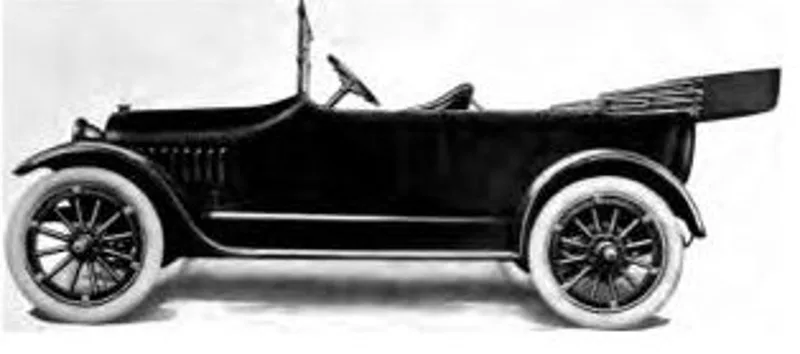
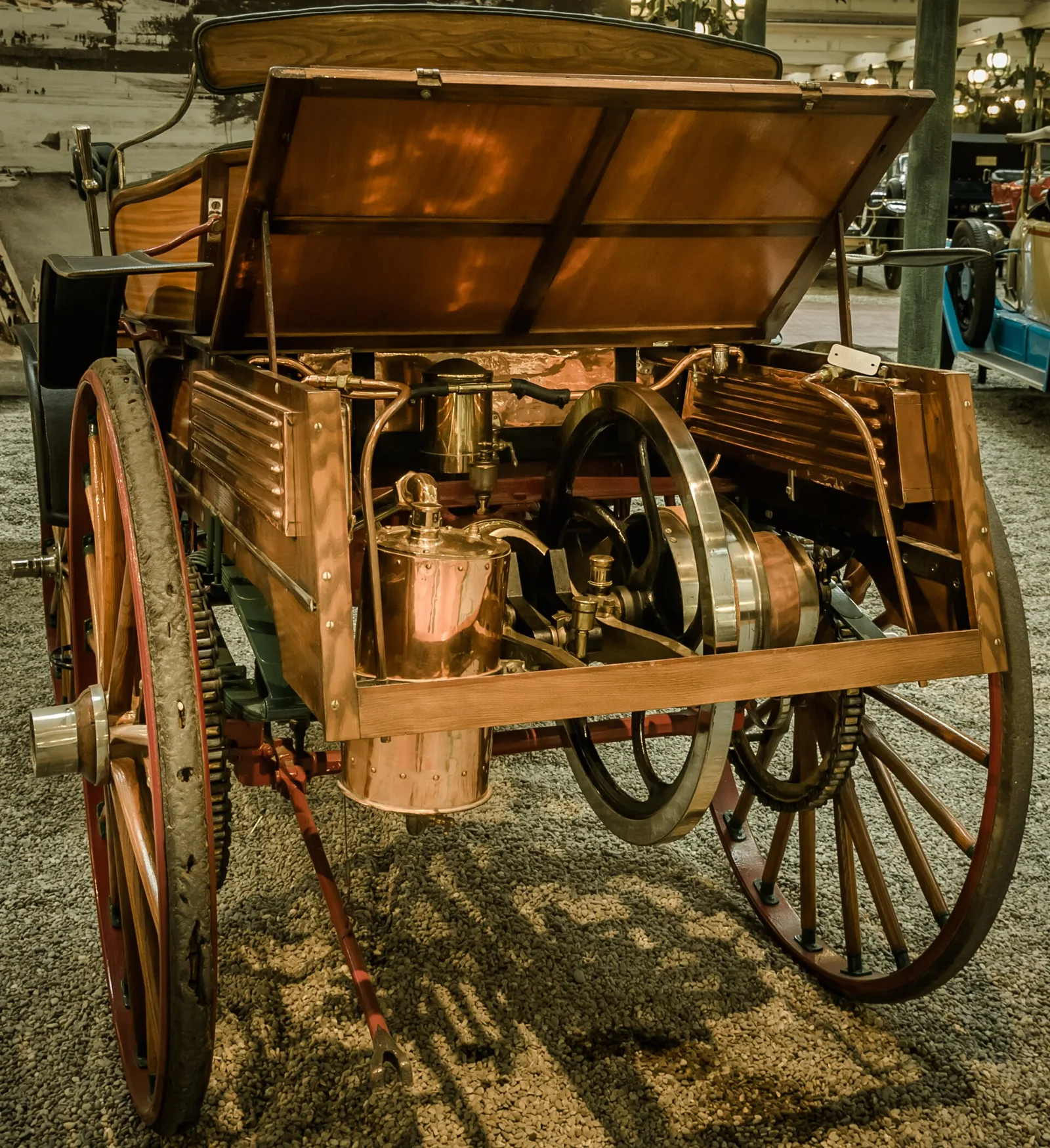
"Brass Era" is what Americans call the first phase of car making. The name comes from the conspicuous brass on lamps, radiators and even fittings under the bonnet, and the period is generally put at 1896 through 1915, a time when cars were still often called horseless carriages.
Beyond North America the same span is usually divided differently. Antique car enthusiasts speak of the veteran era, before 1904, and the Edwardian era that followed, though those labels are not really meaningful outside the former British Empire. A veteran car, in that sense, belongs to the earliest part of the story.
In 1917 there were 127 American makes on sale; by 1947 there were little more than a dozen.
Why brass, and what else marked the era?
Makers turned to brass for both looks and function. It stood up well to tarnish and bad weather, but it needed regular polishing to keep its shine, so keeping a gleaming radiator or lamp meant polishing it often.
The automobile itself had been invented a few years before the era began, but the twenty years it covers mark the start of the industry proper. Production was small in scale and designs were experimental. Midway through, Panhard et Levassor's Systeme Panhard arrived, with the engine at the front driving the rear wheels, and it became the industry standard for decades.
Brass Era cars: steam, electric and petrol
Three kinds of power competed. Electric, petrol and steam cars all found buyers, although petrol engines had become dominant by the end of the period. Steam development had advanced far enough early on to make steam cars some of the fastest road vehicles of the day, and electric cars held a share of the market throughout.
Bodies were varied. Buyers could choose a high-wheel motor buggy that resembled the horse buggy of before 1900, a runabout, a tonneau or a more expensive closed body. The cars most closely linked with the Brass Era, though, were the larger and costlier luxury models made by Packard, Peerless, Pierce-Arrow, Cadillac and other premium builders.
Early technology
Progress was quick, partly because hundreds of small manufacturers were competing for the world's attention. Transmissions and throttle controls were widely adopted, giving a choice of cruising speeds, but cars generally still had a few fixed speed settings rather than the infinitely variable control drivers know today. Leaf springs were common for suspension, though many other systems were in use. Angle steel replaced armoured wood as the favoured frame material.
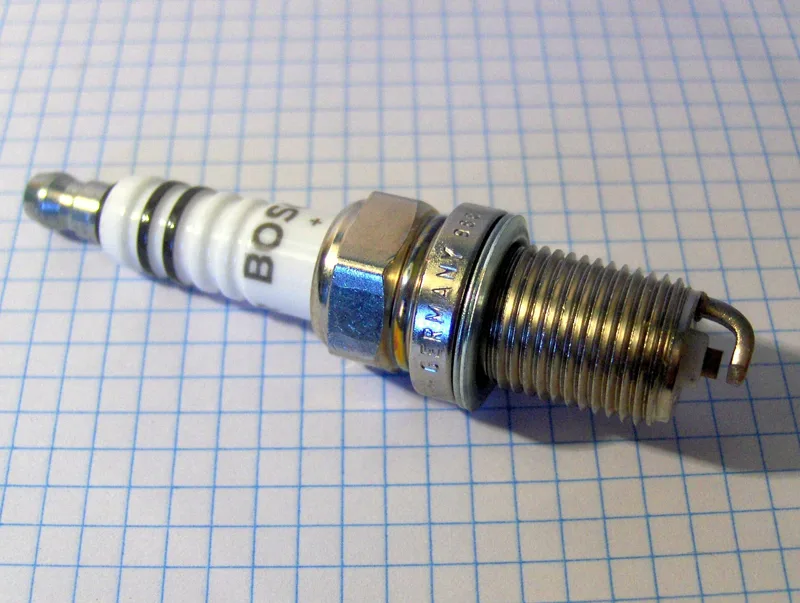
Some of the ideas credited to this era were older than the era itself. Independent suspension, in which each wheel can move on its own instead of being tied to the one opposite, was conceived by Bollee as early as 1873. Electric ignition by dynamotor appeared on the Arnold in 1898, although Robert Bosch, in 1903, tends to get the credit. Safety glass was patented in England in 1905 but did not become standard equipment until 1926.
| Development | Year | Credited to |
|---|---|---|
| Independent suspension (conceived) | 1873 | Bollee |
| Electric ignition by dynamotor | 1898 | Arnold (Robert Bosch, 1903, tends to get the credit) |
| Safety glass (patented) | 1905 | John Wood, England; standard only from 1926 on a Rickenbacker |
| Four-wheel brakes | 1909 | Arrol-Johnston Company, Scotland |
| All-steel bodies | 1912 | Hupp, joined by Dodge in 1914 |
A crowd of makers
Colvin, who covered the American industry for many years as a journalist and trade editor, wrote in his 1947 memoir that the craze for horseless carriages made car plants spring up like mushrooms, much as hundreds of locomotive plants had appeared in the early days of the railways. In both cases the great majority faded away once the industry was firmly established.
The list he gave for 1917 reads like a roll call of lost ambitions. Alongside Buick, Cadillac, Chevrolet, Dodge, Ford, Packard, Studebaker and Pierce-Arrow stood Abbott-Detroit, Bour-Davis, Crow-Elkhart, Dixie Flyer, Moline-Knight, Stanley Steamer and Stutz, to name only a few. Brush, Duryea, Alco, Speedwell and Waverly, among many others, had vanished before 1917. Back in January 1904, Frank Leslie's Popular Monthly had catalogued the whole range of cars available to the mass market in the United States.
The drop from 127 makes in 1917 to little more than a dozen in 1947 shows how complete the shake-out was, and it matches the railway comparison: a crowd of builders at the start, a handful at the end.
North America had builders far from Detroit, too. Marques recorded include McLaughlin in Oshawa, Ontario, Brockville-Atlas in Brockville, Ontario, Maritime Six in Saint John, New Brunswick, and Stoddard-Dayton in Dayton, Ohio.
The wider list shows how far the fever spread. Arrow and Stoddard-Dayton were built in Dayton, Ohio, Overland in Toledo, Marathon in Nashville, Colburn in Denver, Tincher in Chicago and K-R-I-T in Detroit. Lambert came from Anderson, Indiana, Model from Peru, Indiana, and James Cunningham, Son and Company from Rochester, New York. Another entry is the American Locomotive Company of Schenectady, New York, an echo of the railway comparison Colvin drew.
When did the Brass Era end?
The agreed cutoff of 1915 was the last year the Ford Model T could be had with brass fitments. By then the style was beginning to look outdated, and by the 1920s few if any vehicles used brass in their designs.
The Brass Era did not have the early motoring scene to itself. Cyclecars arrived around 1910, in the middle of it, and the luxury cars that defined the period were on sale at the same time as vehicles that cost far less. At one end stood the large Packards and Pierce-Arrows; at the other, a light machine with one or two cylinders and little weather protection.
What is a cyclecar?
Cyclecars were compact, featherweight, cheap cars that grew up in Europe and North America after 1900. They were meant to occupy the space between the motorcycle and the car. Most had three or four wheels, cheap light materials and low-powered engines, with seating for two, often one passenger behind the other.
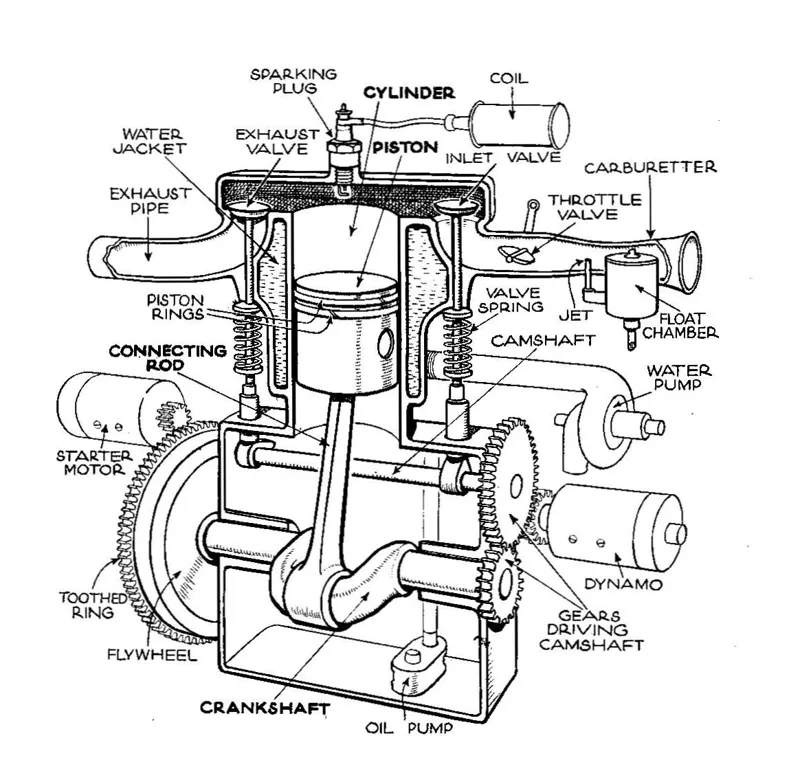
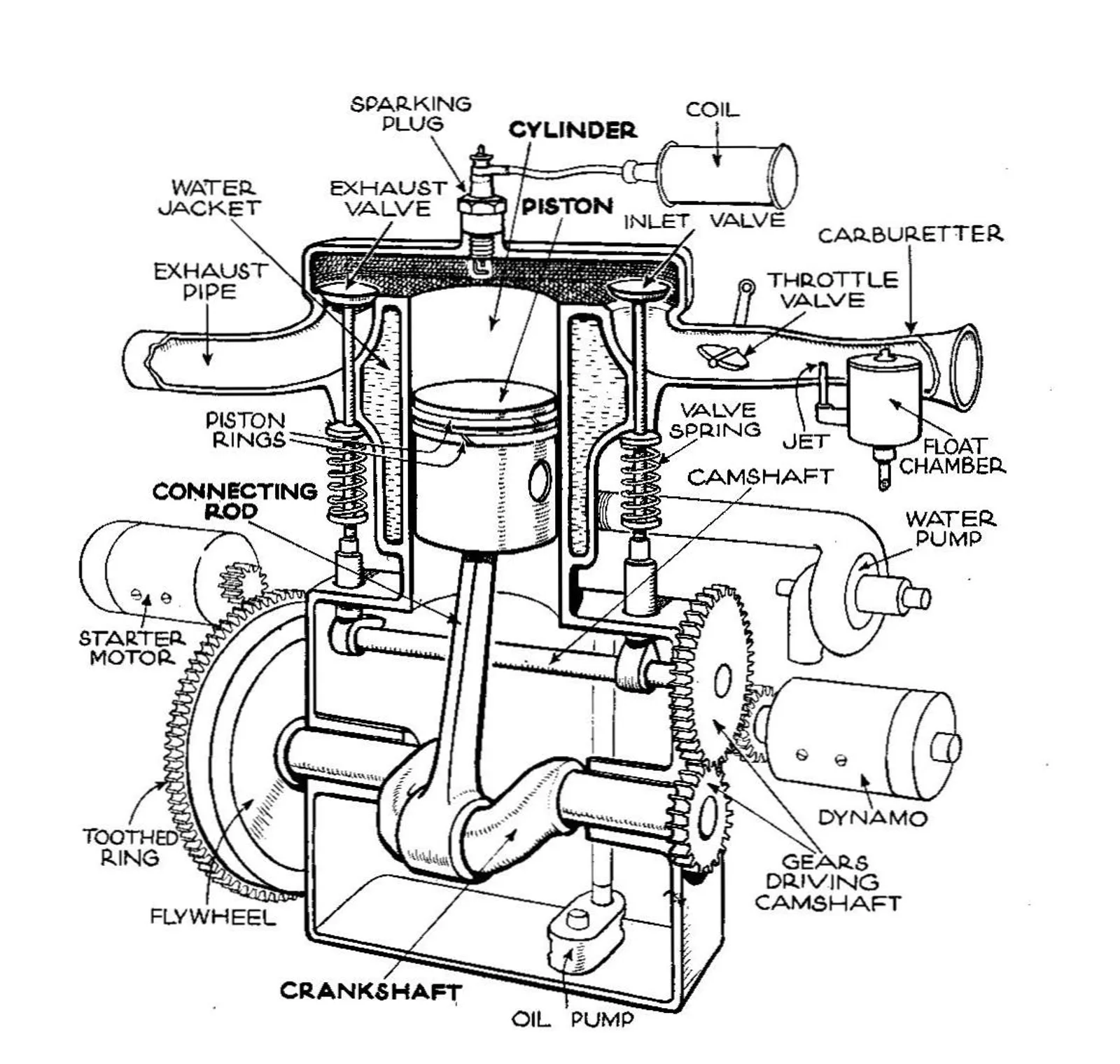
The engineering followed from the price. Power came from a single-cylinder or V-twin engine, sometimes a three- or four-cylinder, and it was often air-cooled. Some makers fitted motorcycle engines and, with them, the motorcycle gearbox. Every cyclecar had to have a clutch and variable gearing, but the requirement could be met by the simplest devices. A belt allowed to slip on its pulley did the job of a clutch, and a pulley of a different diameter gave a different gear ratio, much as moving a bicycle chain to another sprocket does.
Belt or chain drive carried the power to the driven wheel or wheels, often to a single wheel only, which meant no differential was needed. The bodies were light and sometimes gave little protection from the weather or any comfort features. Driving one wheel only is the reason no differential was needed, since that part exists to let two driven wheels turn at different speeds.
Why cyclecars appeared: tax and the 1912 rules
Money drove it. Cyclecars rose because lightweight, small-engined cars paid less tax, both to register and for the annual licence. The movement was organised enough that, on 14 December 1912, the Federation Internationale des Clubs Moto Cycliste formally agreed an international system of cyclecar classes, for adoption by nine countries: the United Kingdom, Canada, the United States, France, the Netherlands, Belgium, Italy, Austria and Germany.
From 1898 to 1910, car production expanded quickly, and the light cars of that time were commonly called voiturettes. Smaller cyclecars arrived around 1910, with a sales boom shortly before the First World War broke out. Temple Press started The Cyclecar magazine on 27 November 1912; it was later retitled The Light Car and Cyclecar. A Cyclecar Club was formed, which in time evolved into the British Automobile Racing Club, and from 1912 the Olympia motorcycle show added cycle cars to its name.
From a dozen makers to over a hundred
Growth was steep. In both the UK and France there were fewer than a dozen cyclecar manufacturers in 1911. By 1914 each country had over 100, with more in Germany, Austria and other European countries.
Many of the makes were short-lived, but several lasted: Bedelia from 1910 to 1925, GN from 1910 to 1923 and Morgan from 1910 to the present day. In 1912 the A.C. Sociable was called one of the most popular on the road, for pleasure and for business, though the Humberette was also called the most popular of the time.
Cyclecars across the map
The cyclecar was not confined to Britain and France. Cyclecar makers existed in Argentina, Austria, Belgium, Canada, Czechoslovakia, Denmark, France, Germany, Greece, Italy, Norway, Poland, Spain, Sweden, Switzerland, the United Kingdom and the United States. The Norwegian Bjering, for example, was built from 1918 to 1925. The range of countries shows how widely the idea of a cheap, light car took hold.
Cyclecar racing
Racing was part of the movement. Several events for cyclecars ran between 1913 and 1920. The Automobile Club de France organised the first race dedicated to them in 1913, and a Cyclecar GP followed at Le Mans in 1920. The Auto Cycle Union planned to introduce cyclecar racing on the Isle of Man in September 1914, but the onset of war put an end to the race.
Why the cyclecar faded
By the early 1920s the cyclecar's days were numbered. Mass producers such as Ford were able to cut prices below those of the usually small cyclecar builders, and similar affordable cars appeared in Europe, among them the Citroen 5CV, the Austin 7 and the Morris Cowley. Larger cars with more power, features and build quality, including the Citroen Type C, were now within reach of the average buyer. By the end of the decade the boom was over.
Most cyclecar makers closed. A few, such as Chater-Lea, survived by returning to motorcycles.
Where small, cheap cars went next
Small economy cars were wanted again after the Second World War, and new makers came forward to supply them. The old name stayed buried: enthusiasts spoke of microcars, and the general public of bubble cars.