A Spanish Land Rover licensee, an Italian importer of Chinese cars, a Taiwanese marque and a Silverstone coachbuilder: who they are and what sits underneath.
Santana, DR Automobiles, David Brown Automotive and Luxgen all built brands on other makers' platforms. Santana built Land Rovers under licence in Spain, DR rebadges Chinese cars in Italy, Luxgen began with a Renault-based MPV in Taiwan, and David Brown wrapped coachwork around Jaguar and Mini mechanicals before it was dissolved.
In 2011 Spain's Santana shut its Linares factory, and 1,341 workers lost their jobs or took early retirement. In October 2025 the plant built a car again, and that car is a rebadged Chinese pickup.
Santana is one of four brands that grew on someone else's platform. It began by building Land Rovers under licence. DR Automobiles puts an Italian badge on Chinese cars. Luxgen's first model was based on the Renault Espace III. David Brown Automotive wrapped hand-beaten aluminium around Jaguar and Mini mechanicals. The arrangement can last for decades, as at Santana, or for a handful of years, and it has sometimes left owners asking who will supply the parts.
How did Santana Motor build Land Rovers in Spain?
Santana Motor is a Spanish manufacturer in Linares, in Jaen province. It was created in 1956 as Metalurgica de Santa Ana to make agricultural machinery, then agreed a licence with Rover to build Series Land Rovers, with production starting in 1958.
At first the Spanish factory assembled kits shipped from Solihull. Spanish content grew from 1960, and by 1968 every component was made locally, with the cars identical to their British counterparts apart from small details such as the electrics and the rear tailgate. The company had started with just 3 million pesetas, helped by a 1954 government drive to encourage business in Andalucia.
Then the pupil began correcting the teacher. From 1962 Santana promoted both the Santana and Land Rover names in Central and South America and Africa, and supplied kits to Morocco and Costa Rica. Hard use in those markets produced blunt customer feedback, and with Land Rover's owner British Leyland short of money, Santana engineered its own answers. Santana models offered anatomical seats, disc brakes, turbo diesels, taper-leaf and coil springs and civilian Forward Control versions before Land Rover did, plus a civilian Lightweight called the Ligero that Land Rover never released. From 1968 it developed its own versions and renamed itself Land Rover Santana.
The relationship loosened in stages. In 1983 the non-competition agreement ended, and the new Land Rover 110 and 90 competed directly with Santana models, which kept leaf springs and heavier-duty axles. Iran shows how odd the arrangement could be. After sanctions, Land Rover could not sell to its long-time partner Morattab Khodro, so parts and kits went through Santana. The licensing agreement ended in 1990, and in 1994 Morattab bought the Santana 2500 production line.
Then the pupil began correcting the teacher.
What happened when Santana turned to Suzuki and Iveco?
Suzuki bought a 20 percent stake in the early 1980s and by 1991 held a controlling 49 percent. Santana built licensed Suzuki Jimny, SJ and Vitara models from 1986, and when Suzuki left in March 1995 the factory passed to the Andalusian government for one peseta. Iveco took over as partner in 2006, with the Massif, a rebadged and restyled Santana PS-10.
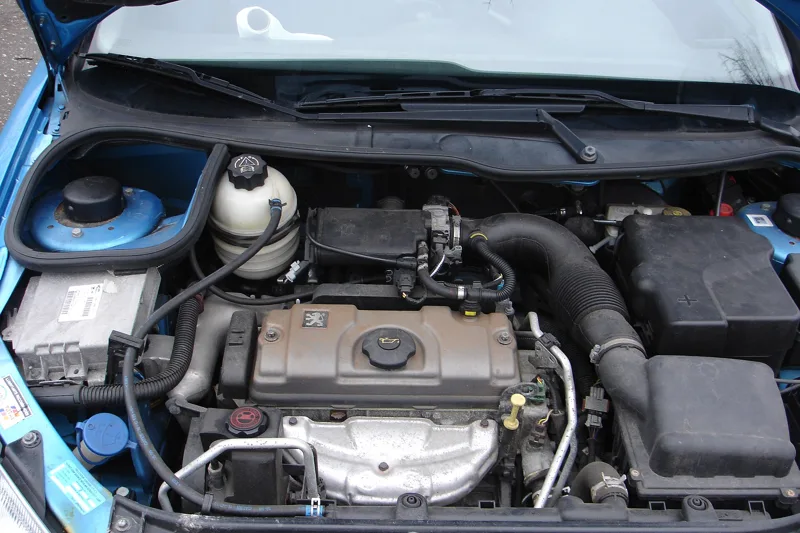
The Suzuki years pulled Santana away from Land Rover. The Series VI/2500, the last Santana that looked like a Land Rover, ended in 1994 under Suzuki's restructuring, and its tooling went to Morattab. Government ownership brought money trouble, with losses above 300 million euros by 2001, and Santana launched its own off-roader, the Anibal, ordered by the Spanish, French and Czech armies. A new Suzuki licence for diesel off-roaders ran to 2006, and the PS-10, built on continued development of the Land Rover Defender design, was a concept in 1999 and went into production in 2002.
The plant also took on odd work. A 2005 venture with Gamesa began making components for renewable energy equipment, and Windar, formed with Grupo Daniel Alonso in 2007, built a plant in Linares for wind turbine tower sections with capacity for 800 a year.
Why did Santana close in 2011?
Sales of the Iveco Massif fell short of expectations in 2010, and Iveco ended its agreement. Santana had already broken with Suzuki in 2009, and Suzuki kept the dealer network that Santana had built over decades. Losses reached 42 million euros by 2010, workers voted by 83 percent to disband the company, and it filed for settlement on 16 February 2011.
The Suzuki split left owners stranded. Suzuki stopped supporting cars Santana had built under licence and sent owners to Santana, which was no longer a Suzuki partner. Some models, such as the Jimny convertible, were made only by Santana, and parts are now hard to find. Output had fallen from 6,692 cars in 2007 to 1,197 in 2009 and just 769 in 2010. Fiat-Iveco had announced in 2008 an option to buy Santana, depending on how the Massif performed. In 2011 the Andalusian government closed the factory instead.
Who restarted Santana in 2025, and what does it build?
In May 2025 a consortium of Zhengzhou Nissan (a Dongfeng subsidiary), BAIC Group and Anhui Coronet Tech agreed to invest 5 million euros to restart the Linares factory. The first car, the Santana 400, is a rebadged Dongfeng Z9 pickup, offered as a diesel or plug-in hybrid with four-wheel drive as standard. Production officially began on 30 October 2025.
The Z9 was earlier sold under the names Nissan Yuanye Z9 and Nissan Frontier Pro. The 400D is the diesel and the 400 PHEV the plug-in hybrid, and the pickup is sold in Spain, Italy, Portugal, Andorra and Gibraltar. Linares had stood idle for 14 years, since the 2011 closure. From mid-2026 BAIC is to sell the Beijing BJ40 and BJ30 off-roaders in Europe under the Santana name, assembled from semi-knocked-down kits at the Spanish factory; the Santana Cajal is already a rebadged BJ40.
The old cars have found a following, particularly in Britain. A restored 1961 Santana-assembled Series II 88 sold at auction for 14,950 euros in 2024, and in 2025 a 1964 Santana 88 Series II pickup went through Bonhams for US$24,640.
What is DR Automobiles, and which Chinese cars does it rebadge?
DR Automobiles Groupe is an Italian company, established in 2006, that mainly sells rebadged vehicles from the Chinese makers BAIC, Chery, Dongfeng and JAC, plus Changan since the end of 2025. It runs eight brands: Birba, DR, EVO, ICH-X, Katay, Sportequipe, Stilnovo and Tiger.
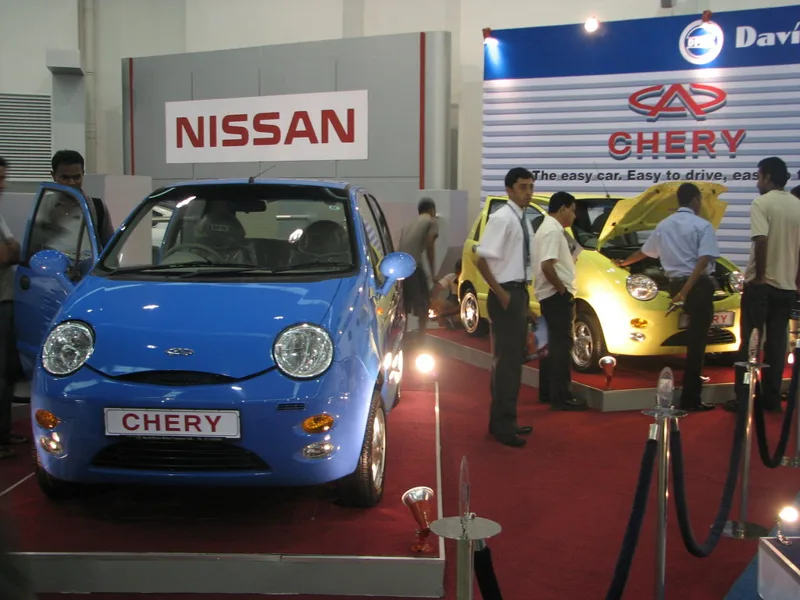
Massimo Di Risio is credited with starting the business in 1985, and the DR brand arrived in 2006. A partnership with Chery from November 2007 has some Chery models assembled at Macchia d'Isernia and sold in Italy as DRs. The original Chery Tiggo became the DR 5 and the Riich M1 the DR 1. By the end of 2018 there were 20 dealers in Italy.
Growth came through new names. EVO, in 2020, was the first sub-brand, and the year the company began rebadging BAIC vehicles. Sportequipe, a more premium line of rebadged Chery models, followed in 2022. That year DR also introduced ICKX, renamed ICH-X after a legal dispute with the former racing driver Jacky Ickx, and acquired OSCA, a name held by the Maserati family. In February 2023 the DR 1.0, a rebadged Chery eQ1, became its first electric car. The purchase of Tiger Racing in 2023 led to the Tiger sub-brand in 2024, along with vehicles rebadged from Dongfeng, and Stilnovo appeared at the 2025 Turin show.
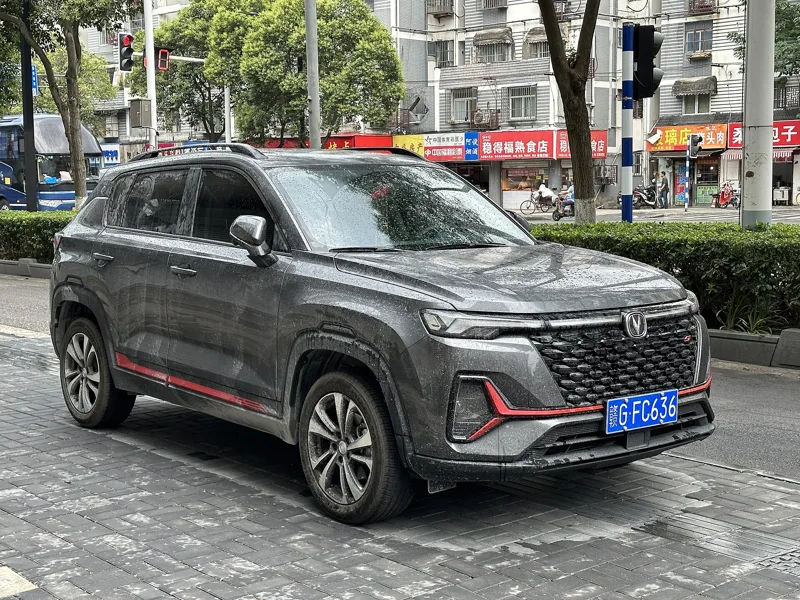
The same car often appears under several badges. The JAC Shuailing T8 is both the DR PK8 and the EVO Cross 4. The Kaiyi Kunlun is the EVO 8 and the Sportequipe 8 GT. The Changan CS35 Plus is the 2026 DR 5 and also the Stilnovo 5. Elsewhere the list reads like a tour of Chinese catalogues: the DR 7.0 is a Chery Tiggo 8, the Tiger Six a Beijing Mofang, the Katay 35C a Karry X6, and the Birba, based on the Chery QQ Ice Cream, is the group's first heavy quadricycle.
What is Luxgen, and what was its first car based on?
Luxgen is a Taiwanese manufacturer headquartered in Miaoli County, founded in 2009 and now a wholly owned subsidiary of Foxtron. Its first production model, the Luxgen7 MPV, was based on the Renault Espace III. It first appeared before the public on 19 August 2009, with Taiwanese sales starting a month later.
It sold quickly: by March 2010 more Luxgen7 MPVs had found buyers in Taiwan than the whole Hyundai range. The SUV followed, released on 4 June 2010 and later renamed the U7. Both used a 2.2-litre turbocharged four-cylinder petrol engine developed with Le Moteur Moderne, with Garrett turbochargers, meeting Euro4 emissions standards. At the Dubai Motor Show in December 2009 Luxgen also showed an EV+ model developed with AC Propulsion.
The S5 sedan, unveiled in Taipei in November 2011 and launched in 2012, was the first Taiwanese car developed entirely in-house. It grew out of the Neora EV concept, which appeared at Auto Shanghai in April 2011, but went on sale with conventional 1.8 and 2.0-litre turbo petrol engines with variable valve timing. The U6 crossover followed in 2013 on the same platform and engines, gaining a 1.6-litre PSA engine in 2017. The URX midsize crossover debuted in 2019, and the n7 battery-electric SUV in 2023.
Overseas sales began in Oman in 2010, with Russia following in 2013 and Iran in 2017. In China, Dongfeng Yulon built and sold the cars from 2010 to 2020, when Luxgen announced it was leaving because of low sales. J.D. Power's Taiwan customer service study placed it top among locally produced brands in 2011 and highest among mass market brands in 2018. The S5, S3, U5 and U7 were discontinued in 2020, the M7 and V7 in 2021.
What was David Brown Automotive, and why was it dissolved?
David Brown Automotive was a British coachbuilder and limited-production car maker based in Silverstone. The businessman David Brown founded it in Coventry in 2013, and he is unconnected to Aston Martin's Sir David Brown. After administration began in November 2024, it was dissolved on 17 February 2026.
Its first model, the Speedback GT, was announced in March 2014 and debuted at Top Marques Monaco that April. It started as a one-off built by the Coventry firm Envisage for Brown's personal use, and takes its inspiration from the 1960s and the Aston Martin DB6. Underneath sits the Jaguar XK's all-aluminium platform, with a 5.0-litre Jaguar AJ-V8 making 510 PS (375 kW; 503 bhp) through a six-speed ZF automatic, enough for 0-97 km/h (0-60 mph) in 4.6 seconds.
The craft is old and the tooling new. Alan Mobberley, a former Jaguar Land Rover designer, drew the car. Its aluminium panels are beaten by hand and rolled over an English wheel, while the forms they are beaten over are milled by a five-axis CNC machine from CAD data taken from a full-size clay model. The production-specification cars shown at Geneva in 2017 carried over 230 refinements over the prototype, among them soft-close doors and better noise insulation.
The Mini Remastered, the second model, launched in Shoreditch in April 2017 and made its show debut at Top Marques Monaco on 20 April. Each is built on a donor classic Mini, keeping its 1275cc A-series four-cylinder and gearbox, refurbished to give up to 84 PS (62 kW; 83 bhp). A new steel shell from British Motor Heritage is coach-built by David Brown Automotive, and modern touches include electric power steering, air conditioning, LED lighting throughout, remote locking and a 7-inch touchscreen. The Speedback Silverstone Edition, limited to 10 and launched at Geneva on 6 March 2018, lifted the V8 to 609 PS (448 kW; 601 bhp) and 766 N m (565 lb ft), with a Fly by Night paint finish applied over 8 weeks.
In April 2017 the company moved from Binley to an 18,000 sq ft build facility at Silverstone Park. In July 2020 Brown sold his majority share to UK Advanced Industrials, and Eddie Kembery, formerly of Aston Martin and Ford, became chief executive. Brown left his post as director in 2023. After financial problems, the company entered administration in November 2024 with MB Insolvency as administrators. A notice to move it to dissolution followed on 17 November 2025, and three months later it was declared dissolved.
Four brands and the platforms under them
| Brand | Based | Platforms underneath | Where it stands |
|---|---|---|---|
| Santana | Linares, Spain | Land Rover Series (licensed); Suzuki Jimny and Vitara (licensed); own PS-10, sold by Iveco as the Massif; Dongfeng Z9; Beijing BJ40 | Closed in 2011; production of the Santana 400 began on 30 October 2025 |
| DR Automobiles | Italy | Chery, JAC, BAIC, Dongfeng and Changan models, plus Kaiyi, Jetour, Forthing and others | Eight brands, including EVO, Sportequipe, ICH-X, Tiger and Stilnovo |
| Luxgen | Miaoli County, Taiwan | Renault Espace III for the first model; own platform for the S5, which also underpins the U6 | Foxtron agreed to buy it in December 2025; no new models planned |
| David Brown Automotive | Silverstone, England | Jaguar XK platform; donor classic Mini | Dissolved on 17 February 2026 |
What does a borrowed platform mean for the owner?
The Santana and Suzuki split is the clearest example. When the partnership ended in 2009, Suzuki stopped supporting cars made by Santana under licence, and owners were pointed back to Santana. Owners of David Brown cars now look to a company that has been dissolved, and Luxgen buyers will deal with a dedicated sales system run for the Foxtron brand.
Platforms can also add value. A Land Rover-derived Santana is sought after in Britain and sells at auction for sums that make the point. A Santana 400 buyer gets a vehicle that exists in China under other names, and the DR range shows how many badges one donor car can carry.
What is planned for each brand in 2026?
Santana plans to add the BJ40 and BJ30 from mid-2026. DR has prototypes for 2026: the Itala 35, based on the GAC Emzoom, and the OSCA MT6, based on the Changan UNI-T, while the Stilnovo 5 and 6, on the Changan CS35 Plus and CS55 Plus, have been on sale since 2026. Foxtron's purchase of Luxgen was due to complete in early 2026, after which Luxgen will launch no new models.