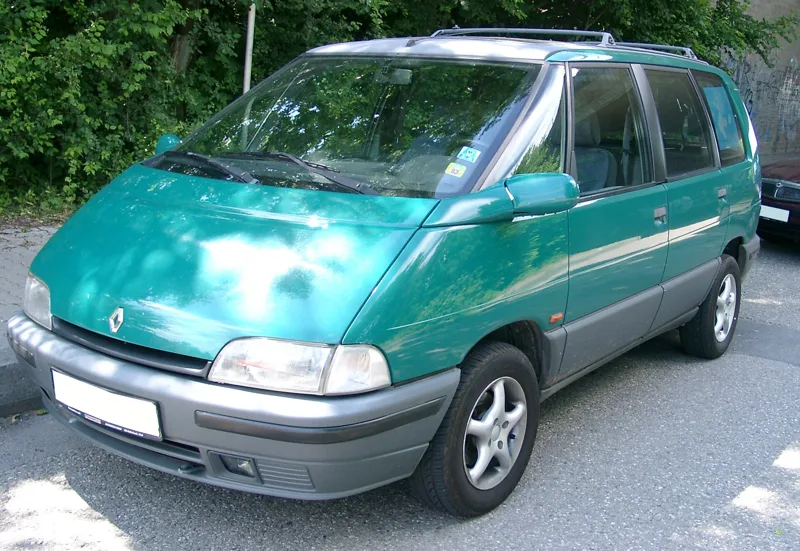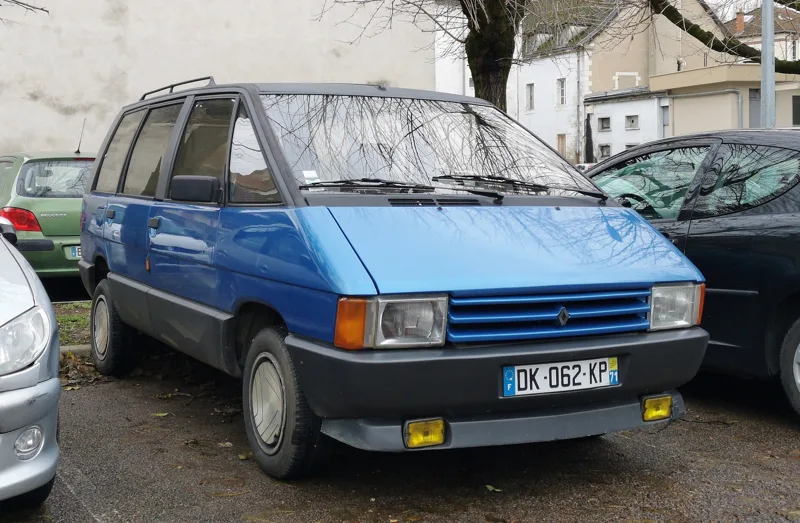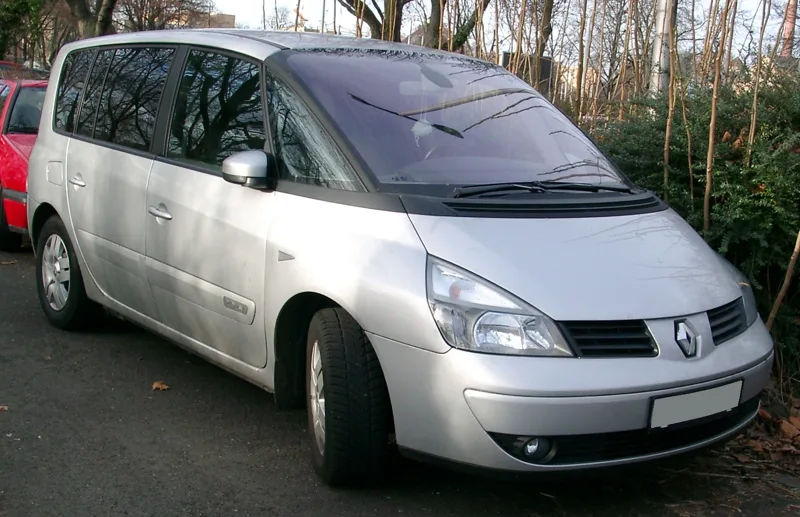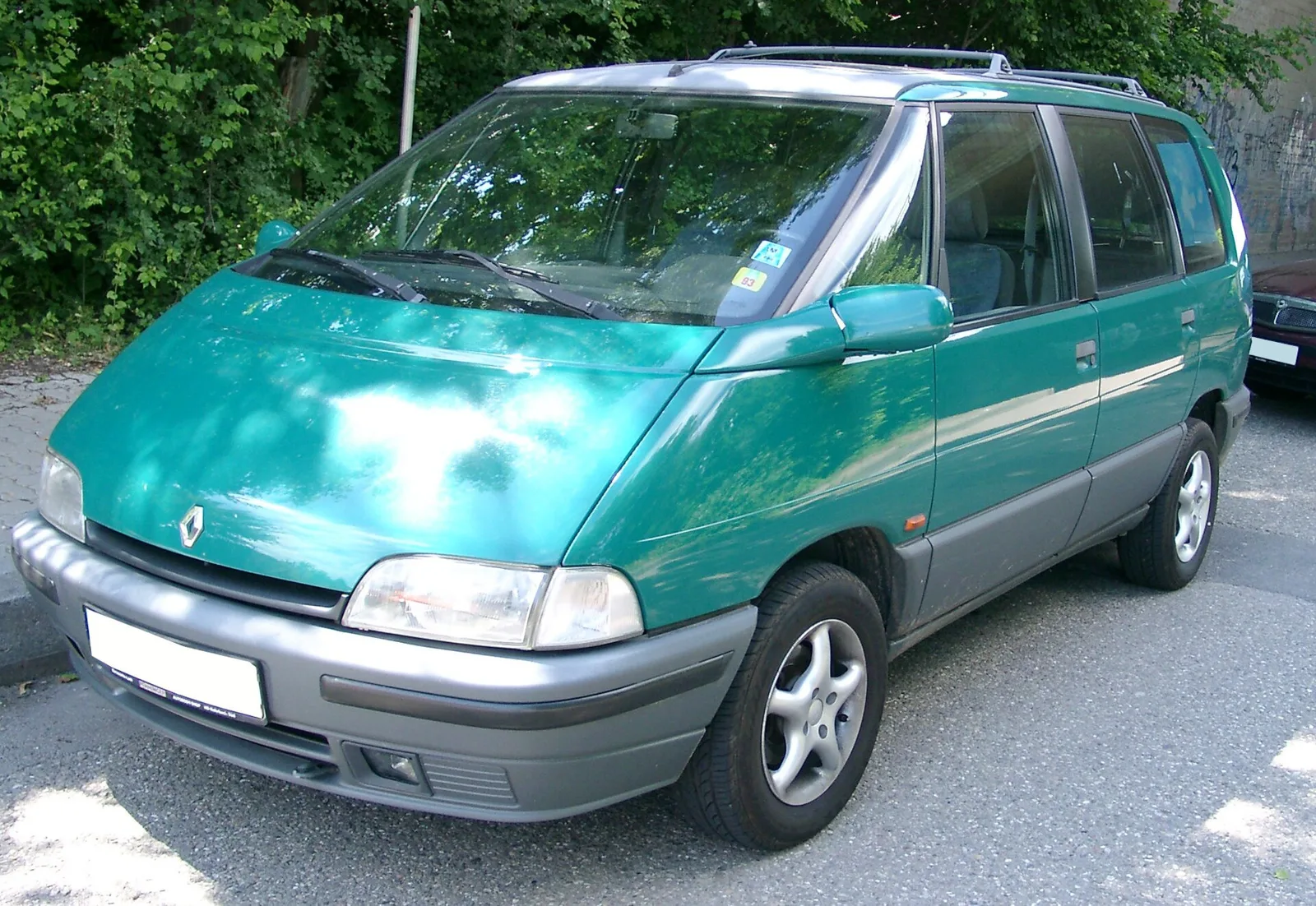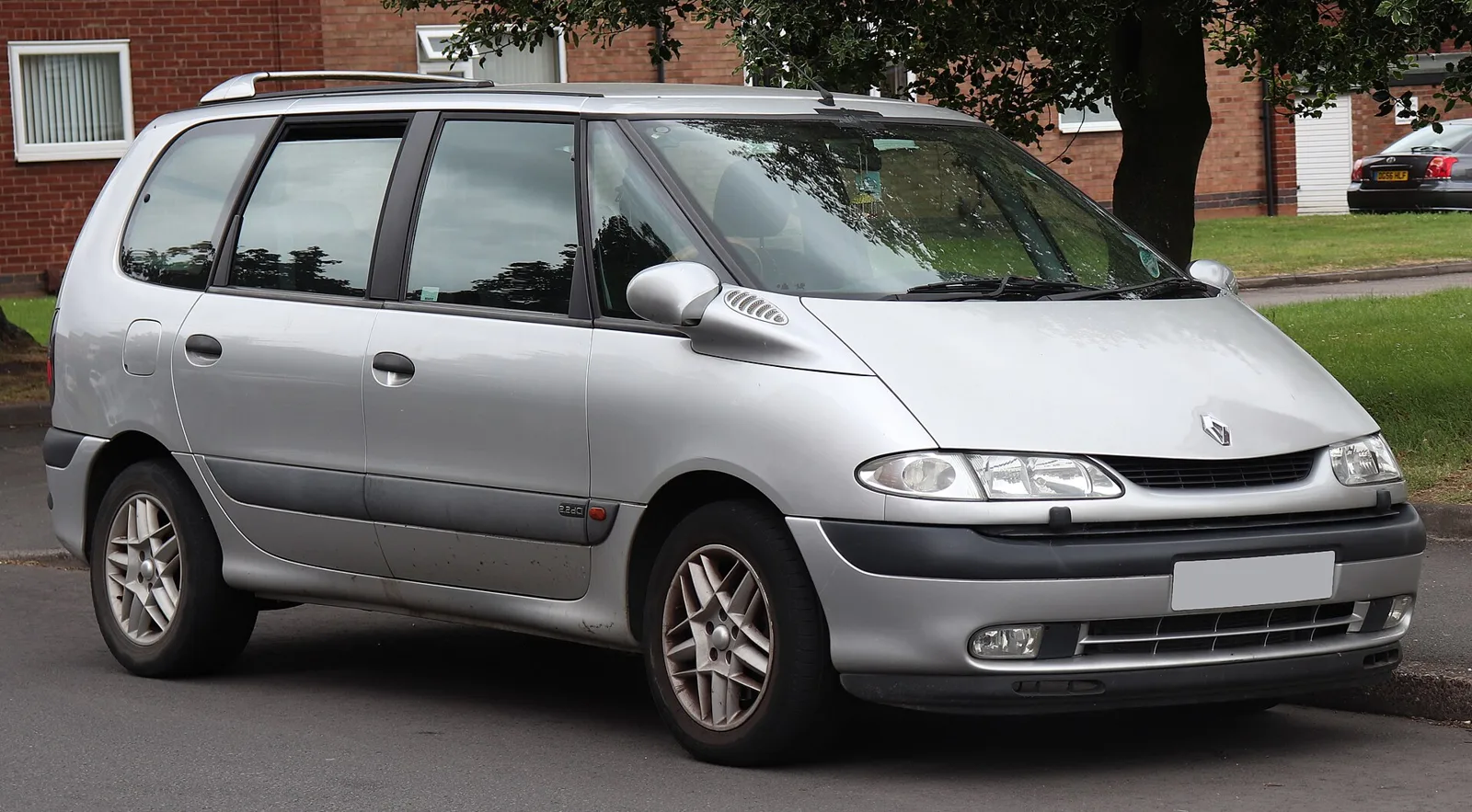
The 1996 third-generation people-carrier, designed by Matra, with a longer floor, a 1999 sales record and the Grand Espace stretch.
The Renault Espace III was the third generation of the Espace people-carrier, built by Renault from 1996 to 2002 and the last Espace designed by Matra. It offered three engines at launch, from a 2.0 petrol to a 3.0 V6, and the Grand Espace stretched it in 1997.
The Espace III reached showrooms in December 1996, after a Paris debut that October. Its brief was to improve the modularity of the interior and its luggage room, an aspect the press had criticised on the Espace II.
Why did Renault give the Espace III a longer floor?
Criticism of the Espace II had focused on luggage room when seven seats were in use. Renault borrowed a more modern floor from the Laguna I and stretched it a further 3 cm (1.2 in), which raised interior habitability and luggage capacity together.
The project was known as P52 in Romorantin and J66 inside Renault. It was the last Espace that Matra designed, and its brief included better modularity for the interior space.
The Laguna I floor was itself longer in wheelbase than the older Espace's, and Renault stretched it further still. Matra's engineers also gave conviviality a high priority. Heavy soundproofing kept noise and vibration out of the cabin, so passengers in the back row could talk without raising their voices.
Dates vary between references. The car was shown in Paris in October 1996, but sales only began in December, which is why some give 1996 as the debut and others 1997.
The Espace III tackled its predecessor's space complaints head-on and gave the family a longer floor.
Shape and details
Its length exceeded the predecessor's by close to 9 cm (3.5 in), which helped interior room. The size also reaffirmed the large people-carrier role introduced with the outgoing generation. The front carried a grille with almost no central badge, and the badge sat only on the bonnet's lower side.
The lower bonnet profile cut into the headlamps, bringing them into line with the Renault styling of the day that the Laguna and Megane shared. Those two had a grille split by a pointed nose, which the Espace did not.
The mirrors were aerodynamically shaped, and beside each, at the foot of a front pillar, a small air intake fed the cabin ventilation. The roof bars could be moved or taken off altogether. Glazing was generous, the tailgate took up nearly the whole rear end, and richer trims had a separately opening rear window.
How was the interior laid out?
The Espace III had a much roomier cabin than the Espace II. The transverse engine layout and a floor 12 cm (4.7 in) longer freed up space, and the press criticism of interior room that had dogged its predecessor was answered.
The driver faced a horizontal digital dashboard, a fairly futuristic design for the period, framed by an eyelid-shaped surround and acting mainly as an information display. In the centre sat a large glovebox of 33 litres, and between it and the dashboard ran a row of climate vents alternating with small storage bins across the fascia.
In the least well-equipped version only five seats were standard, and a third row cost extra. In five-seat cars the luggage area held 900 litres flush with the parcel shelf, rising to 1,450 litres above it. Removing the three seats behind the driver gave up to 2,850 litres.
What engines were on offer at launch?
At launch the Espace III offered three engines: a 2.0 single-cam petrol displacing 1,998 cc (121.9 cu in) and making 114 PS (84 kW; 112 hp), a reworked PRV 3.0 V6 displacing 2,963 cc (180.8 cu in) and making 167 PS (123 kW; 165 hp), and a 2.2 dT 12v turbodiesel rated at 113 PS (83 kW; 111 hp).
The petrol range ran from the 2.0 to the V6, while the diesel was a single 2.2 at launch. The 2.0 was the entry engine and the 3.0 the top one, and the 2.2 diesel used indirect fuel injection. In autumn 2000 that diesel gave way to the 2.2 dCi.
The petrol 2-litre and the 2.2 diesel took a 5-speed manual, while the V6 came with a 4-speed automatic.
Chassis, brakes and steering
The body was built once more at Romorantin, with a galvanised steel structure and composite panels. The floor pan came from the first-generation Laguna, combined with parts taken from the flagship Safrane. The MacPherson front suspension came from the Safrane but used an anti-roll bar from the Laguna. Its auxiliary front subframe was hydroformed, a method that yields sturdier and stiffer parts.
At the rear, a semi-rigid axle sat with a Panhard rod that also served as the stabiliser bar. Both axles used coil springs and telescopic hydraulic dampers. The two smaller engines used front discs with rear drums, while the V6 had four discs with ventilated fronts. Power assistance was variable-ratio, mounted on a rack-and-pinion unit.
How did the Espace III evolve after launch?
The biggest change was the Grand Espace, shown at the Frankfurt Motor Show in 1997 with a wheelbase 17 cm (6.7 in) longer and an overall length 26 cm (10.2 in) greater. Its load capacity grew to 3.1 cubic metres (3,100 litres).
Renault presented it to end lingering questions about how roomy the French MPV really was. The leftover 9 cm (3.5 in) all went to the load area, and the longer rear overhang is what tells it apart from the standard car.
Load capacity grew considerably with the longer body. The Grand Espace kept the standard car's engines. It weighed only 40 kg (88 lb) more than the short-wheelbase car, and on the Italian price list it cost 3 million lire more for the same engine.
The Italian market received the Espace III only at the beginning of 1997, the year the Grand Espace arrived.
In 1998 a new 2-litre twin-cam of 140 PS (103 kW; 138 hp) sat beside the single-cam version. The 3-litre PRV gave way to the 3-litre L7X V6, with twin cams on each bank and 190 PS (140 kW; 187 hp).
The small 1.9 dTi arrived in 1999 with direct injection and a rotary pump, making 98 PS (72 kW; 97 hp). Its modest performance kept it out of the Grand Espace range. That same year the Espace set a sales mark that still stands: 71,200 cars were produced in 1999 alone.
What did the autumn 2000 update change?
Autumn 2000 brought an almost invisible restyling, limited to the headlamps with clear reflectors. Under the skin, the older 2.2 turbodiesel gave way to the 2.2 dCi with common rail and a variable-geometry turbocharger. Its power reached 129 PS (95 kW; 127 hp). The new Proactive 4-speed automatic was paired with the twin-cam 2-litre.
The new diesel had four valves per cylinder where the old unit had three, and its turbocharger replaced a fixed-geometry design. The 2.2 turbodiesel also received four-disc brakes, with ventilated fronts and solid rears.
On the petrol side the single-cam 2-litre disappeared where it was still offered.
In 2001 there were no major changes. Early in 2002 the V6 left the range, and the 1.9 dTi was dropped in some markets, Italy among them. That autumn the next generation of the people-carrier was launched.
Espace III specifications at a glance
| Specification | Detail |
|---|---|
| Built | 1996 to 2002 |
| Project codes | P52 at Romorantin; J66 at Renault |
| Body | Galvanised steel structure with composite panels |
| Length | Almost 9 cm (3.5 in) longer than the Espace II |
| Wheelbase | 12 cm (4.7 in) longer than the Espace II |
| Glovebox | 33 litres |
| Luggage, five seats | 900 litres; 1,450 litres above the shelf; 2,850 litres with the rear seats removed |
| 2.0 petrol | 1,998 cc (121.9 cu in); 114 PS (84 kW; 112 hp) |
| 3.0 PRV V6 | 2,963 cc (180.8 cu in); 167 PS (123 kW; 165 hp) |
| 2.2 dT 12v turbodiesel | 2,188 cc (133.5 cu in); 113 PS (83 kW; 111 hp) |
| 2.0 twin-cam (1998) | 140 PS (103 kW; 138 hp) |
| 3.0 L7X V6 (1998) | 190 PS (140 kW; 187 hp) |
| 1.9 dTi (1999) | 98 PS (72 kW; 97 hp) |
| 2.2 dCi (2000) | 129 PS (95 kW; 127 hp) |
| Grand Espace | Wheelbase 17 cm (6.7 in) longer; overall length 26 cm (10.2 in) longer; 3.1 cubic metres (3,100 litres) |
| Gearboxes | 5-speed manual (2.0 and 2.2 dT); 4-speed automatic (V6) |