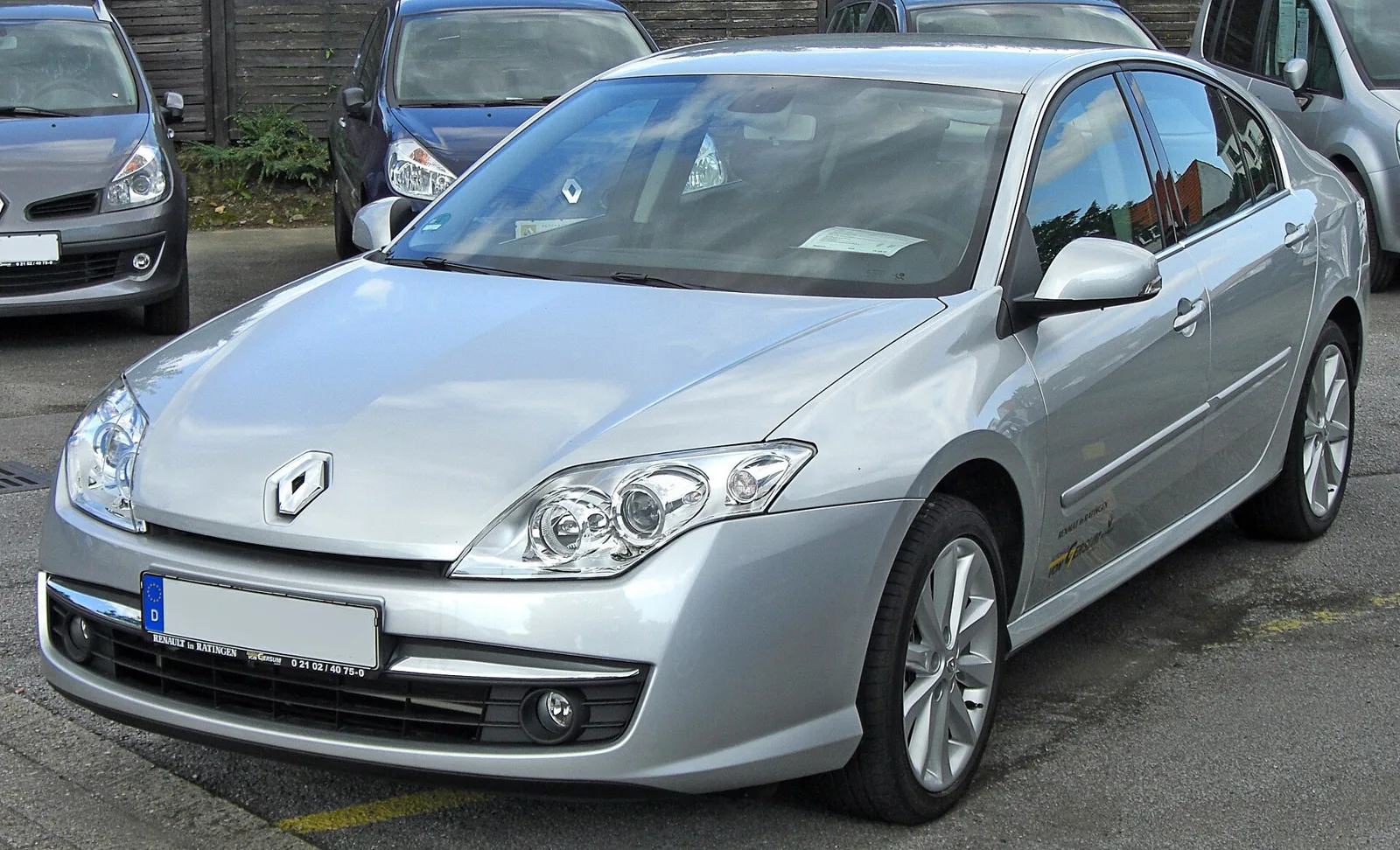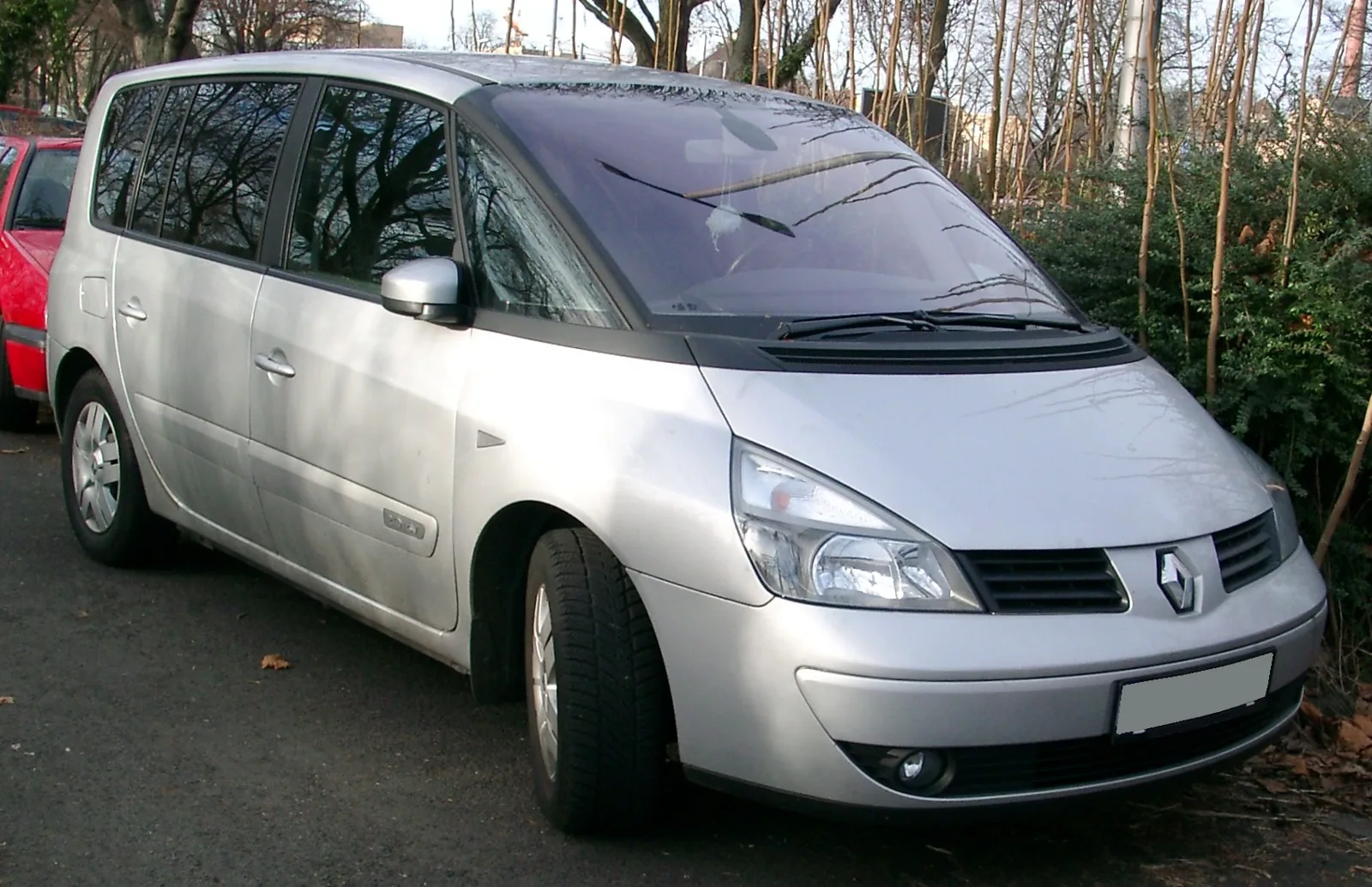
Renault dropped Matra and composite panels for a steel body, a roomy cabin and a V6 of Nissan origin at the top of the range.
The Renault Espace IV was the fourth generation of Renault's large people-carrier, built from 2002 to 2014. It moved to a steel body, offered engines from 136 PS (100 kW; 134 hp) up to a 3.5 V6 with 241 PS (177 kW; 238 hp), and enjoyed the longest production run of any Espace.
The Espace IV was the first Espace built with a steel body, giving up the composite panels that the first three generations had used. The result was a larger and roomier people-carrier that Renault hoped would also draw buyers from big estate cars, and one that lasted longer than any earlier Espace.
Why did Renault leave Matra behind?
Project J81 broke with Matra and its composite bodywork, moving the new people-carrier to sheet steel. Renault had once hoped to become independent of Matra, but the solutions proposed by the Romorantin plant proved more worthy of consideration, so the first three generations all bore Matra designers' signature and a fibreglass build process.
That composite process cut the kerb weight, but it kept production slow. By the end of the twentieth century that pace was no longer affordable, especially as the upper-end people-carrier segment still held buyers while more compact mid-range people-carriers grew in popularity.
Word of Matra's absence from the project leaked early. The J81 specification called for a big rise in size and content, aiming to place the car at the top of its class as if it were a true luxury car.
A steel body and a cabin styled to feel like a true luxury car.
How did the Espace IV look?
The fourth-generation Espace had a body made entirely of angles, styled by a team led by Patrick Le Quement. Its bonnet and windscreen formed one sloping line, which revived the sloping nose of the first Espace and earned the car a comparison with the TGV.
Large triangular light clusters enclosed the black grille, which the Renault logo split in two. Slender pillars, apart from the rear ones, allowed a huge glazed area, and a panoramic roof was optional. When needed it could be shaded by a screen 9 mm thick.
With the optional panoramic roof the glazed area exceeded 7 m2 (7.42 m2 to be precise), while the slim pillars helped cabin brightness and visibility during difficult manoeuvres. At the rear, the tailgate dominated the view, with vertical rear light clusters set in the upper area.
How roomy was the cabin?
The cabin was roomier than that of the previous generation of people-carriers, thanks to a wheelbase increased by a further 10 cm. Some rivals did better, however, especially in interior width, and the boot gained little. The Espace III's luggage area reached 2,850 litres with the two rear rows removed, and the new version rose only to 2,860 litres.
With all seven seats in place, luggage space fell to 291 litres, a limit common to most people-carriers of that kind. The Grand Espace, with a wheelbase 7 cm longer and an overall length 20 cm greater, offered a partial fix, but with the rear rows removed its interior volume was 50 litres smaller than that of the Grand Espace based on the Espace III.
What made the dashboard unusual?
The dashboard was almost free of controls. Most functions sat in levers behind the steering wheel, the hi-fi ran on a remote control, and the air conditioning controls were grouped on the driver's door with a small temperature display.
The layout kept a slim digital display in the centre, a strip of vents and small storage bins, and a large central drawer, with two more drawers lower down. Dual-zone air conditioning added a second control group on the front passenger's side.
Not every idea was practical. The hazard light buttons under the roof, between the two sun visors, raised doubts from the start. The centre console, though minimalist, included a start button and two cup holders.
Key specifications
| Item | Figure |
|---|---|
| Wheelbase, standard | 2.803 m (9.2 ft) |
| Wheelbase, Grand Espace | 2.87 m (9.4 ft) |
| 2.0 16v | 1,998 cc (121.9 cu in), 136 PS (100 kW; 134 hp) |
| 2.0 16v Turbo | 163 PS (120 kW; 161 hp), later 170 PS (125 kW; 168 hp) |
| 3.5 V6 | 3,498 cc (213.5 cu in), 241 PS (177 kW; 238 hp) |
| 1.9 dCi | 1,870 cc (114.1 cu in), 120 PS (88 kW; 118 hp) |
| 2.2 dCi | 2,188 cc (133.5 cu in), 150 PS (110 kW; 148 hp) |
| 3.0 dCi | 2,958 cc (180.5 cu in), 177 PS (130 kW; 175 hp) |
| Luggage, all seven seats | 291 litres |
Which engines were offered at launch?
At launch the Espace IV came with six engines, three petrol and three diesel. The entry 2.0 16v made 136 PS (100 kW; 134 hp), while the top 3.5 V6 was of Nissan origin, from an alliance that Renault had formed with the Japanese maker in 1999.
The 2.2 dCi, the middle diesel, was a development of the Espace III unit, lifting output from 129 PS (95 kW; 127 hp) up to 150 PS (110 kW; 148 hp). The 3.0 dCi was the real novelty. Developed with Isuzu, it was the first diesel V6 to fit under the bonnet of an Espace, and it produced 177 PS (130 kW; 175 hp).
Transmissions followed the engine. The four-cylinder engines came with a 6-speed manual, while the V6 versions came with a 5-speed automatic that was not offered with the other engines. The Grand Espace did not offer the naturally aspirated 2.0 16v or the 1.9 dCi.
How was the chassis built?
The Espace IV used the floorpan of the Laguna II and Vel Satis, with the wheelbase set at 2.803 m (9.2 ft) between the sizes of the first and second generations. The front suspension used a MacPherson layout, and the rear kept an interlinked-wheel arrangement adapted to take a Panhard rod.
Springs and dampers were offset rather than coaxial. For the first time in Espace history, four discs braked the whole range, with self-ventilated front discs. The steering kept its rack-and-pinion arrangement. In the Grand Espace the wheelbase rose to 2.87 m (9.4 ft), which was longer than that of the flagship Vel Satis.
Light materials still played a part. Plastic bumpers and aluminium doors were used, along with an SMC composite tailgate, the same material as in earlier generations.
What changed during its life?
The Espace IV ran for more than twelve years with three slight facelifts, the longest commercial career of any Espace. The first change came in September 2005, when the 2-litre turbo rose from 163 to 170 PS (125 kW; 168 hp).
In 2006 the grille went from three bars to two, the front bumper gained fog lamps linked by a chrome strip, and the headlamps received xenon. The 1.9 dCi was dropped, and a 2-litre dCi with 150 PS (110 kW; 148 hp) took over from the 2.2 dCi of equal power, which stayed in the range at 139 PS (102 kW; 137 hp) with a 5-speed automatic.
A 3-litre dCi received a new 6-speed Proactive automatic in 2006, and the petrol V6 kept its 5-speed. A 2-litre dCi with 170 PS (125 kW; 168 hp) arrived between late 2006 and early 2007, followed by a 130 PS (96 kW; 128 hp) 2-litre dCi that replaced the 1.9 dCi.
The naturally aspirated 2-litre petrol went out of the range in 2008. In 2010 the front headlamps moved to LED technology and the mirrors were slightly redesigned, while the two V6 engines were withdrawn. The range was left with the 2-litre turbo and the 2-litre dCi in three power levels.
In 2012 the Espace IV reached ten years of production. Renault kept it on sale while it searched for a successor, and the third facelift brought a grille that widened in the middle to house the logo, plus a black lower bumper. The engines remained unchanged.
What replaced the Espace IV?
The Initiale concept car, shown at the Frankfurt Motor Show in autumn 2013, previewed a fifth generation with some crossover traits to meet new market demands. That model was presented at the Paris Motor Show in autumn 2014, a move that coincided with the end of Espace IV production.
The Espace IV stayed on some European price lists for a few months longer, which was enough to clear stock held in warehouses. The new model made its definitive debut in early 2015, marking the end of the Espace IV.