From the 954 cc TU9 of the Citroen AX to the DW10 HDi diesel that became the basis of the Duratorq family co-developed with Ford, the engines behind Peugeot and Citroen's small cars and vans.
PSA's TU range of compact four-cylinder engines debuted in the Citroen AX in 1986, taking over from the older X engine. In 1998 the EW petrol and DW diesel families took over from the XU, and the DW10 later formed the basis of Ford's Duratorq diesels.
Citroen's X engine earned the nickname "suitcase engine" because its gearbox sat in the crankcase and the whole thing lay almost flat on its side. When the Citroen AX arrived in October 1986, PSA replaced it with a conventional, upright engine called the TU. That engine, and the EW and DW families that followed in 1998, went on to power a large share of the small and mid-sized Peugeot and Citroen cars, and a good number of vans.
What is the PSA TU engine?
The TU is a family of small inline-four engines introduced by PSA Peugeot Citroen in 1986. It came in petrol form and as a naturally aspirated diesel, the TUD. The Citroen AX was the first car to receive it, in October 1986, and it kept many components of the X family it replaced.
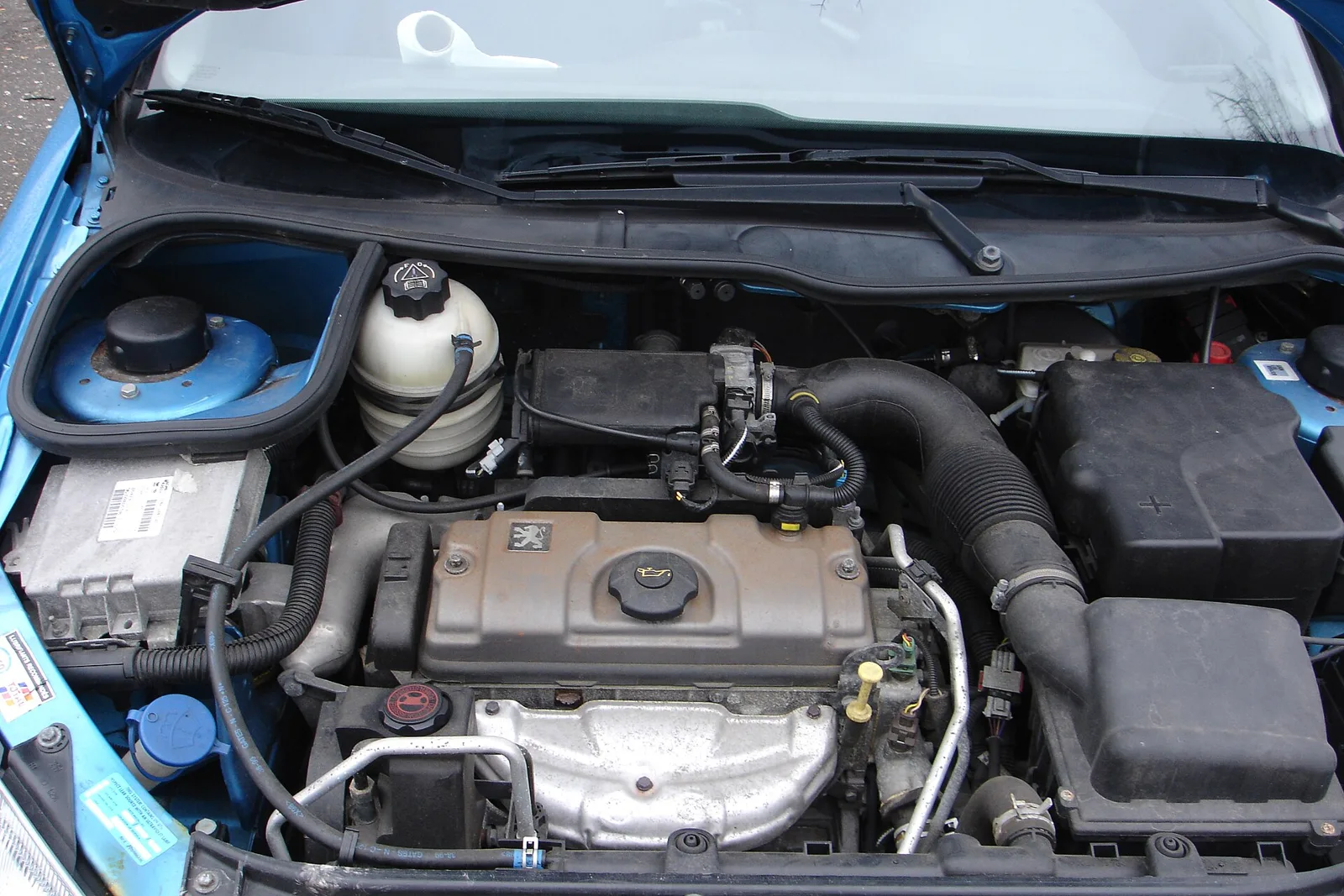
The two differ in layout. The TU uses a belt-driven camshaft where the X used a chain, and it sits upright with a separate, end-on gearbox and driveshafts of unequal length. The X had its transmission built into the side of the crankcase, shared its oil, and was mounted nearly horizontal.
The TU swapped the sideways suitcase for an upright engine, and the DW10 gave PSA its first common-rail diesel.
Which cars used the TU engine?
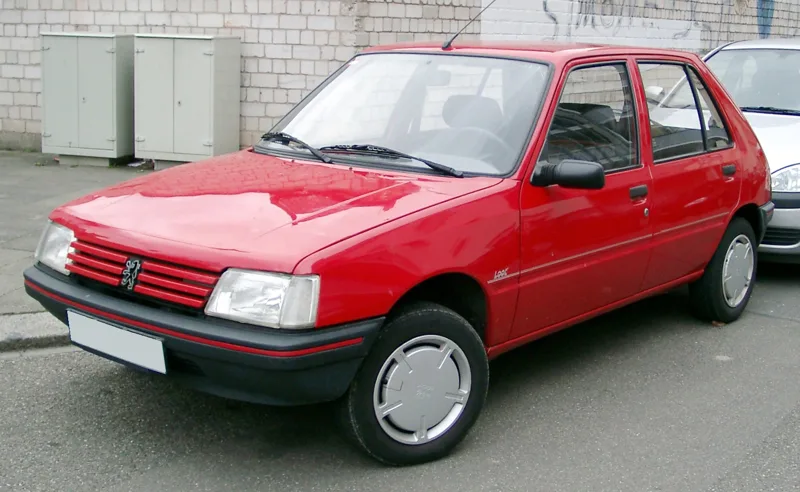
After the AX, the TU spread fast. By 1988 the Peugeot 205, the Citroen BX and the Citroen C15 had all switched, and in 1991 it took over from the Simca Poissy unit in the Peugeot 309.
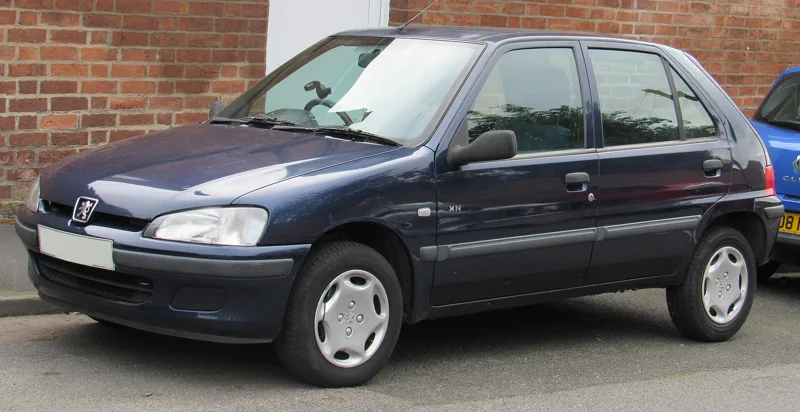
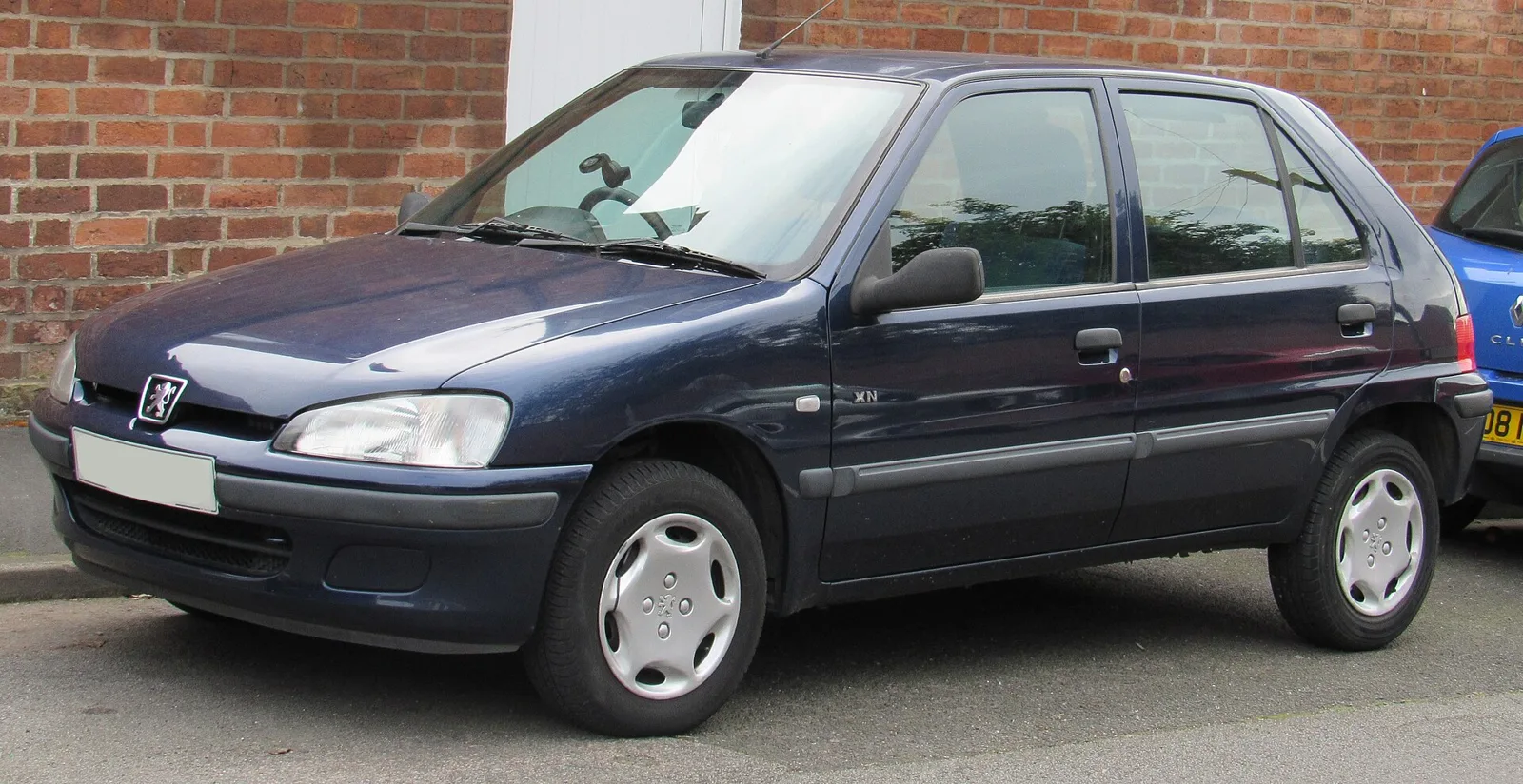
On the Citroen side it went on to power the Saxo, C2, C3, C4, ZX, Xsara, Nemo and Berlingo. For Peugeot it also served in the 106, 206, 207, 306, 307, 405, Bipper, Partner and Hoggar, and in Iran in the Peugeot 405, the Peugeot Pars and the IKCO Runna.
PSA has stopped building the original TU. The closely related EC family, in 1.6, 1.8 and 2.0-litre sizes, is still built for emerging markets, China and Russia among them. IKCO's EF engines, developed jointly by Iran Khodro and F.E.V of Germany, are also close relatives.
How small was the TU9?
The TU9 sat at the bottom of the range, displacing 1.0 litre (954 cc) from a bore and stroke of 70 by 62 mm. It powered the AX, Saxo, 205 and 106. Output began at 45 PS (33 kW; 44 hp) and rose to 50 PS (37 kW; 49 hp) in 1992, when central fuel injection and a catalytic converter were adopted. Euro III ended it in the Saxo and 106 in 2001.
Early engines suffered a nasty fault. Their special low-friction pistons, designed to save fuel, failed prematurely, bringing piston slap on a cold engine, heavy oil consumption and exhaust smoke. PSA fixed the affected cars under warranty, fitting redesigned pistons and replacement liners.
What did the TU1 and TU2 do?
The TU1 displaced 1.1 litres (1,124 cc) from a 72 by 69 mm bore and stroke. Power started at 55 PS (40 kW; 54 hp) and moved to 60 PS (44 kW; 59 hp) in 1992 with the same central injection and catalytic converter as the TU9. Euro III brought multi-point injection, which left power unchanged but added a little torque. It was the entry-level engine in the Citroen C2 and C3 and the Peugeot 206.
The TU2 series is two engines made for competition. The TU24 is carburettor-fed, based on the TU1, with 1.3 litres (1,294 cc) and 75 by 73 mm cylinders, making 95 PS (70 kW; 94 hp) in the Citroen AX Sport, which used Solex carburettors. A slightly stronger version for the Peugeot 205 Rallye had a longer intake manifold and bigger venturis in its Weber carburettors.
The TU2 proper arrived in 1992 for the Peugeot 106 Rallye, with 100 PS (74 kW; 99 hp), a Magneti Marelli injection system and a catalytic converter. It was built on the taller TU3 aluminium block, with different connecting rods, pistons, cylinder heads and camshafts.
Why was the TU3 so widely used?
With 1.4 litres (1,360 cc) and 75 by 77 mm cylinders, the TU3 became one of the most used engines in the whole PSA Group, appearing in superminis, compacts and mid-sized cars. It also did time in competition: the Citroen AX GT Cup and GTI Cup ran in many European countries through the early 1990s, on circuits and on rally stages.
Early engines took a single or double-barrel carburettor. Fuel injection came in 1990 for the AX GTI and 106 XSi, producing 100 PS (74 kW; 99 hp) at 6600 rpm. Carburettor versions gave way to injection in 1992, and the sports version was retired in 1996.
In 2004 a DOHC 16-valve version with variable valve timing appeared in the Peugeot 206 Quiksilver Edition. It was named ET3, possibly as a prelude to the Prince engine family PSA developed with BMW.
What is the TU5 or EC5?
The TU5 is a 1.6-litre (1,587 cc) engine measuring 78.5 mm across the bore and 82 mm in stroke. It began in 8-valve and 16-valve forms, but only the DOHC 16-valve remains, with a cast iron block and aluminium head. Most applications make 109 PS (80 kW; 108 hp), which matches the DV6 1.6 diesel, and a sporty 125 PS (92 kW; 123 hp) version powered the Citroen C2 VTS. Both Citroen and Peugeot used it in motorsport, and the Yugo Florida received the JP+ version from 2002 to 2008.
The latest use is in the Citroen C-Elysee and Peugeot 301, where it is renamed EC5. In China the engine is called N6A 10FXA3A PSA and makes 88 PS (65 kW; 87 hp). In Iran, Megamotor, a SAIPA subsidiary, builds the ME16, a modernised, redesigned TU5 derivative.
What were the TU diesels?
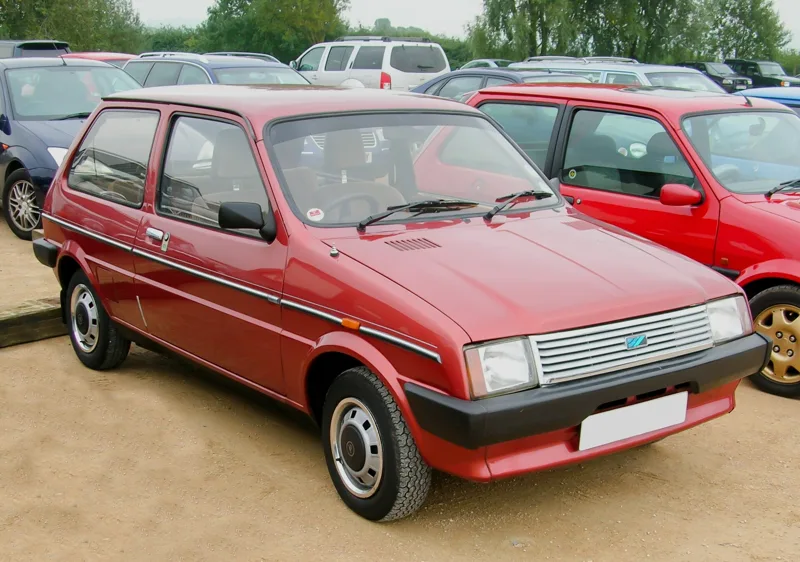
The TUD diesel was used in just 11 cars, six of them from other makers. They were the Citroen AX, Saxo and Xsara; the Peugeot 106; the Rover Metro and 100 series; the Nissan Micra; the Maruti Suzuki Zen D and Esteem D; the IKCO Samand; and the Tata Indigo 1.4 TD, which uses a smaller variant.
The TUD3 was the diesel version of the TU3, with the same 1.4 litres (1,360 cc), 75 by 77 mm bore and stroke, indirect injection and a mechanical pump from Bosch or Lucas. It started with the TU3's alloy block and stronger wet liners, and it was prone to early head gasket failure. Some early AX14D engines needed a replacement gasket before their first service. It was built from 1988 to 1994, then replaced by the iron-block TUD5, which fixed the problems. It went into the AX 14D, the Peugeot 106 1.4 D, the Rover Metro 1.4 D and, in Portugal only, the ZX 1.4 D.
The TUD5 arrived in 1994 at 1.5 litres (1,527 cc), with a 77 by 82 mm bore and stroke, an iron block, an alloy head and a Ricardo "Advanced Comet" pre-combustion chamber. Naturally aspirated only, with a Lucas injector pump, it made up to 58 PS (43 kW; 57 hp) at 5,000 rpm and 95 Nm at 2,250 rpm. Citroen used it in the AX, Saxo, ZX and Xsara, Peugeot in the 106, and others including Nissan, Rover, Maruti Suzuki and Tata took it too. About 3,000 Lada Samaras built by FMA Automobiles for the French importer Poch carried one.
What are the PSA EW and DW engines?
The EW/DW is a family of straight-four "black-top" engines introduced in 1998 to replace the XU. It reuses many XU parts, most notably the crankshaft, but is built from lighter materials. The EW name covers the petrol engines, with the E standing for "essence", while DW covers the diesels. Some DW engines are built under a joint venture with Ford.
All EW engines are DOHC and multivalve, ranging from 1.7 to 2.2 litres (1,749 to 2,231 cc). They go mainly into large family cars, executive cars and big MPVs, though the 2.0 also powers some hot hatches. The DW began as an SOHC two-valve design, and gained DOHC and four valves per cylinder when the 2.2 arrived in 2000 in the Citroen C5 and Peugeot 607. Turbocharged versions moved to common rail and took the commercial name HDi.
What was the DW8 diesel?
The DW8 is an evolution of the XUD9 and the only diesel in the family that has neither a turbocharger nor common-rail direct injection. It was used mainly in vans such as the Citroen Berlingo and Peugeot Partner, and in cheaper 206 and 306 models. At 1.9 litres (1,868 cc) with 23.0:1 compression, it made 71 PS (52 kW; 70 hp) and 127 Nm at 2500 rpm. It was phased out in 2007 because it is a Euro 3 engine and could not pass Euro 4. Toyota called it the 1WZ.
Why did the DW10 matter?
The 2.0-litre DW10 (1,997 cc, 85 by 88 mm) was PSA's first diesel with common-rail direct injection, and it carried the HDi name. It replaced the XUD9 in 1999. Initially it made 90 PS (66 kW; 89 hp) using two valves per cylinder and a turbo with no intercooler; adding an intercooler later in the year lifted it to 109 PS (80 kW; 108 hp).
It first appeared in mid-sized cars, the Citroen Xsara and Xantia and Peugeot 306, 406 and 206, then spread to light commercial vehicles. A 16-valve version (RHW) went into big MPVs built with Fiat, and Suzuki used the engine in its European Vitara, Grand Vitara and XL-7. The Jumpy, Expert and Scudo vans got a 94 PS (69 kW; 93 hp) version.
The DW10 was also the basis for the Duratorq diesels co-developed with Ford and Volvo, used in the Focus, Kuga, Mondeo, C-Max and C30, S40, V50 and C70. The DOHC 16-valve units brought a second generation of common rail and a turbocharger with variable geometry, taking output to 136 PS (100 kW; 134 hp). The DW10BTED4E5 and DW10C meet Euro 5, and the Euro 6 versions of 2014, the DW10FC and DW10FD, brought in selective catalytic reduction.
What is the DW12?
The 2.2-litre DW12 (2,179 cc, 85 by 96 mm) had 16 valves from the start and debuted in 2000 in the Citroen C5 and Peugeot 406, 406 Coupe and 607. In 2006 it joined the PSA and Ford family with 170 PS (125 kW; 168 hp). Peugeot offered it in the 407 and facelifted 607, and Land Rover used it in the Freelander 2, the Discovery Sport and the Range Rover Evoque. The Peugeot 4007 and Citroen C-Crosser took a 190 PS version, and the Jaguar XF used it in a longitudinal layout from 2012 to 2015.
A separate 2.2 litre engine, Ford's ZSD-422 of 2,198 cc, went into Citroen and Peugeot vans. The DW12 RU, an updated Euro 6d version for light commercial work, powers the Citroen Jumper and Peugeot Boxer from 2019 at 120 PS with 300 Nm, 140 PS with 340 Nm, or 165 PS with 370 Nm.
The DW12 in India
Tata Motors and Mahindra both built the engine. Tata launched it as the 2.2 Dicor in the 2007 Safari and used it in the Hexa, Aria and Xenon until 2020, when Bharat Stage 6 emission rules forced it out. Mahindra re-engineered it with AVL of Austria as the mHawk, introduced in 2009 in the Scorpio CRDe with an intercooler, a variable-geometry turbo and a Bosch common-rail system, making 140 PS (103 kW) and 320 Nm. Compression runs from 16.5:1 to 18.5:1, depending on the model. A second-generation mHawk, revised for BS6 in 2020 and BS6.2 in 2023, powers the Thar, XUV700 and Scorpio.
What did the EW petrol engines do?
The EW7 was a 1.7-litre (1,749 cc) unit with 82.7 by 81.4 mm cylinders, fitted at the bottom of the range in the Citroen C5, Xsara Picasso and the Peugeot 406 and 407. The EW10 (1,997 cc, 85 by 88 mm) was used widely, in the C4, C5, Xsara, Xsara Picasso and the Peugeot 206, 307 and 407. A gasoline direct injection variant, the EW10 D marketed as HPi, appeared briefly in the C5 and 406 from 2001 and was dropped in 2003 because of low sales.
The EW10 J4S is the performance version, used in the 206 GTI 180, 206 RC, 307 Feline, 307 cc and C4 VTS. Its true output of 177 PS (130 kW; 175 hp) is advertised by both French brands as 180 PS (132 kW; 178 hp). The EW10 A added variable valve timing for 140 PS (103 kW; 138 hp) at 6000 rpm, and Citroen usually quotes 143 PS for the same engine.
The EW12, at 2.2 litres (2,231 cc) and 86 by 96 mm, replaced the low-pressure turbo XU10. Citroen only used it in the C8 MPV, while Peugeot, with a sportier image, put it in the 406 SRi and Coupe, 407, 607 and 807.
How do the TU petrol engines compare?
| Engine | Displacement | Bore and stroke | Power |
|---|---|---|---|
| TU9 | 954 cc | 70 x 62 mm | 45 PS, then 50 PS |
| TU1 | 1,124 cc | 72 x 69 mm | 55 PS, then 60 PS |
| TU24 | 1,294 cc | 75 x 73 mm | 95 PS |
| TU3 | 1,360 cc | 75 x 77 mm | 100 PS with injection |
| TU5 | 1,587 cc | 78.5 x 82 mm | 109 PS, 125 PS in the C2 VTS |
Where this goes next
Production of the original TU has stopped, though the related EC family continues for China and Russia. The EW7, EW10 and EW12 were all withdrawn in Europe in 2010 and 2011 because they met only Euro 4, and PSA replaced them with 1.6-litre turbocharged engines based on the Prince family. On the diesel side, the DW10 was updated in 2014 with selective catalytic reduction, and the DW12 RU now meets Euro 6d for vans.