From a Soviet-derived car plant to Huawei partnerships and an electric start-up in bankruptcy review: what four Chinese carmakers own, where they sell and how far each has got.
GAC Group runs Trumpchi, Aion and Hyptec; BAIC runs Beijing, Arcfox, Foton and a Mercedes-Benz stake; Seres makes AITO with Huawei plus Fengon and DFSK; Hozon built the Neta brand before entering bankruptcy review in 2025. GAC and BAIC are state-owned, with 2021 sales of 2.144 million and 1.723 million.
In 2022 Hozon Auto's Neta brand sold 148,700 cars, the high point for a Chinese electric start-up that had started selling in 2018. Three years later Hozon was in a bankruptcy review, its three main factories had stopped production, and a report from Reuters said that at least 64,719 of the sales it booked between January 2023 and March 2024 had been recorded early, by insuring cars before they were delivered.
Hozon is the cautionary case among four Chinese car groups that sit outside the most familiar names. GAC and BAIC are state-owned giants. Seres has tied its fortunes to Huawei. Each is also a collection of brands, joint ventures and partners that can be confusing from the outside.
GAC Group: Trumpchi, Aion and Hyptec
Guangzhou Automobile Group, known as GAC Group, is a state-owned manufacturer headquartered in Guangzhou. It was the fifth-largest carmaker in China in 2021, with 2.144 million sales. Its roots are in the Tongsheng Machining Plant, founded in 1948, which became part of Guangzhou Automobile Industry Group as a joint-stock company in 2005. By 2009 it ranked sixth in China.
How GAC grew
In 2009 GAC bought 29% of the sport-utility maker Changfeng, reportedly a condition imposed by the Chinese state for a joint venture with Fiat, and it acquired the rest in 2011. It listed in Hong Kong under its own name in 2010 after privatising Denway Motors, bought 51% of Gonow in late 2010, and listed in Shanghai in early 2012. In December 2010 it launched the Trumpchi marque, whose first product was based on the Alfa Romeo 166. In 2010 it sold 724,200 vehicles and in 2011 produced 740,400.
The GAC brand family
Trumpchi is the original, sold as GAC Motor outside China. Aion is the electric arm: founded in 2017 as GAC New Energy Automobile and renamed in November 2020. As of 2023 GAC Aion was the third-largest battery electric brand after Tesla and BYD, producing 480,003 vehicles. Hyptec is the premium line created in September 2022 under the name Hyper, with the SSR sports car, the GT sedan and the HT SUV coupe. Its Western name changed to Hyptec in August 2024. GAC Commercial Vehicle makes electric commercial vehicles; it began as a truck venture with Hino and was taken over by GAC in 2024.
In 2021 GAC was China's fourth-largest plug-in maker, with 4% of the market and 123,660 EV sales. At the time it planned to double EV capacity to 400,000 a year by December 2022.
Huawei and the Qijing brand
In March 2025 GAC set up Huawang Automotive to develop a high-end brand with Huawei, using Huawei's intelligent driving software and smart cockpit systems. In August 2025 GAC Aion invested 600 million yuan, leaving GAC directly holding 71.43% and indirectly 28.57%. The Qijing brand, called Aistaland overseas, launched on 19 September 2025, with the Aistaland GT7 as its first model.
Joint ventures and markets
GAC Honda is a 50:50 venture that has built Honda cars for China since 1999 and began selling its own Everus brand in 2011. GAC Toyota, also 50:50, was founded in 2004. Earlier ventures included Guangzhou Peugeot, among the first Sino-western car ventures, which ran from 1985 to 1997 and built about 100,000 cars, and GAC Mitsubishi, operational from September 2012.
Abroad, Trumpchi showed an E-Jet concept at the Detroit show in January 2013 and later brought SUVs and sedans, but on 22 May 2019 GAC indefinitely postponed US plans because of the trade war between the United States and China. It opened offices in Lebanon in 2015 and Chile in 2020, opened a factory at Purwakarta in Indonesia on 10 June 2025 with capacity for 20,000 cars a year, and launched in Australia on 18 November 2025.
One of the four holds 9.98% of the Mercedes-Benz Group; another is in bankruptcy review.
BAIC Group: from Soviet design to a Mercedes-Benz stake
BAIC, the Beijing Automotive Group, is a state-owned maker headquartered in Shunyi, Beijing. Founded in 1958 as Beijing Automobile Works, its first product was the Dongfanghong BJ760, based on the Soviet GAZ-21. It was the sixth largest manufacturer in China in 2021, with 1.723 million sales, and a large share of sales comes from agricultural, commercial and military vehicles. Its main passenger-car subsidiary, BAIC Motor, is co-owned with the Beijing Municipal Government, and Foton builds trucks, vans, buses and farm machinery.
Saab technology and a Daimler stake
After failed attempts to buy European makers in 2009, including Saab, Volvo and Opel, BAIC bought Saab technology from a former General Motors unit: three vehicle platforms, Saab 9-3 and 9-5 technologies, two engines and two transmissions. The first Saab-based car, the Senova C70, was expected in 2012 but reached showrooms in May 2013. In 2016 BAIC sold 2.85 million vehicles, with operating income of 406.1 billion yuan. In July 2019 it bought 5% of Daimler, now the Mercedes-Benz Group, and in December 2021 it lifted that to 9.98%, passing Geely to become the largest shareholder. It has agreed not to raise the stake further.
The BAIC brand family
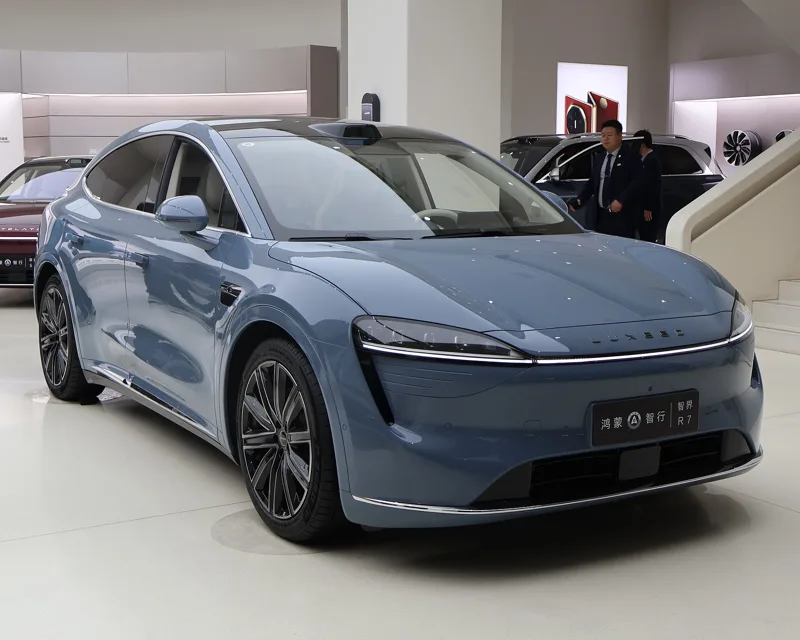
The Beijing brand was revived in 2020 after BAIC dropped Senova, with former Senova cars renamed. Arcfox, established in 2017, is the premium EV brand, run through BAIC BluePark, which also operates Beijing's EV models and Stelato, the brand BAIC shares with Huawei. The first Stelato, the S9 sedan, followed in August 2024. Beijing Off-road became independent in 2020 and covers the BJ30, BJ40 and BJ60 and the Titan 700. Foton and the Ruili Doda small vans complete the list.
Joint ventures include Beijing Hyundai, 50:50 with Hyundai, and Beijing Benz and Beijing Foton Daimler with Daimler. A former one, Beijing Jeep, set up in 1984 with American Motors, was China's first Sino-western automotive venture. BAW, the old parent plant, was sold to the private sector in 2015. In May 2025 BAIC, Zhengzhou Nissan and Anhui Coronet Tech agreed to invest 5 million euros to restart Spain's Santana Motor factory in Linares, and from mid-2026 BAIC planned to sell the BJ40 and BJ30 in Europe under the Santana name.
Seres Group: appliance springs to the AITO partnership
Seres Group, based in Chongqing, started in September 1986 as a maker of components for household appliances and springs for car seats, founded by Zhang Xinghai and other shareholders. It later made shock absorbers, motorcycles and, from 2003 in a 50:50 venture with Dongfeng, microvans under licence from Suzuki. Its shareholders mix private investors, a local government body and a state-owned company. The name comes from the Ancient Greek word for China.
It was called Sokon Group until July 2022. It listed in Shanghai in June 2016. In November 2018 it bought out Dongfeng's share of the car venture for 621 million euros, while Dongfeng took 26.1% of Sokon for 620 million euros. Huawei signed a software agreement in January 2019, and a battery agreement with CATL followed in April 2022. Cumulative exports reached 500,000 vehicles by 2022.
The AITO brand and its owners
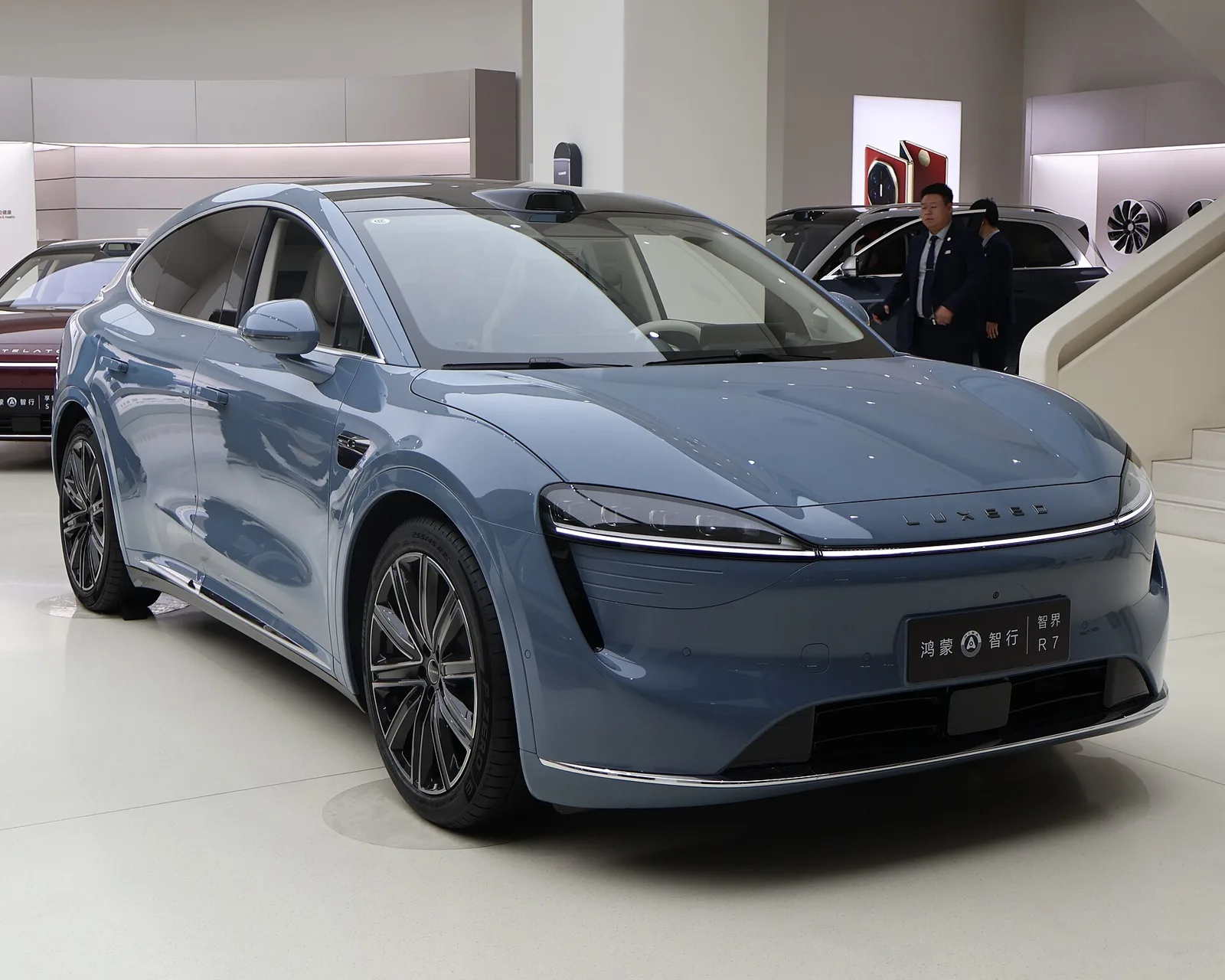
AITO is the smart electric vehicle brand Seres builds with Huawei: Huawei leads the design and Seres handles production. The AITO trademark was sold to Huawei in June 2023, and in July 2024 Huawei transferred the English trademarks and related patents back to Seres for 2.5 billion RMB. Since 2023 the Seres name has been the export brand and AITO domestic only. In August 2024 Seres said it would take 10% of Huawei's Yinwang subsidiary for RMB 11.5 billion. In 2024 its revenue rose by more than 300%, which put it fourth among new energy vehicle companies worldwide to swing from loss to profit, behind Tesla, BYD and Li Auto.
Other brands include Fengon, known as DFSK Glory abroad, aimed at affordable compact MPVs and SUVs, and DFSK for light commercial vehicles, both fully acquired by Seres in 2022. Ruichi makes pure electric commercial vehicles. In 2026 Seres' Landian brand became the independent Saidou Technology, which launched the Aiva brand with ByteDance in May 2026.
Hozon Auto and the Neta story
Hozon was founded in 2014 in Zhejiang province by Beijing Sinohytec and a Tsinghua University institute, based in Jiaxing, and later moved headquarters to Shanghai. It unveiled its first concept in 2017 and launched the Neta N01 compact SUV and the Neta brand in 2018. In 2021 it ranked fourth in the Chinese EV market behind XPeng, Li Auto and NIO, concentrating on lower prices. Its sales peaked at 148,700 in 2022, driven by the cheap Neta V and U, although another report had projected deliveries of more than 150,000 for that year.
Why Neta stalled
A push upmarket in 2023 with the Neta S and GT sold poorly and undercut the entry-level base; the V and U still produced more than 51% of 2023 sales. In 2024 the brand returned to cheap cars with the Neta L, but delivery delays hurt its reputation, and the update gap on the U and V contributed to the company's failure. Overseas assembly began in Thailand in November 2023, with deliveries in Indonesia and moves into Brazil and Kenya in 2024.
The financial trouble was open. Hong Kong offered a subsidy of up to HK$200 million in March 2024 in return for a local factory, and three local government investment firms put in 5 billion RMB in April 2024. CEO Zhang Yong was replaced by founder Fang Yunzhou in December 2024. In March 2025 Hozon proposed converting debts into equity with 134 suppliers, and in June 2025 Hozon New Energy entered the bankruptcy review process. Production at Yichun, Nanning and Tongxiang has stopped.
The Reuters report in July 2025 said Neta inflated sales by insuring cars before delivery, booking at least 64,719 early sales between January 2023 and March 2024, more than half of the 117,000 units it reported, a practice said to have begun in late 2022 to qualify for expiring EV subsidies.
The four groups compared
| Group | Base | Founded or rooted in | Ownership | Brands and partners |
|---|---|---|---|---|
| GAC Group | Guangzhou | 1948 Tongsheng plant | State-owned | Trumpchi, Aion, Hyptec, Aistaland; Toyota and Honda ventures |
| BAIC Group | Beijing | 1958 | State-owned | Beijing, Arcfox, Stelato, Foton; Hyundai and Mercedes-Benz ventures |
| Seres Group | Chongqing | 1986 | Private, local government and a state-owned company | AITO with Huawei, Seres, Fengon, DFSK |
| Hozon Auto | Shanghai | 2014 | Start-up, in bankruptcy review since 2025 | Neta |
Where can buyers actually find these brands?
These groups reach the market through different doors. GAC's Trumpchi cars wear the GAC badge in export markets, from Chile and Lebanon to Indonesia and Australia. BAIC is planning European sales through a Spanish factory. Seres exports under its own name and as DFSK; its K-Series microvan, first built in 2005, was also exported, Europe included. The Neta story is a reminder that a low-priced electric car depends on the finances of its maker: in Thailand, over 12,000 imported Neta V cars had been delivered by the time local assembly began in 2023.
What plans are on the table for each group?
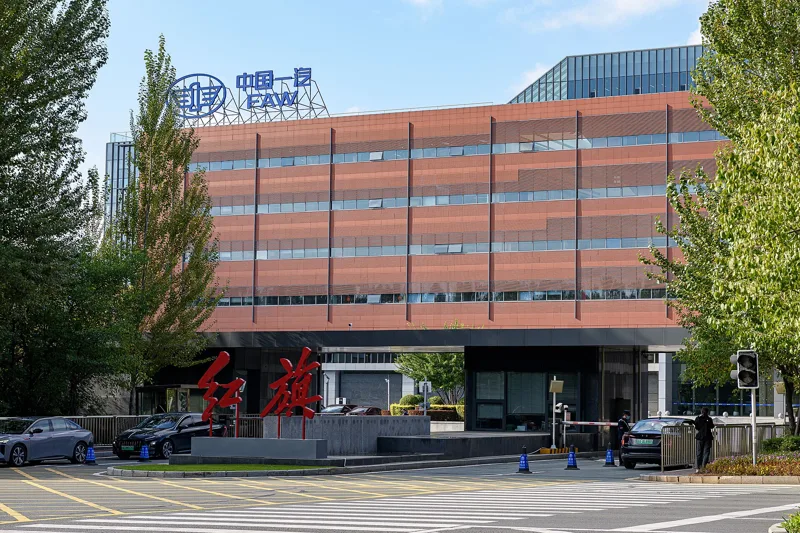
Several plans are on the table. GAC aims to integrate all-solid-state batteries in cars by 2026, and in September 2026 announced a plan to acquire part of a vehicle venture held by FAW Group through a share issue, which would make FAW its second-largest shareholder. BAIC planned to start Santana sales of the BJ40 and BJ30 in Europe from mid-2026. In September 2026 Hozon's creditors discussed investing RMB 3 billion in a three-phase plan: restart Neta X production at 10,000 units a year, then launch export vehicles at 300,000 units a year, and finally global models with an RMB 40 billion annual output ahead of a listing. It is a plan under discussion, not a result.