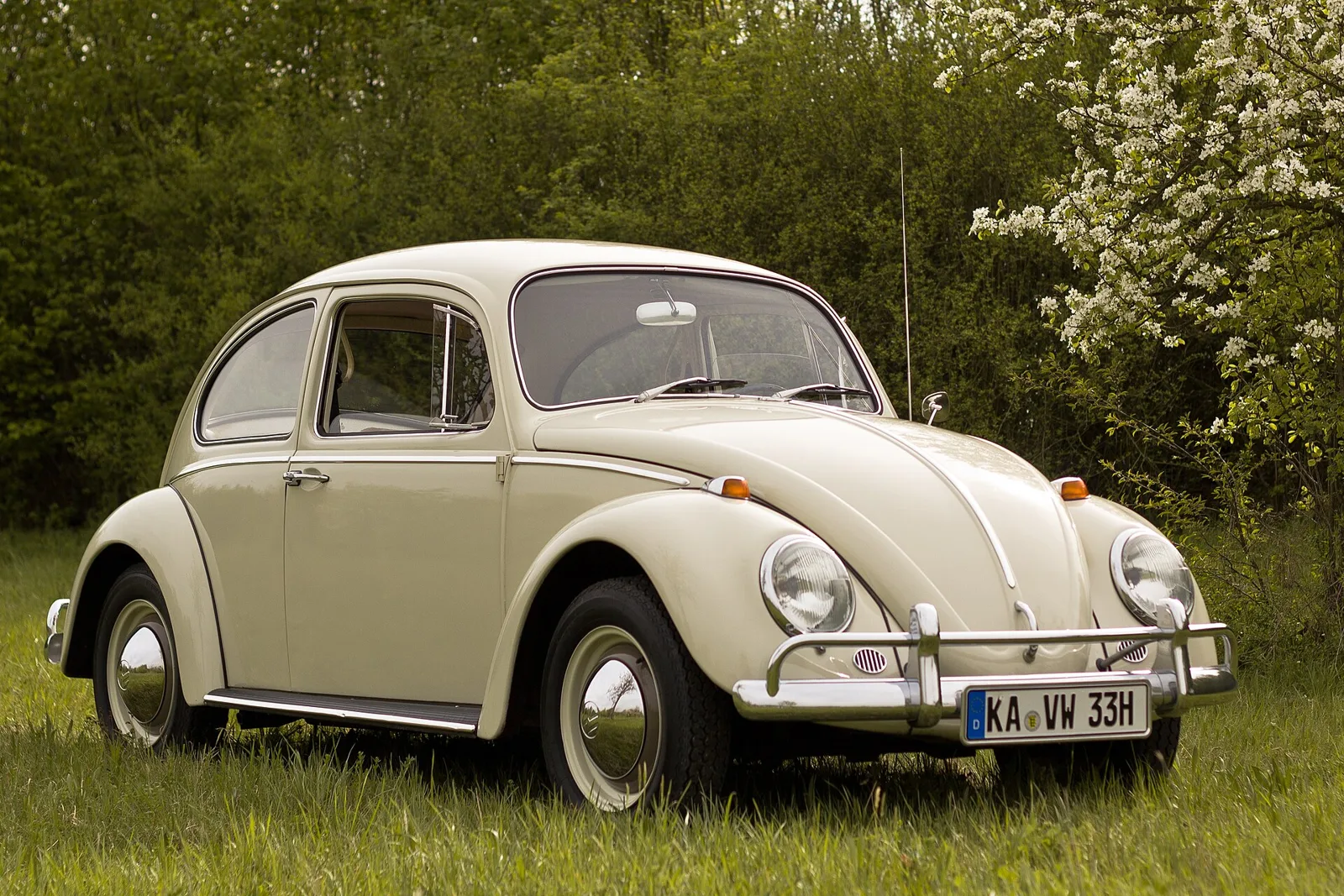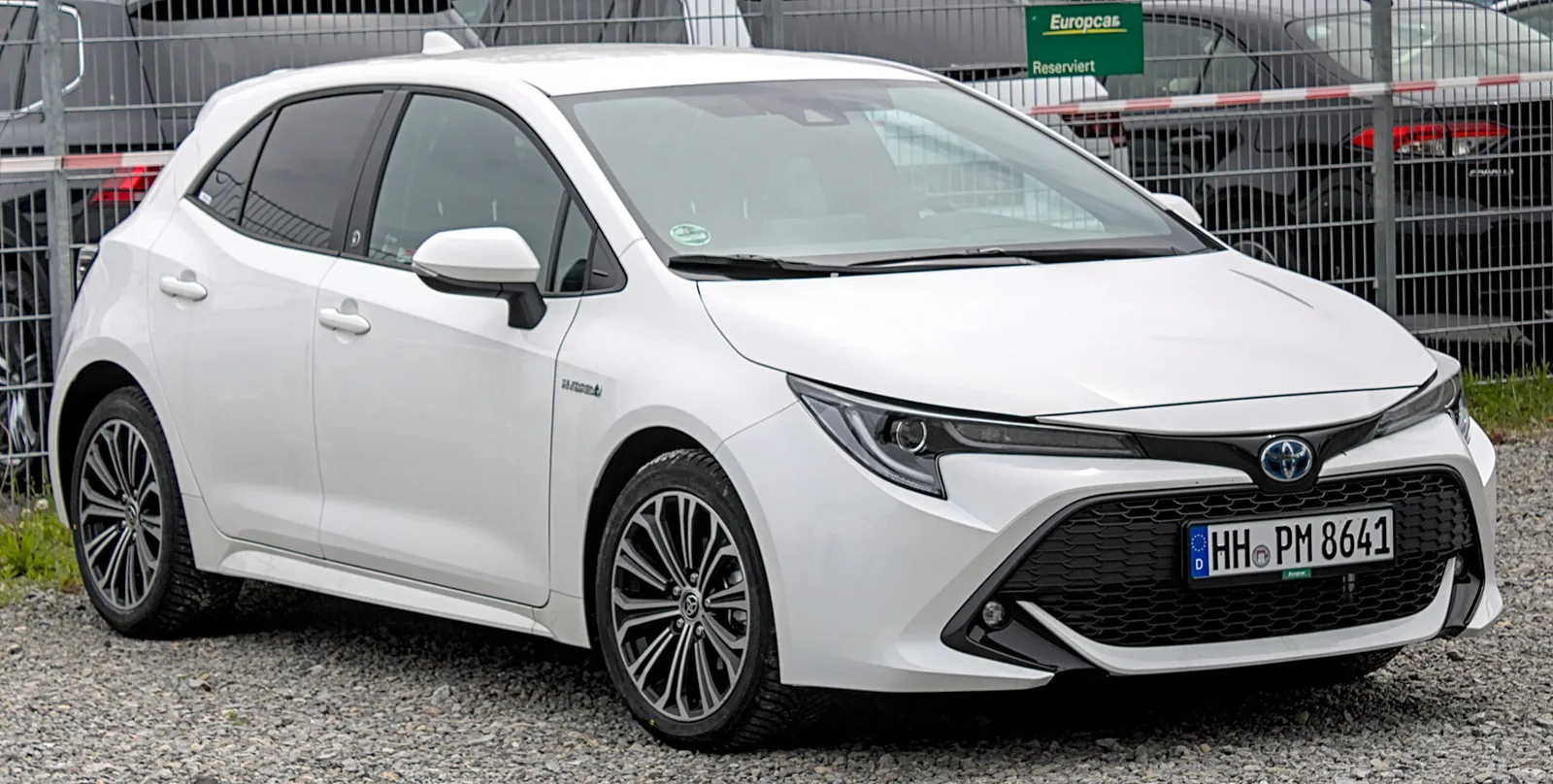
Toyota's Corolla leads with more than 54 million, with Ford's F-Series and the Volkswagen Golf behind, but every total depends on how a car is defined.
The Toyota Corolla is the best-selling car nameplate of all time, with over 54 million sold as of early 2026. The Ford F-Series follows with over 43 million and the Volkswagen Golf with over 37 million, though totals depend on how nameplates are counted.
The best-selling car in the world, the Toyota Corolla, has sold more than 54 million units since 1966, yet the first one and the one in a showroom today share little beyond a name. The first was rear-wheel drive on a 2286 mm wheelbase. Today's hybrid and all-wheel drive models ride on a 2640 mm wheelbase and a mechanically unrelated platform.
What are the best-selling cars of all time?
Toyota's Corolla heads the list with more than 54 million sold by early 2026, ahead of Ford's F-Series at over 43 million and the Volkswagen Golf at over 37 million.
| Nameplate | Maker | Units sold | Note |
|---|---|---|---|
| Corolla | Toyota | Over 54 million as of early 2026 | 12 generations since 1966 |
| F-Series | Ford | Over 43 million | On sale since model year 1948 |
| Golf | Volkswagen | Over 37 million | Eight generations since 1974 |
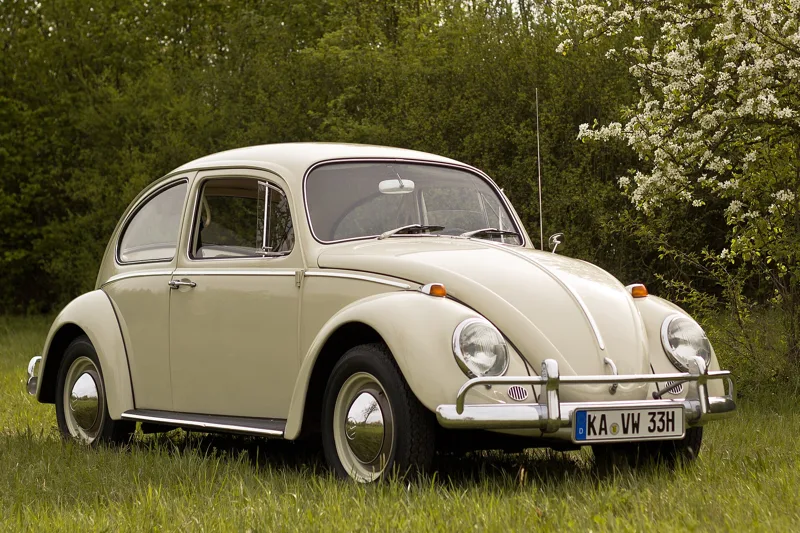
| Beetle | Volkswagen | 21 million | Passed the Model T in February 1972 |
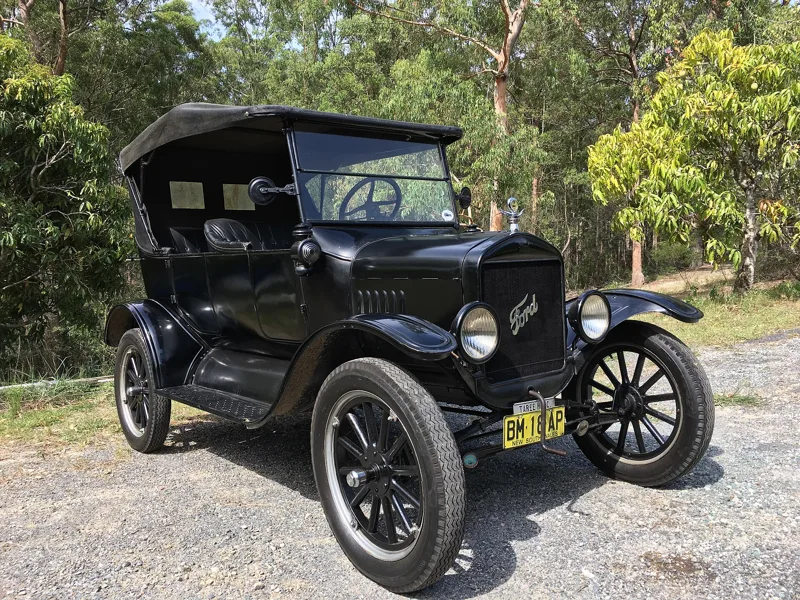
| Model T | Ford | 16.5 million credited | Production ended 1927 |
| Chrysler minivans | Chrysler | Over 16 million worldwide | Several nameplates combined |
Toyota has applied the Corolla nameplate to 12 generations since 1966, and the first and the latest share little beyond a name.
How do you count a best-selling car?
Carefully, and with a pinch of salt. Nobody has set a definitive standard for counting units sold. Manufacturers supply most of the claims.
The first difficulty is names. A single vehicle can be sold at the same time under several nameplates in different markets, as happened with the Nissan Sunny, and in those cases a maker often publishes only a combined figure for all of them. The second is change. Volkswagen has claimed the Beetle as the best-selling car in history partly because it did not substantially change over its run. Toyota, by contrast, has used the Corolla name across 12 generations since 1966, and the total passed 50 million in 2021.
How did the best-seller crown change hands?
The millionth Model T left Ford's line on 10 December 1915, and from that point three cars have been widely hailed as the best seller on the planet. The Model T kept the title for forty-five years after production ended in 1927. On 17 February 1972 Volkswagen declared that the Beetle had overtaken it, as the 15,007,034th Beetle was made.
The crown then moved again. The Beetle remained the top seller until the late 1990s, when the Corolla overtook it; Toyota dates its lead to 1997. The Model T has since been credited with 16.5 million units, while the Beetle reached 21 million. Within Ford, the Model T was surpassed by the F-Series pickup, which descends directly from the Model T roadster pickup. The Beetle's own sales were later passed by its successor, the Golf.
Why is the Toyota Corolla the best-selling car in the world?
Longevity helps, and so does global reach. Toyota has made the Corolla since 1966, and in 2021 it reached 50 million over twelve generations. The name comes from Toyota's habit of naming sedans after the Crown, and corolla means small crown in Latin.
The first generation debuted at the 1966 Tokyo Motor Show and went on sale in November that year with a new 1100 cc K pushrod engine. Its Japanese rival, the Nissan Sunny, arrived in the same year, and later competitors included the Subaru Leone, Honda Civic and Mitsubishi Lancer. In Japan the Corolla was sold only through a dedicated chain of Corolla Store dealers, and until 2000 it had a twin, the Toyota Sprinter. The hatchback companion carried the Auris name in Japan and much of the world between 2006 and 2018.
One name, many cars
Toyota has repeatedly split the Corolla to suit different markets. For the ninth generation in 2000 it created the E120 for Japan, Europe, Australasia and the Middle East and the wider E130 for other Asian and American markets. In 2012 it made three, with the E160 aimed at Japan, Hong Kong, Macau and New Zealand, and the E170 and E180 covering most other countries. The Japanese E160 was designed with slightly smaller exterior dimensions to suit elderly drivers in narrow alleys and car parks.
Production followed the markets. Corollas have been built in Japan at the original Takaoka plant since 1966, along with plants in Brazil, Canada, China, Pakistan, South Africa, Taiwan, Thailand, Vietnam, Turkey and Britain. Former sites include Dandenong and Altona in Australia, plus India, Indonesia, Malaysia, New Zealand, the Philippines and Venezuela. In the United States, Corollas were built at NUMMI in Fremont, California until March 2010, and production resumed in November 2011 in Mississippi.
Badge engineering stretched the name further. In the United States, E80 Sprinters carried Chevrolet Nova badges from 1985. The E90 Sprinter sold there under two names at once, Toyota Sprinter and Geo Prizm, and General Motors changed the second to Chevrolet Prizm once the Geo brand was dropped. Australian buyers of the E90 could choose between a Toyota Corolla and a Holden Nova, both built locally. In 1998 some non-Japanese cars received the 1ZZ-FE engine, with an aluminium block and cylinder heads that made them lighter than those powered by the older cast-iron A series.
Rear-wheel drive disappeared slowly. The AE85 and AE86 of the fifth generation, built from May 1983, were the last Corollas with that layout. In Japan, annual sales of the sixth-generation car reached 300,008 in 1990, the highest for any car there until the Prius passed it in 2010. A hybrid Corolla Axio sedan and Fielder wagon followed in August 2013 for the Japanese market, rated at 3.03 L/100 km on the JC08 cycle. Those two models were discontinued for business users in October 2025.
How did the Ford F-Series get to second place?
By becoming the default truck of North America. Ford has sold more than 43 million F-Series trucks worldwide, placing it second among all automobiles ever sold. It has been the best-selling pickup in the United States since 1977 and the best-selling vehicle overall since 1981, and in Canada it has led the truck market for more than 50 years.
The line began with the model year 1948 and has gone through repeated redesigns. By the 2018 model year the series was reported to generate $41 billion in annual revenue for Ford. Today it is built at four facilities in the United States, and the F-150 has reached a fourteenth generation, which dates from the 2021 model year.
From work truck to second car
A key moment came for the 1997 model year. Ford saw a major increase in demand for pickups that doubled as personal transport, effectively a second car, so it split the range. The F-150 was redrawn with a more modern look, as a bigger Ranger, while the heavier F-250 and F-350 stayed with buyers who needed a work vehicle. The Super Duty line took over the largest pickups in 1999.
Along the way the F-Series collected firsts. In 1986 the 5.0L V8 was the first fuel-injected engine offered in an American-market pickup. In 1987 the redesigned F-Series became the first full-size American truck with composite headlights, and in 1994.5 it gained the first engine to carry the Power Stroke name. The 1965 revision introduced the Twin I-Beam front suspension, which stayed on the F-150 until 1996. The F-100 was dropped after 1983, which removed a size overlap with the F-150 that had arrived in 1975 to avoid certain emission rules. The platform also underpins Ford SUVs including the Bronco, Expedition and Excursion, and a high-performance Raptor version appeared from 2010.
What made the Volkswagen Golf a global best-seller?
The Golf arrived in May 1974 as a modern front-wheel drive successor to the Beetle, which had its air-cooled engine at the rear. In the United States and Canada the first and fifth generations were sold as the Rabbit, and in Mexico the first was the Caribe. Across eight generations it has sold more than 37 million, and the company calls it its bestseller.
Its range did more than any single engine. The GTI came in June 1976 with a 1.6-litre engine that used fuel injection and a quoted 180 km/h (110 mph), and a diesel followed in September 1976. A cabriolet arrived in 1979, an estate in 1993, and the same platform spawned the Jetta, Vento and Bora saloons. Volkswagen describes the Golf as covering economy to high-performance segments. The Mk2 GTI gained a 16-valve engine in 1985 that could do more than 220 km/h (137 mph), and the Mk4 produced the 3.2-litre R32 in 2002.
Awards and platforms
The sixth generation was shown at the 2008 Paris Motor Show with Volkswagen's chief designer, Walter de'Silva, responsible for the styling. The company says it was more aerodynamic and quieter than the car it replaced, and it overhauled an interior whose trim quality had been criticised on the fifth generation. The third generation had already brought the first turbocharged direct injection diesel to the Golf, along with a narrow-angle 2.8-litre VR6.
The car has collected prizes steadily. The Mk6 and Mk7 won World Car of the Year in 2009 and 2013, and the Golf took European Car of the Year in 1992 and again in 2013, a feat matched only by the Renault Clio and the Vauxhall Astra. Motor Trend named the Mk7 its Car of the Year in 2015, and the Mk4 was the best-selling car in Europe in 2001.
The seventh generation, introduced in September 2012, used the MQB platform shared with the Audi A3, SEAT Leon and Skoda Octavia. Compared with the Mk6 it grew a little but shed around 100 kg. The same system let Volkswagen build petrol, diesel, natural gas, electric and hybrid Golfs on the same line, giving the e-Golf and the plug-in Golf GTE.
What does this mean if you are buying one?
It means you should check which car sits behind the name. A Corolla bought in Japan, Southeast Asia or North America may belong to a different generation code and a different body, and some of those models are exclusive to one region. The Golf has been badged as a Rabbit and a Caribe, and the Mk5 Rabbit won a comparison against eight small cars in a Car and Driver test.
Pickup buyers face the same layering. An F-Series covers everything from the F-150 to heavy-duty chassis cabs and commercial trucks, so the headline sales figure includes vehicles with very different jobs.
Where does the sales race go next?
The Corolla's total keeps growing: from 50 million in 2021 to more than 54 million by early 2026, according to Toyota. The F-150 continues as the centre of the F-Series range in its fourteenth generation, and the Mitsuoka Ryugi, a Japanese special based on the E160 Corolla, was discontinued in 2026.