An unrecognised first year, a Skyline GT-R champion in 1994 and 1995, and a McLaren invasion that Team Goh left behind in 1996.
The All Japan GT Championship ran its inaugural season in 1993 and became the series now known as Super GT. The 1994 season introduced the two-class format and Success Ballast, Nissan's Skyline GT-R won the 1994 and 1995 GT1 titles, and McLaren F1 GTRs dominated 1996.
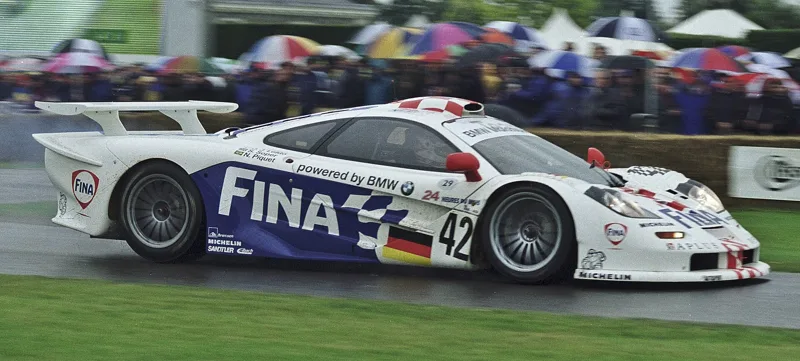
Two McLaren F1 GTRs won four of the six races of the 1996 All Japan GT Championship and took pole position and fastest lap at every round, even though the organisers had loaded them with massive performance handicaps. Team Goh, which prepared the cars, then walked away from the series after the finale and stayed away until 2019.
That one season captures the character of the early years of the championship now known as Super GT: a growing series, an eclectic grid and a governing body that used handicaps to keep the field close.
What was the All Japan GT Championship?
The All Japan Grand Touring Car Championship, known as the JGTC, was the Japan Automobile Federation's premier GT racing series. It grew out of a line of JAF-sanctioned sports car championships that reached back to the All Japan Sports Prototype Championship, and it is the forerunner of the Super GT series of today. Counting from that older line, the 1993 season was the eleventh, 1994 the twelfth, 1995 the thirteenth and 1996 the fourteenth. Counting the GT series alone, 1996 was only the fourth.
The handicaps had not been enough to even out the McLarens' advantage.
How did the 1993 All Japan GT Championship begin?
It began as a rescue operation. The All Japan Sports Prototype Championship, usually shortened to JSPC, folded after the 1992 season. The GT championship that started in 1993 became the eleventh season of that JAF-sanctioned line, but it did not start as a stand-alone series. It started as one strand of the Inter-Circuit League, a nine-round championship put together in a final attempt to rescue the JSPC.
The plan fell apart quickly. Five of the proposed rounds were cancelled because too few cars entered. Only the Suzuka 1000km put Group C prototypes and GT cars on the track at the same time, and cars from the N1 Endurance Series joined them there. The GT rounds that survived were run alongside other championships, as joint events, shared with the IMSA GT Championship or the Japan Super Sports Sedan series.
The entry lists show how mixed the field was. Drivers and teams were sorted into thirteen groups, from GT1 and GT2 through the sedan-based JSS and the C1 class to GT-N3, GTS, GTU, Lights, LM GT4 and the N1 and RS categories. Nismo was the only team to build and enter cars to the new JAF N-GT regulations.
Masahiko Kageyama was the only full-time driver in the GT1 category, and he was declared champion in a Nissan Skyline GT-R. He also won the last All-Japan Touring Car Championship run to Group A regulations that year.
The GT Association was incorporated in October 1993 to manage the series. Because the format and structure of the 1993 races differed so much from what came next, the association does not officially recognise that year.
What changed in the 1994 JGTC season?
Almost everything that makes the series recognisable arrived in 1994, the first full season of premier class GT racing in Japan promoted by the new GT Association. The year is regarded as the first season of what is now Super GT. It introduced the familiar two-class structure and the Success Ballast handicap system, both of which became staples of the series. As the name suggests, success was answered with ballast, which is extra weight carried in the car.
What did the 1994 JGTC Skyline GT-R face in GT1?
The premier class, GT1, was an eclectic mix. Japanese entries included a fleet of Nissan Skyline GT-Rs run by the factory and, later in the year, the Toyota Supra GT from Team SARD. Foreign machinery ran in the same class too, among it a Porsche 911 RSR, a Lamborghini Countach and a Ferrari F40. A Porsche 962C, left over from the Group C era, took its place on the grid, and so did a former WRC-spec Lancia 037 that appeared just once.
The secondary class, GT2, was for privately built sports cars, the type that had raced in the old Japan Super Sport Sedan Championship.
The Skyline came out on top. Kageyama drove the #1 Calsonic Skyline GT-R to the GT1 title, while Sakae Obata won GT2 in the #29 Korg Kegani Porsche 964. A footnote in the standings concerns Tetsuya Ota, who skipped the final and so could not score championship points. Teams that ran more than one car were scored on the best result from each round.
Who won the 1995 All Japan GT Championship?
The third season of JAF GT premiere racing, and the second under the GT Association, brought the same GT1 champion. Kageyama and the #1 Calsonic Nissan Skyline GT-R won again. In GT2 the title went to the #70 Gaikokuya Nissan Skyline of Yoshimi Ishibashi and Kaoru Hoshino, which meant that a Skyline took both class championships. Masahiko Kondo did not cover the minimum distance required and was ineligible for points.
When did the Toyota Supra win its first JGTC race?
The Toyota Supra took its first victory in the GT1 category in 1995, at Sendai Hi-Land Raceway. The result for the Castrol TOM's Supra came a week after its driver, Masanori Sekiya, had become the first Japanese driver to win the 24 Hours of Le Mans overall. On 2 April 1995 the championship also went to Suzuka Circuit for the first time in an official capacity.
How did the McLaren F1 GTR change the 1996 JGTC season?
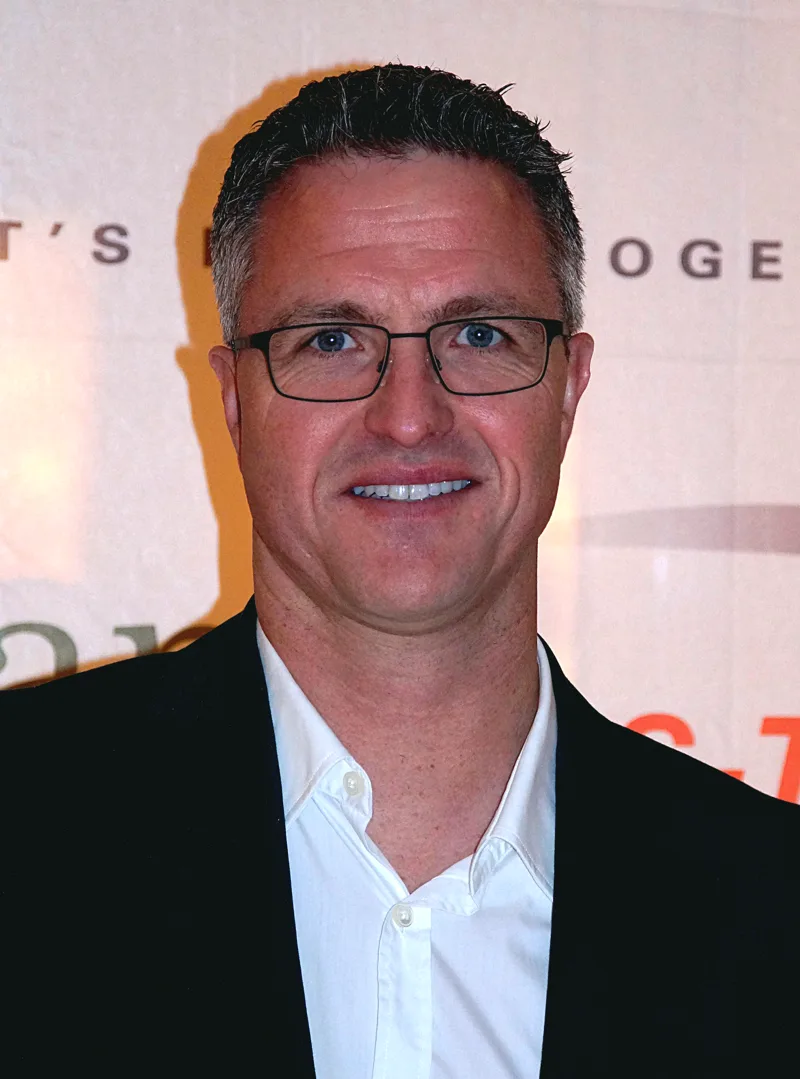
The fourth JAF GT season belonged to McLaren. Team Goh prepared the F1 GTRs, and their arrival was the biggest story of the year. The #60 McLaren of Naoki Hattori and Ralf Schumacher led a one-two finish at the Suzuka season opener.
That pairing did not take the title, however. Hattori and Schumacher won three races but also suffered three retirements, and their senior teammates David Brabham and John Nielsen beat them to the championship in the #61 Team Lark McLaren F1 GTR. Over the six races, the two McLarens won four, and they took pole and the fastest lap at every round. All of this happened under heavy handicaps imposed by the GT Association.
The arithmetic tells its own story. Four wins for the pair, three of them for the #60 car, leaves one victory for the #61. Brabham and Nielsen took the title by finishing races while Hattori and Schumacher alternated between winning and retiring, three wins against three retirements across a six-round season.
Team Goh did not stay. It was at odds with the association over further performance handicaps that were due to be proposed, and it withdrew after the championship finale at Mine Circuit. An attempt to return in 2006 was aborted, and the team did not rejoin the series until 2019.
What else changed in the JGTC in 1996?
The two classes took new names: GT500 and GT300 replaced the GT1 and GT2 labels of 1994 and 1995. Every race now required two-driver teams. The series also staged an All-Star Race, its first outside the championship, at Central Circuit on 17 November.
The GT300 title went to the #26 Team Taisan Jr Porsche 964 of Keiichi Suzuki and Morio Nitta, the second time a 964 had won the lower class in three seasons.
The Honda NSX also made its series debut. Team Kunimitsu entered it without direct factory support, which did not arrive until the following season, and the car was mostly mechanically identical to the 1995 24 Hours of Le Mans GT2 class winner.
Why did handicaps matter so much in the JGTC?
Handicapping runs through the whole story. Success Ballast arrived in 1994 as part of the new structure, and by 1996 the GT Association was also imposing performance handicaps on individual cars. A grid that mixed factory Skylines, Porsches, a Honda NSX and McLarens could only stay competitive if someone adjusted the odds, and the association took that role.
The McLaren episode shows the limit of the approach. The handicaps were massive, yet two cars still took four of the six wins and every pole and fastest lap. When the association signalled that it wanted to go further, the team that ran them chose to leave instead. The handicaps had not been enough to even out the McLarens' advantage.
Who were the JGTC champions from 1993 to 1996?
| Season | Top class champion | Second class champion | Notes |
|---|---|---|---|
| 1993 | Masahiko Kageyama, Nissan Skyline GT-R | Several other classes ran | Inaugural year, not recognised by the GT Association |
| 1994 | Masahiko Kageyama, #1 Calsonic Skyline GT-R (GT1) | Sakae Obata, #29 Korg Kegani Porsche 964 (GT2) | Dual classes and Success Ballast introduced |
| 1995 | Masahiko Kageyama, #1 Calsonic Nissan Skyline GT-R (GT1) | Yoshimi Ishibashi and Kaoru Hoshino, #70 Gaikokuya Nissan Skyline (GT2) | Toyota Supra won its first GT1 race |
| 1996 | David Brabham and John Nielsen, #61 Team Lark McLaren F1 GTR (GT500) | Keiichi Suzuki and Morio Nitta, #26 Team Taisan Jr Porsche 964 (GT300) | Classes renamed; two-driver teams mandated |