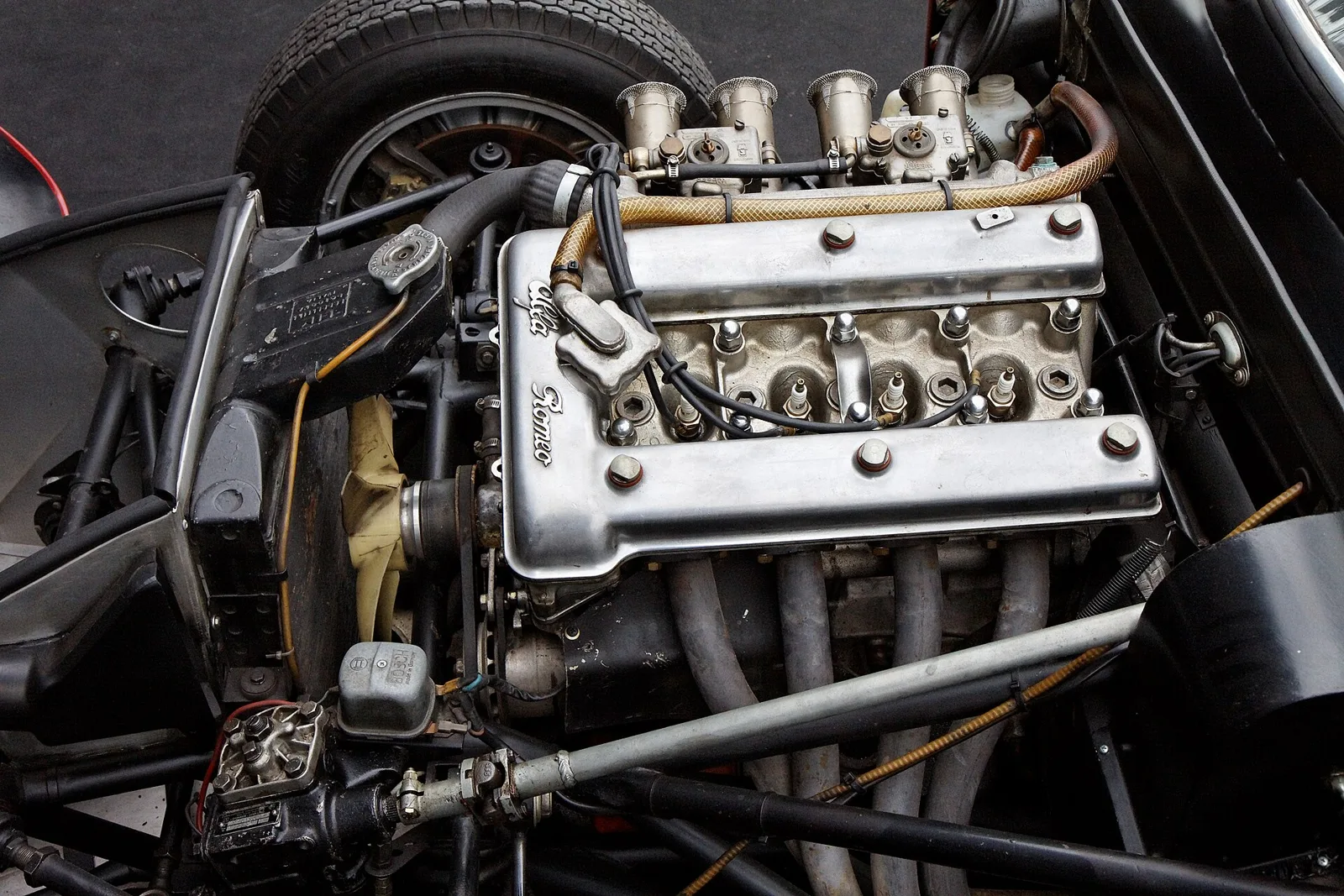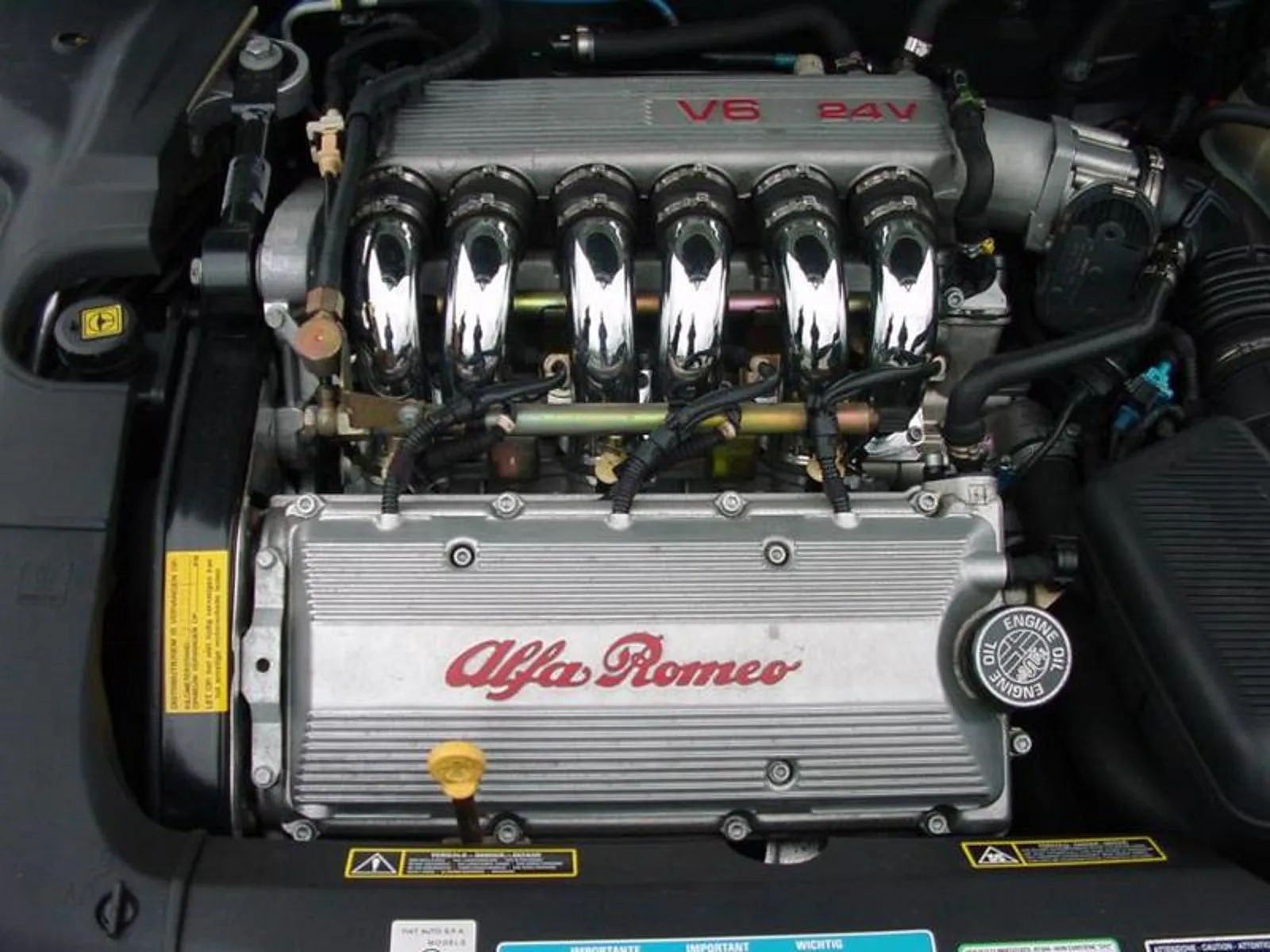
A 60-degree V6 with a famous voice gave way to a twin-turbo 90-degree engine, led by an engineer from Ferrari, for the Giulia and Stelvio Quadrifoglio.
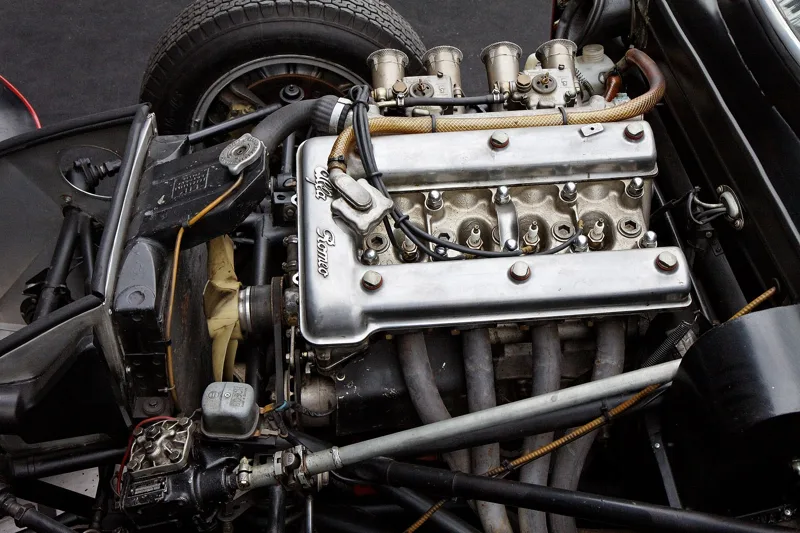
Alfa Romeo's Busso V6 ran from 1979 to 2005, a 60-degree design by Giuseppe Busso that grew from 2.0 to 3.2 litres. The 690T is the company's 2.9-litre twin-turbo 90-degree V6 of 2015, with 510 PS in the Giulia and Stelvio Quadrifoglio.
When the last Busso V6 was built at Alfa Romeo's Arese plant in 2005, Cosworth was keen to buy the assembly lines and Alfa refused to sell. Giuseppe Busso, the engine's designer, died within a couple of days of that final unit. Ten years later a very different V6 arrived: the 690T, a twin-turbo 90-degree engine for the Giulia Quadrifoglio.
What are the Alfa Romeo Busso V6 and 690T engines?
The Busso V6 is a 60-degree Alfa Romeo engine made from 1979 to 2005 and designed by Giuseppe Busso, used in cars from the Alfa 6 to the 166. The 690T is a twin-turbocharged 90-degree V6 made at Termoli since 2015 for the Giulia and Stelvio Quadrifoglio.
They are separate engines with different architectures and different eras, even though Alfa Romeo's engineers deliberately chased the old engine's character when they voiced the new one.
Giuseppe Busso, the engine's designer, died within a couple of days of that final unit.
Why is the Busso V6 called the Violin of Arese?
The nickname comes from the sound. EVO magazine judged it in August 2011 the finest-sounding six-cylinder road engine ever, and it has also been called Alfa's Violin.
Busso developed it in the early 1970s, and it first appeared in the Alfa 6 with a 2.5-litre (2,492 cc) displacement and a single-overhead-cam, 12-valve head. Each cylinder bank had one belt-driven camshaft, with the exhaust valves worked by short pushrods, in a layout like that of earlier Lancia Fulvia engines. The bore and stroke were 88 mm x 68.3 mm, and six carburettors helped it to 158 PS (116 kW; 156 hp). Bosch L-Jetronic injection arrived for the 1983 Alfa 6 with no change in power.
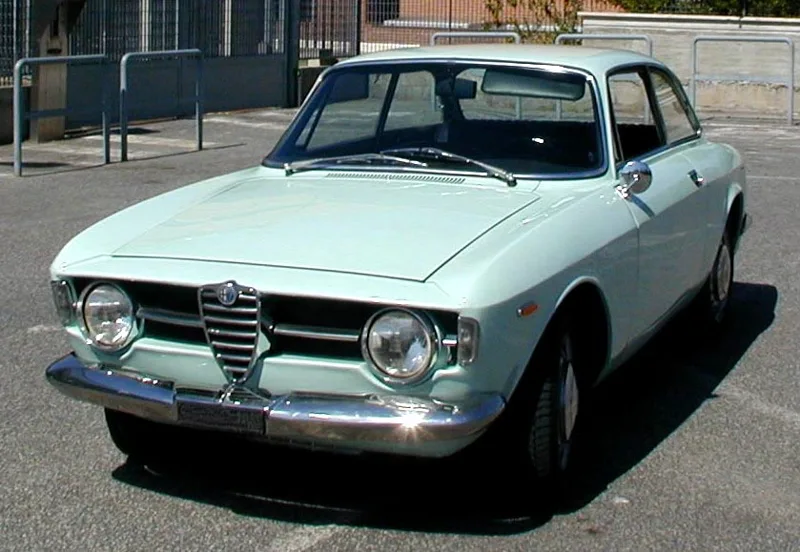
The two-valve 2.5 lived a long time. Besides the Alfa 6, it went into the GTV6 from 1980, the Alfa 90, the 75/Milano and the Alfa 155, where it developed 166 PS (122 kW; 164 hp). Fiat used it in the 1993 to 1996 Croma, and it was fitted to the Rayton Fissore Magnum V6 and an AC 3000ME prototype.
How did the Busso V6 grow from 2.0 to 3.0 litres?
Alfa Romeo kept adjusting the capacity to suit tax rules, racing regulations and market demand. A 2.0-litre version (1,996 cc) came in 1983, a 3.0-litre in the late 1980s, and a 3.2-litre (3,179 cc) in 2002, all on the same basic design.
The 2.0 gave 136 PS (100 kW; 134 hp) with carburettors or 132 PS (97 kW; 130 hp) with injection. A turbocharged 2.0 followed in 1991 in the Alfa 164, with 210 PS (154 kW; 207 hp), digital engine management and an 80 mm x 66.2 mm bore and stroke. It was aimed mainly at Italy, whose law at the time taxed engines above two litres at a higher rate. The turbo later appeared in the 164 Super, GTV, Spider and 166 Super.
Independent efforts stretched the engine further. In 1982 the German dealer and tuner Dieter Gleich offered a 2.8-litre conversion of the GTV6 engine, rebored to 93 mm with forged Mahle pistons and compression raised from 9.5 to 10.5:1. It made 191 PS (140 kW; 188 hp), and a magazine test in June 1982 reported a 0-100 km/h (62 mph) time of about seven seconds and speeds beyond 230 km/h (143 mph).
Autodelta, Alfa's former racing department, did something similar for South African and Australian racing rules, boring to 93 mm and stroking to 72 mm for 2,934.5 cc. Only 174 GTV6 3.0 SA cars were built in 1984, with another 68 in 1985.
Success there pushed Alfa to build a production 3.0, with a 93 mm x 72.6 mm bore and stroke giving 2,959 cc. With Bosch L-Jetronic injection it made 188 to 192 PS (138-141 kW; 185-189 hp). Alfa reworked it to sit transversely in the 164, where a catalytic converter cut it to 184 PS (135 kW; 181 hp) in 1991 and the Cloverleaf version reached 200 PS (147 kW; 197 hp). The SZ and RZ Zagato models used more aggressive cams and higher compression to reach 210 PS (154 kW; 207 hp).
What changed with the 24-valve Busso V6?
In 1993 the 3.0 gained double overhead cams and four valves per cylinder, with an aluminium alloy block and head and sodium-filled exhaust valves. The regular 164 then made 211 PS (155 kW; 208 hp), and the 164 QV made 230 PS (169 kW; 227 hp).
The 164 Q4 reached 232 PS (171 kW; 229 hp), though the final 1996 run was reduced to 228 PS (168 kW; 225 hp) with more torque. Later 3.0 engines in the GTV, Spider and 166 produced 218 to 220 PS (160-162 kW; 215-217 hp) in Euro 3 trim. The Lancia Kappa and Thesis used it as well, and it also appeared in the 1991 Proteo concept car.
The 2.5 24V debuted with the Alfa 156 in 1997, rated at 190 PS (140 kW; 187 hp) and later, in 2001, 192 PS (141 kW; 189 hp). It won International Engine of the Year in 2000. The 166 used a slightly detuned version for extra low-rev torque.
The largest production engine was the 3.2, introduced in 2002 in the 156 GTA and 147 GTA with 250 PS (184 kW; 247 hp) and 300 Nm (221 lb ft) from a 93 mm x 78 mm bore and stroke. In the 166, GTV, Spider and GT it was detuned to 240 PS (177 kW; 237 hp), and Lancia's version made 230 PS (169 kW; 227 hp).
A few ideas never reached the showroom. N-Technology showed a 156 GTAm prototype at the Bologna Motor Show in December 2002, with a 3458cc engine and 300 PS at 6,800rpm. Alfa engineers also worked on a 2.8-litre (2846cc) 24-valve engine, which promised considerable torque gains but never entered series production. Private workshops have gone as far as 101 mm bores for 3.75L, or 103 mm for 3.9L.
Alfa Romeo Busso V6 vs 690T
| Busso V6 3.2 24V | 690T | |
|---|---|---|
| Layout | 60-degree V6 | 90-degree V6, twin turbo |
| Introduced | 2002 (family from 1979) | 2015 |
| Capacity | 3,179 cc | 2,891 cc |
| Valves | Four per cylinder, DOHC | Four per cylinder, DOHC |
| Bore and stroke | 93 mm x 78 mm | 86.5 mm x 82.0 mm |
| Power | 250 PS (184 kW; 247 hp) | 510 PS (375 kW; 503 hp) |
| Torque | 300 Nm (221 lb ft) | 600 Nm (443 lb ft) |
| Plant | Arese | Termoli |
How did Alfa Romeo race the Busso V6?
Alfa raced a heavily revised 2.5-litre version in the early 1990s in the Alfa 155 V6 TI, its bore and stroke reset to 93 mm x 61.3 mm. It made 420 bhp (313 kW) at 11,800 rpm and 294 Nm.
The record from the 1993 to 1996 DTM and ITC years is striking: thirty-eight victories from eighty-nine starts, nineteen pole positions and the fastest lap in forty-two races. In 1996 Alfa also raced a development of the 90-degree V6 shared by Peugeot, Renault and Volvo, with 490 PS at 11,900 rpm.
Where else did the Busso V6 end up?
It turned up in kit cars such as the DAX, the Hawk HF Series and the Ultima GTR, in the Gillet Vertigo sports car and in a Lancia Aurelia B20GT Outlaw. The Gillet Vertigo has used it from 1998, and in 3.6 and 3.9-litre forms too. Even an ice resurfacer from the Italian firm engo Ltd runs one.
Production finished at Arese in 2005, with a stock of five thousand built to supply the Lancia Thesis, Alfa 166 and Alfa GT. The last 3.2 met Euro4 rules, so it could have run a couple more years. In the 159 and Brera it was replaced by a new 3.2-litre V6 with a General Motors-designed block topped by Alfa Romeo heads and induction.
What is the Alfa Romeo 690T engine?
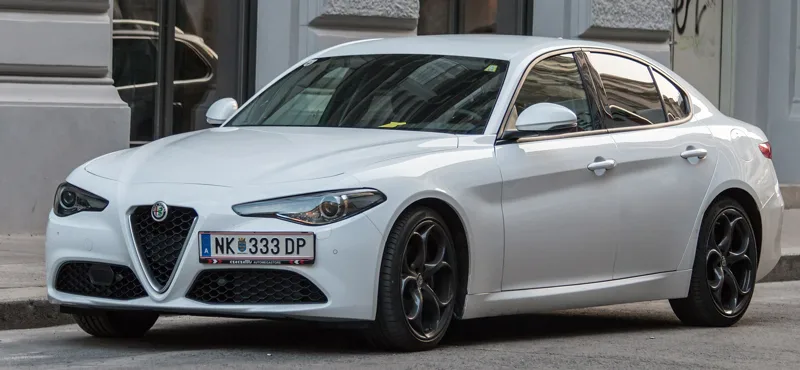
The 690T is a 2.9-litre (2,891 cc), twin-turbocharged, direct-injected 90-degree petrol V6, which Alfa Romeo has designed and built since 2015 at its Termoli plant for the Giulia Quadrifoglio and Stelvio Quadrifoglio.
In standard form it produces 375 kW (510 PS; 503 hp) at 6,500 rpm, with 600 Nm (443 lb ft) of torque from 2,500 to 5,400 rpm. Its bore is 86.5 mm (3.41 in) and its stroke 82.0 mm (3.23 in), and two single-scroll turbochargers feed it.
The project began in May 2013, when FCA chief executive Sergio Marchionne brought the engineer Gianluca Pivetti over from Ferrari to create an engine for the Giulia Quadrifoglio, a flagship meant to relaunch the brand. Pivetti, the Giorgio platform chief Philippe Krief and a dozen engineers began work in Modena in July. They had a three-year deadline, won technical approval within a year and a half, and then continued development alongside the FCA engine plant at Termoli, with production ready in 2015.
It is often thought of as Ferrari's F154 engine with two cylinders removed. In reality it is an all-new engine, though Alfa adopted similar geometries, technologies and materials that were known to work, to save development time. It also belongs to the Giorgio project, which aimed to give Alfa its own architecture, designed and produced entirely in Italy. One design requirement was the ability to deactivate a cylinder bank, since the engine would serve more than super sports cars.
The target kept rising. With the Nurburgring record for a saloon in sight, Alfa first projected that the Giulia needed around 338 kW (460 PS; 454 hp), then raised the goal to 375 kW (510 PS; 503 hp). At its release the engine had more power than the BMW M3 of the time.
The sound was tuned too. Alfa went after the voice of the Busso V6 as heard in the 147 GTA and 156 GTA, shaping it through the intake and offsetting it with the exhaust. Evo found it throatily aggressive and more characterful than the BMW's, though not yowlingly sonorous, and Top Gear's Chris Harris judged it possibly the best top-end turbocharged motor he had driven.
How is the Alfa Romeo 690T built?
The 690T has a closed-deck aluminium block cast by Mazzucconi in Bergamo, with a one-piece aluminium bedplate bolted on by 16 bolts. Three crankpins spaced 120 degrees from one another each carry two side-by-side connecting rods, which keeps the engine short and stiff.
It is designed as two independent three-cylinder engines on a common crank. Each bank has its own engine controller, intake and turbocharger. Firing is uneven between banks, at 90 and 150 degrees, but each bank fires evenly every 240 degrees, so each turbocharger gets evenly spaced exhaust pulses. The firing order is 1-6-3-4-2-5, and the odd rhythm gives the engine its distinctive sound.
The vibration character resembles an inline-three, with a harmonic order of 1.5, half that of a typical even-firing V6. Alfa found it needed neither a balance shaft nor active engine mounts. Three reed valves between the lower crankcase and the oil pan scavenge oil vapour and lower the pressure under the pistons, a technique borrowed from motorcycles and Ferrari, which gains 30 hp (22 kW) by reducing pumping losses.
Mahle makes the pistons, pins and wet steel cylinder liners, whose surfaces are coated with silicon carbide to limit blow-by and oil consumption. The rods are forged steel, and the vanadium-alloyed crankshaft is forged from a 9 kg (20 lb) blank and gas nitrided, as at Ferrari.
The valvetrain has four overhead camshafts driven by two chains, four valves per cylinder, hollow intake valves and sodium-filled exhaust valves. The turbochargers come from IHI, are water-cooled and are built into the exhaust manifolds; maximum boost is 1.4 bars (20 psi). Fuel goes in by port and direct injection, with pressure of 200 bars (2,900 psi), and a variable-speed oil pump runs at 1.5 or 4.1 bar (22 or 59 psi) depending on demand.
How does the 690T shut down half its cylinders?
Collapsible hydraulic tappets on the right-hand bank close its intake and exhaust valves. A solenoid valve cuts the oil supply to the idle turbocharger so that oil cannot leak through its seals into the exhaust.
The system switches on when it would help fuel efficiency at certain speeds and loads, and it improves economy by seven percent by cutting pumping losses.
Which cars use the Alfa Romeo 690T?
The 690T powers the Giulia Quadrifoglio, Stelvio Quadrifoglio, Giulia GTA and GTAm, Giulia SWB Zagato and the 33 Stradale. Power goes through a ZF 8HP 75 automatic, and in Europe a ZF S6-53 manual was offered until 2018.
For the GTA and GTAm, Alfa reinforced the connecting rods, added piston oil jets, improved the oil cooler and raised boost, for 397 kW (540 PS; 533 hp). The 33 Stradale has a larger 3.0-litre development of the Maserati Nettuno engine, rated at 456 kW (620 PS). The Nettuno, introduced in the Maserati MC20, has much in common with both the 690T and the Ferrari F154.
690T production, emissions rules and upkeep
Termoli built 39,833 engines from 2015 to 2024, after an investment of more than 1.5 billion euros across the 2.0 and 2.9-litre engines. Port injection was added to meet Euro 6d rules. Alfa plans to continue production, though it is unsure whether the engine can be made to comply with Euro 7. The maintenance plan calls for an accessory belt change at four years or 60,000 km (36,000 mi), and the job means taking off the bumper.