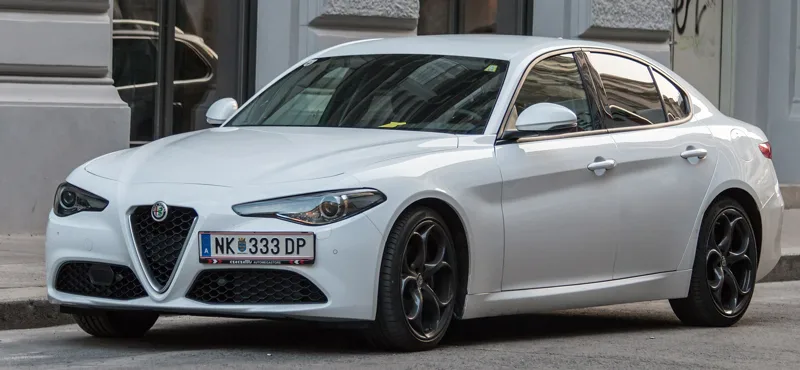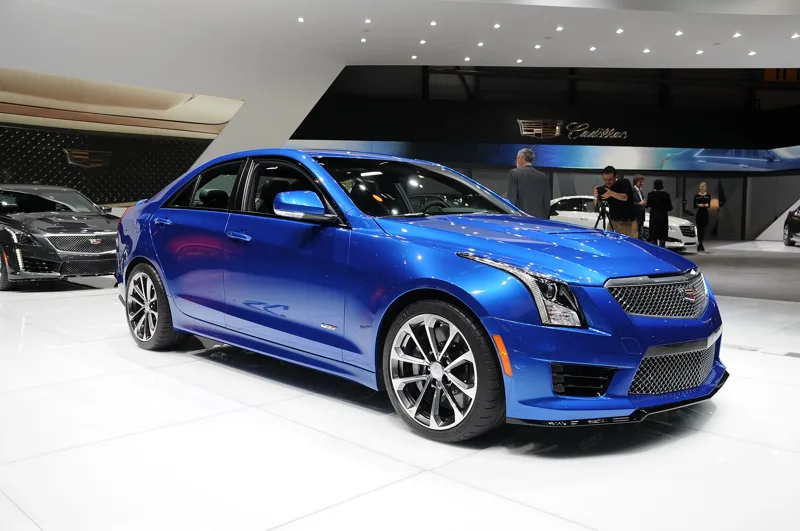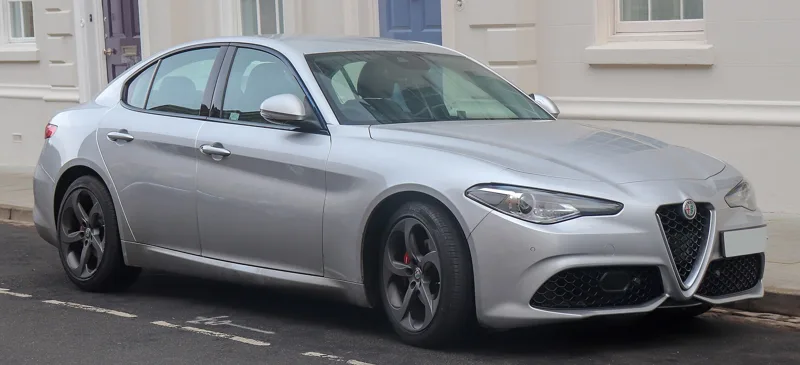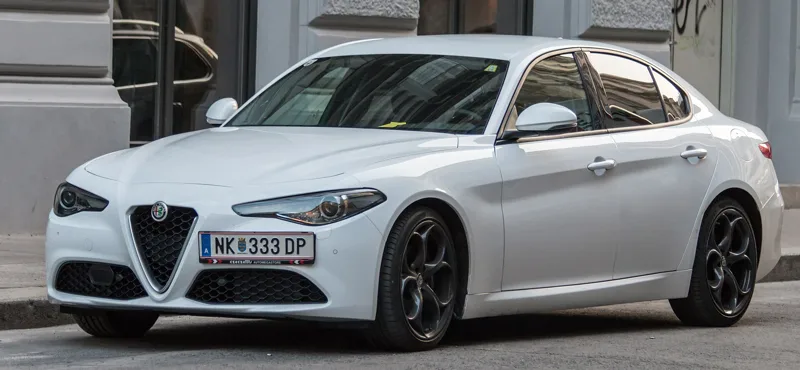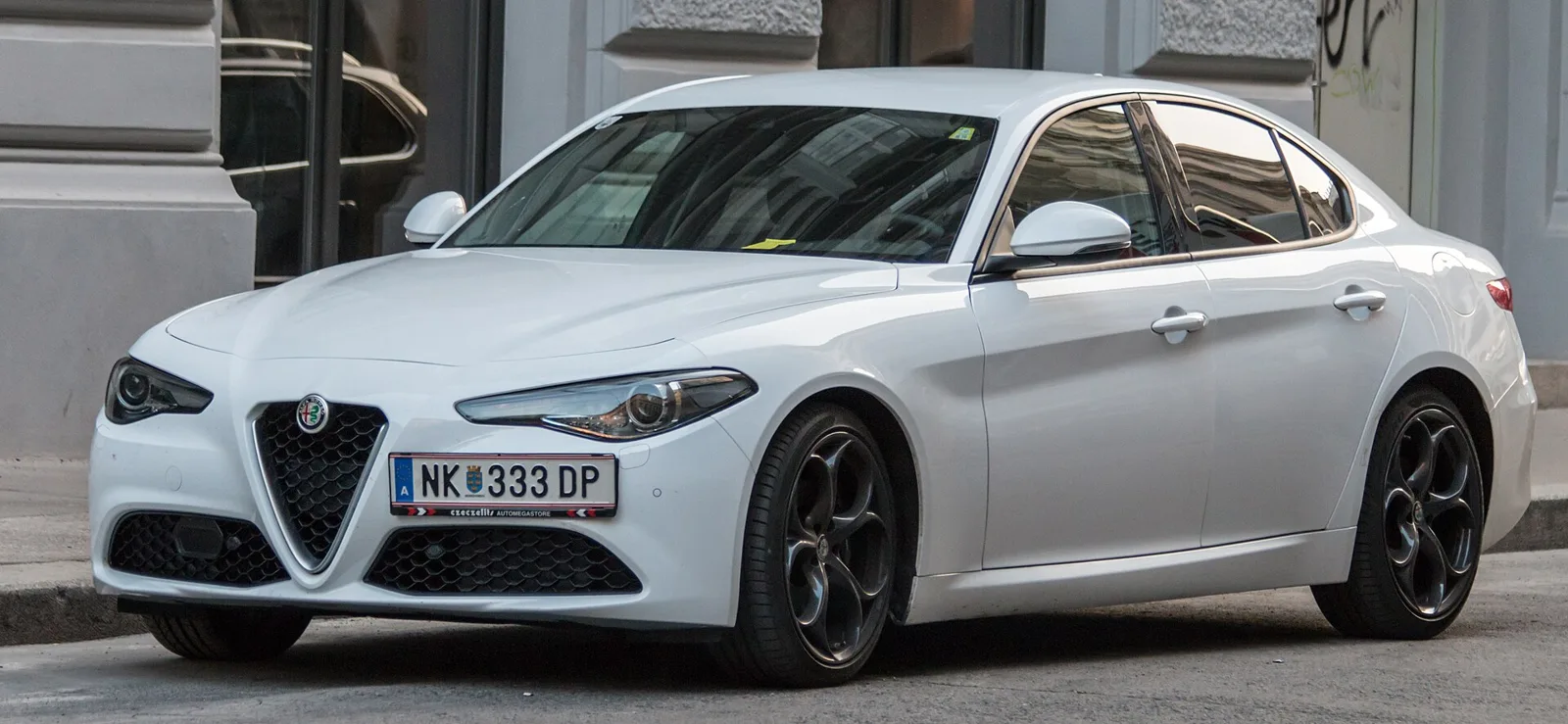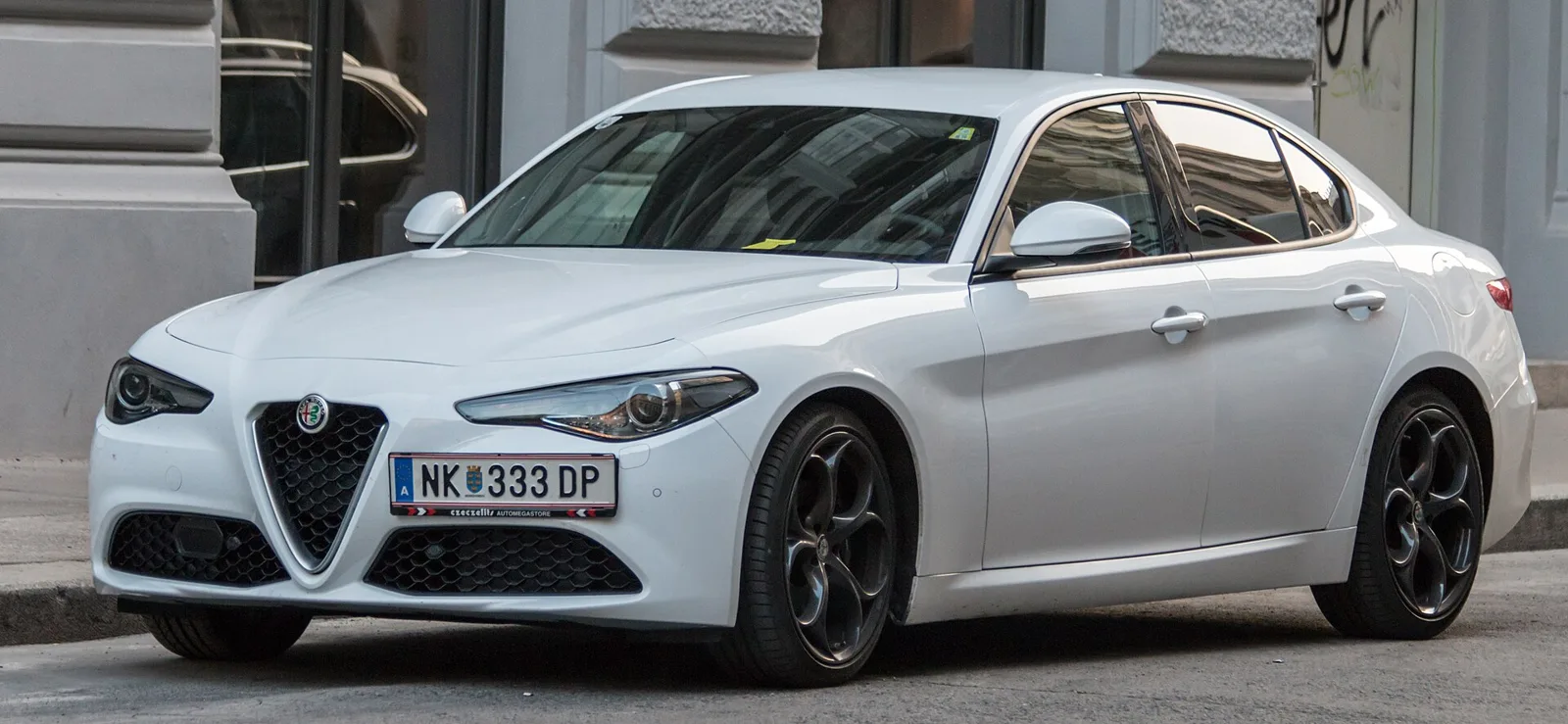
The Giulia Quadrifoglio and the Cadillac ATS-V were both aimed at buyers who would otherwise choose a European sports saloon, but their origins and detail differ.
The Alfa Romeo Giulia and Cadillac ATS-V were both aimed at European rivals such as the BMW 3 Series. The Quadrifoglio's 510 PS twin-turbo V6 is the strongest engine named, while the ATS offered 2.0-litre turbo and 3.6-litre V6 engines.
The Alfa Romeo Giulia and the Cadillac ATS-V are named as rivals in the Giulia Quadrifoglio's competitor list, and both were built to take on European sports saloons. The Giulia was scheduled on sale in 2016 as a rear-wheel-drive car, while the ATS was a 2013 model that ran until 2019 and included a V version.
Why are the Giulia and the ATS-V compared?
They are compared because the Giulia Quadrifoglio's main competitors were named as the Mercedes-AMG C63, the BMW M3 and the Cadillac ATS-V. Both are compact executive cars, and both were pitched against the BMW 3 Series, which the ATS engineers used as their benchmark.
Cadillac's engineers treated the BMW 3 Series as the direct competitor for the ATS, and the Giulia's reviewers compared it with the 3 Series, the Audi A4 and the Mercedes-Benz C-Class. That shared target is why the two cars sit side by side in the performance sector, even though one was launched in 2012 and the other in 2015.
A 510 PS Italian rear-driver against an American compact built on a new platform, two rivals with different strengths.
How did each car come about?
The Giulia began as a clean-sheet request from Sergio Marchionne in 2013 for a rear-wheel-drive sports saloon, with Philippe Krief named chief engineer. The ATS began in 2009, when Cadillac started full-scale development of a compact car after finding that buyers wanted something small and well designed.
Krief, a former technical director at Ferrari, was asked to assemble a team of ten to design and build the Giulia within two and a half years. The car rode on a new longitudinal-engine platform called Giorgio, and Marco Tencone of Centro Stile Alfa Romeo in Turin headed the design team.
GM's ATS engineers benchmarked the 1999 to 2006 BMW E46 3 Series, which chief engineer Dave Masch regarded as the most dynamic and driver-focused 3 Series of its time. Dave Leone led the team that created the GM Alpha platform, which could handle both rear-wheel and all-wheel drive and had a near 50/50 weight split.
The Giulia was unveiled to the press at Arese on 24 June 2015, the day the company marked its 105th anniversary. It was the first model in a relaunch plan with an investment of EUR 5 billion for an eight-car line-up, with a worldwide sales goal of 400,000 units by 2018, against 74,000 in 2013.
Cadillac debuted the production ATS to the press in January 2012 and began assembling it in July that year. Sales in the United States started in August 2012 as a 2013 model. GM invested US$190 million in the Lansing Grand River Assembly plant to build the car, and that upgrade created 600 jobs through a second shift.
What did the platforms and designs share?
Both cars put a premium on balance. The Giulia targets an even weight split, and the ATS came out at 51 percent front and 49 percent rear, which is close to the same goal. Both used rear-drive layouts with independent suspension, though their components differed.
The Giulia uses a front-engined, rear-wheel-drive layout, with an even 50% front and 50% rear weight distribution. Its suspension is independent at every corner, with double wishbones at the front and a multilink arrangement at the rear. A carbon-fibre driveshaft made by Hitachi Automotive Systems is fitted, and aluminium shock towers, suspension parts, front wings and doors keep the weight down. The drag coefficient is Cd 0.28.
The ATS was built on the GM Alpha platform and used cast iron for its rear differential, which is unusual in its class, since rival cars tended to use aluminium housings. Cadillac's engineers said the heavier metal helped preserve the balance. The ATS also featured Cadillac's first five-link independent rear suspension, with a fifth toe-control link, and its drag coefficient is 0.299 Cd.
The Quadrifoglio adds a carbon-fibre roof and bonnet and a carbon splitter at the front, plus a rear diffuser that works with the faired underside. Its active aero splitter drops by 10 degrees at speeds from 100 to 230 km/h (62 to 143 mph) when the car is in Dynamic or Race mode, and the drag coefficient rises to Cd 0.31 with those extras.
The ATS-V's detail on the Cadillac side is thin. Its chief engineer was Tony Roma, and the V variant was said to have 25 percent greater structural stiffness than a non-V ATS. Its engine and performance figures are not listed in this comparison, so the V-specific differences cannot be measured here.
What engines did each car use?
The Quadrifoglio uses a 2.9-litre twin-turbo V6 rated at 510 PS (375 kW; 503 hp), while the ATS range used a 2.5-litre four, a 2.0-litre turbo four and a 3.6-litre V6 at 321 hp (239 kW). The V-specific engine for the ATS-V is not given in this comparison.
The Quadrifoglio's V6 was developed by engineers with a Ferrari background, and its torque reaches 600 N m (443 lb ft) across the 2,500 to 5,000 rpm band. Its turbochargers are single-scroll IHI units, and peak boost reaches 1.4 bar (20 psi).
The ATS base engine was a naturally aspirated 2.5-litre four making 202 hp (151 kW) until the 2016 model year. The 2.0-litre turbo four, rated at 272 hp (203 kW), replaced it as the base engine from the 2017 model year, and an optional 3.6-litre V6 produced 321 hp (239 kW).
Gearboxes differed too. The ATS had a 6-speed GM automatic as standard until 2015, then an 8-speed automatic from the 2016 model year, and the turbo rear-drive version could take a 6-speed Tremec manual. The Giulia Veloce used an 8-speed automatic with Alfa's Q4 all-wheel-drive system, and the Quadrifoglio was offered with an automatic or a manual.
How heavy were the two cars?
The Quadrifoglio weighs 1,734 kg (3,822 lb), while the lightest ATS weighed 3,315 lb (1,504 kg), against 3,461 lb (1,570 kg) for a BMW E46 328i. The ATS's lighter weight came from a deliberate push to beat the E46 benchmark, and the Quadrifoglio's weight is shared out with a carbon roof and bonnet.
The Quadrifoglio's factory wet weight is 1,620 kg with the automatic and 1,580 kg with the manual, and it carries about 3 kg (6.6 lb) per PS. Its fuel use is 8.5 litres per 100 km (33 mpg-imp; 28 mpg-US), with CO2 at 198 g/km and an EPA rating of 20 mpg.
The ATS engineers chose electric power steering from ZF Friedrichshafen and kept the weight down with an aluminium hood, magnesium engine mounts and natural-fibre door trim panels.
Which car was more practical?
The Giulia is a mid-sized four-door saloon with a 58-litre (13 imp gal; 15 US gal) fuel tank. The ATS offered 10.4 cu ft (290 L) of boot space, which was low for its class compared with the 13 cu ft (370 L) of the F30 3 Series.
The Giulia reviews raised several practical points. The Sunday Times found the driver's door too small or badly placed and said the optional carbon front seats limited room for rear passengers. The Telegraph said there was plenty of space in front and enough at the back, and the Sunday Times also thought the fuel tank was not quite big enough.
Inside, the ATS came with dual-zone automatic climate control, proximity key entry, push-button start and an 8-inch touchscreen with Apple CarPlay and Android Auto. The optional features included navigation, a sunroof and a 110-volt power outlet. Its instrument panel wraps into the doors, and the gauge cluster uses LED lighting that reads clearly in all conditions.
Interior quality drew the sharpest comments on the Giulia side. The Sunday Times said the fittings did not match what buyers expected at that price, and the Telegraph said its plastics trailed some competitors. The Guardian said the cabin was generously luxurious.
What safety and equipment did each car offer?
The ATS was built around what GM called a control-and-alert strategy, with visual and audible warnings. Its available systems included adaptive cruise control, forward collision alert, autonomous emergency braking, blind zone alert and rear cross-traffic alert.
The ATS also featured start assist, which holds the brakes for 1.5 seconds to stop the car rolling back if the parking brake is forgotten. Its frontal, side and curtain airbags were joined by knee airbags for the front occupants, and two packages, ESS I and ESS II, added further safety kit.
The Giulia's safety and driver-assistance equipment is not described in this comparison, so no like-for-like safety verdict can be given. The Telegraph's note on the Giulia's warranty is the only buyer-protection detail on that side.
How did reviews and the market treat each car?
The Giulia was second in the 2017 European Car of the Year voting, named Motor Trend Car of the Year for 2018, and given the Compasso d'Oro industrial design award in 2018. Reviewers across the press were warm about how it drove.
The Sunday Times called the steering fast, needing just two turns from lock to lock, and rated the optional carbon-ceramic brakes as well tuned. The Telegraph called the steering remarkably quick, and the Guardian praised the driving experience as lovely.
The ATS sold across a wide range of markets, from North America and Europe to the Middle East and Asia. Sales in China began on November 21, 2013, and the Chinese-assembled ATS-L launched there in August 2014. It was replaced by the CT4 in 2019 for the 2020 model year.
What did each car do better?
The Giulia's reviewers praised its steering, its driving feel and its warranty, while the ATS side offers more on production and market reach. Neither car has a motorsport record in this comparison, so the racing question does not separate them.
On the figures, the Quadrifoglio's 510 PS is well above the 272 hp of the 2.0-litre ATS turbo, and its 1,734 kg (3,822 lb) is heavier than the lightest ATS at 1,504 kg (3,315 lb). The ATS's 3.6-litre V6 gave 321 hp, so the numbers do not settle a head-to-head.
The ATS had the stronger practical story in some respects. Its standard interior tech, from the 8-inch touchscreen to the 12-speaker Bose stereo and wireless phone charging, was well equipped, and its active safety list was long. The Giulia side carries the awards and the review praise.
Which buyer suits each car?
The Giulia suits a buyer who wants a rear-drive saloon with an even weight split, a choice of petrol, diesel and Quadrifoglio power, and a design that won awards. The ATS suits a buyer who values a wide choice of ATS engines, the 8-speed automatic and a long list of active safety systems.
A buyer who needs maximum boot space should look carefully, since the ATS was low for its class. A buyer who wants the most powerful car of the two will find the Quadrifoglio's 510 PS hard to match on paper, while a buyer who wants the lighter car will find the lightest ATS below the Quadrifoglio's weight.
Side-by-side specifications
| Specification | Alfa Romeo Giulia (Quadrifoglio unless stated) | Cadillac ATS-V (ATS range where stated) |
|---|---|---|
| Launch | Unveiled 24 June 2015; sale due February 2016 | Debut January 2012; sales from August 2012 as a 2013 model; replaced by CT4 in 2019 |
| Layout | Front-engined, rear-wheel drive; all-wheel drive on non-Quadrifoglio models | Rear-wheel or all-wheel drive on the GM Alpha platform |
| Engine | 2.9-litre twin-turbo V6, 510 PS (375 kW; 503 hp) | ATS-V engine not given. ATS range: 2.0-litre turbo four, 272 hp (203 kW); 3.6-litre V6, 321 hp (239 kW) |
| Torque | 600 N m (443 lb ft) from 2,500 to 5,000 rpm | Not given |
| Weight | 1,734 kg (3,822 lb) | Lightest ATS: 1,504 kg (3,315 lb) |
| Weight distribution | 52.5% front, 47.5% rear | 51% front, 49% rear |
| Drag coefficient | Cd 0.31 (Quadrifoglio); Cd 0.28 (standard Giulia) | Cd 0.299 |
| Structure | Carbon-fibre roof and bonnet on the Quadrifoglio | V variant: 25 percent greater structural stiffness than a non-V ATS |
| Transmission | Automatic or manual; eight-speed automatic on the Veloce | 6-speed GM automatic to 2015; 8-speed automatic from 2016; 6-speed Tremec manual on the turbo rear-drive version |
| Fuel use and CO2 | 8.5 litres per 100 km (33 mpg-imp; 28 mpg-US); 198 g/km CO2 | Not given |
| Boot space | Not given | 10.4 cu ft (290 L) |
| Fuel tank | 58 litres (13 imp gal; 15 US gal) in the car the Sunday Times reviewed | Not given |
| 0-100 km/h | Not given | Not given |
| Motorsport | Not given | Not given |
| Safety | Not given | Adaptive cruise, forward collision alert, autonomous emergency braking, blind zone and rear cross-traffic alerts; ESS I and II packages |
| Recognition | 2017 European Car of the Year runner-up; Motor Trend Car of the Year 2018; Compasso d'Oro 2018 | Not given |