A rear-wheel-drive compact with a 3.6-litre twin-turbo V6, a 3.9-second 0-60 mph claim and a GT3 racing sibling built from the same architecture.
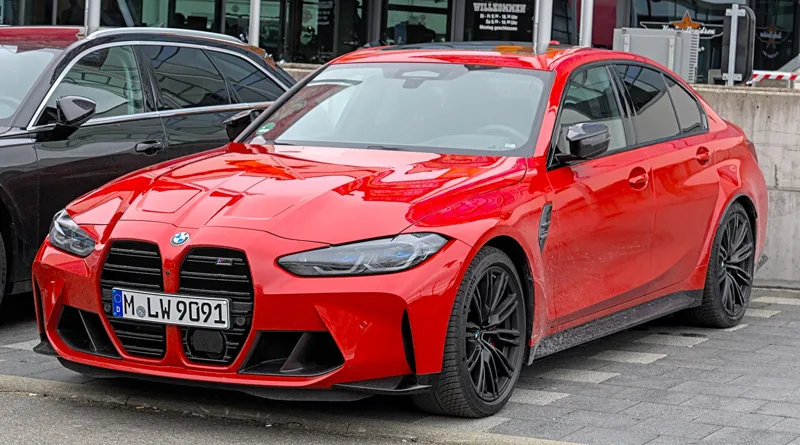
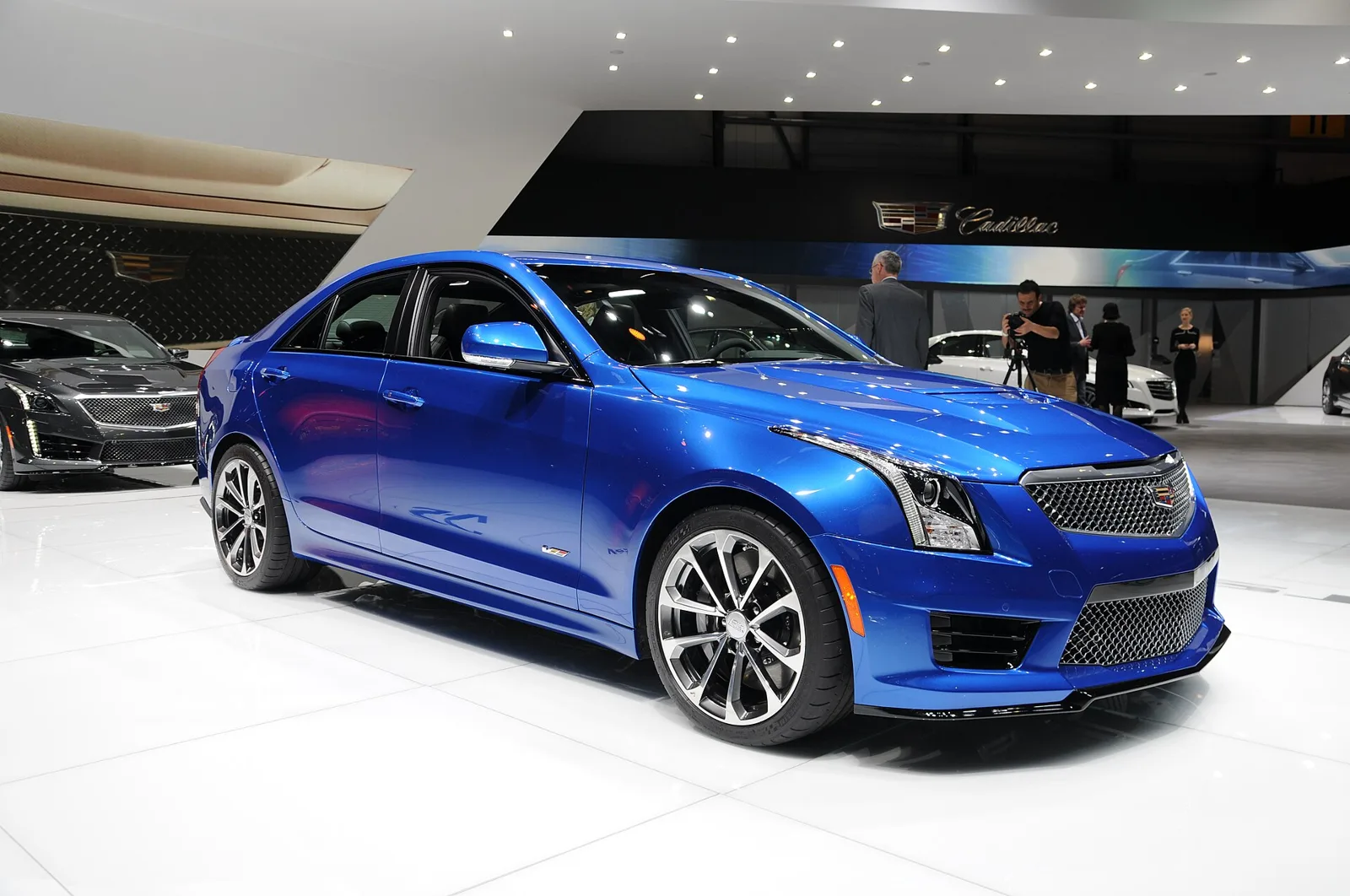
Cadillac's ATS-V is the performance sedan and coupe of the ATS compact range, with 464 hp from a twin-turbo 3.6-litre V6. Orders opened in February 2015, and the car was pitched against German sport compacts, including the BMW M3, with rear-wheel drive as its only layout.
The Cadillac ATS-V was the performance version of Cadillac's compact ATS range, pitched against German sport sedans from BMW and Mercedes-Benz. Its 3.6-litre twin-turbocharged V6 made 464 hp (346 kW), and the car was rear-wheel drive only. Cadillac launched it as a sedan and a coupe in 2015 and later closed the range without a direct replacement for the coupe.
What is the Cadillac ATS-V?
The ATS-V is the performance-focused version of Cadillac's compact range, offered as a sedan and as a coupe. It is rear-wheel drive only and uses a 3.6-litre twin-turbocharged V6, and it was aimed at Mercedes-AMG and BMW M rivals in the performance compact class.
The ATS-V coupe was revealed in early November 2014, and the four-door followed eight days later. Orders opened in February 2015 and production started in March of that year.
The ATS itself is a D-segment car from General Motors that Cadillac sold between 2013 and 2019. In the United States it was the first home-built entry-level premium Cadillac since the Cimarron, and the cars came off the line at the Lansing Grand River Assembly plant, in Michigan.
Tony Roma served as chief engineer for the ATS-V, having held the same role on the third-generation CTS-V range. Its structure was 25 percent more rigid than that of the non-V ATS.
A rear-wheel-drive compact with 464 hp, built to match the German sport sedans on the road and the GT3 grid.
How was the ATS developed?
The ATS was developed from 2009 at GM's Technical Center in Warren, Michigan, on a new light, compact architecture called the GM Alpha platform. Engineers benchmarked the 1999 to 2006 BMW E46 3 Series and built a car that weighed less than that benchmark.
Full development of the compact car began in 2009 after research showed buyers wanted something small and thoughtfully made. By August 2009 the design team had a full-size styling model, which Edward Welburn showed beside the XTS saloon.
Dave Masch, the ATS chief engineer, and his team regarded the E46 as the most dynamic 3 Series. They chased low weight, and some GM product rules were set aside because following them would have made the car heavier.
At its lightest, the ATS came in at 3,315 lb (1,504 kg), while an E46 328i weighed 3,461 lb (1,570 kg). Dave Leone, who led the rear-wheel-drive and performance cars, set a dollar-per-kilogram strategy to measure what each saved kilogram cost, and the final weight split was 51 percent front and 49 percent rear.
Ken Kelzer, a GM engineering executive, said the team could simply have cut down a CTS and produced a pretty good car. Because the BMW 3 Series was the direct rival, a dedicated platform was judged the better path, and the two years of development reflected that choice.
Cadillac released a two-minute video in September 2011 featuring Mark Reuss, the General Motors North America president, who test drove a pre-production car. Engineers David Leone, Chris Berube and Kevin Zelenka also appeared in the footage.
General Motors put US$190 million into upgrading the Lansing Grand River Assembly plant for the ATS, which created 600 jobs through a second shift. The production car first reached the press in January 2012, and assembly for customers began on 26 July 2012.
Why did Cadillac build a compact car?
Cadillac's smallest car had been the E-segment CTS, which cost about the same as D-segment rivals such as the Audi A4 and BMW 3 Series. Research showed that buyers who already owned a 3 Series or A4 did not want something larger, which pushed the ATS down to a compact size.
Cadillac had assumed buyers would want an E-Class-sized sedan for the price of a 3 Series. That assumption proved wrong, and the compact car became the answer to the question the research had asked.
Taki Karras, the ATS design manager, said that building an entirely new architecture was much harder than reskinning an existing car. The exterior design team worked closely with the engineers so that the body matched the quality of the chassis and interior.
What powers the Cadillac ATS-V?
The ATS-V uses a 3.6-litre twin-turbocharged V6 rated at 346 kW (464 hp) and 603 Nm (445 lb ft). It goes from 0 to 60 mph in 3.9 seconds and was tested at 189 mph (304 km/h), and buyers could choose a six-speed manual or an eight-speed automatic.
The regular ATS offered a 2.5-litre four making 202 hp (151 kW), a 2.0-litre turbo rated at 272 hp (203 kW) and a 3.6-litre V6 at 321 hp (239 kW). The 2.5-litre was dropped for 2017, which left the 2.0-litre turbo as the entry engine.
A six-speed Tremec TR6060 manual came with active revolution matching and launch control. The alternative was an eight-speed 8L90 automatic, which also had launch control, plus a Performance Algorithm Shift mode for quicker gear changes.
Cadillac also tuned the V6 range over time. For 2016 the 3.6-litre models gained Stop/Start technology and Active Fuel Management, which lets the engine switch off half its cylinders, with an estimated fuel economy gain of up to 9 percent over the previous V6.
How does the ATS-V handle and brake?
The ATS-V adds a Brembo high-performance brake system and driver-adjustable steering, suspension and throttle settings. A carbon-fibre hood with an air-extraction vent helps clear hot air from the engine bay, and the car's structure is 25 percent stiffer than a standard ATS.
The brakes were developed for durability and capability on track days, which suited a performance sedan that could also be taken on track. The ATS-V also uses the car's underlying suspension, including the five-link rear layout that was Cadillac's first of its type.
Under the skin the ATS line shares a MacPherson strut front suspension with ball joints, a cast-iron rear differential and electric power steering from ZF Friedrichshafen. The cast iron is heavier, but it preserves the car's near-even weight split and cuts differential noise.
Inside, boot capacity was a weak point at 290 litres (10.4 cubic feet), against 370 litres (13 cubic feet) for the F30 3 Series. The 8-inch touchscreen came standard with Android Auto and Apple CarPlay, along with Bluetooth and wireless phone charging.
How did the ATS-V compare with its rivals?
Motor Trend tested the ATS-V against the BMW M3 and the Mercedes-AMG C 63 S, and the Cadillac accelerated faster than both German cars. It was also the fastest of the three around Willow Springs International Motorsports Park, and it was the least expensive in the test.
Those results fit the spec sheet, with 464 hp and a 3.9-second sprint to 60 mph setting the benchmarks. The ATS-V was therefore positioned as a value performance car rather than a luxury sports sedan.
How did the ATS-V.R race?
Cadillac revealed the ATS-V.R on 14 November 2014, built to the SRO GT3 rulebook with the help of Pratt and Miller. It replaced the CTS-V.R as Cadillac's racing car. It used the LF4.R, a race-tuned development of the production car's 3.6-litre twin-turbo V6, with larger BorgWarner turbochargers and a Bosch MS 5.1 engine control unit.
The ATS-V.R also gained better intercoolers, exhausts that exit at the side and a bespoke rear transaxle.
The car debuted in the Pirelli World Challenge in 2015 as a factory effort. Cadillac treated that year as a development season without a customer programme. Johnny O'Connell won the GT drivers' title, and Cadillac finished third in the manufacturers' standings.
In 2016 Michael Cooper and O'Connell finished third and fourth in the drivers' table, and Cadillac was third again among manufacturers. The 2017 season gave Cadillac its best team result, a second place, with Cooper and O'Connell second and sixth in the drivers' standings.
On 28 September 2017 the company said it was leaving the Pirelli World Challenge, ending the ATS-V.R programme without a successor. Cadillac had decided not to sell the car to customer teams, a choice that has since been cited as a factor in the GT3 minimum-production rules introduced by SRO Motorsports Group.
What safety kit did the ATS carry?
The ATS was built around a control-and-alert strategy, with adaptive cruise control, autonomous emergency braking, forward collision alert and blind zone alert offered as options. The NHTSA rated the 2013 and 2014 cars five stars overall across frontal, side and rollover tests, the highest possible score.
Adaptive cruise control uses radar to hold pace with traffic, including stopping in heavy traffic and pulling away again. If a driver does not respond to a forward collision alert, the car applies its brakes. The agency also highlighted three technologies it recommends, including stability control and lane-departure warning.
What trims did the ATS offer?
At launch, North American buyers could choose Standard, Luxury, Performance or Premium trim. Standard came with 17-inch alloy wheels and a vinyl-trimmed cabin, while Premium added 18-inch wheels, navigation and a colour head-up display. China used different names, Standard, Luxury, Elite and Comfort.
Luxury added run-flat tyres, keyless entry and start, leather seating and a rear bench that splits 60-40. The Performance trim brought dual exhausts, xenon headlights and sporty front seats.
How did the ATS change through its run?
In May 2014 Cadillac announced a minor facelift to match the coupe. The emblem lost its laurel wreaths and grew larger, and the three-piece grille became a single unit crossed by a slim chrome line. For 2015 the ATS also gained a DockSpot inductive charger option and new paint colours.
For 2016 the 2.0-litre and 3.6-litre models gained start-stop technology and an eight-speed paddle-shift automatic, and the CUE system added Apple CarPlay and Android Auto. The 2017 update renamed the trims Standard, Luxury, Premium Luxury and Premium Performance, and 2018 removed several colours and the CD glovebox.
What happened to the ATS and ATS-V?
The ATS sedan ended in 2019 when the Cadillac CT4 replaced it for the 2020 model year, and the CT4-V took over the ATS-V role. The ATS-V coupe was discontinued without a replacement, and ATS sales had already fallen 23 percent through May 2016.
The coupe premiered at the 2014 Detroit Auto Show and reached showrooms in summer 2014 with a 2.0-litre four or a 3.6-litre V6. The company ended it after 2019 because sales were weak and buyers were moving to crossovers and SUVs.
For China, GM built a long-wheelbase version called the ATS-L in Shanghai. Its wheelbase ran 85 mm (3.3 in) past that of the regular sedan, and production ended in September 2019.
What are the Cadillac ATS-V specifications?
The ATS-V pairs a 3.6-litre twin-turbo V6 with rear-wheel drive, a 3.9-second 0-60 mph time and a choice of six-speed manual or eight-speed automatic gearboxes. The table below lists the main figures, along with the build timeline and what replaced the car.
| Specification | Detail |
|---|---|
| Body styles | Four-door sedan and two-door coupe |
| Drive | Rear-wheel drive only |
| Platform | GM Alpha |
| Engine | 3.6-litre twin-turbocharged V6 |
| Power | 346 kW (464 hp) |
| Torque | 603 Nm (445 lb ft) |
| 0-60 mph | 3.9 seconds |
| Top speed | 189 mph (304 km/h), tested |
| Manual gearbox | Tremec TR6060 six-speed with launch control |
| Automatic gearbox | Hydra-Matic 8L90 eight-speed with launch control |
| Brakes | Brembo high-performance system |
| Hood | Carbon fibre with an air-extraction vent |
| Orders opened | February 2015 |
| Production started | March 2015 |
| Successor | CT4-V for the sedan; coupe discontinued |