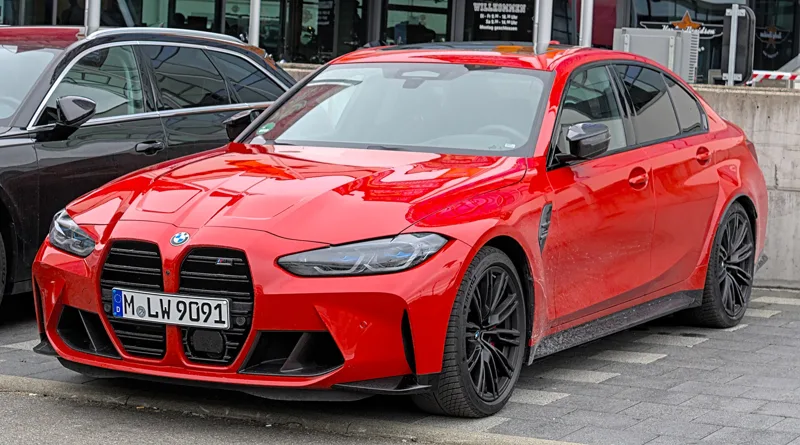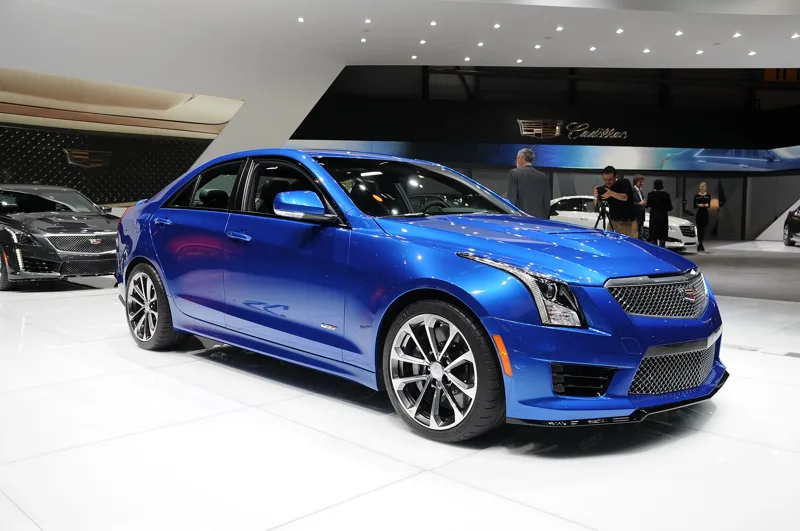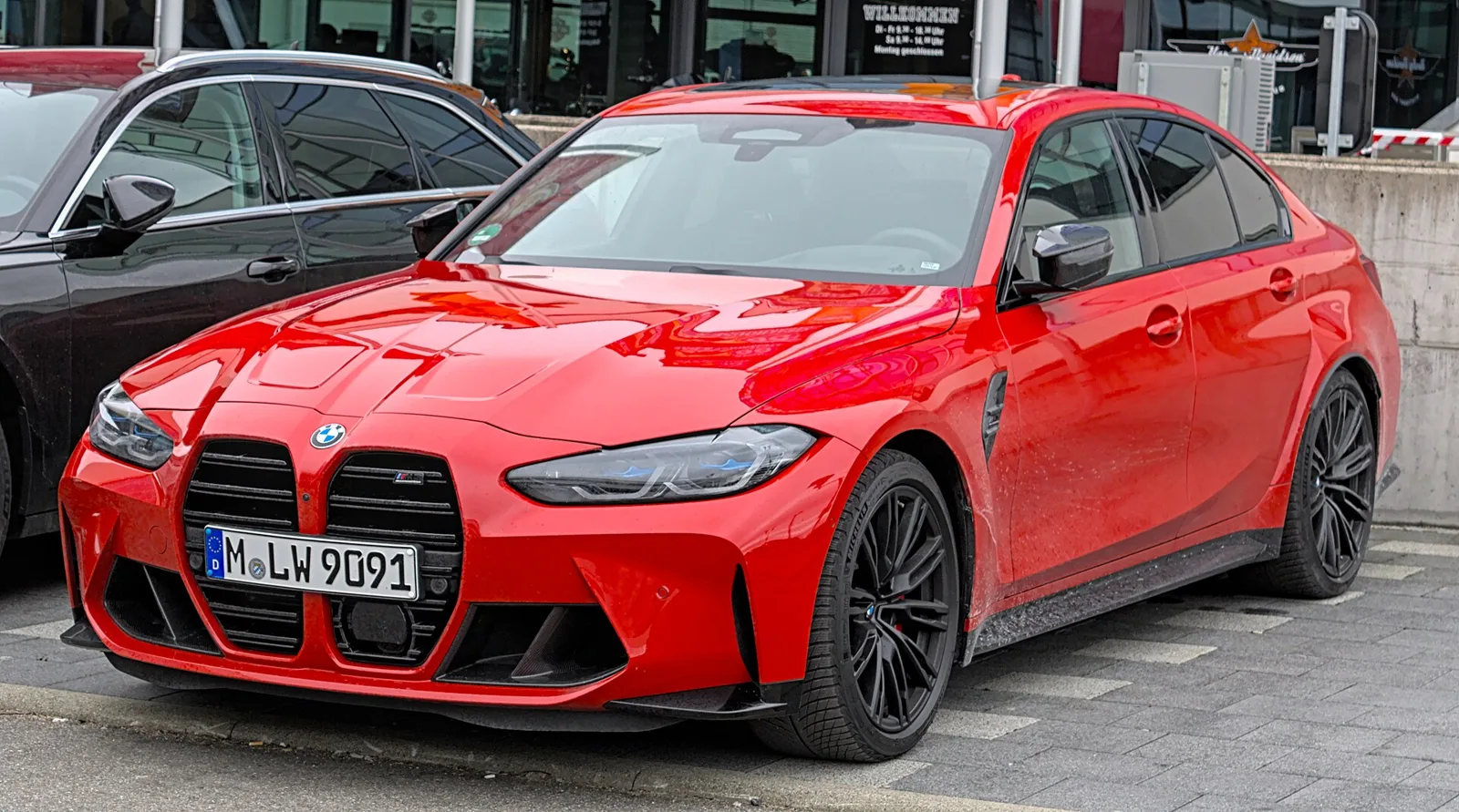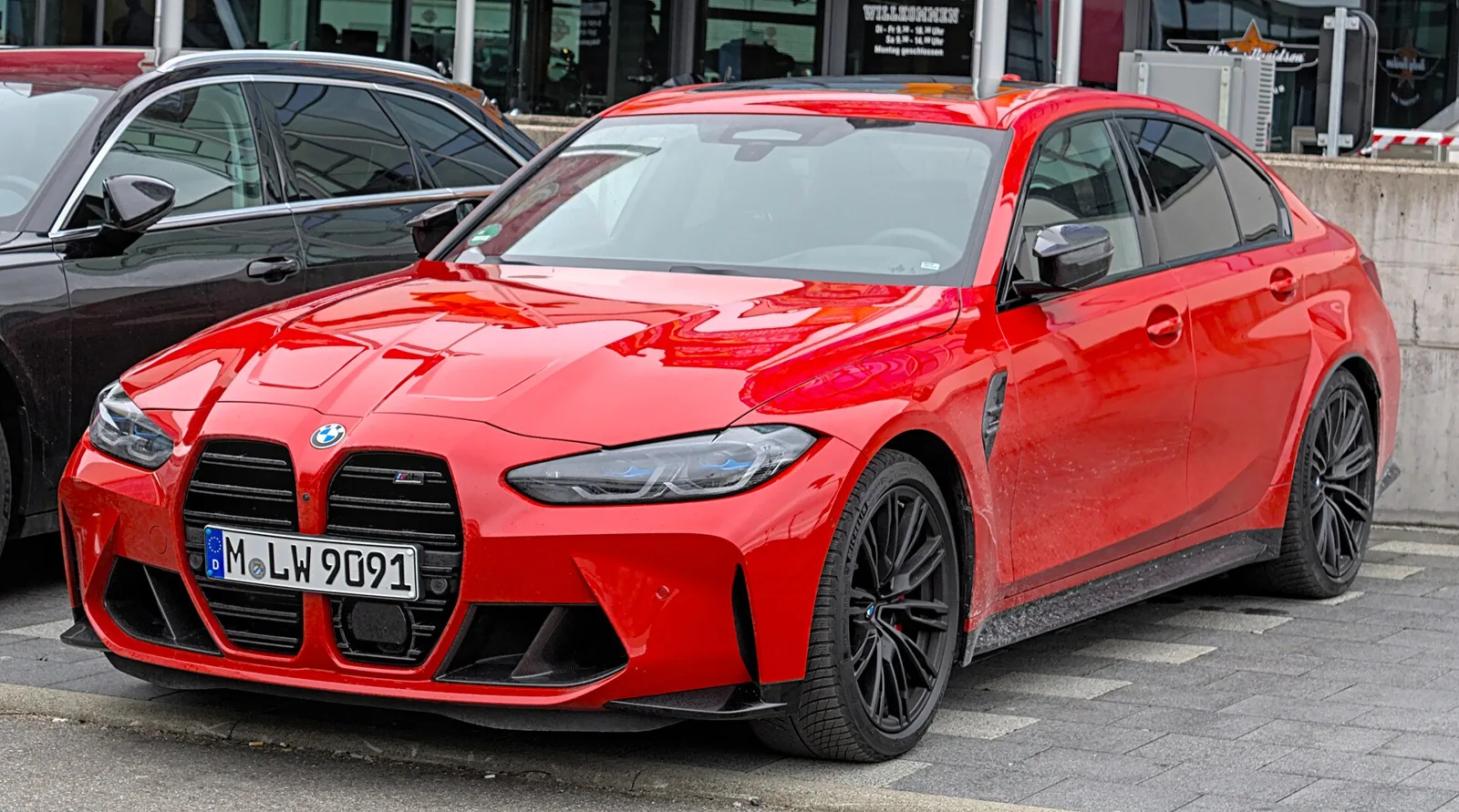
BMW's high-performance 3 Series set against a Cadillac compact that was engineered to match the 3 Series on feel and weight: origins, engines, chassis, motorsport and the buyer each suited.
The M3 has been built for every 3 Series generation since 1986, with 17,970 E30s made between 1986 and 1991. The ATS was a Cadillac compact built from 2013 to 2019 on GM's Alpha platform, with a 3.6-litre V6 at the top of its range.
The BMW M3 and the Cadillac ATS-V are both performance-focused compact executives, but they come from different places and different eras. The M3 is BMW's high-performance version of the 3 Series, built by its in-house motorsport division for every generation since 1986. The ATS was General Motors' answer to the 3 Series, launched in 2013 on a new platform.
This comparison covers how each car came about, the M3's generations, the ATS's engineering, the engines and power of each, their motorsport records, the surviving detail on the ATS-V and which buyer each car suited on the facts available.
Why were the BMW M3 and Cadillac ATS-V rivals?
They were rivals because the ATS was built to compete with the 3 Series, and the M3 is the 3 Series at its sharpest. Cadillac's engineers benchmarked the 1999 to 2006 BMW E46 3 Series, which their chief engineer Dave Masch regarded as the most dynamic and driver-focused version of the 3 Series. The M3 is the high-performance member of that family, so the ATS was aiming at the same kind of driver.
The two cars also share a niche. Both are compact executive cars in the D-segment, and both were sold as performance-oriented choices rather than family transport. The M3 has a much longer record of success, which makes the ATS the newcomer in any direct comparison.
The timelines barely overlap. The E36 M3 was built from 1992 to 1999, while the ATS arrived in 2013 and was made until 2019. A buyer comparing them would be choosing between two cars from very different parts of the performance market.
One car has spent four decades proving itself on the track; the other was built to measure itself against the 3 Series on weight and feel.
How did the two cars come about?
The first BMW M3 was based on the E30 3 Series and was intended as a homologation special for touring car racing. The rules of the Deutsche Tourenwagen Meisterschaft and Group A required 5,000 base models and 500 evolution specials to be built. The car was presented at the 1985 Frankfurt Motor Show, and production ran from March 1986 to June 1991.
The ATS was a much later project. Cadillac began full-scale development of a compact car in 2009, and it was given the name ATS. In August 2009 Edward Welburn, then vice president of design, showed a full-size styling buck alongside the XTS. Development took two years, and a further three and a half years passed before production.
The M3 has been produced for every 3 Series generation since 1986, and it became a coupe, a convertible and later a saloon and an estate. Since 2014 the coupe and convertible have been rebranded as the M4. The ATS, by contrast, was built only as a sedan and a coupe before its replacement by the CT4 in 2019.
The M3's origins as a racing car shaped its character. The engineers who built the E30 M3 were working to homologation rules, and the car had to be sold in road-going form to qualify. The ATS is not described in this material as a racing car, and its engineering is framed around road driving and weight control.
What engines did the M3 use?
The E30 M3 used the BMW S14, a high-revving DOHC four with a 7,250 rpm redline. Catalysed versions produced 143 kW (195 PS; 192 hp) and reached 235 km/h (146 mph), while cars without a catalytic converter were rated at 147 kW (200 PS; 197 hp).
Over time the M3 moved to a six. The E36 M3 introduced the BMW S50 straight six, the first six-cylinder M3. Its initial 2,990 cc version produced 210 kW (286 PS; 282 hp) at 7,000 rpm and 320 N-m of torque. The 1995 facelift raised the capacity to 3,201 cc, giving 236 kW (316 hp) at 7,400 rpm.
The ATS offered a different sort of choice. Its base engine was a naturally aspirated 2.5-litre four with 202 hp (151 kW) until 2016, and the 2.0-litre turbo four with 272 hp (203 kW) replaced it as the base unit for 2017. The 3.6-litre V6 produced 321 hp (239 kW). The M3's engines show how the 3 Series moved from fours to sixes, while the ATS went from a four to a turbo four and a V6.
Engine layout is the clearest point of difference. The M3 relied on high-revving naturally aspirated engines for much of its life, while the ATS offered a turbocharged option alongside a V6. Those choices mirror the different priorities of each maker over the years.
How did the M3 evolve through its special editions?
The E30 M3 spawned a family of homologation specials. The Evolution 1 of 1987 had 505 examples built with a revised cylinder head, and the Evolution 2 of 1988 added a revised camshaft, pistons and a higher compression ratio of 11.0:1, lifting output to 162 kW (220 PS) at 6,750 rpm.
The Sport Evolution arrived for 1990 as a limited run of 600 cars. It had an enlarged 2,467 cc engine producing 175 kW (238 PS; 235 hp) at 7,000 rpm, and its top speed rose to 250 km/h (154 mph). Its front bumper openings and adjustable splitter and wing made it the most visibly aggressive E30.
The E36 family continued that pattern. The M3 GT of 1994 was a racing homologation special for Europe, built in 356 examples with a peak output of 220 kW (295 hp) at 7,100 rpm. It was about 30 kg (66 lb) lighter than the regular car and had a derestricted top speed of 275 km/h (171 mph).
The ATS had no equivalent run of homologation specials in the material available. Its performance variant, the ATS-V, is documented mainly by its chief engineer, Tony Roma, and by its structural stiffness, so a like-for-like comparison of special editions is not possible.
How did the chassis and weight compare?
The E30 M3 used special brake calipers, discs and a master cylinder, with vented discs at the front and solid discs at the rear. Its aerodynamic changes brought a drag coefficient of Cd 0.33, against 0.38 for the standard 3 Series, and its glued-in windscreen and flattened rear window helped that figure.
The 1996 E36 M3 coupe weighed 1,515 kg (3,340 lb) in European specification. The SMG 6-speed automated manual introduced in 1995 was praised for its fast shifts but criticised for its everyday behaviour, which shows how the M3 was tuned for performance rather than comfort.
The ATS was designed to be lighter than its benchmark. Its lightest version weighed 3,315 lb (1,504 kg), against 3,461 lb (1,570 kg) for an E46 328i. Its weight split was 51 percent front and 49 percent rear, and its drag coefficient was 0.299 Cd.
The ATS also used a cast-iron rear differential, unusual for its class, and its rear suspension was the first five-link independent set Cadillac had fitted. The chassis work was aimed at a sporting feel, though the figures on the V variant itself are limited, as the comparison shows.
What did the two cars achieve in motorsport?
The E30 M3 has one of the great touring car records. It won the 24 Hours of Nurburgring five times, in 1989, 1990, 1991, 1992 and 1994, and the Spa 24 Hours four times, in 1987, 1988, 1990 and 1992. Its race engine was rated at about 221 kW (300 PS; 296 hp) in full race trim.
The E30 M3 also won widely across championships. It took the World Touring Car Championship in 1987, two European Touring Car Championships, two British Touring Car titles, two DTM titles and seven Japanese JTC-2 titles from 1987 to 1993. Its 1987 victory on the Tour de Corse, driven by Bernard Beguin, was a famous rally result.
The ATS has no comparable motorsport record in the material available. It was a road car first, and the comparison gives no racing results for it, so the motorsport question favours the M3 by a wide margin.
How did the two cars sell and last?
The E30 M3 was built in 17,970 cars, from 1986 to 1991. That total is modest by mass-market standards, but it reflects a homologation special built in limited numbers.
Sales covered North America, Europe, the Middle East and Asia, including China, Japan and South Korea. General Motors invested US$190 million in the Lansing plant to build it, which created 600 jobs through a second shift. No total sales figure for the ATS is given in this comparison.
The M3's long life is one of its defining features. It has been built for every 3 Series generation since 1986, and its track record carried it through many generations of owners. The ATS had a shorter life, with its production ended after seven model years.
Which buyer suits each car?
On the facts given, the M3 suits a buyer who wants a 3 Series with a long performance heritage, a race-proven chassis and a range that ran from the E30 to the modern M3. The ATS suits a buyer who wants a Cadillac compact with a choice of turbo and V6 engines and a platform built around low weight.
A buyer who wants a proven performance badge would look at the M3. Its record in touring car racing and its homologation specials give it a clear identity.
A buyer who wants a newer engineering story would look at the ATS. Its platform was built to beat the 3 Series on weight, its weight split was measured, and its rear suspension was a first for Cadillac.
Neither car is shown to be better across the board. The M3 has the longer racing record and the more complete family of special editions, while the ATS has the later platform and the turbo and V6 choice. The better choice depends on whether the buyer values motorsport heritage or Cadillac's newer engineering.
Specifications at a glance
| Feature | BMW M3 | Cadillac ATS-V |
|---|---|---|
| Production | E30 1986 to 1991; E36 1992 to 1999 | 2013 to 2019 model years |
| Cars built | 17,970 E30s | No figure given |
| Engine | S14 four (E30); S50 straight six (E36) | 2.5-litre, 2.0-litre turbo and 3.6-litre V6 range |
| Power | 143 kW (195 PS; 192 hp) E30; 210 kW (286 PS; 282 hp) E36 coupe | Up to 321 hp (239 kW) on the V6; V figure not given |
| Top speed | 235 km/h (146 mph) E30; 275 km/h (171 mph) M3 GT | No figure given |
| Weight | 1,515 kg (3,340 lb) E36 coupe, 1996 | 3,315 lb (1,504 kg) lightest |
| Weight split | No figure given | 51 percent front, 49 percent rear |
| Drag coefficient | Cd 0.33 (E30) | Cd 0.299 |
| Gearbox | Getrag 5-speed; 6-speed from 1995; SMG option | 6-speed automatic, then 8-speed from 2016 |
| Stiffness | No figure given | 25 percent greater than a non-V ATS |
| Motorsport | 24 Hours Nurburgring five wins; Tour de Corse 1987 | No figure given |