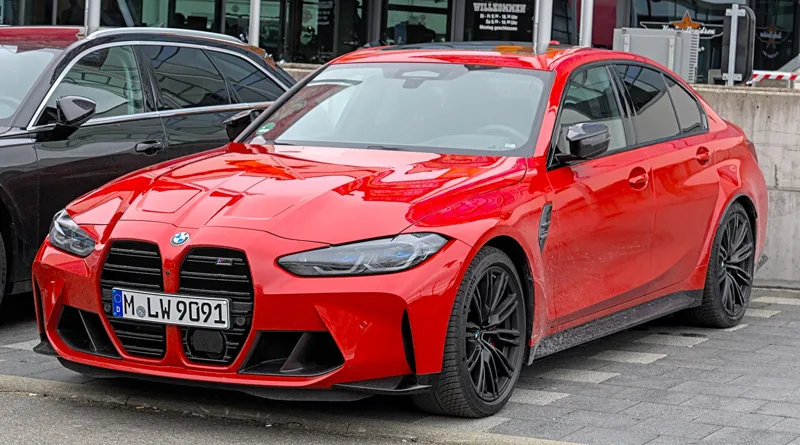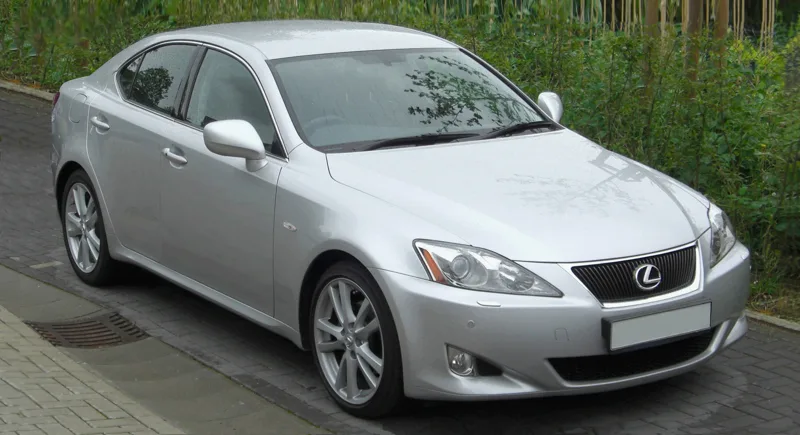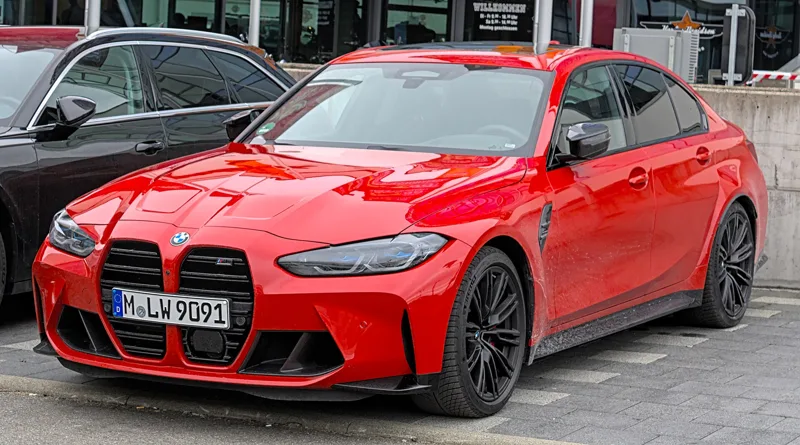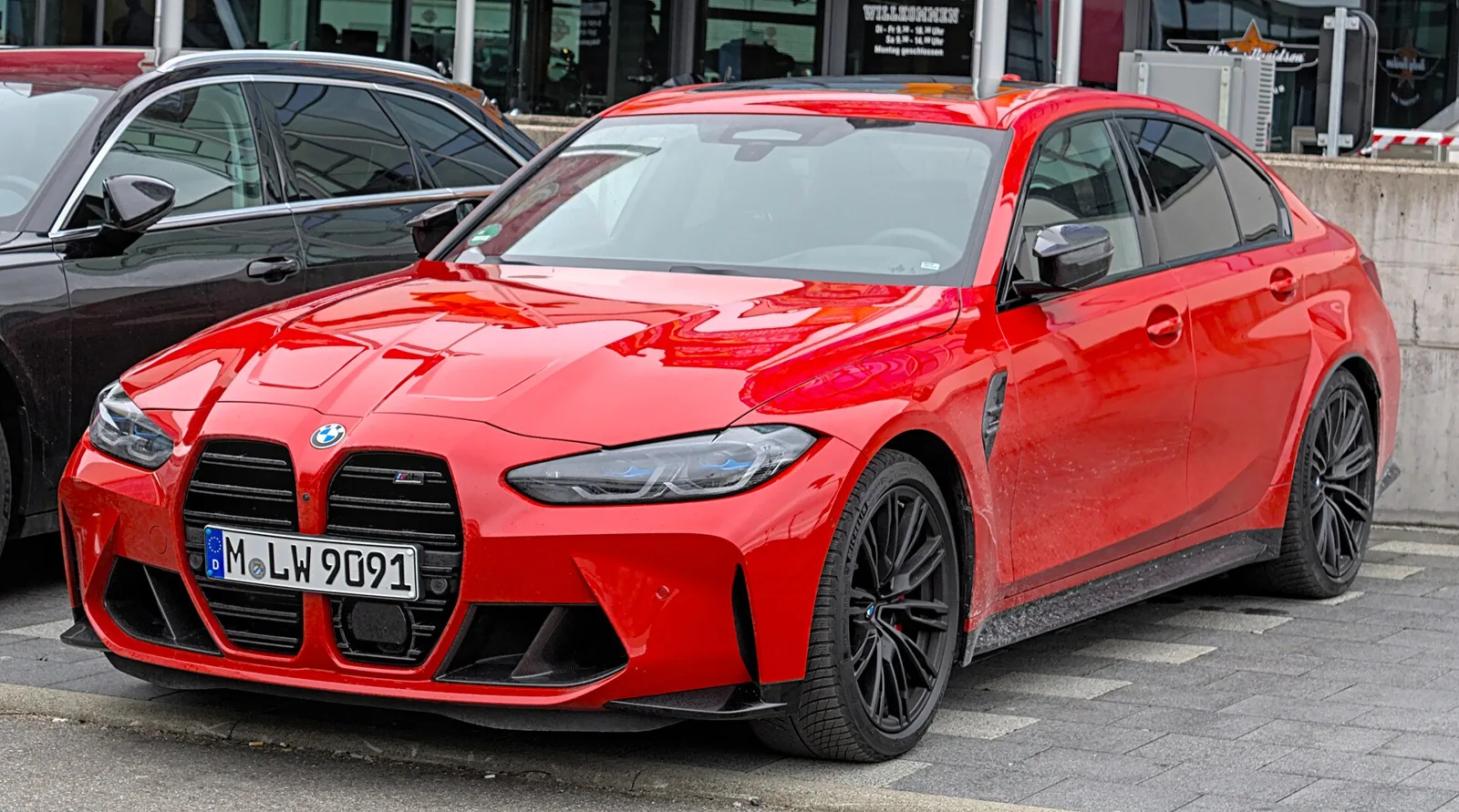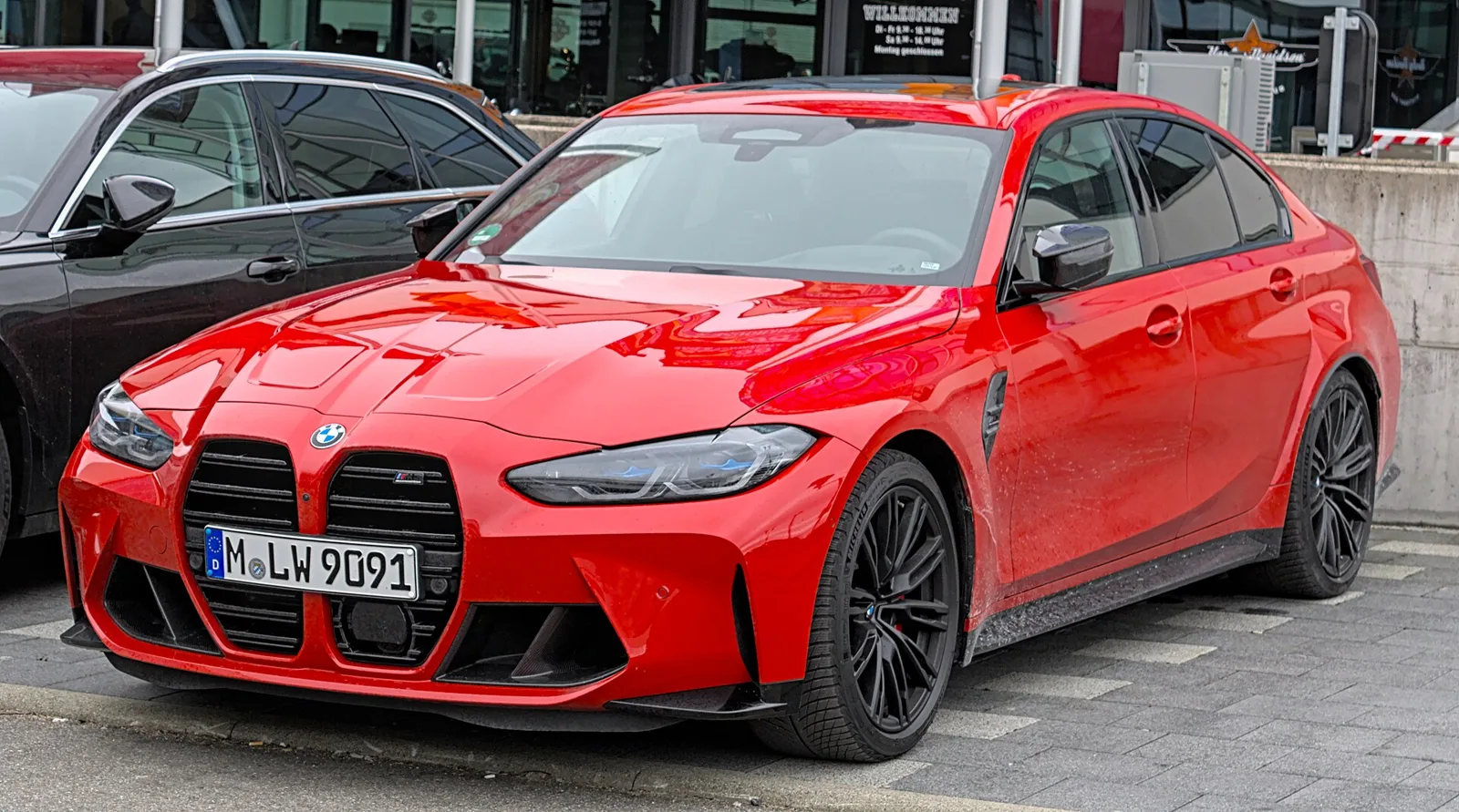
The BMW M3 was built to win races before it was sold to road buyers, while the Lexus IS was Lexus's entry sedan, sharpened later by the IS F.
The BMW M3 is the high-performance version of the 3 Series, produced for every generation since the E30 in 1986. The Lexus IS (XE20) was Lexus's entry-level sedan from 2005 to 2013, built at Tahara and Miyawaka in Japan.
The BMW M3 and the Lexus IS were both compact sedans with a performance edge, but they came from very different places. The M3 was BMW M's high-performance version of the 3 Series, while the IS was Lexus's entry-level sedan.
The M3 is best known through its motorsport record, and the IS through its later performance variant, the IS F. Their stories meet in the way each brand used a smaller sedan to make a sporting point.
Why were the M3 and IS compared?
BMW M GmbH developed the M3 as the performance variant of the 3 Series. The Lexus IS (XE20) was an entry-level sedan sold from 2005 to 2013, and its IS F variant became the performance flagship of the compact range.
The E30 M3 was presented at the 1985 Frankfurt Motor Show and was built as a homologation special for DTM and Group A rules. It needed 5,000 base models and 500 evolution specials to qualify, which made the car a racing car first.
XE20 development began in 2001 under Suguya Fukusato, and the record names Kengo Matsumoto as its main designer. The two cars therefore came from programmes separated by almost two decades.
Both stories begin with a specific brief. The E30 M3 existed because a racing rule set demanded a road-going version, while the XE20 was Lexus's entry sedan in a line-up that needed one. That difference in origin explains almost every choice in the two cars that follows.
The E30 M3 was homologated to race in touring car championships, while the XE20 IS was a luxury sedan that Lexus later sharpened with the IS F.
How did the two cars come to market?
E30 M3 production ran from March 1986 to June 1991, and the E36 M3 coupe was released in November 1992. The XE20 IS was produced from 2005 to 2013 at Tahara and Miyawaka in Japan, after development began in 2001.
The E36 M3 was the first six-cylinder M3, using the BMW S50 straight-six. The E36 M3 GT was built for FIA-GT and IMSA GT racing, and 356 cars were produced.
The IS was sold in Japan as the Toyota Altezza from 1998 to 2005, and the XE20 that followed was Lexus's entry-level sport sedan. The record places its role clearly in the Lexus range, below the ES.
Design in the E30 M3 is about aerodynamics and racing parts, which the record describes in unusual detail. The XE20's design is described more in terms of dimensions and styling, so the comparison of design is one of purpose rather than of quality.
How did the two cars differ in design?
The E30 M3 had a front splitter, a rear apron and a flattened rear window, and its drag coefficient was Cd=0.33 against Cd=0.38 for the standard car. The XE20 second generation had a drag coefficient of Cd=0.28 for the sedan and used L-finesse design with a fastback profile.
The E30 M3 used a Getrag 265 five-speed manual with a clutch limited-slip differential, behind the S14 four-cylinder that revved to a 7,250 rpm redline. The E36 M3 moved to the BMW S50 straight-six, which the record marks as its first six-cylinder M3.
The XE20 second-generation IS was 89 mm longer than before, and its wheelbase was stretched by 58 mm. The IS 250 and IS 350 used the D-4S fuel injection system, a detail that marks the XE20 as a modern engine line.
The M3's design choices were made around racing, while the IS's were made around a sedan's interior and fastback styling. The record does not describe the IS's interior in the same detail as the M3's race parts.
Gearing and drivetrain are where the E30 M3 is most unusual, with a five-speed manual, a limited-slip differential and a four-cylinder with a high redline. The record gives the XE20 fewer drivetrain details, so the comparison of how each car delivered its power is weighted towards the M3.
The E30 M3's racing origins make its design a set of trade-offs, from the front splitter that shaped the car's air flow to the flattened rear window. The XE20's design trade-offs are less about racing and more about a sedan's practicality and its fastback look.
What engines did each car use?
The E30 M3 produced 143 kW (195 PS; 192 hp) with a catalytic converter and reached a top speed of 235 km/h, while the 1988 race trim produced about 221 kW (300 PS; 296 hp). The E36 M3's 2,990 cc S50 produced 210 kW (286 PS; 282 hp).
The E36 M3 facelift used a 3.2-litre S50 rated at 236 kW (316 hp), and the E36 M3 GT used the European S50B30 to produce 220 kW (295 hp). The IS 350 was claimed by AMCI testing to be the fastest in its class at launch.
The IS 220d introduced a diesel option in 2006. The IS F, the performance variant, gave the IS its highest performance figures in the record.
The IS 350 engine was tested by Road and Track in 2007, and the magazine's February 2007 comparison placed the IS 350 first.
The engine section shows a clear pattern. The M3's power came from a four-cylinder and then a six, while the IS's came from a six, a diesel and the IS F's higher-output variant, so each car's engine story reflects its maker's chosen route.
How did sales and production compare?
The E30 M3's total production was 17,970 cars, and its Sport Evolution run was 600 units. The E36 M3 GT was built in 356 examples. The IS sold strongly in its first US year, and the record notes a sharp rise in its 2006 sales over 2005.
The IS was the third best-selling Lexus in the US in 2011, behind the RX and ES, according to the record. That places the IS as a volume model rather than a limited performance car.
The M3's numbers are low by design, since each homologation special was a small run, while the IS's numbers reflect a mass-market luxury sedan.
Sales for the M3 are small by design, and the record presents its significance through racing and critics' lists. The IS's sales are large by comparison, and the record presents its significance through volume and magazine tests.
Production volume is the most direct way to compare the two cars' ambitions. The M3 was a limited run built to qualify for racing, while the IS was a mass-market sedan in Lexus's range, so the same kind of badge means different things for each.
How were the two cars received?
Sports Car International named the E30 M3 sixth in its 1980s list in 2004, and Automobile Magazine included it in its greatest drivers' cars list in 2007. The IS 350 won Ward's best engines list in 2006 and 2007, and the IS F won Car's Performance Car of the Year in 2008.
The IS 350 placed first in a February 2007 Road and Track comparison, and the record's reception material for the IS is mainly positive. The M3's reception material is built on critics' lists rather than comparison tests.
Both cars carry strong reputations, but the M3's rests on racing and critics' lists, while the IS's rests on sales and magazine comparisons.
Reception is where the two cars sit closest. Both have strong records, but they rest on different evidence: critics and racing for the M3, sales and tests for the IS.
Did either car have a motorsport record?
The E30 M3 won the 24 Hours Nurburgring five times and the Spa 24 Hours four times, and it won the 1987 Tour de Corse with Bernard Beguin. It also took the 1987 World Touring Car Championship title and the 1987 and 1988 European Touring Car titles, plus seven Japanese Touring Car Championship wins.
The record gives no motorsport results for the IS, which was not raced in the material used here. The record also places the E36 M3 GT in FIA-GT and IMSA GT racing, so the M3 line carries a racing history across its generations.
The motorsport gap between the cars is the widest in this comparison, and the M3's racing record is the strongest evidence in the material for either car's sporting pedigree.
Motorsport is the decisive difference here, because the M3 has a racing record across both generations and the IS has none in the material.
How do the specifications compare?
| Specification | BMW M3 (E30, first) | Lexus IS (XE20) |
|---|---|---|
| Years | March 1986 to June 1991 | 2005 to 2013 |
| Total built | 17,970 (E30 M3) | no figure given |
| Engine | S14 four-cylinder, 143 kW (195 PS; 192 hp) | IS 350 and IS 220d diesel (2006) |
| Top power | E36 M3 2,990 cc S50, 210 kW (286 PS; 282 hp) | no figure given |
| Top speed | 235 km/h (E30 M3) | IS F, the performance version |
| Performance variant | no figure given | IS F, the performance version |
| Drag coefficient | Cd=0.33 against Cd=0.38 for the standard car | Cd=0.28 for the sedan |
| Racing | homologated for DTM and Group A rules | no figure given |
| Sales | 17,970 total | strong first US year |
Read down the table and the M3 is the racing-derived car with a clear homologation story, while the IS is the mass-market sedan whose performance peak is the IS F. Each column is strongest where its own maker told its story most fully.
Because the two cars were built for different purposes, the table can show differences but not which car is better. The verdict depends on whether the buyer wants homologated racing heritage or a compact luxury sedan with a performance option.
A buyer who wants a sporting car with a racing pedigree should compare the two cars on evidence, since the M3's record is documented across both of its generations.
Which buyer suits each car?
The BMW M3 suits a buyer who wants a homologated performance car with a racing history across its generations and a clear place in motorsport history. The Lexus IS suits a buyer who wants a compact luxury sedan with sharper performance options, including the IS F, and a volume-model profile.
Buyers who value racing pedigree and track heritage will look to the M3, while those who want a modern luxury sedan with a performance variant will choose the IS.
The record gives no current values for either car, so buyers should check present-day prices and condition before comparing purchase costs.