How 5,000 required road cars launched the E30, and how six cylinders, a V8 and turbochargers followed.
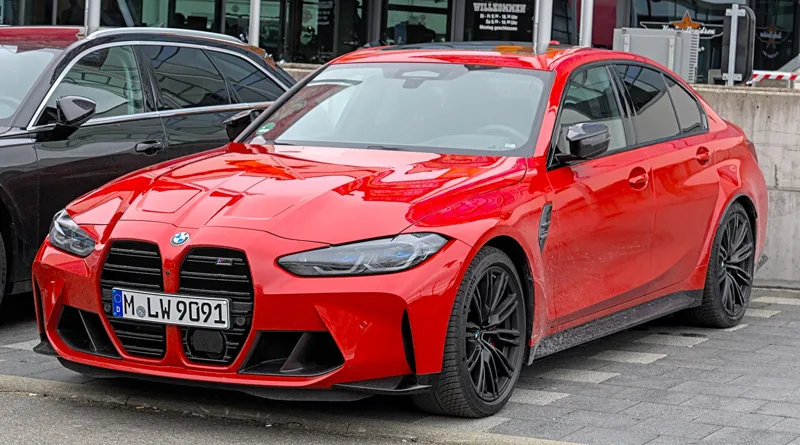
The BMW M3 is the high-performance 3 Series from BMW M GmbH. The first, the E30 of 1986, was a homologation special for touring-car rules requiring 5,000 road cars. The E36 added a six-cylinder engine in 1992, and since 2014 M3s have used a twin-turbocharged straight-six.
The first BMW M3 existed because a rule book demanded it. To go touring-car racing, BMW had to build 5,000 road cars, plus 500 evolution specials, and the result was the E30 M3 of 1986. Four decades later the M3 is still with us, offered as a saloon and an estate.
What is the BMW M3?
The M3 is the high-performance version of the BMW 3 Series, built by BMW's in-house motorsport division, BMW M GmbH. There has been an M3 for every generation of 3 Series since the E30 M3 arrived in 1986. It began as a coupe, with a convertible added soon after, and saloons appeared in the E36 and E90 generations.
Since 2014 BMW has rebranded the coupe and convertible as the 4 Series, which turned the M3 coupe into the M4. The M3 itself carried on as a saloon, and in 2020 BMW added an estate, the Touring, for the first time.
The M in the name stands for motorsport. BMW M GmbH was established in May 1972 with 35 employees and grew to 400 by 1988. It was originally called BMW Motorsport GmbH, and it changed its name in 1993. Its first racing project was the 3.0 CSL. BMW then built the 530MLE in 1976 to race in South Africa's Modified Production Series, which required 100 homologated road cars. The M1, revealed at the 1978 Paris Motor Show, was the first M-badged car offered to the public, and the direction of M cars changed with the 1979 M535i, a high-performance version of the 5 Series.
There has been an M3 for every generation of the 3 Series since 1986.
Why was the E30 M3 a homologation special?
Because the Deutsche Tourenwagen Meisterschaft (DTM) and Group A touring rules asked for it. To enter, a manufacturer had to build a total of 5,000 of the base model, with a further 500 evolution specials. The E30 M3 was BMW's answer, presented to the public at the 1985 Frankfurt Motor Show and built from March 1986 to June 1991.
The car was based on the E30, the second-generation 3 Series, which was produced from 1982 to 1994 and replaced the E21. Mostly the M3 was a coupe, with a limited run of convertibles that were sold only in Europe. In total BMW built 17,970 E30 M3s.
How was the E30 M3 different from a normal 3 Series?
Very different, despite the family resemblance. The M3 used a widened and heavily redesigned two-door body, and it shared only the bonnet, roof panel and sunroof with regular E30 models. A front splitter, a rear apron and sill panels all helped the airflow, the rear window was laid flatter and the lid at the back was moulded in lightweight glass-reinforced plastic, sitting about 40 mm higher. Lift fell and the car became steadier in a straight line.
The windscreen was glued in instead of sitting in a rubber frame, as in other E30 models. The effect was a drag coefficient of 0.33 against 0.38 for the standard 3 Series.
Under the bonnet sat the S14, a four-cylinder engine that revved to a 7,250 rpm redline. Its DOHC head was closely based on the head of the S38 six-cylinder engine, and the block came from the M10 four-cylinder. With a catalytic converter it made 143 kW (195 PS; 192 hp) and could reach 235 km/h (146 mph), while cars without one were rated at 147 kW (200 PS; 197 hp).
A Getrag 265 five-speed manual handled the gears. European cars got a dogleg pattern with close ratios and a 1:1 fifth gear, while North American cars used a conventional shift pattern with wider spacing and an overdriven fifth. A clutch-type limited-slip differential was standard. The M3 had its own brake calipers, discs and master cylinder, five-stud wheel hubs, 225/45R16 Pirelli P700-Z tyres and suspension changes that included offset control arm bushings to increase caster angle.
How many E30 M3 evolution models were there?
Several, produced to keep the car competitive as the racing rules changed from year to year. They added power, shed weight and sharpened the aerodynamics, and sold in limited numbers.
| Model | Year | Units | Output |
|---|---|---|---|
| E30 M3 (catalytic converter) | 1986 | 17,970 (all E30 M3) | 143 kW (195 PS) |
| Evolution 1 | 1987 | 505 | Unchanged |
| Evolution 2 | 1988 | 501 | 162 kW (220 PS) |
| Ravaglia and Cecotto | 1989 | 25 and 480 plus 80 Swiss | 158 kW (215 PS) |
| Sport Evolution | 1990 | 600 | 175 kW (238 PS) |
The Evolution 1 of 1987 carried a revised cylinder head, marked with an "E" stamp, and looked identical to the standard car. BMW France ordered a batch of 50 to celebrate the car's win on the 1987 Tour de Corse. The Evolution 2 of 1988 raised the compression ratio from 10.5:1 to 11.0:1, changed the camshaft and pistons and fitted a lightened flywheel. A deeper front air dam replaced the fog lights, the boot lid wore a rear spoiler with a flap, and thinner side and rear glass saved weight. Peak power rose to 162 kW (220 PS) at 6750 rpm, with 245 N m (181 lb ft) at 4750 rpm.
The Sport Evolution of 1990, sometimes called the Evo 3, enlarged the engine to 2,467 cc for 175 kW (238 PS; 235 hp) at 7,000 rpm and 240 N m (177 lbf ft). Top speed rose to 250 km/h (154 mph). It had enlarged front bumper openings and an adjustable front splitter and rear wing. In April 1989 the Ravaglia and Cecotto editions had arrived, named after DTM drivers, at 158 kW (215 PS; 212 hp). BMW made only 25 Ravaglias, while the Cecotto run was 480 cars plus 80 for Switzerland, detuned to 155 kW to meet that country's emissions limits.
The odd ones out
BMW M built a pick-up in 1986. The M3 Pickup prototype was based on the convertible and powered by the 2.0-litre S14 from the Italian-specification M3, and BMW M used it as a transporter for roughly 26 years until retiring it in 2012. Italy and Portugal taxed cars with engines over 2.0 litres heavily, so BMW built the 320is there with a 2.0-litre S14 making 141 kW (192 PS). In South Africa, where no M3 was sold, BMW SA and Alpina created the 333i with a 3.2 L M30 engine, producing 210 cars from 1985 to 1987.
How successful was the E30 M3 in racing?
Highly. In full race trim, the 1988 car's 2.3-litre naturally aspirated engine produced about 221 kW (300 PS; 296 hp), and the 2.5-litre evolution engine introduced in 1990 raised that to roughly 279 kW (379 PS; 374 hp). It often beat rivals with larger or turbocharged engines.
The car won the 24 Hours Nurburgring five times, in 1989, 1990, 1991, 1992 and 1994, and the Spa 24 Hours four times, in 1987, 1988, 1990 and 1992. Its list of titles is long. It took the World Touring Car Championship in 1987, the European Touring Car Championship in 1987 and 1988, the DTM in 1987 and 1989, and the British Touring Car Championship in 1988 and 1991. It won four Italian Superturismo titles, seven Japanese JTC-2 titles from 1987 to 1993 and the 1987 Australian Touring Car Championship.
On the rally stage, Prodrive-prepared M3s contested national championships and selected World Rally Championship rounds between 1987 and 1989. By 1989 they had six-speed gearboxes and about 221 kW (300 PS). Against four-wheel-drive cars on loose surfaces they struggled, but on asphalt they were very effective, and Bernard Beguin won the 1987 Tour de Corse in one.
What changed with the E36 M3?
Everything under the bonnet. The E36 M3 went on sale in November 1992 as a coupe, with a convertible added in 1994 and a saloon in December 1994. The saloon covered a hole in the M range: the E34 M5 ended in 1995 and the E39 M5 did not arrive until 1998.
It was powered by the S50 straight-six, the first six-cylinder engine in an M3, and the layout has since powered most M3 models, albeit with turbocharging from 2014. In most countries the first version displaced 2,990 cc and made 210 kW (286 PS; 282 hp), peaking at 7,000 rpm, with 320 N m (236 lb ft) of torque. North American cars used the less powerful S50B30US, at 179 kW (243 PS; 241 hp).
The facelift of September 1995 enlarged the engine to 3,201 cc, with 236 kW (316 hp) arriving at 7,400 rpm and 350 N m (258 lbf ft) of torque, and replaced the five-speed manual with a six-speed. The North American S52 stayed at 179 kW. A 6-speed automated manual called SMG also arrived, the first time an automated transmission was offered on an M3 outside the United States. Praised for its fast shifts in performance driving, it was criticised for its behaviour in everyday use. The 1996 coupe in European specification weighed 1,515 kg (3,340 lb).
North American E36 saloons and convertibles were the first M vehicles to get a traditional torque-converter automatic. BMW also made limited editions. The 1994 M3 GT, a homologation special for Europe, was painted British Racing Green only. BMW built 356, with 220 kW (295 hp) at 7,100 rpm, a deeper front splitter, a higher double rear wing, aluminium doors and a derestricted top speed of 275 km/h (171 mph). A 50-car UK run took the GT's cosmetics without the mechanical upgrades. In 1996 BMW M hand-built an M3 Compact prototype aimed at younger buyers, but it never reached production.
How did the M3 move from naturally aspirated to turbocharged?
For decades BMW M refused to use forced induction. Until the 2010 model year it never used supercharging or turbocharging, and as late as the early 2000s BMW regarded both as low-tech shortcuts to more horsepower that added weight and complexity and dulled throttle response. BMW M has chosen to tune only cars with what it calls lateral agility, historically the 3 Series, 5 Series and roadsters.
The E90 M3, a saloon built from 2008 to 2012, used the S65 V8, related to the S85 V10 of the E60 M5. Those two engines are the most powerful BMW has built without supercharging or turbocharging, at 100 hp per litre of displacement, and each won numerous International Engine of the Year awards. Rule changes on CO2 and fuel consumption in the late 2000s were cited as the reason to stop developing high-revving naturally aspirated engines. The N54 twin-turbo straight-six in the 2007 335i gave almost the same performance as the E46 and E90 M3 while being more practical and fuel-efficient every day.
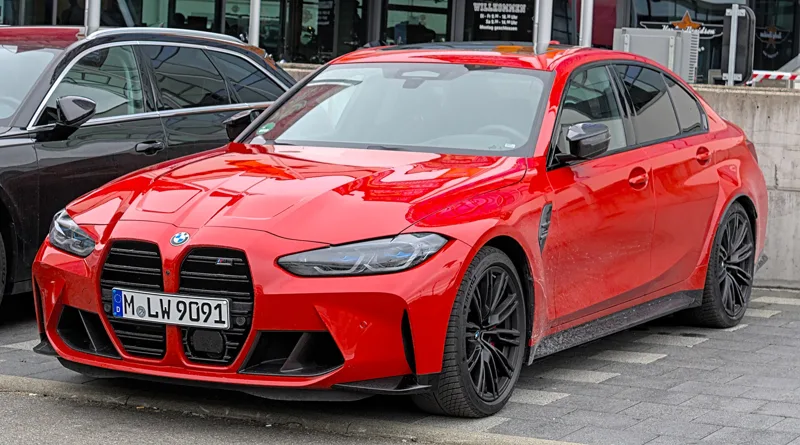
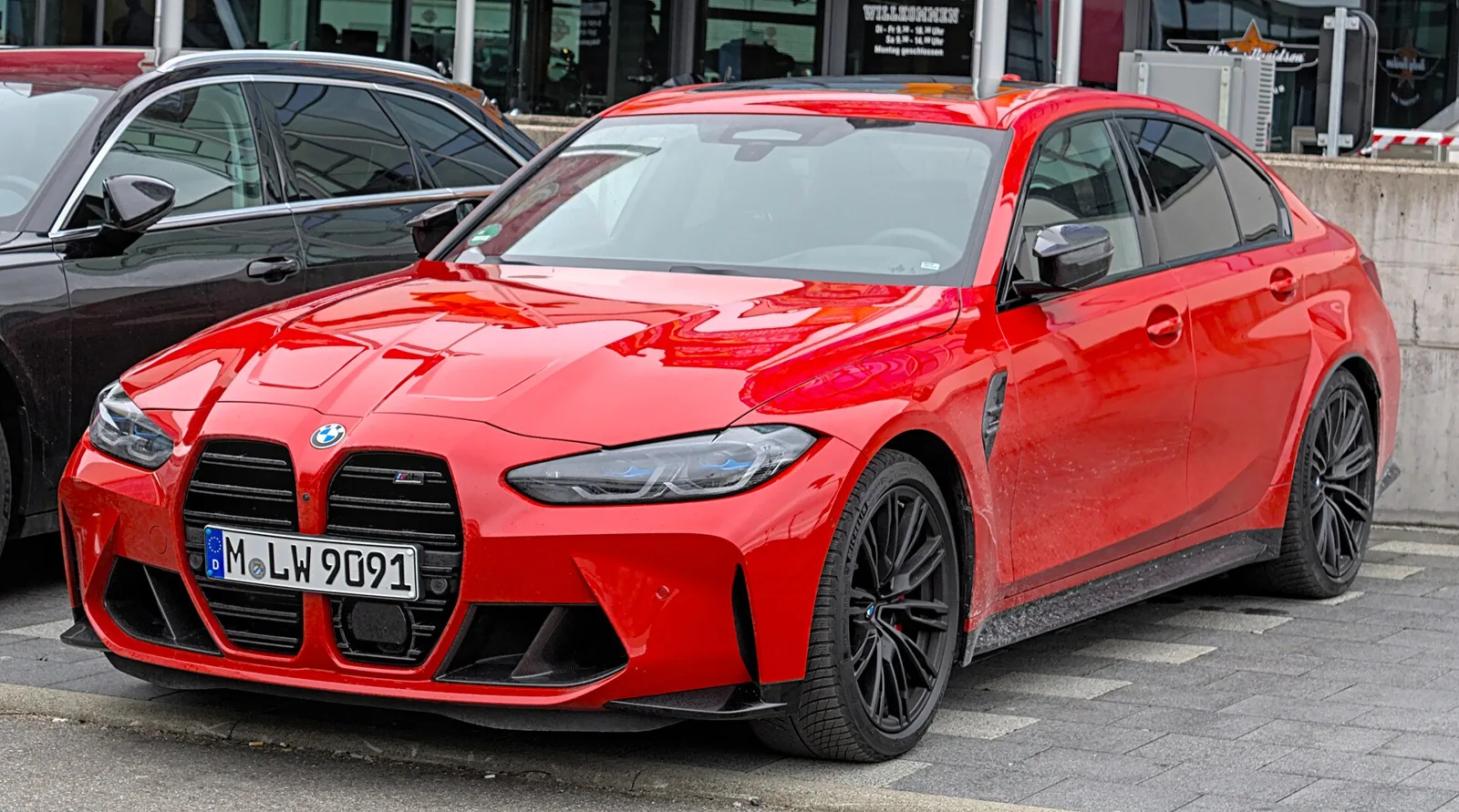
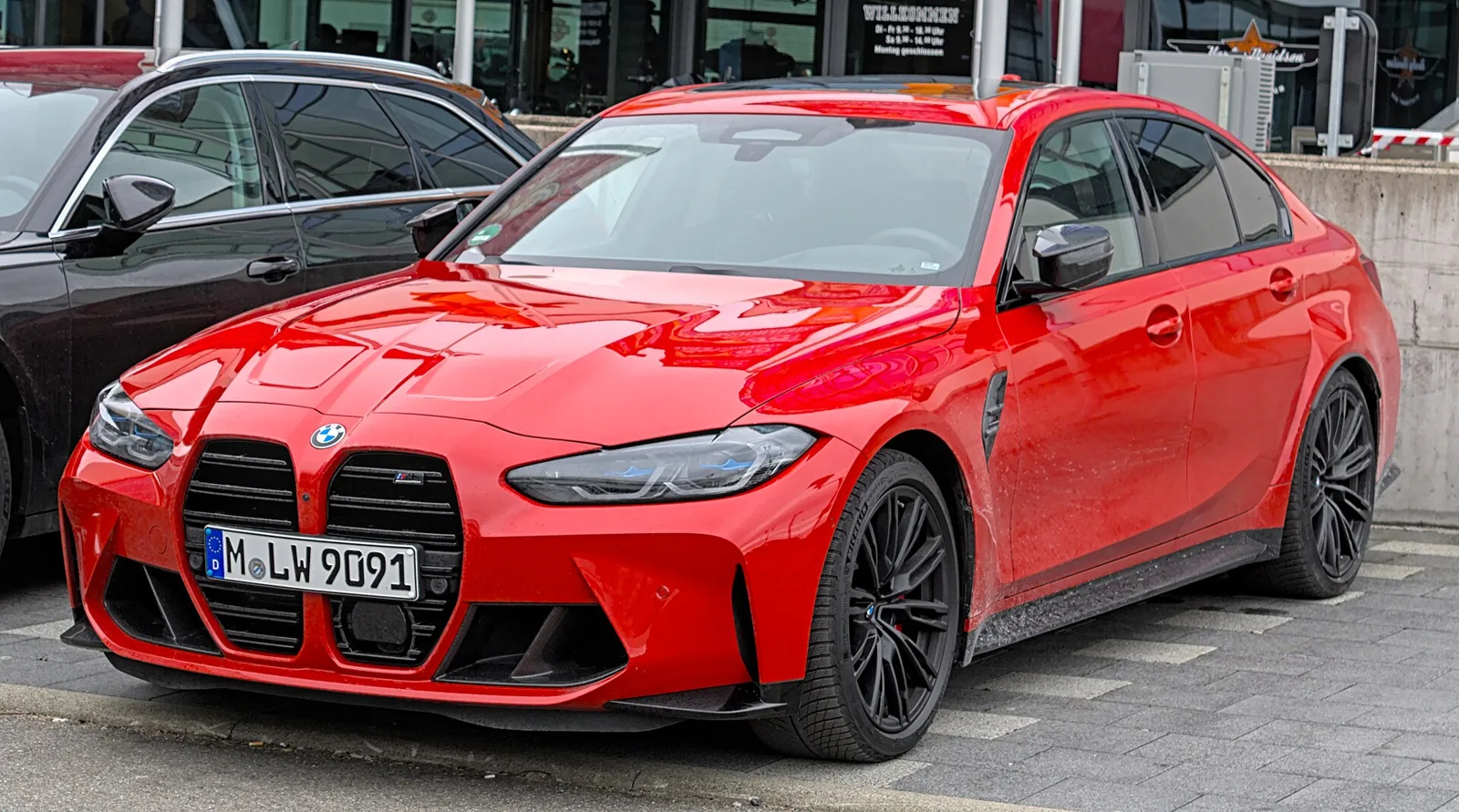
The E92/E93 M3 was the last traditional M car. The next generations, the F80 M3 and the F82/F83 M4, moved to a twin-turbocharged straight-six, and the six-cylinder has been turbocharged ever since. The current range is the G80 saloon and G81 estate, with the G82 coupe and G83 convertible as the M4.
Is the E30 the best M3 ever?
Magazines have given it plenty of credit. Sports Car International ranked the E30 M3 sixth among the Top Sports Cars of the 1980s in 2004. Automobile Magazine, three years later, put it among its "5 greatest drivers cars of all time" within a feature on the 25 Greatest Cars of All Time.
The M3 today
The current range is the G80 M3 saloon and the G81 estate, with the G82 M4 coupe and G83 convertible beside them. The estate was first produced in 2020, and the G80 and G81 generation is listed from 2021. BMW M's other current cars are the M2 (G87, from 2023), the M5 (G90 saloon and G99 estate, from 2024) and the XM, one of two models, with the M1, that BMW sells only in M form.