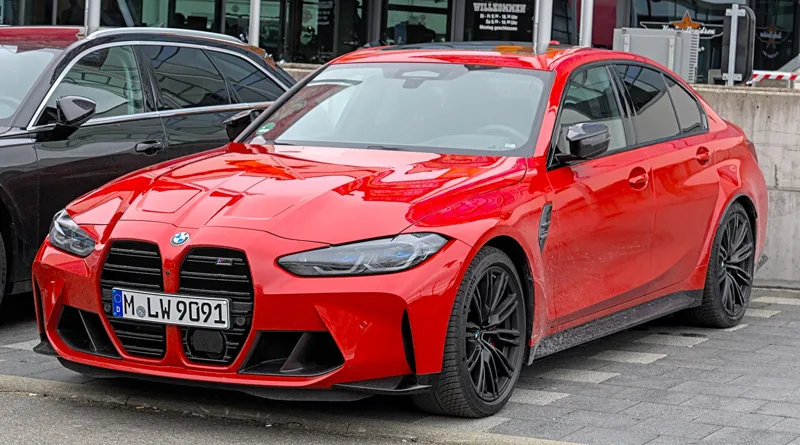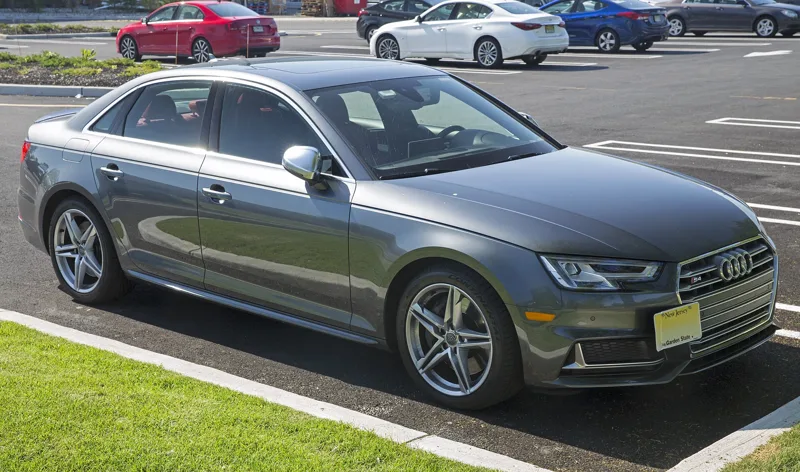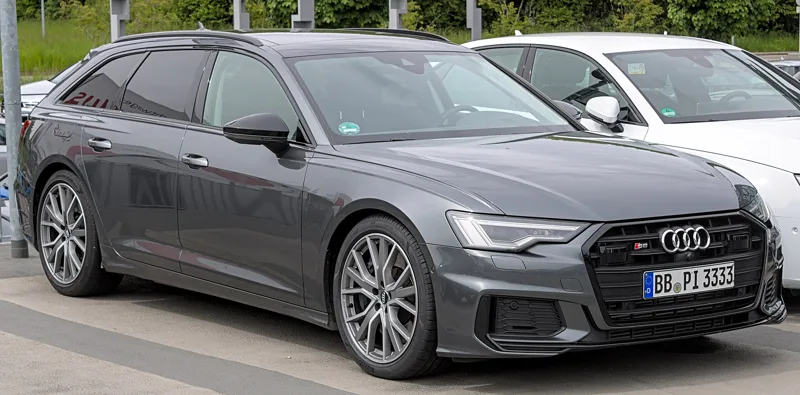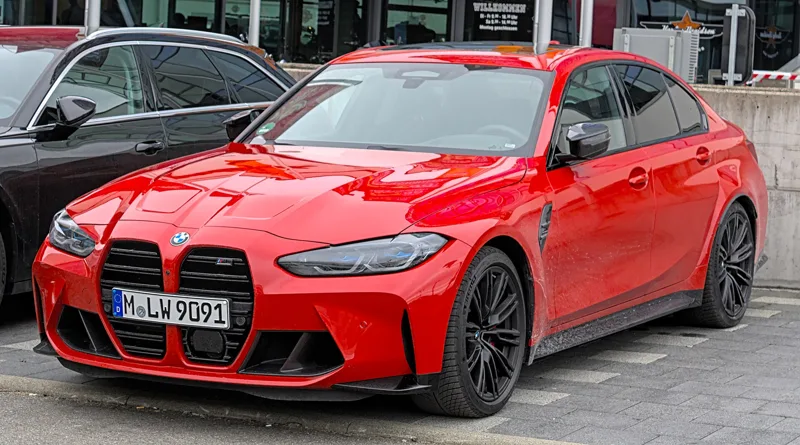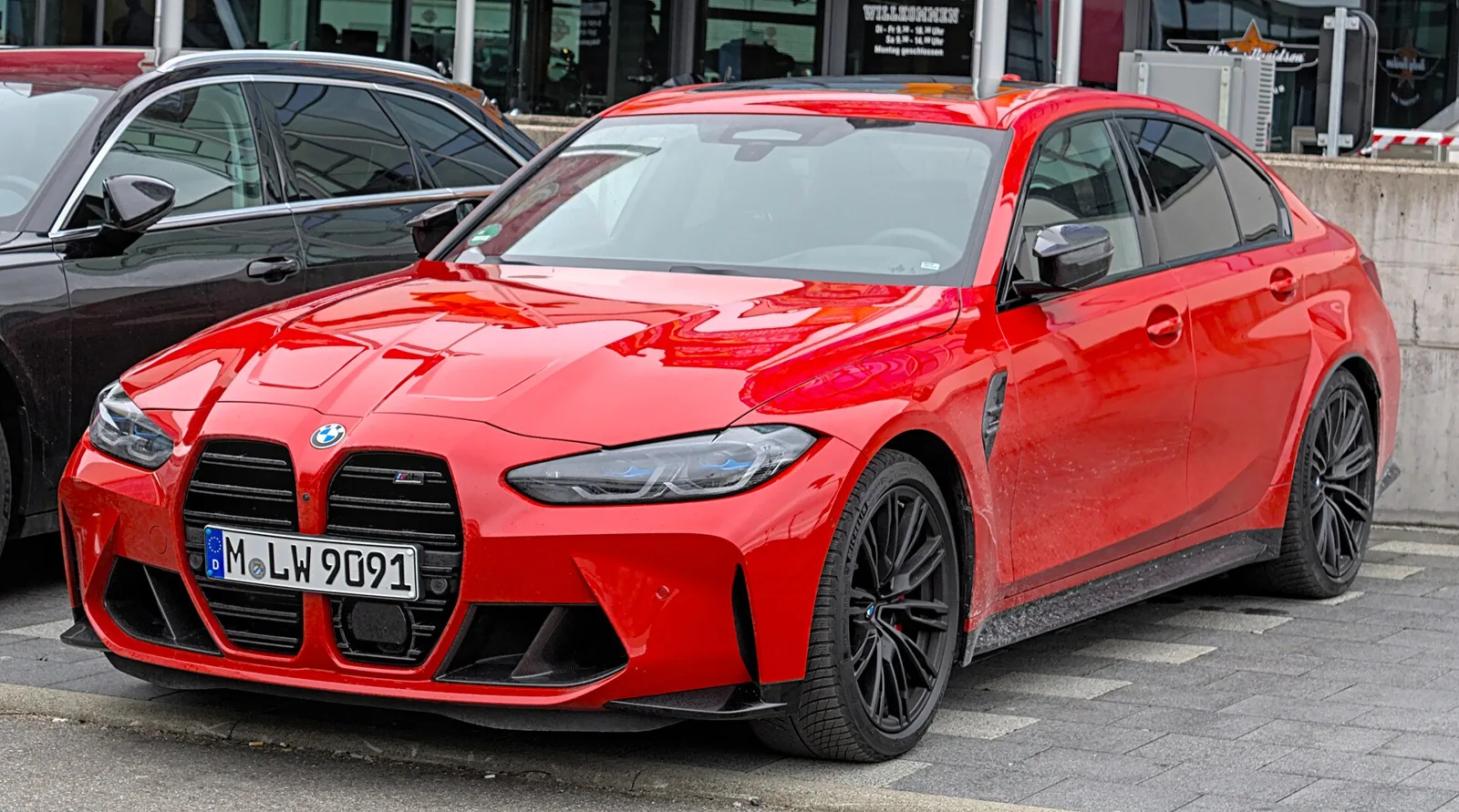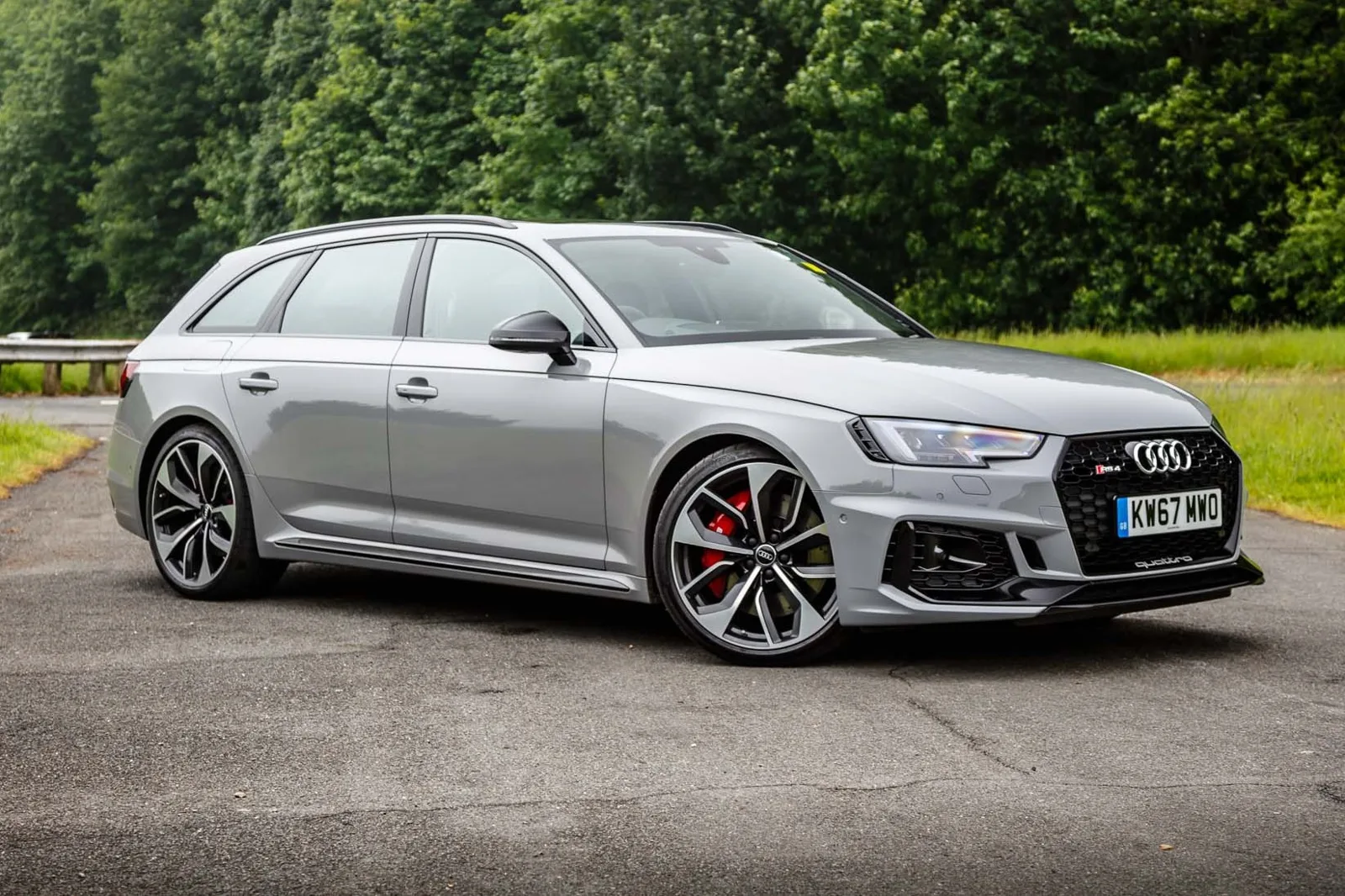
Audi's RS 4 and BMW's M3 both took family-sized bodies and turned them into fast road cars, but the two cars rarely shared a showroom year, so their stories run on parallel tracks.
The Audi RS 4 B5 and BMW M3 E36 overlapped in 1999, when a 280 kW V6 Avant met a 236 kW straight-six coupe. The RS 4 B7 came later, and the E30 M3's Nurburgring record is the strongest racing story in this comparison.
The Audi RS 4 and the BMW M3 are both high-performance versions of compact-class executive cars, built from a family saloon or estate and turned into fast road machines. The M3 has been produced since 1986 by BMW's motorsport division, while the RS 4 arrived in 1999 as the top version of the A4 Avant.
Were the RS 4 and the M3 rivals?
Yes, in the performance compact class, and the RS 4 history names the BMW M3 among its main market competitors. The two cars only shared a window of production at the edges: the B5 RS 4 overlapped the late E36 M3 in 1999, and the B7 RS 4 arrived after the E36 had ended.
The M3's history covers the E30 and E36 generations in detail, so the comparison is strongest on the late 1990s. The sections below set out what each car offered in its own time.
A turbocharged V6 Avant with quattro grip against a rear-drive M3 whose Nurburgring 24 Hours wins in the late 1980s and early 1990s made it a class benchmark.
How did the RS 4 come about?
The original B5 RS 4 Avant quattro went on sale from 2000, as the successor to the RS2 Avant that Porsche and Quattro GmbH had developed. It was built on the Volkswagen Group B5 platform, and Audi produced 6,030 units between 1999 and 2001.
The second RS 4, the B7 of 2006 to 2008, was built by quattro GmbH in Neckarsulm. It was unveiled in February 2005 and reached European customers in mid-2006, with about 10,000 built, of which around 2,000 were sold in the United States.
How did the M3 come about?
The first M3 was a homologation special built on the E30 3 Series. It had to meet the Deutsche Tourenwagen Meisterschaft and Group A touring rules, which required 5,000 base cars and 500 evolution specials. It was presented at the 1985 Frankfurt Motor Show and built from March 1986 to June 1991, with 17,970 cars made.
The E36 M3 followed in November 1992, initially as a coupe. A convertible was added in 1994, and a saloon in December 1994 filled the gap left by the lack of an M5 saloon between the E34 and E39 M5s.
How do the specifications compare?
| Feature | Audi RS 4 (B5) | BMW M3 (E36) |
|---|---|---|
| Years | 1999 to 2001; 6,030 built | November 1992 to 1999 in the material |
| Body | Avant only | Coupe first; convertible from 1994; saloon from December 1994 |
| Engine | 2.7-litre V6 biturbo developed by Cosworth | S50 straight-six, 2,990 cc at first, then 3.2 litres in the facelift |
| Output | 280 kW (381 PS; 375 bhp) at 7,000 rpm | 210 kW (286 PS; 282 hp) at 7,000 rpm; 236 kW (316 hp) at 7,400 rpm after the facelift |
| Torque | 440 N-m (325 lbf-ft) at 6,000 rpm | 320 N-m (236 lb-ft) at 3,600 rpm at first; 350 N-m (258 lbf-ft) at 3,250 rpm after the facelift |
| Transmission | Six-speed manual with Torsen quattro | Five-speed manual, then six-speed; SMG automated manual from 1995 |
| Drivetrain | quattro all-wheel drive | Rear-wheel drive |
| Weight | 1,620 kg (3,571 lb) | 1,515 kg (3,340 lb) for the 1996 European coupe |
| 0 to 100 km/h | 4.9 seconds | Not reported |
| Top speed | 250 km/h (155 mph), electronically limited | Not reported |
| Limited editions | Not reported | M3 GT, 356 cars for Europe, with 220 kW (295 hp) |
| Motorsport | Not reported | E30 won the Nurburgring 24 Hours five times; the E36 M3 GT was a racing homologation special |
How did the RS 4 B7 compare with the M3 of its time?
The B7 RS 4 used a 4.2-litre V8 with 309 kW (420 PS; 414 bhp) at 7,800 rpm. Its saloon reached 100 km/h in 4.8 seconds and 200 km/h in 16.6 seconds, and Road & Track recorded 4.5 seconds to 60 mph in a November 2009 test of ultimate sedans.
The material does not give the performance of the M3 generations after the E36, so a like-for-like figure for the B7 against the M3 cannot be made from the available records. The B7 was the only RS Audi to use a naturally aspirated engine until the RS5 of 2010.
How did the E30 M3 engine and chassis work?
The E30 M3 used the BMW S14 four-cylinder, a high-revving DOHC engine with a head closely based on the S38 six, and a block from the M10. It was rated at 143 kW (195 PS; 192 hp) with a catalytic converter and at 147 kW (200 PS; 197 hp) where there was none.
The M3 had wider aerodynamic changes that reduced its drag to Cd 0.33, against 0.38 for the standard 3 Series. Its brakes and master cylinder were unique to the model, and it used a Getrag 265 five-speed manual with a clutch-type limited-slip differential.
How did the RS 4 B5 and the E36 M3 engine differ?
The RS 4 B5's V6 biturbo was developed from the 2.7-litre unit used in the B5 S4, with Cosworth-cast aluminium heads, two parallel turbochargers and enlarged intercoolers. It made 280 kW (381 PS; 375 bhp) and 440 N-m of torque.
The E36 M3 used the S50 straight-six, which was the first six-cylinder in an M3 and has been used in most M3s since, albeit turbocharged from 2014. Its 1995 facelift raised the engine to 3.2 litres and 236 kW (316 hp), and the North American cars used a less powerful version.
How did the two cars perform in motorsport?
The E30 M3 was highly successful in touring car racing. It won the 24 Hours of Nurburgring five times and the Spa 24 Hours four times, often against cars with significantly larger or turbocharged engines, and its Tour de Corse win in 1987 was driven by Bernard Beguin.
The RS 4 record shows no comparable racing programme for the B5 or B7, so the M3's competition record is the stronger of the two in this comparison.
What were the M3 Evolution models?
To keep the E30 competitive from year to year, BMW released homologation specials with limited volumes. The Evolution 1 of 1987, also called EVO1, had a revised cylinder head with an E stamp and no visible change from the standard car. In total 505 were built between March and May 1987, and BMW France commissioned a batch of 50 special editions after the M3 won the 1987 Tour de Corse.
The Evolution 2 followed in 1988, with 501 examples built between March and May. It had a revised camshaft, pistons and a compression ratio raised from 10.5:1 to 11.0:1, a more efficient air intake and a lighter flywheel. Its output rose to 162 kW (220 PS) at 6,750 rpm and 245 N-m at 4,750 rpm, and the final drive was shortened from 3.25:1 to 3.15:1 for a higher top speed.
The Sport Evolution of 1990 had a 2,467 cc engine producing 238 PS (175 kW; 235 hp) at 7,000 rpm, with enlarged front bumper openings and an adjustable front splitter and rear wing. Its top speed reached 250 km/h (154 mph) in a limited run of 600 units.
How did the M3's racing and special editions develop?
The Ravaglia and Cecotto limited editions appeared in April 1989, named after two touring car drivers. The Cecotto Edition ran to 480 cars, with a further 80 for Switzerland tuned down to 155 kW (211 PS; 208 hp) for its emissions limits, and the Ravaglia Edition consisted of 25 cars.
In full race trim the 1988 M3 produced about 221 kW (300 PS; 296 hp) from its 2.3-litre engine. With the 2.5-litre evolution engine introduced into racing in 1990, power rose to roughly 279 kW (379 PS; 374 hp), and Prodrive-prepared rally cars contested several national championships and selected world rounds between 1987 and 1989.
How did the E36 M3's gearboxes and chassis change?
The E36 facelift of September 1995 raised the engine to 3.2 litres and upgraded the manual from five speeds to six, with different wheels and clear indicator lenses. The facelift reached the saloon in November 1995 and the convertible in February 1996.
The facelift also brought the six-speed SMG automated manual, the first automated transmission on an M3 outside the United States. It was praised for its fast shifts and its behaviour in performance driving, but criticised for everyday use. The 1996 European coupe weighed 1,515 kg (3,340 lb).
What did the M3 GT and the Compact prototype add?
The M3 GT of 1994 was a racing homologation special for Europe, built to compete in FIA GT class II, IMSA GT and international long-distance races. Its European engine was upgraded with larger camshafts and a higher compression ratio, giving 220 kW (295 hp) at 7,100 rpm, and it was finished in British Racing Green.
The GT had aluminium doors, 17-inch wheels, a deeper front splitter and a higher rear wing, and it was about 30 kg (66 lb) lighter than the regular M3, with a derestricted top speed of 275 km/h (171 mph). In 1996 BMW M also hand-built an E36 M3 Compact prototype for younger customers, using the 3.2-litre S50 in a body familiar to North American buyers, but it never reached production.
What was the M3 Pickup prototype?
In 1986 BMW produced an M3 Pickup prototype, based on the convertible with the narrower body of the regular E30. It was first powered by the 2.0-litre version of the S14 from the Italian-specification M3, and BMW M used it as a transporter for roughly 26 years before it was retired in 2012.
How did the RS 4 B7 saloon and Avant compare for luggage?
The B7 saloon offered 460 litres (16.2 cu ft) with the rear seats upright and between 720 and 833 litres (25.4 to 29.4 cu ft) with them folded, depending on specification. The Avant gave 442 litres (15.6 cu ft) under its retractable load cover and 1,354 litres (47.8 cu ft) with the seats folded.
The interior carried a Bose ten-speaker system with 190 watts, and the RNS-E DVD navigation was available. Its Recaro seats were fitted with pyrotechnic belt pretensioners and, in North America, lower side airbags.
Which buyer suits which car?
The facts do not settle which car was better, because they belong to different years and different engineering. The RS 4 suits a buyer who wanted an Avant or saloon with quattro all-wheel drive, and a V8 or V6 turbo with a strong torque curve. The M3 suits a buyer who wanted a rear-drive coupe with a motorsport heritage and a homologation history.
The M3's production total of 17,970 cars for the E30 is the clearest sales figure the material gives for the M3, while the RS 4 B5's 6,030 units are the clearest for Audi's car. Neither figure settles a verdict between the two.