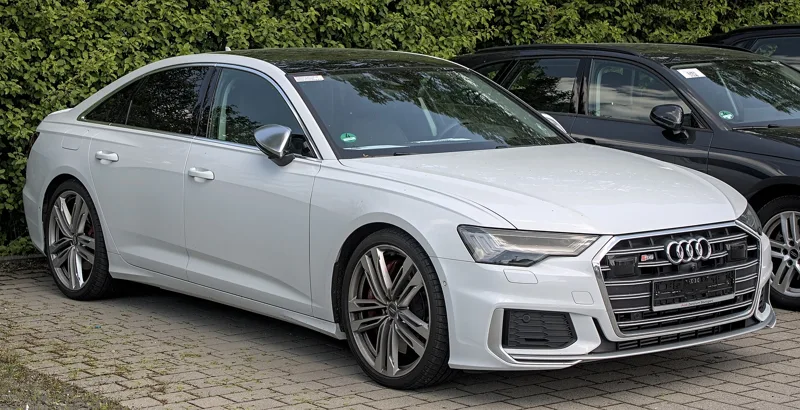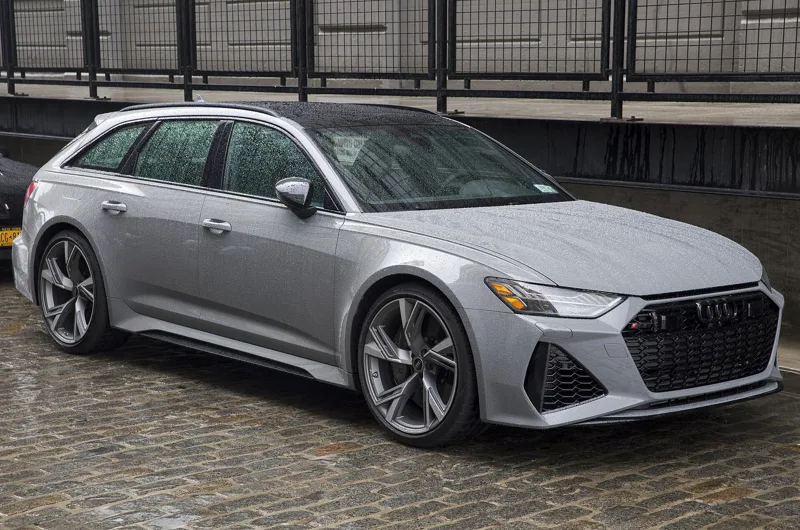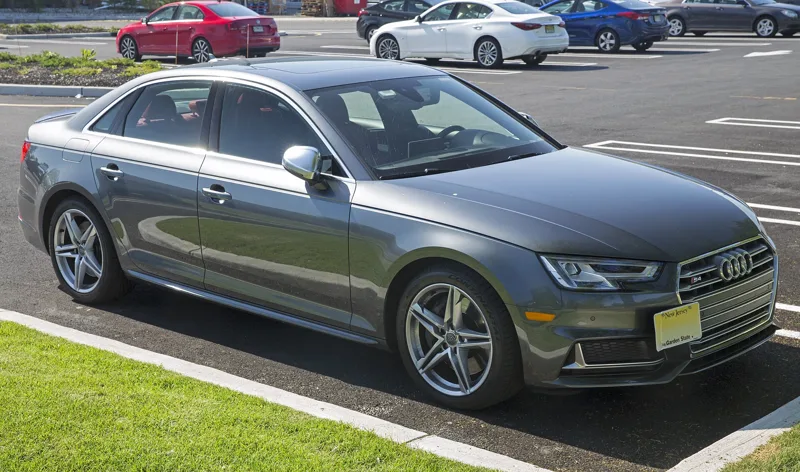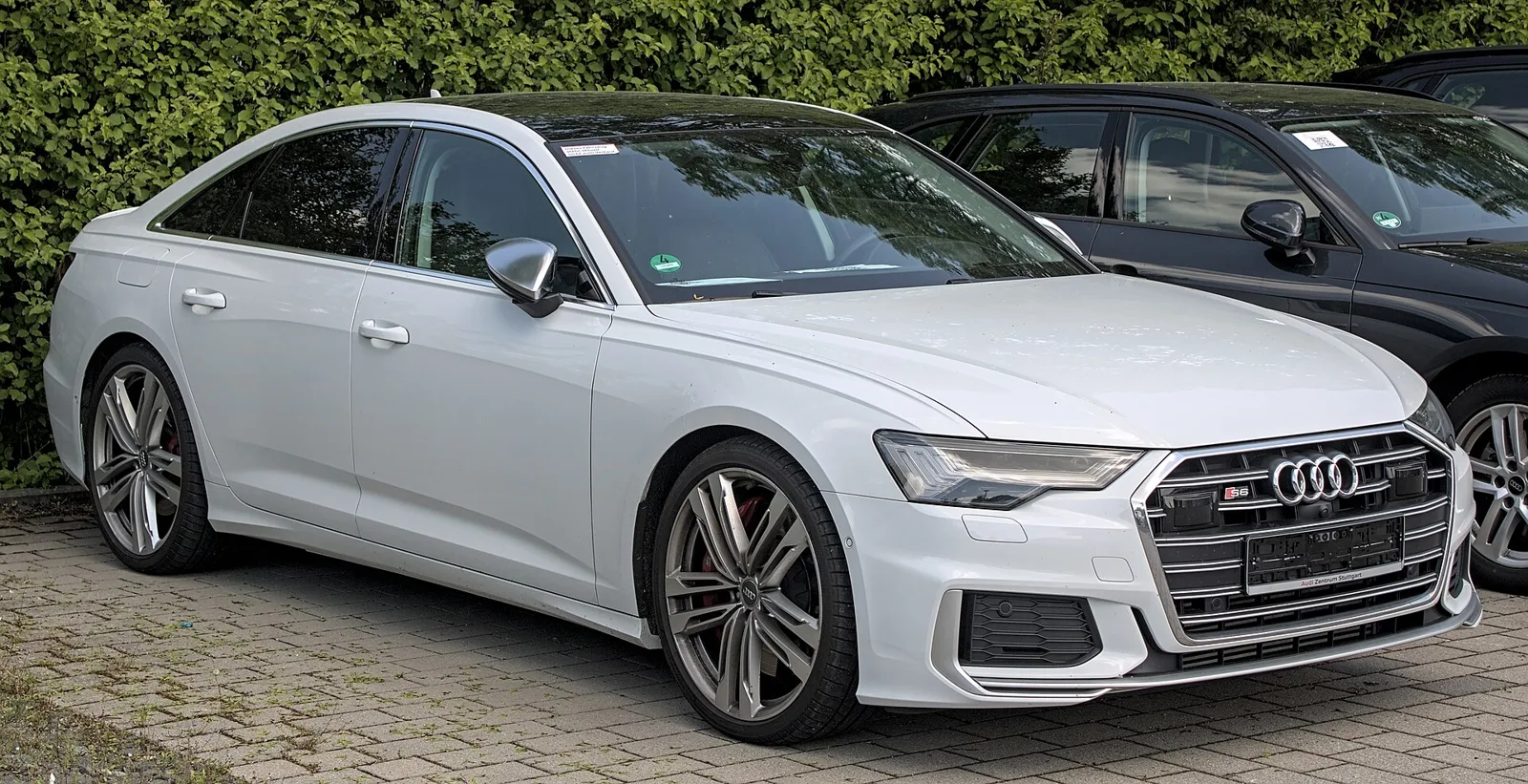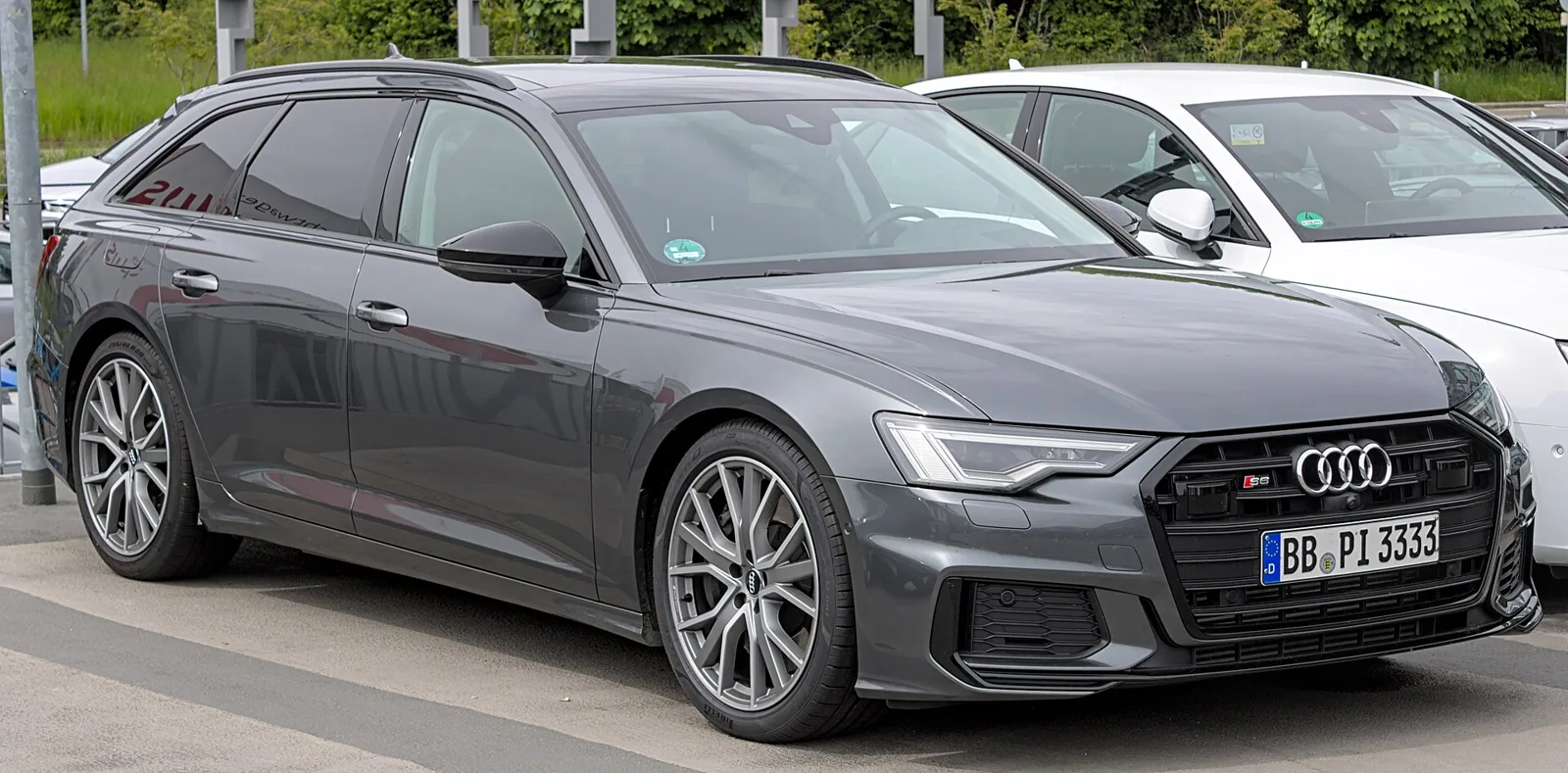
Audi's S6 and BMW's M5 faced each other in the mid-1990s and again around 2000, with the Audi moving from a turbo five to a V8 and the BMW from a six to a V8.
The Audi S6 and BMW M5 met in the mid-1990s and again from 1999 to 2003. The C4 S6's turbo five and the C5 S6's 250 kW V8 faced the E34 and E39 M5, with the E39's 294 kW V8 setting the higher peak output.
The Audi S6 and the BMW M5 were high-performance executive saloons, and their careers overlapped twice: in 1994 and 1995 when the first S6 met the E34 M5, and from 1999 to 2003 when the C5 S6 met the E39 M5. The S6 began as a revised version of the S4 and later became a V8 car, while the M5 moved from a straight-six to a V8 with the E39.
Were the S6 and the M5 rivals?
Yes, in the same class. Both were executive saloons with a performance trim, sold to buyers who wanted more than a standard executive car. The S6 was sold in Europe and the United States, while the M5 was sold in Europe, Britain, the United States, Canada and South Africa.
The two makers went about the job differently. Audi kept the S6 close to its S4 origins and then added a V8 option, while BMW's motorsport division built the M5 as a separate car with its own engine and chassis.
A turbo five that became a V8, set against an M5 that moved from a six to a V8, two saloons that met twice in their long careers.
How did the S6 come about?
The S6 went on sale in 1994, shortly after the A6 name replaced the 100 nameplate. The original S6 was largely identical to the S4 (C4), with new body cladding and badging, and it was sometimes called the Ur-S6. It was sold as a saloon and an Avant in Europe and the United States, and only as a saloon in Canada, Asia and Australia.
The C5 S6 arrived in 1999 on the Volkswagen Group C5 platform, as the S6 quattro. It was built as a saloon and a five-door Avant, with the Avant the only body sold in North America. It went out of production in 2003.
How did the M5 come about?
The first M5 was the E28, hand-built from late 1984 with an updated version of the M1's engine. At its launch it was the fastest production saloon in the world, and 2,241 were built in total. The E34 followed from September 1988 to August 1995, with the S38 straight-six and 12,254 units made.
The E39 M5 was introduced at the 1998 Geneva Motor Show, and it was the first M5 to use a V8. Production ran from October 1998 to 2003, with 20,482 cars built at Dingolfing.
How do the specifications compare?
| Feature | Audi S6 (C4 or C5) | BMW M5 (E34 or E39) |
|---|---|---|
| Years | C4 1994 to 1997; C5 1999 to 2003 | E34 1988 to 1995; E39 1998 to 2003 |
| Engine | C4 2,226 cc turbo five or 4.2-litre V8; C5 4.2-litre 40-valve V8 | E34 S38 straight-six, 3.6 or 3.8 litres; E39 S62 V8 |
| Output | C4 five 169 kW (230 PS; 227 bhp); C4 V8 213 kW (290 PS; 286 bhp); C5 250 kW (340 PS; 335 bhp) | E34 232 kW (315 PS; 311 hp), 250 kW with the 3.8; E39 294 kW (400 PS; 394 hp) |
| Torque | C4 five 350 N-m; C4 V8 400 N-m; C5 420 N-m (310 lbf-ft) | E34 360 N-m (266 lb-ft); E39 500 N-m (369 lb-ft) |
| 0 to 100 km/h | C4 five 6.7 seconds; C4 V8 5.9 seconds; C5 6.7 seconds | E34 6.3 seconds to 97 km/h; E39 4.8 seconds |
| Top speed | C4 five 241 km/h (149.8 mph); C4 V8 249 km/h (154.7 mph); C5 250 km/h (155.3 mph) | E34 limited to 250 km/h (155 mph); E39 limited to 250 km/h |
| Transmission | C4 six-speed manual or four-plus-one automatic; C5 six-speed manual or ZF five-speed tiptronic | E34 five and then six-speed Getrag manual; E39 Getrag 420G six-speed |
| Drivetrain | quattro all-wheel drive on all S6s | Rear-wheel drive |
| Brakes | C4 314 mm front discs; C5 321 mm front discs | Not reported; E39 with aluminium suspension parts |
| Production | S6 Plus 952 cars in 1996 and 1997 | E34 12,254; E39 20,482 |
| Body | Saloon and Avant; Avant only in North America for the C5 | Saloon; E34 Touring from 1992 with 891 units |
How did the C4 S6 perform against the E34 M5?
The C4 S6 turbo five produced 169 kW (230 PS; 227 bhp) at 5,900 rpm and 350 N-m of torque. Its time to 100 km/h was 6.7 seconds, and 160 km/h came in 17.5 seconds, with a top speed of 241 km/h (149.8 mph).
The E34 M5 used the S38 straight-six, and the S38B36 in the second-generation car produced 232 kW (315 PS; 311 hp). It took 6.3 seconds to 97 km/h, with its top speed limited to 250 km/h (155 mph). The 3.8-litre S38B38 that arrived in late 1991 raised output to 250 kW (340 PS; 335 hp).
How did the S6 V8 and the S6 Plus compare?
The C4 S6 could be ordered with a 4.2-litre V8 at 213 kW (290 PS; 286 bhp) and 400 N-m, which took 5.9 seconds to 100 km/h and topped out at 249 km/h (154.7 mph). That V8 car came with a four-speed automatic and quattro, with a six-speed manual as an option.
The S6 Plus was a limited run of 952 cars, built from June 1996 to October 1997, with 855 Avants and 97 saloons. Its V8 was reworked to 240 kW (326 PS; 322 bhp), with a revised six-speed manual and enlarged 323 mm front discs. The saloon took 5.6 seconds to 100 km/h and the Avant 5.7 seconds.
How did the C5 S6 and the E39 M5 compare?
The C5 S6 used a new 40-valve 4.2-litre V8 rated at 250 kW (340 PS; 335 bhp), with 420 N-m of torque at 3,400 rpm. Its 100 km/h time was 6.7 seconds, and 200 km/h came after 21.7 seconds; and its top speed was electronically governed to 250 km/h (155.3 mph).
The E39 M5's S62 V8 produced 294 kW (400 PS; 394 hp), with 500 N-m of torque at 3,800 rpm. Acceleration to 97 km/h took 4.8 seconds, and an unrestricted car topped 300 km/h (186 mph) in testing. The E39 M5 produced more peak output, 294 kW against the C5 S6's 250 kW.
How did the chassis and drivetrain compare?
The S6 had quattro on every model, using the Torsen T-1 system with Electronic Differential Lock. The C5 S6 was lowered by 10 mm and stiffened, with 30 percent stiffer springs and shocks and 40 percent more compression damping, and it had ZF rack and pinion Servotronic power steering.
The E39 M5 had rear-wheel drive, a 25 percent limited-slip differential and a 3.15:1 final drive. Its MacPherson strut front and multi-link rear suspension were lowered by 23 mm, with thicker anti-roll bars and polyurethane auxiliary springs.
What did the S6's later V10 look like?
The C6 S6 of 2006 to 2011 used a 5,204 cc 40-valve V10 whose 320 kW (435 PS; 429 bhp) arrived at 6,800 rpm, with 540 N-m of torque from 3,000 to 4,000 rpm. It was derived from Lamborghini's 5.0-litre V10 but with a longer stroke and a wider bore to add low-end torque for the heavier saloon.
The ZF six-speed tiptronic was the only transmission, with steering-wheel paddles, and quattro was standard. A facelift for the 2009 model year and third-generation MMI electronics for 2010 completed the car's run.
What did the S6 Plus change on the chassis?
Further revisions went into the suspension, brakes and wheels of the S6 Plus. The front brake discs grew to 323 mm (12.7 in) in diameter and 30 mm thick, and the standard wheels were 8Jx17 six-spoke Avus alloys with 255/40 R17 tyres. A 7Jx16 alloy wheel for winter tyres was also available.
The C4 S6 had standard Avus wheels of 7.5Jx16 with 205/55 R16 tyres, and an 8Jx17 Bolero wheel with 225/45 R17 tyres was an option. The C4's front brakes were 314 mm ventilated discs with Girling calipers, and the rear discs measured 269 mm.
How was the C5 S6 body built?
The C5 S6's body panels were largely based on the Audi A6 4.2, with slightly flared wheel arches and door sills. The bonnet and front wings were made of aluminium, and the car carried S6 badging, a unique front grille and a rear bootlid spoiler.
Interior options included bolstered seats and Recaro sports seats, and the door mirror housings were polished aluminium. The layout was otherwise close to the standard A6, so the S6 was distinguished mainly by its engine and its detail trim.
What did the RS 6 add above the C5 S6?
The RS 6 built on the S6 with a biturbo version of the same 4.2-litre V8, producing 331 kW (450 PS; 444 bhp) at 5,700 to 6,400 rpm, with 560 N-m of torque available from 1,950 to 5,600 rpm. Its only transmission was a five-speed tiptronic automatic.
Compared with the S6, the RS 6 was lowered by 20 mm, with ventilated brake discs upgraded to 365 mm at the front and 335 mm at the rear. The optional Dynamic Ride Control system used diagonally interlinked dampers, and the car took 4.6 seconds to 100 km/h.
How did the E34 M5's wheels and special editions look?
From 1988 to 1992 the M5 used three-piece Style 20 M-System wheels, with magnesium bolted-on covers and an aluminium assembly with concentric fins. BMW said the covers raised airflow to the brakes by 25 percent. The M-System II of 1992, nicknamed throwing stars, improved brake cooling, and in May 1994 the M5 moved to 18-inch Style 37 M Parallel wheels without the finned cover.
Four E34 special editions were made. The Cecotto had 22 cars, the Winkelhock was a lightweight edition with 51 cars, the 20 Jahre marked BMW Motorsport's 20th anniversary in 1992 with 20 Mugello Red cars, and the UK Limited Edition of 1995 totalled fifty cars.
How did the E39's engine work?
The E39's S62 had electronically actuated individual throttle bodies, an aluminium block and heads, double-VANOS variable valve timing and a semi-dry sump oil system. It was a naturally aspirated engine, so its output came from its capacity and its valve timing rather than from boost.
The S6 C5's V8 was a 40-valve design with solenoid-operated magnesium two-stage variable intake manifolds, and it used cylinder-selective knock control. Both engines were managed by Bosch electronics, and both were chosen to suit their cars' weight and character.
Which buyer suits which car?
The facts do not settle which car was better, because they reward different tastes. The S6 suits a buyer who wanted quattro all-wheel drive in an executive saloon, with the choice of a turbo five in the C4 or a V8 in the C5 and a V10 in the C6. The M5 suits a buyer who wanted a rear-drive V8 with a motorsport lineage, a Nurburgring record and a Touring estate in the E34 generation.
The E39 M5's 20,482 cars and the E34's 12,254 are the clearest sales figures in the material. The S6 Plus's 952 cars were a limited run, and the wider S6's totals are not reported here.