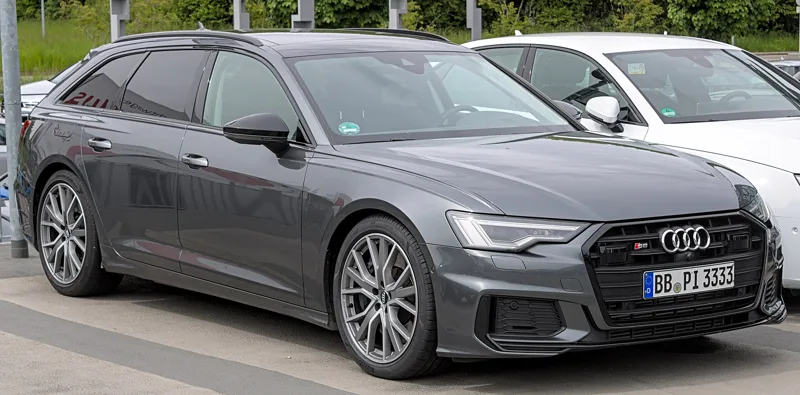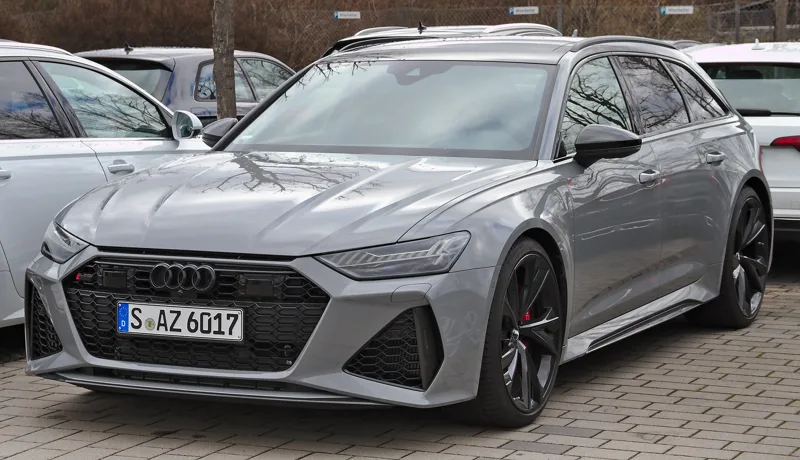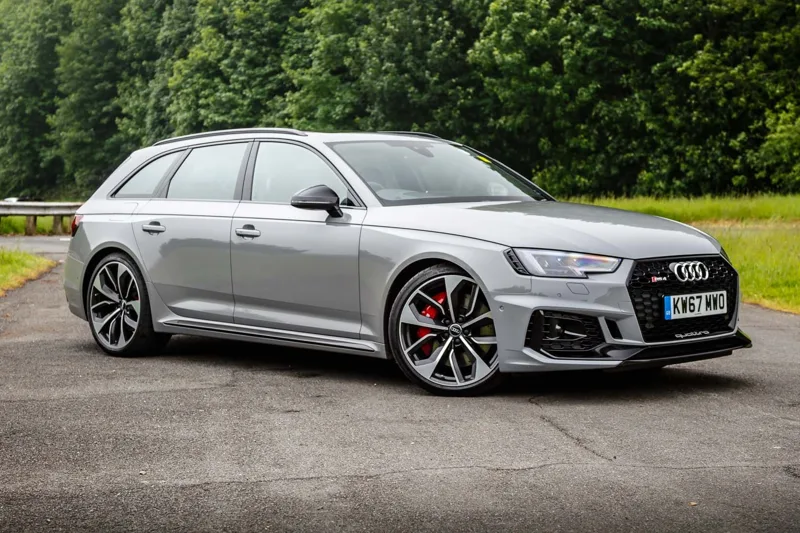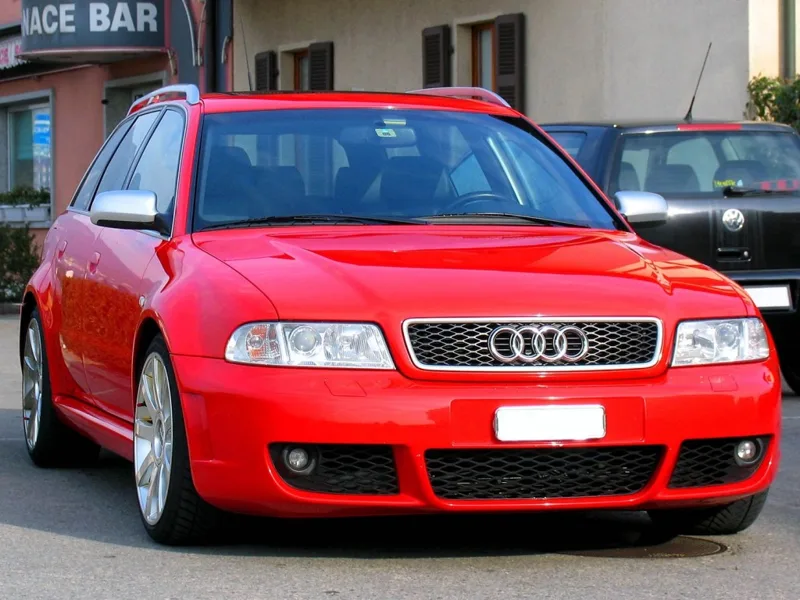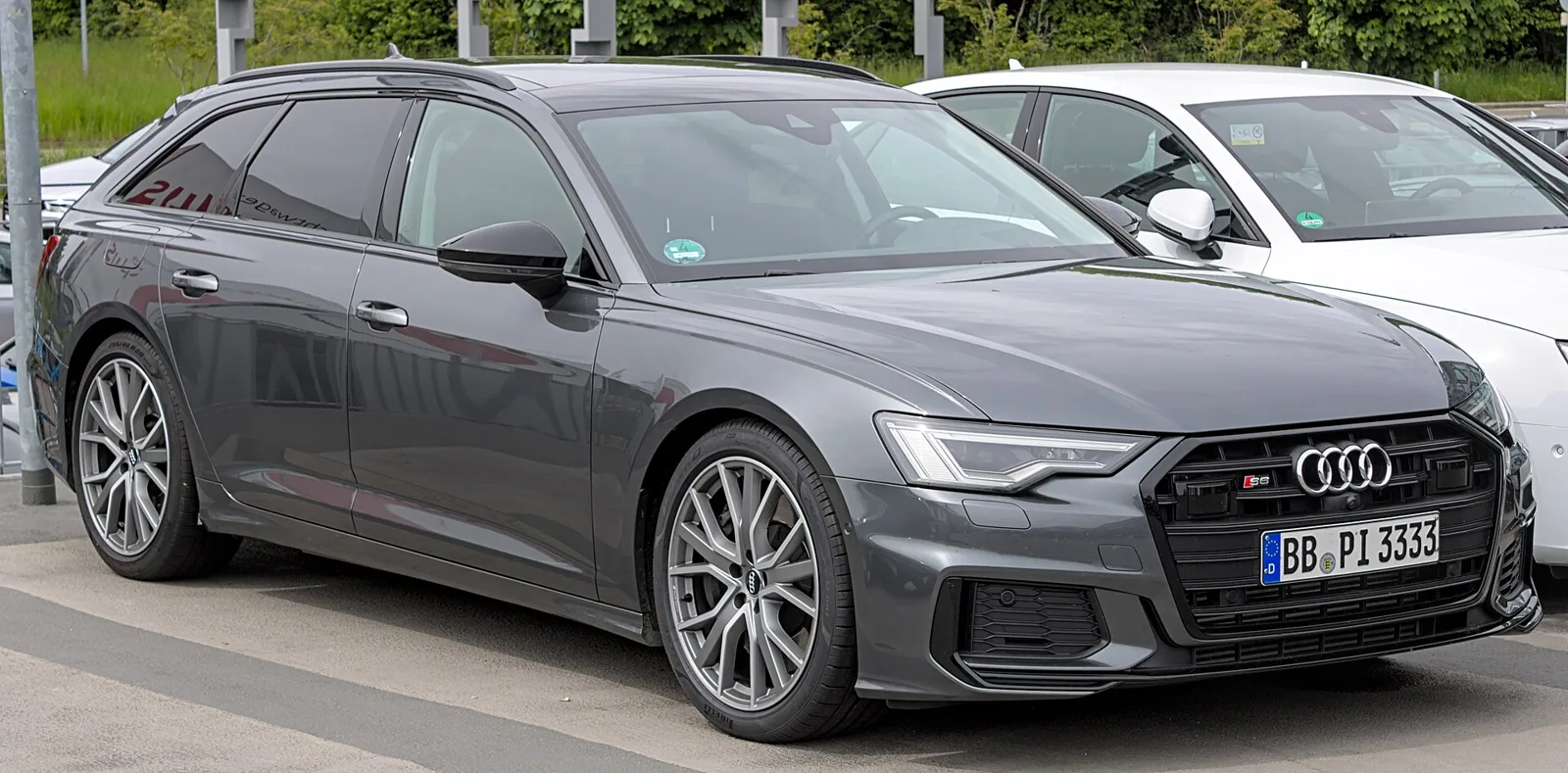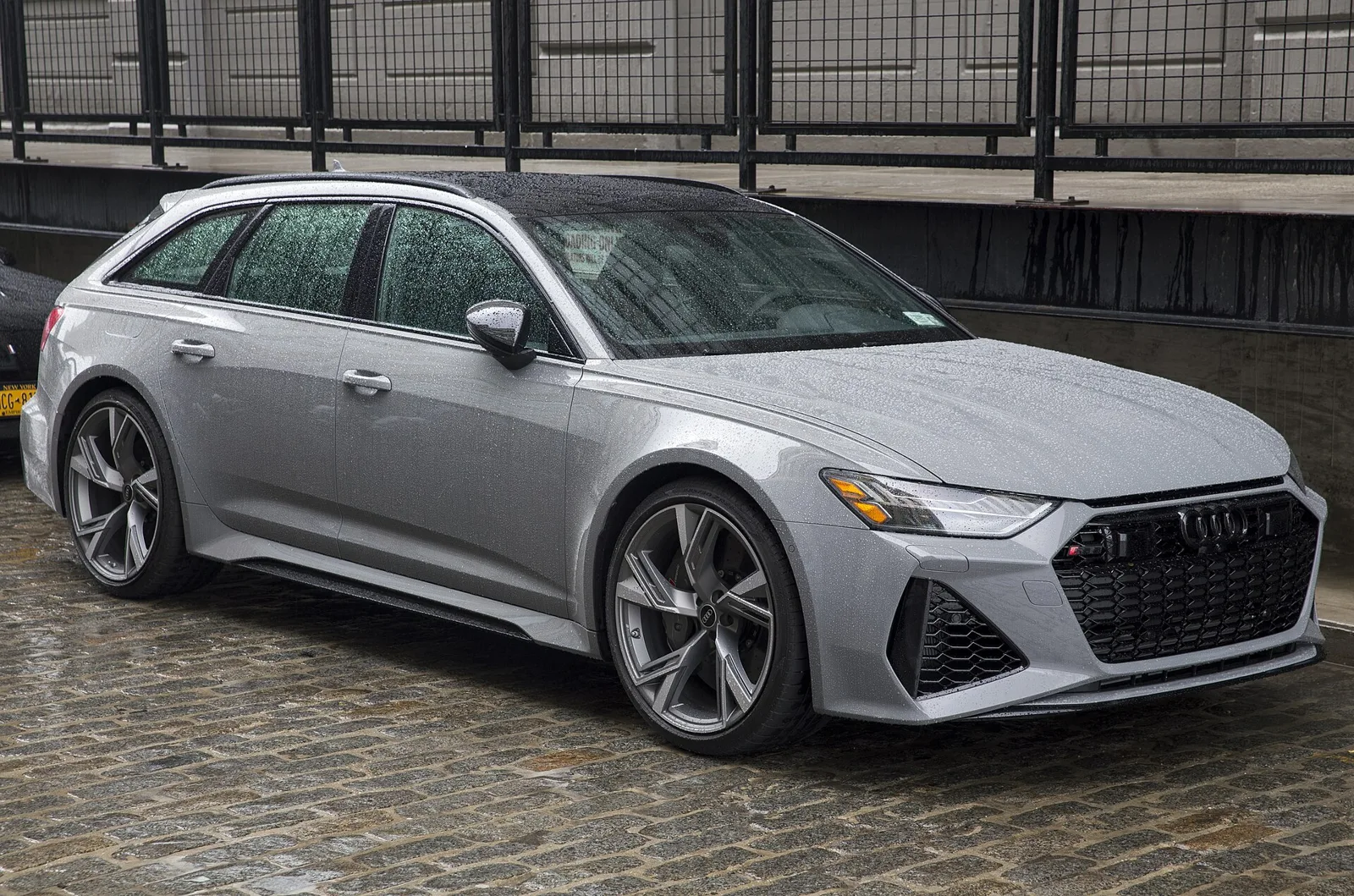
Audi's twin-turbo RS 6 and BMW's naturally aspirated V8 M5 were the flagship performance executives of the early 2000s, and their 2002 to 2003 overlap made them direct rivals.
The Audi RS 6 C5 and the BMW M5 E39 were on sale together in 2002 and 2003. The RS 6 used a 331 kW twin-turbo V8 with quattro, while the M5 used a 294 kW naturally aspirated V8 with rear-wheel drive.
The Audi RS 6 and the BMW M5 were the flagship performance executives of the early 2000s, and their production years overlapped from 2002 to 2003. The C5 RS 6 was built from June 2002 to September 2004, while the E39 M5 ran from 1999 to 2003. Their makers treated them as direct rivals, and the RS 6 is named by Audi as one of its main rivals alongside the M5.
Were the RS 6 and the M5 rivals?
Yes. Audi's RS 6 literature names the BMW M5 and the Mercedes-Benz E 55 and E 63 AMG as its main rivals, and the two cars were sold to the same buyers at the top of the executive market. Both were built from a family saloon or estate and turned into high-performance flagships.
Their engineering took different routes. The RS 6 used a twin-turbocharged V8, while the M5 used a naturally aspirated V8 developed by BMW's motorsport division. The rest of this comparison follows that difference.
A twin-turbo V8 Avant with quattro grip against a naturally aspirated rear-drive V8 saloon, the two flagships of the early 2000s meeting head to head.
How did the RS 6 come about?
The RS 6 is the high-performance variant of the A6, produced by Audi Sport GmbH from 2002. Its first and second versions were offered as both Avant and saloon, while the third and fourth generations were Avant only. The C5 RS 6 was the fourth model to come out of quattro GmbH, after the RS 2 Avant, the S6 Plus and the B5 RS 4.
Production of the C5 RS 6 ran from June 2002 to September 2004. It was the first Audi RS variant exported to North America, and the C6 RS 6, introduced at the 2007 Frankfurt Motor Show, was sold only in Europe.
How did the M5 E39 come about?
The E39 M5 was introduced at the 1998 Geneva Motor Show, and it was the first M5 to use a V8. It was also the first M5 with aluminium front suspension components and a multi-link rear suspension. Production began in October 1998, and the car was built on the same line as the regular 5 Series at Dingolfing.
The M5 had a long heritage before the E39. The first M5 was the E28, hand-built from late 1984 with an engine from the M1, and the E34 followed from 1988 with the S38 straight-six.
How do the specifications compare?
| Feature | Audi RS 6 (C5) | BMW M5 (E39) |
|---|---|---|
| Production | June 2002 to September 2004; RS 6 Plus April to September 2004 | October 1998 to 2003; 20,482 built |
| Body | Avant first, then saloon; Avant only for the RS 6 Plus | Saloon; Touring prototype not produced |
| Engine | 4,172 cc twin-turbo V8 with five valves per cylinder | S62 naturally aspirated V8 |
| Output | 331 kW (450 PS; 444 bhp) at 5,700 to 6,400 rpm; RS 6 Plus 353 kW (480 PS; 473 bhp) | 294 kW (400 PS; 394 hp) at 6,600 rpm |
| Torque | 560 N-m (413 lbf-ft) from 1,950 to 5,600 rpm; 580 N-m on the Plus | 500 N-m (369 lb-ft) at 3,800 rpm |
| Transmission | Five-speed ZF tiptronic automatic only | Six-speed Getrag 420G manual with 3.15:1 final drive |
| Drivetrain | Torsen T-2 quattro all-wheel drive | Rear-wheel drive with 25 percent limited-slip |
| 0 to 100 km/h | 4.6 seconds for the Avant; 4.4 seconds for the Plus | 4.8 seconds to 97 km/h |
| 200 km/h | 17.8 seconds Avant; 17.6 seconds saloon; 20.36 seconds Plus | Not reported |
| Top speed | 250 km/h (155.3 mph), limited; Plus 280 km/h (174.0 mph) | 250 km/h (155 mph), limited; over 300 km/h (186 mph) unrestricted in testing |
| Lap time | Not reported | Nurburgring lap of 8:20 |
| Luggage | 455 to 1,590 litres in the Avant; 424 litres saloon | Not reported |
| Brakes | Brembo 8-piston front calipers on 365 mm discs | Not reported |
| Motorsport | SPEED World Challenge GT manufacturers' titles from 2002 to 2004 | Not reported for the E39 |
How did the twin-turbo V8 work?
The RS 6's engine was a 4,172 cc V8 with two turbochargers, one for each cylinder bank, and five valves per cylinder. The turbos raised output to 331 kW (450 PS; 444 bhp) at 5,700 to 6,400 rpm, with 560 N-m of torque, and the combination of variable inlet timing and two turbos gave the car a wide power band with peak torque from 1,950 to 5,600 rpm.
Quattro GmbH and Cosworth developed and built the engine. Engine management came from a Bosch Motronic ME 7.1.1, and it controlled the sequential injection, eight single-spark coils and the torque reduction that worked with the ESP traction control. The car was Euro 3 compliant.
How did the M5 E39's V8 work?
The S62 V8 produced 294 kW (400 PS; 394 hp) at 6,600 rpm and 500 N-m of torque at 3,800 rpm. It had electronically actuated individual throttle bodies, an aluminium block and heads, double-VANOS variable valve timing and a semi-dry sump oil system.
The engine was naturally aspirated, so its power arrived as the revs rose rather than through turbo boost. BMW paired it with the six-speed Getrag manual, which suited that character.
How did the RS 6 Plus raise the bar?
The RS 6 Plus was a final limited run between April and September 2004, with 353 kW (480 PS; 473 bhp) at 6,000 to 6,400 rpm and 580 N-m of torque. The extra power came from a new engine control unit and two additional coolant radiators behind the side-mounted intercoolers.
Official figures gave the Plus 4.4 seconds to 100 km/h and 20.36 seconds to 200 km/h, with an official top speed of 280 km/h (174.0 mph). It came with Dynamic Ride Control as standard and a no-cost Sports Suspension Plus, and it sold 999 units, all as Avants for European markets.
How did the two cars handle and stop?
The RS 6 used the A6's four-link front and double-wishbone rear suspension, lowered by 20 mm with 30 percent stiffer springs and 40 percent more compression damping. It was also the debut model for Dynamic Ride Control, a mechanical system that used a pump to adjust damper pressure during cornering, acceleration and braking.
The M5 E39 used aluminium-intensive MacPherson strut front suspension and multi-link rear suspension, lowered by 23 mm, with thicker anti-roll bars and polyurethane auxiliary springs. Its differential had a shorter 3.15:1 ratio, and it had a 25 percent limited-slip differential. The RS 6 had Brembo 8-piston front calipers on 365 mm discs, with 335 mm rear discs.
What did the RS 6 and the M5 do on track?
The RS 6 was used in the North American SPEED World Challenge GT Series for three years, from 2002 to 2004, and it claimed the manufacturers' championship in each of those years. The race derivative of the twin-turbo V8 was developed and built by Cosworth in the UK.
The M5 E39 recorded a Nurburgring lap of 8:20 in testing, and the material records no comparable racing programme for the E39 itself. The M5 heritage on track rests with the earlier E28 and E34 generations.
What was the RS 6 C5's cabin and equipment like?
The C5 RS 6 shared an aluminium structure from the firewall forward with the V8 versions of the A6, and the car's body was built on the same basis as the S6. Its standard wheels were 19-inch on European cars, with an 18-inch package as the only offering in the US, and an 18-inch winter package used Dunlop SP Winter Sport M3 tyres.
The RS 6 Plus added a black optic pack to the grille frame, window trims, tailgate trim, roof rails and exhaust tailpipes. Each car carried a plaque showing the last three digits of its VIN on the centre console, which marked the 999 cars out as individuals.
How was the RS 6 engine positioned in Audi's range?
Unlike the A6 and S6, the RS 6's engines in the C5 and C6 were not shared with any other vehicle in Audi's lineup. The later C7 RS 6 shared its 4.0-litre twin-turbo V8 with the RS 7, and detuned variants of that engine appeared in the S8, A8 and S6.
Mounted at the front and oriented longitudinally, the RS 6's engine fed a transaxle at the rear, and the car was only available with the Torsen-based quattro system, as were all of Audi's S and RS models.
How did the Audi RS 6 use fuel and octane?
The official figures assumed the recommended high octane 98 RON Super Plus fuel. Using the standard 95 RON Premium petrol reduced the engine's power output and gave a logical reduction in performance.
Owners often reported that the RS cars' speed limiter was rather liberal, with genuine limited top speeds of 270 km/h (167.8 mph) being achievable, although the official figure stayed at 250 km/h (155.3 mph).
What changed on the M5 E39 during its life?
The E39 received a facelift in September 2000 for the 2001 model year, with halogen corona ring headlights, often called Angel Eyes, and LED tail-lights. The mechanical specification stayed the same, and later changes were limited to new exterior colours from September 2001 and a DVD-based navigation system from September 2002.
A Touring estate version was evaluated, and at least one prototype was built in Titanium Silver with black Exclusive leather, but BMW did not put it into production for financial reasons.
What did the earlier M5s add to the story?
The E28 M5 was built from October 1984 to June 1988, and its M88/3 engine was an updated version of the M1's unit. At launch it was the fastest production saloon in the world, and only 2,241 were made.
The M5 Touring, BMW M Division's first estate, followed the E34 saloon in 1992, and 891 units were produced. Its S38B36 engine produced 232 kW (315 PS; 311 hp) and reached 100 km/h in 6.3 seconds, and the 3.8-litre S38B38 that arrived in 1992 raised output to 250 kW (340 PS; 335 hp).
Which buyer suits which car?
The facts do not settle which car was better, because each offered a different kind of performance. The RS 6 suits a buyer who wanted quattro grip, a wide torque band from twin turbos, and the Avant practicality of its estate body. The M5 suits a buyer who wanted a rear-drive V8 saloon with a naturally aspirated character and a long motorsport heritage.
The M5's production total of 20,482 cars for the E39 is the clearest sales figure available, while the RS 6 C5 was a limited run whose volumes are not reported here. No sales verdict can be drawn between them.