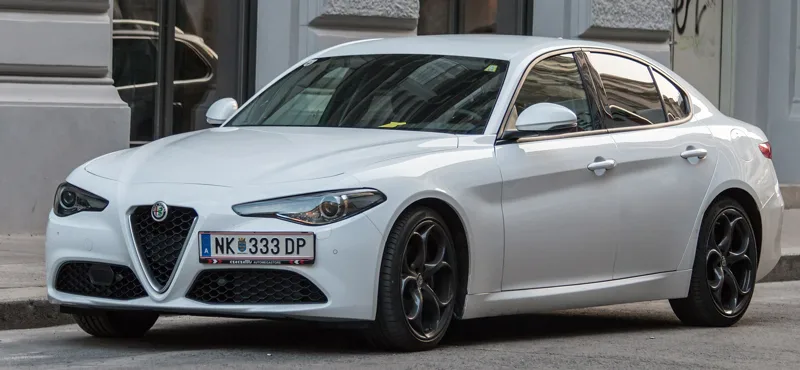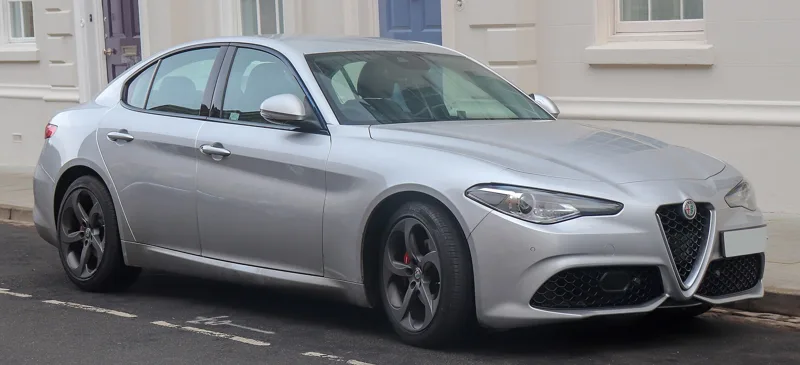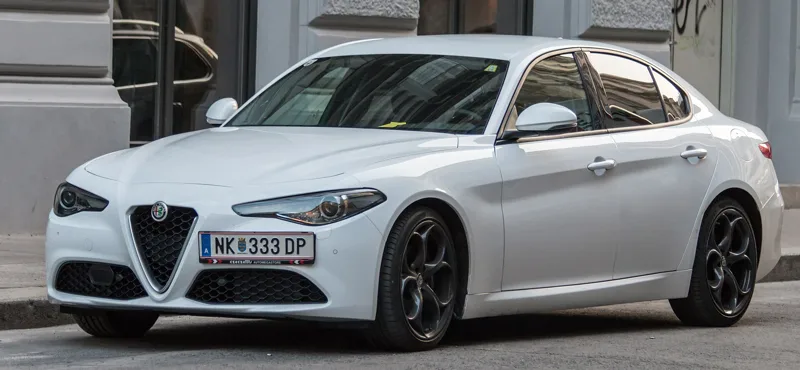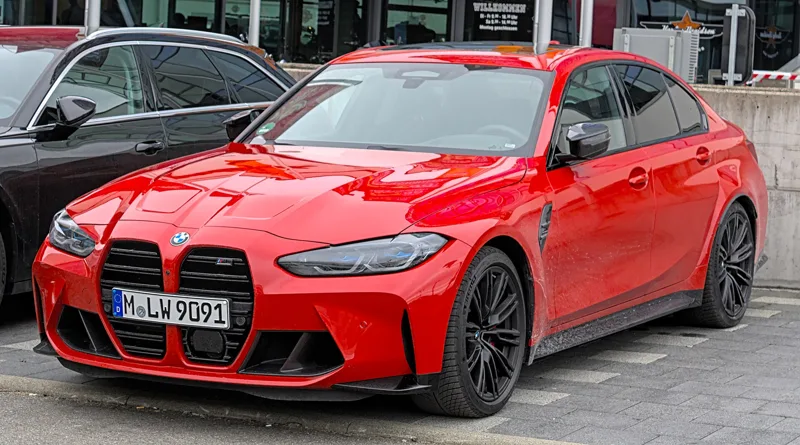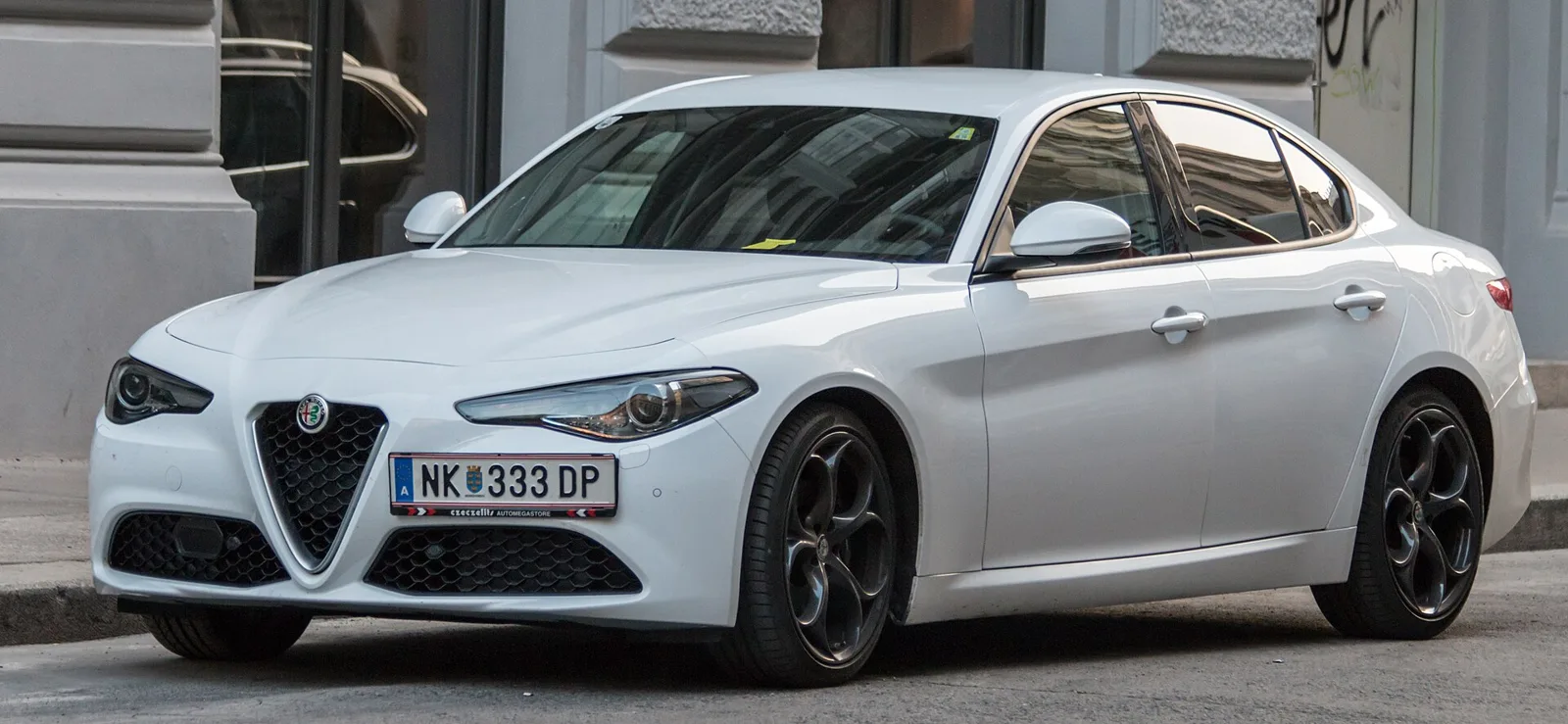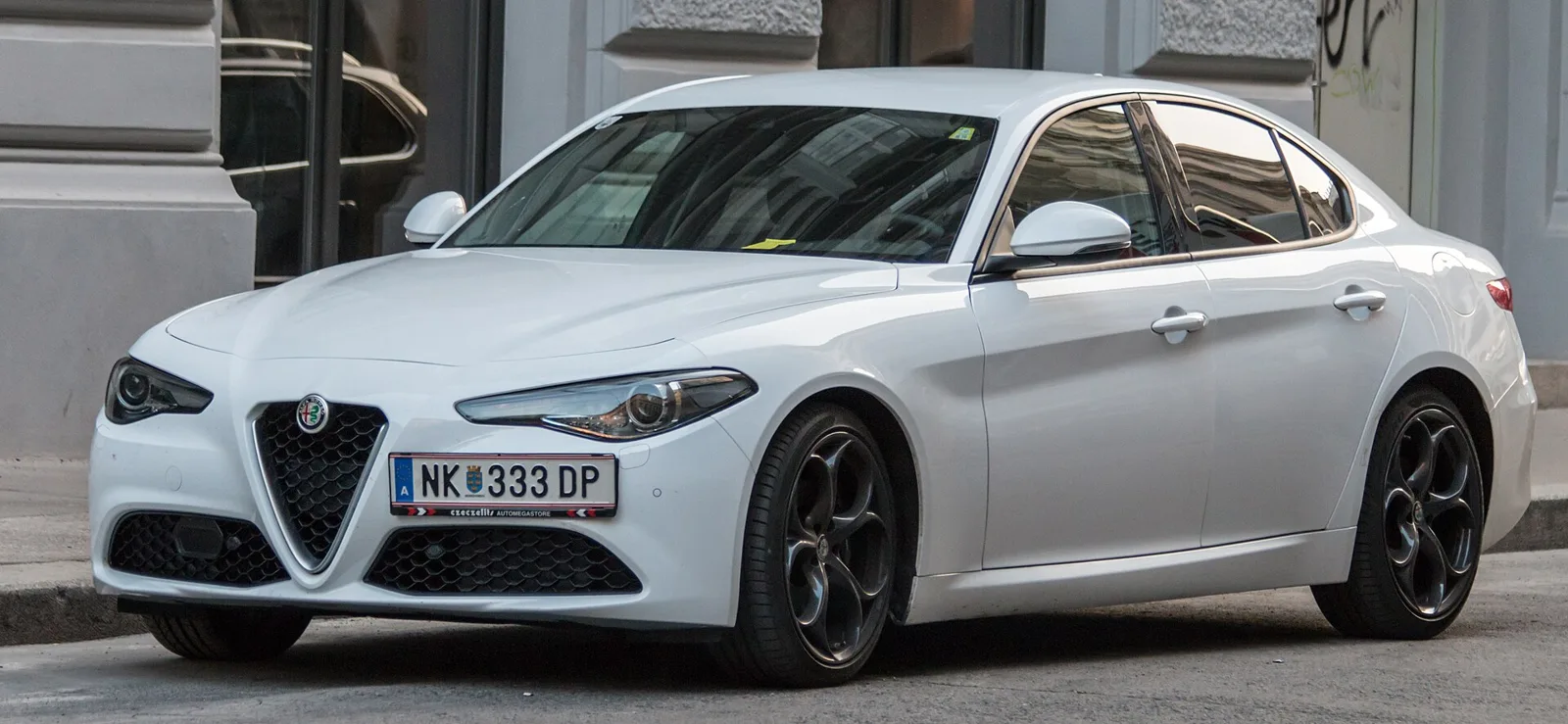
The Giulia Quadrifoglio was measured against the M3 from the 1980s and 1990s, and the two cars differ in era, engine and what they offered buyers.
The Alfa Romeo Giulia and BMW M3 were rival performance cars from different eras. The Giulia Quadrifoglio uses a 510 PS twin-turbo V6, while the E30 and E36 M3s had four and six-cylinder engines and built a strong racing record.
The Alfa Romeo Giulia and the BMW M3 meet most directly in the Giulia Quadrifoglio, the performance version that one review set against the M3. The Giulia was due on sale in February 2016 as a rear-wheel-drive saloon, while the BMW side of this comparison covers the E30 and E36 M3s built between 1986 and 1999.
Why are the Giulia and the M3 compared?
They are compared because the Giulia Quadrifoglio was named among the main rivals of the M3, alongside the Mercedes-AMG C63 and the Cadillac ATS-V. One review put the Quadrifoglio beside the M3 directly. Both aim at the performance end of the compact executive class.
The M3 has been a high-performance version of the 3 Series since the E30 arrived in 1986, and it has been offered for every 3 Series generation since. The Giulia is a newer design, unveiled in June 2015, so the two cars belong to different eras of performance engineering.
Two performance saloons from different decades: a 2015 Alfa with 510 PS and a 1980s-1990s M3 built for the racetrack.
How did each car come to be?
The Giulia began as a clean-sheet request from Sergio Marchionne in 2013 for a rear-wheel-drive sports saloon, with Philippe Krief as chief engineer. The M3 began in 1985 as a homologation special for touring car racing, which required 5,000 base cars and 500 evolution specials.
Marchionne wanted a car that would help return Alfa Romeo to its roots. Krief assembled a team of ten and had two and a half years to design and build the car. Marco Tencone of Centro Stile Alfa Romeo in Turin headed the design team, and the car rode on a new longitudinal-engine platform called Giorgio.
BMW's own motorsport division developed the M3 on the E30 3 Series. It was presented at the 1985 Frankfurt Motor Show and built from March 1986 to June 1991, with the aim of satisfying the Deutsche Tourenwagen Meisterschaft and Group A Touring rules.
The Giulia was presented to reporters at the Museo Storico Alfa Romeo in Arese on 24 June 2015, with the top Quadrifoglio as the only model on show. That day marked the company's 105th anniversary and introduced a restyled logo, and the car was presented under the slogan La meccanica delle emozioni, meaning the mechanics of emotions. It opened a relaunch plan with an investment of EUR 5 billion for an eight-car line-up.
What were the design and chassis differences?
The Giulia uses a front-engined, rear-wheel-drive layout with an even split of weight between the axles, and it is built with aluminium and carbon parts to keep its mass down. The first M3 was a modified E30, with a front splitter, a flatter rear window and a drag coefficient of 0.33.
The Giulia targets an even 50% front and 50% rear weight distribution. Its suspension is independent at all four corners, with double wishbones at the front and a multilink arrangement at the rear. A carbon-fibre driveshaft made by Hitachi Automotive Systems runs through the car, and aluminium shock towers, suspension parts, front wings and doors keep the weight down. The drag coefficient is 0.28.
The Quadrifoglio adds a carbon-fibre roof and bonnet, a carbon splitter at the front and a rear diffuser that works with the faired underside. Its active aero splitter drops by 10 degrees at speeds from 100 to 230 km/h (62 to 143 mph) when the car is in Dynamic or Race mode, and the drag coefficient rises to 0.31 with the extra aerodynamic equipment.
The E30 M3 changed its body in several places, adding a front splitter, a rear apron and sill panels, while the rear window was flattened and the tailgate raised by about 40 mm for better airflow. The windscreen was glued in rather than framed with a rubber seal. The M3 had its own brake calipers, discs and master cylinder, and the gearbox was a Getrag 265 five-speed manual with a clutch-type limited-slip differential as standard.
What engines did each car use?
The top Giulia runs a twin-turbocharged 2.9-litre V6 rated at 510 PS (375 kW; 503 hp), while the E30 M3 started with a 2.3-litre four giving 143 kW (195 PS; 192 hp) in markets with a catalytic converter. The E36 moved the M3 to a six-cylinder, with 210 kW (286 PS; 282 hp) in its first form.
The Quadrifoglio's V6 was developed by engineers with a Ferrari background and is derived from Ferrari's twin-turbo F154 V8. It shares a bore and stroke of 86.5 mm by 82 mm with that engine, and it makes 600 N m (443 lb ft) between 2,500 and 5,000 rpm. Its turbochargers are single-scroll IHI units, and peak boost reaches 1.4 bar (20 psi).
The Veloce uses a 2.0-litre turbo petrol making 280 PS (206 kW; 276 hp) and 400 N m (295 lb ft), with a 210 PS (154 kW; 207 hp) diesel alternative. The base Giulia runs a 200 PS (147 kW; 197 hp) 2-litre petrol, and the 2.2-litre diesel was offered in 136, 150 or 180 PS. Alfa's Q4 all-wheel-drive system sends all torque to the rear and moves up to 60% forward when grip runs out.
The E30 used the S14, a high-revving DOHC four with a 7,250 rpm redline. Catalyst versions were rated 143 kW (195 PS; 192 hp) and reached 235 km/h (146 mph), while non-catalyst cars gave 147 kW (200 PS; 197 hp). The E36 M3 brought the S50 straight-six, and facelifted models of late 1995 used a 3,201 cc version with 236 kW (316 hp) and 350 N m (258 lbf ft).
How fast and how heavy were they?
No 0-100 km/h time is given for either car in this comparison. Top speeds and weights are listed, and the Quadrifoglio's 1,734 kg (3,822 lb) is set against the 1,515 kg (3,340 lb) of the 1996 E36 coupe, which shows how much heavier the newer car is.
The Quadrifoglio weighs 1,734 kg (3,822 lb), which works out at about 3 kg (6.6 lb) per PS. Its factory wet weight is 1,620 kg with the automatic and 1,580 kg with the manual, and the weight split is 52.5% front and 47.5% rear. Fuel use is 8.5 litres per 100 km (33 mpg-imp; 28 mpg-US), with CO2 at 198 g/km and an EPA rating of 20 mpg.
On the M3 side, the E30 reached 235 km/h (146 mph) with a catalytic converter, and the Sport Evolution of 1990 raised the top speed to 250 km/h (154 mph). The 1994 M3 GT, built in 356 units for Europe, was about 30 kg (66 lb) lighter than the standard car and had a derestricted top speed of 275 km/h (171 mph).
Which car was more practical?
The Giulia is a mid-sized four-door saloon, while the M3 covered here came as a coupe at first and later as a convertible and saloon. Reviewers were divided on space, with one finding the front seats generous and another saying the rear seats were tight with the optional carbon seats fitted.
The Giulia reviews raised several practical points. The Sunday Times found the driver's door too small or badly placed and said the optional carbon front seats limited room for rear passengers. The Telegraph said there was plenty of space in front and enough at the back. The Sunday Times also said the 58-litre (13 imp gal; 15 US gal) fuel tank was not quite big enough.
On the M3 side, the E30 was mainly a coupe with limited convertible volumes. The E36 added a convertible in 1994 and a saloon in December 1994, and from 2020 the M3 was also offered as a Touring estate. The E36's six-speed SMG automated manual, the first on an M3 outside the United States, was praised for its shift times but criticised in everyday driving.
Interior quality drew complaints on both sides of the comparison. The Sunday Times said the Giulia's fittings did not match its price, and the Telegraph described its plastics as slightly behind rivals. The Guardian called the cabin generously luxurious.
What motorsport record does each car have?
The E30 M3 has a deep racing record, with five wins at the 24 Hours Nurburgring and four at the Spa 24 Hours. The Giulia has no motorsport record in this comparison, so the racing story belongs to the BMW.
The E30 M3 won the 24 Hours Nurburgring in 1989, 1990, 1991, 1992 and 1994, and it took the Spa 24 Hours in 1987, 1988, 1990 and 1992. Many of those wins came against cars with bigger or turbocharged engines, which made the record stronger still.
The car also won championships across the world, including the World Touring Car Championship in 1987, the European Touring Car Championship twice, and seven JTC-2 titles in Japan from 1987 to 1993. Its most notable rally success was the 1987 Tour de Corse victory with Bernard Beguin at the wheel.
The homologation specials followed the racing rules closely. The Evolution 1 had 505 cars built between March and May 1987, the Evolution 2 had 501 built in 1988 with 220 PS, and the Sport Evolution was limited to 600 units for 1990.
How did reviews and sales compare?
The Giulia finished second in the 2017 European Car of the Year vote and won Motor Trend's car of the year title for 2018. It also received the Compasso d'Oro industrial design award in 2018, while the E30 M3 sold 17,970 cars in total.
The Giulia's commercial ambition was large, with a target of 400,000 sales by 2018, up from 74,000 in 2013. Actual Giulia sales are not part of this comparison, so the target is the only figure given for the car's volume.
The M3 earned its own recognition. Sports Car International placed the E30 M3 sixth on its list of Top Sports Cars of the 1980s in 2004, and Automobile Magazine included it among its five greatest drivers' cars of all time in 2007.
Reviews of the Giulia were warm about the way it drove. The Guardian called the drive lovely, and the Sunday Times described the car as an absolute joy to drive.
What did each car do better?
The Giulia's reviewers praised its steering, its luxury feel and its warranty, while the M3 has the stronger racing and homologation record. Each car wins on a different measure, and the figures do not show a single overall winner.
The Telegraph described the steering as remarkably quick without the artificial dartiness common in modern systems, and the Sunday Times said it needed only two turns lock to lock. The Sunday Times also said the optional carbon-ceramic brakes were tuned perfectly. The Telegraph noted that the Giulia was sold with a warranty it considered better than those of its rivals.
The M3's strengths are its competition history and its limited editions. The Evolution 1, Evolution 2 and Sport Evolution were built in 505, 501 and 600 cars, the M3 GT in 356, and the UK received a special GT trim limited to 50 cars. The E36's SMG gearbox was an early automated manual for the M3.
Which buyer suits each car?
The Giulia suits a buyer who wants a modern rear-drive performance saloon with an even weight split and a choice of petrol, diesel or Quadrifoglio power. The M3 suits a buyer who values motorsport heritage, limited editions and the coupe or convertible shape of the E30 and E36.
Buyers who want a diesel option or the widest range of trims have more choice in the Giulia line-up, while the M3 Touring estate only arrived in 2020. Buyers who want the deepest racing history will find more in the M3's record, and those drawn to a newer design will find the Giulia's specification more recent.
Side-by-side specifications
| Specification | Alfa Romeo Giulia (Quadrifoglio unless stated) | BMW M3 (E30 and E36) |
|---|---|---|
| Launch | Unveiled 24 June 2015; sale due February 2016 | E30 presented 1985, built March 1986 to June 1991; E36 from November 1992 |
| Layout | Front-engined, rear-wheel drive; all-wheel drive on non-Quadrifoglio models | Rear-wheel drive on the 3 Series base |
| Engine | 2.9-litre twin-turbo V6, 510 PS (375 kW; 503 hp) | E30: 2.3-litre four, 143 kW (195 PS; 192 hp) with catalyst. E36: 210 kW (286 PS; 282 hp) from a 2,990 cc six |
| Torque | 600 N m (443 lb ft) from 2,500 to 5,000 rpm | E30: Not given. E36: 320 N m (236 lb ft) |
| Weight | 1,734 kg (3,822 lb) | E30: Not given. E36 coupe (1996): 1,515 kg (3,340 lb) |
| Drag coefficient | Cd 0.31 (Quadrifoglio); Cd 0.28 (standard Giulia) | E30: Cd 0.33, against 0.38 for the standard 3 Series |
| Weight split | 52.5% front, 47.5% rear | Not given |
| 0-100 km/h | Not given | Not given |
| Top speed | Not given | E30: 235 km/h (146 mph) with catalyst; Sport Evolution 250 km/h (154 mph); M3 GT 275 km/h (171 mph) |
| Fuel use and CO2 | 8.5 litres per 100 km (33 mpg-imp; 28 mpg-US); 198 g/km CO2 | Not given |
| Gearbox | Automatic or manual; eight-speed automatic on the Veloce | E30: five-speed Getrag manual. E36: six-speed manual, or six-speed SMG from 1995 |
| Fuel tank | 58 litres (13 imp gal; 15 US gal) in the car the Sunday Times reviewed | Not given |
| Production or sales | Target of 400,000 sales by 2018, from 74,000 in 2013 | E30: 17,970 cars |
| Limited editions | Not given | Evolution 1: 505; Evolution 2: 501; Sport Evolution: 600; M3 GT: 356 |
| Motorsport | Not given | E30: five 24 Hours Nurburgring wins; four Spa 24 Hours wins |