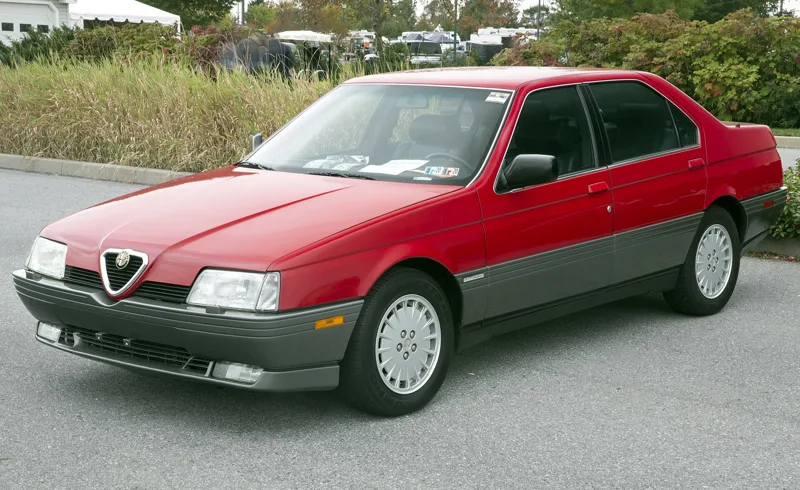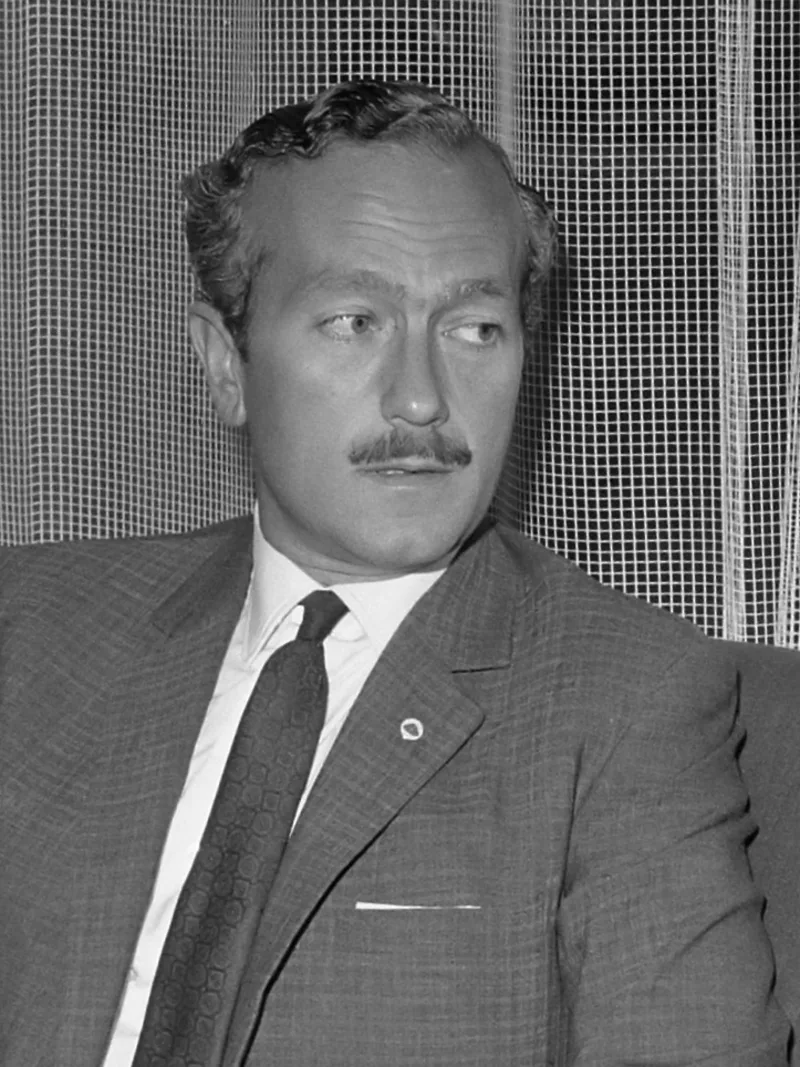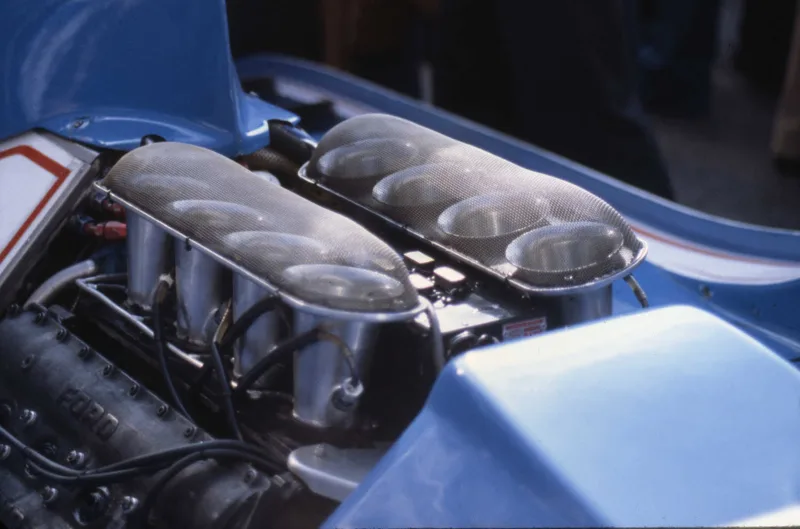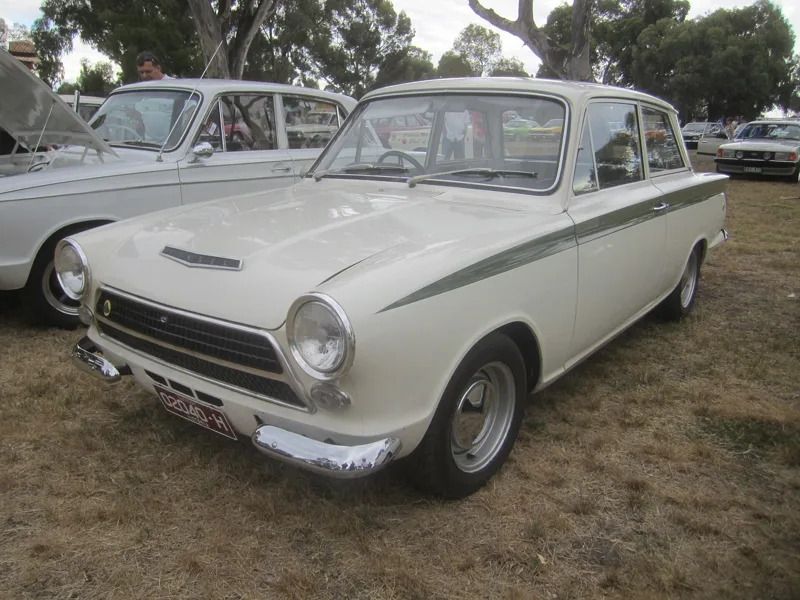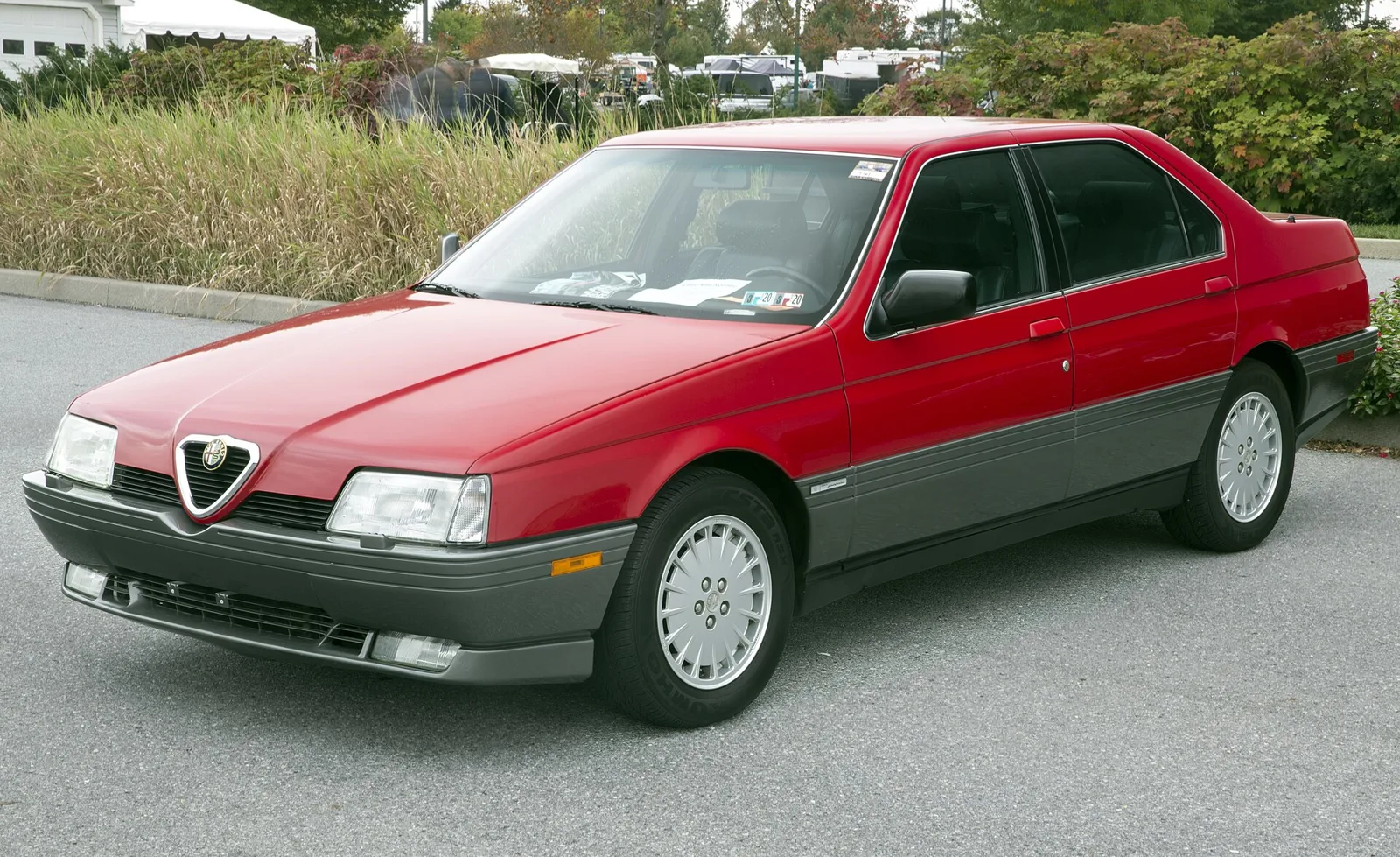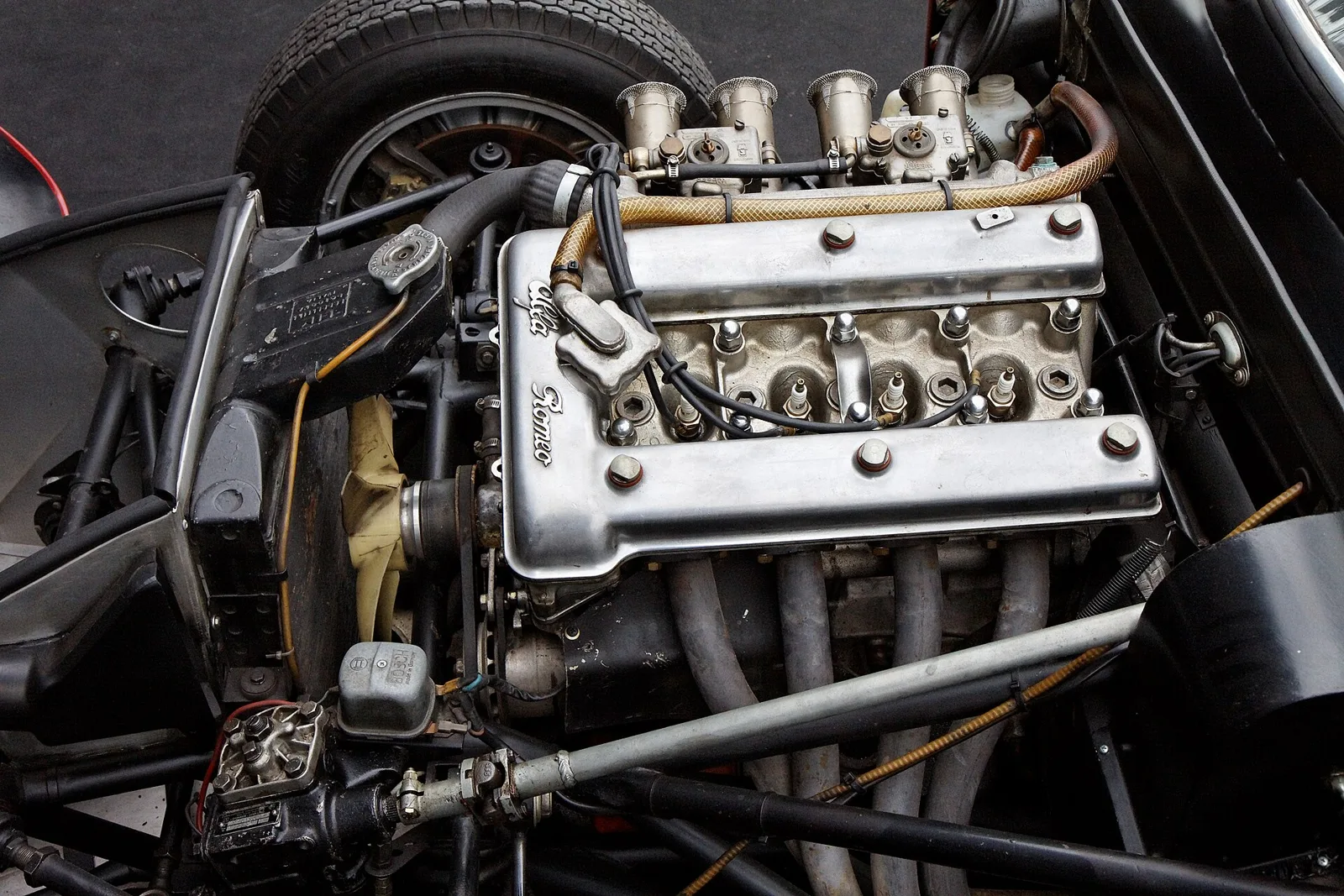
An all-alloy Italian four from 1954, Aurelio Lampredi's rally-winning unit and a Ford block topped by a Lotus head each took a different route to the same layout.
Alfa Romeo, Fiat and Lotus-Ford each brought double overhead camshafts to road cars. Alfa's all-alloy Twin Cam arrived in 1954, Fiat's Lampredi unit in 1966, and Lotus fitted its aluminium head to a Ford Kent block for the 1962 Elan.
The first production car engine to use variable valve timing arrived in 1980, in an Alfa Romeo Spider, but the engine underneath dated from 1954. That is how long-lived a good twin-cam design can be. Alfa Romeo, Fiat and Lotus all reached double overhead camshafts by different roads, and each engine carried a distinct set of ideas into ordinary road cars.
The Italian pair were built from the ground up in their own factories, while the Lotus used a humble Ford block topped by a head that a racing-engine designer had first drawn for a French sports car. Together they explain how twin-cam technology moved from the race track to the high street.
What is the Alfa Romeo Twin Cam engine?
The Alfa Romeo Twin Cam is an all-alloy inline four produced from 1954 to 1994, with the last 8-valve Twin Spark versions in the 164 running until 1997. In Italian it is the "bialbero", meaning twin-shaft. Enthusiasts also call it the "Nord" engine, because it was built at Portello in Milan, later Arese, and so differed from the Boxer engine built in the south for the Alfasud.
Its predecessor appeared in the 1950 Alfa Romeo 1900, an under-square four with a cast-iron block and an aluminium crossflow head with double overhead cams and valves 90 degrees apart. Orazio Satta Puliga oversaw that engine and its successor. The Twin Cam shared some features with it but was a new design by Giuseppe Busso, and debuted in the 1954 Giulietta.
The 1954 recipe
Its specification read like a wish list for the mid-1950s. An aluminium block carried cast iron "wet" cylinder liners, and an aluminium head had hemispherical combustion chambers. A forged steel crankshaft ran in five main bearings, and two overhead camshafts, driven by a double row timing chain, acted directly on bucket tappets. Two inclined valves per cylinder, set 80 degrees apart, flanked a nearly central spark plug, and a large, flat, finned sump completed the picture. These features formed the basis of every later version with only minor variations.
The first production car engine to use variable valve timing came from a design that dated back to 1954.
How the Alfa Twin Cam grew
The Giulietta engine displaced 1,290 cc. A curious detour came in 1960, when the Tipo 103 small-car prototype carried a 896 cc version with a 66 mm bore and 65.5 mm stroke, making 39 kW; 53 PS (52 bhp) at 5500 rpm. It remains the smallest four-cylinder Twin Cam ever, built for a transverse front-wheel-drive layout with engine block and transaxle case as one unit. Only three were made.
On 27 June 1962 the Giulia brought a 1,567 cc engine, cast by a different method, with a longer timing chain and a revised crankshaft. The 1750 GTV and Berlina took a 1,779 cc version in 1968, with offset big-end bearings and sodium-filled exhaust valves. In 1971 the 2000 GTV and Berlina received the largest production Twin Cam at 1,962 cc, which had fewer ring-gear teeth and six flywheel bolts instead of eight.
The Alfetta of 1972 forced a new oil pump and the end of the finned sump. Owners reportedly complained that the old sump kept engine and oil so cool in cold weather that they sometimes had to block radiator airflow to get enough heat for the interior heater. And in 1980 the Spider introduced an electro-mechanical system with a variator that altered the phase, but not the duration, of the intake camshaft.
Racing specials and boost
Alfa's Autodelta competition arm made variants for racing classes, including the GTA, with displacements from 1,283 cc up to 2,056 cc. Many used dual ignition. Alfa never sold a production Twin Cam with more than 8 valves, yet at least two 16-valve heads were made, one from Autodelta and another from the tuner Franco Angelini. Some heads, called "testa stretta" or narrow head, had a smaller valve angle than the usual 80 degrees. The 1959 Asardo 1500 AR-S, a one-off non-Alfa prototype, bored a 1,290 cc block out to 1,489 cc with Mahle pistons and liners and made 135 bhp (137 PS; 101 kW).
Forced induction came in several forms. The 1967 GTA SA at Geneva used two superchargers on a 1,567 cc engine for a reported 220 bhp (223 PS; 164 kW). The 1979 GTV Turbodelta, with a KKK turbocharger and two Dell'Orto carburettors, made 150 bhp (152 PS; 112 kW); 400 were built, sold until 1981 when Alfa left Group 4 for Formula 1. The 1984 Giulietta Turbodelta made 125 kW (170 PS; 168 bhp), and in 1986 a turbocharged 1,779 cc engine in the Alfa Romeo 75 1.8 Turbo Quadrifoglio produced 167 PS (123 kW; 165 bhp), up to 223.7 kW (300 bhp) in Group A touring-car form.
From Twin Cam to Twin Spark
Twin Spark ignition, with two plugs per cylinder, dates to the A.L.F.A. Grand Prix car of 1914. The production Alfa 75 2.0 Twin Spark of 1987 had a head that improved ignition and allowed a better combustion chamber shape. Developed from the Twin Cam, it shares almost no parts with it: it has two oilways to the head against six, a narrower timing chain cover, and a valve angle of just 46 degrees. With a variable phase system and fuel injection, the 75's engine made 148 PS (109 kW; 146 bhp).
The final Twin Cams were the 1,749 cc, 1,773 cc and 1,995 cc 8V Twin Spark engines of the 155 and 164. After 1995 the 155 used a 16-valve Twin Spark from Fiat's Pratola Serra series, while the 164 kept the 8-valve engine until production ended in 1997.
What is the Fiat Twin Cam engine?
The Fiat Twin Cam, also called the Lampredi Twin Cam, was built from 1966 through 2000 for Fiat and Lancia. Aurelio Lampredi, an ex-Ferrari engineer, designed it. It came in many sizes from 1,297 to 2,111 cc and powered Fiat, Lancia, Alfa Romeo, SEAT, FSO and Morgan cars. Its record in rallying is unmatched: Fiat and Lancia won ten World Rally Championships for Manufacturers with engines based on it, making it the most successful engine in the history of the series.
Lampredi started from the iron block of the overhead-valve 124-series engine in the Fiat 124 and modified it for belt-driven camshafts. The head was cast in three pieces: a main section holding the combustion chambers and valves, plus a separate casting for each camshaft running in tunnel-type bearings. The valves sat at an included angle of 65 degrees.
A cheaper way to set the valves
The clever part was valve clearance. In rival twin-cam engines, such as those of Alfa Romeo or Jaguar, small shims sat on the valve stems inside bucket tappets. Adjusting them meant taking the camshafts out, which made servicing slow and costly. Think of having to remove the roof just to change a light bulb. Lampredi put the shims on top of the tappets, so a mechanic could press the tappets down with a special tool and remove the shims with the camshaft still in place. Fiat patented it, used it in the 128 and 130, and even converted the Dino V6.
Fiat was also an early user of toothed rubber camshaft belts and aluminium heads. Earlier Fiat twin cams were actually O.S.C.A. designs. One version, the CHT (for "Controlled High Turbulence"), was developed by Yamaha for the first-generation Croma, using auxiliary intake ducts for better mixture under low or partial load, which considerably improved fuel economy. That made the Croma one of the very first volume cars with variable intake ducts.
Rally and sports cars
The engine debuted in the Fiat 124 coupe of late 1966. The four-valve version first appeared in the Group 4 Fiat 124 Spider Abarth at 1.8 litres, exploiting rules that allowed a "free" head design; it still used a three-piece head, now with a 46 degree valve angle. When rules later restricted four-valve heads to homologated cars with them, the Fiat 131 Rally Abarth came with a two-litre four-valve engine. A supercharged version, eventually enlarged to 2.1 litres, went into the mid-engined Lancia 037, and the Lancia Beta Montecarlo turbo won the World Sportscar Championship in 1980 and 1981. It has also turned up in hot rods and kit cars, including an aftermarket kit for the Morris Minor.
How did the Lotus-Ford Twin Cam come about?
Colin Chapman wanted an engine for the 1962 Lotus Elan that cost less than the all-alloy Coventry Climax FWE in the original Elite. His reasoning was that building on a mass-produced engine would hold costs down. He chose the Ford Kent four from the Anglia, a 1.0 L (997 cc) unit with a thin-wall cast iron block, three main bearings and an oversquare design that allowed bigger valves. The 1.3 L (1,339 cc) Kent from the Consul Classic 109E became the main platform.
The head was Harry Mundy's. He had been designing for Jean Daninos' Facel S.A., including a replacement DOHC head for the failure-prone 1.6-litre Pont-a-Mousson four in the Facellia. Facel's finances stalled the project, but Chapman commissioned Mundy to adapt it to the Ford block, with an aluminium head, front cover and back plate. Richard Ansdale drew it in detail, Steve Sanville led production engineering with Mike Costin, Neil Francis and Bob Dance, and Harry Weslake ran flow-bench tests. Early prototypes had head-joint problems, so Keith Duckworth, who had by then left for Cosworth, reshaped the ports and added structure.
From test bench to Elan
The first engine ran on 10 October 1961 and broke a crankshaft, a failure blamed on the three-main-bearing block. A left-hand-drive Ford Anglia received the first Twin Cam on 18 January 1962 and, with Jim Clark driving, is reported to have passed a Jaguar at well over 100 mph (161 km/h). In May 1962 Ford announced a 1498cc Kent with five main bearings, and Duckworth built the first two production-specification engines, and one of them raced in a Lotus 23 at the Nurburgring. Boring it out to 82.55 mm raised capacity to 1.56 L. The engine officially debuted at the Earls Court Motor Show in October 1962. Around 34,000 were built in 24 varieties.
Chapman called it the Lotus Twin-Cam. Ford started calling it the Lotus-Ford Twin Cam in 1967 with the Cortina Twin Cam, and enthusiasts know it as the Lotus TC or the "Twink".
Three twin-cam engines side by side
| Engine | Introduced | Block and head | Valve angle | Sizes |
|---|---|---|---|---|
| Alfa Romeo Twin Cam | 1954 Giulietta | Aluminium block with wet liners, aluminium head | 80 degrees | 896 cc prototype; 1,290 to 1,962 cc production |
| Fiat (Lampredi) Twin Cam | Late 1966, Fiat 124 coupe | Iron 124-series block, three-piece head | 65 degrees | 1,297 to 2,111 cc |
| Lotus-Ford Twin Cam | 1962 Elan | Ford Kent iron block, aluminium head | 27 degrees from vertical (each valve) | 1,498 cc early; 1557cc standard |
Lotus Twin Cam specifications and tunes
The Lotus engine's true capacity is 1,557.46 cc, from an 82.55 mm bore and 72.75 mm stroke, usually rounded to 1,558 cc. That left room to bore it out by 1 mm and remain under the FIA 1600 cc class limit. The head has hemispherical combustion chambers, with 39 mm inlet and 33.7 mm exhaust valves inclined 27 degrees from vertical. The early 1,498 cc engine made 100 bhp (75 kW; 101 PS) at 5700 rpm on 9.5:1 compression.
The design kept the original in-block camshaft to drive the distributor and oil pump, and a long Renold roller chain drove the overhead cams. The water pump used the front cover as its housing, so replacing it was awkward. Early blocks were ordinary Ford items picked for thick cylinder walls and marked "A"; later ones were cast specifically for the Twin Cam and carry an "L". A revised engine in 1966 used Ford 125E connecting rods and six flywheel bolts, and the design suffered from oil surge and a flexing starter mount.
Special Equipment, SSE and Big Valve
Lotus sold more potent Special Equipment engines, first Cosworth-built with Duckworth cams, later with BRM Phase I and II parts. They used 26/66/66/26 cam timing and gave the Elan S/E its name. In 1968 Sanville began building Super Special Equipment engines with the D-Type cam, a head shaved by 1.0 mm for 10.3:1 compression, and Weber jetting changes, for an estimated 124-126 bhp (92-94 kW).
The Big Valve was Engineering Director Tony Rudd's project: deck height cut by 1.0 mm for 10.5:1 compression, 1.565 in (39.8 mm) inlet valves, reshaped inlet runners and D-type cams. Power was up 20% over the regular engine, and it went into the Elan Sprint, Elan +2 130 and Europa Twin Cam Special. Most of the gain came from porting and uprated cams, not valve size by itself.
The usual ratings run to 105 hp (78 kW) for a standard engine, 115 hp (86 kW) for the S/E and 126 hp for the Big Valve. Engines are often told apart by build number, with "rope-seal" engines up to number 7799 and "lip-seal" engines after.
What this means for someone buying a classic
Identification matters. A Lotus Twin Cam with an "A" stamped on the timing cover face has an early production-line block, while an "L" under the engine mount means a block cast for the job. Alfa's Twin Spark is not a Twin Cam with extra plugs: its parts mostly do not swap. Fiat's top-mounted shims made servicing cheaper than on rivals, an advantage Lampredi designed in. And the Alfa finned sump, though dropped on the Alfetta, apparently kept engines cool enough to affect cabin heating in cold weather.
Where this goes next
Each engine eventually gave way to something newer. The Lotus 900 series replaced the Twin Cam in Lotus cars after 1973, and production ended in 1975. In 1977 Caterham announced it had taken over the rights, and in 1983 the Vegantune-built VTA appeared, a 1.6 or 1.7 L belt-driven development making 140 to 160 hp (104 to 119 kW). Around 40 were supplied, but quality was uneven and Caterham switched to the Cosworth BDR or the single-cam 1700 Supersprint. Alfa's design was gradually replaced from 1995 by Fiat-based 16-valve Twin Spark engines, and Fiat's own Twin Cam gave way to the "family B" Pratola Serra series.