How idling-stop technology works, why it saves fuel in town, what extra parts it needs, and the concerns it has raised along the way.
A start-stop system shuts the engine off when a car is stopped and restarts it when the driver moves off, cutting fuel and emissions in town. It needs reinforced bearings, batteries and starters to cope with the extra cycles. Savings for non-hybrid cars are commonly reported at 3-10%.
A start-stop system, also called idling stop or micro hybrid, automatically shuts down the engine when a car stops and restarts it when the driver is ready to move off. The aim is to cut the fuel and emissions wasted while idling at traffic lights and in congestion. Its benefit is greatest in towns, where vehicles stop and start constantly.
What is a start-stop system?
A start-stop system switches the internal combustion engine off during a stop and brings it back to life when the car needs to move. Originally developed for hybrid electric vehicles, the technology is now found in a wide range of conventional cars without hybrid powertrains. The principle is simple, but making it reliable demands a number of changes to the car's other systems.
Start-stop has also reached two-wheeled vehicles. Honda scooters sold in Asian and European markets use the technology, which shows how the same idea can suit very different machines. In each case the engine shuts down when the vehicle is stationary and starts again on demand.
The engine that sleeps at the lights is a small trick, but the parts that make it reliable are what make it work.
How much fuel does start-stop save?
Reported fuel economy improvements for non-hybrid vehicles range from 3-10%, and some estimates go as high as 12%. Savings depend on how much a driver spends idling, so stop-start traffic produces the largest gains. Hybrids gain less from the feature, because they already switch their engines off when the car is at rest.
Driving pattern and conditions shape the result as well. A car that spends long periods in stop-start traffic benefits more than one that mostly cruises on open roads. Systems can also be overridden in some situations, such as when the air conditioning is working hard or the battery is low, and in those cases the engine keeps running and the saving is lost for that journey.
The scale of wasted idling is substantial. The US Department of Energy puts the annual fuel burned while idling across America at above 6 billion US gallons. That is 23 billion liters, or 5.0 billion imperial gallons, which explains why manufacturers have been keen to trim the waste.
When does the engine switch off?
Start-stop operation varies by transmission type. In a manual car, the engine usually shuts down when the gear is in neutral and the clutch is released, and it restarts as soon as the clutch is pressed. Automatic systems watch engine load and accessory demand, and they may override the stop function when conditions require it, such as during air conditioning use or when the battery is low.
| Transmission | Engine switches off when | Engine restarts when |
|---|---|---|
| Manual | Neutral is selected and the clutch is released, typically at a full stop | The clutch is pressed |
| Automatic | The foot brake is pressed while the car comes to a halt | The brake is released or the accelerator is used |
| Automatic using the handbrake | Never, if the final stop is made with the handbrake | Not applicable |
Several rules keep the system sensible. The engine must be warm before it can be shut down, because the catalytic converter needs to be hot enough to work and the lubrication must be good for an easy restart. A system that shuts down only when warm avoids unnecessary stops while the engine is cold, which is the time when most engine wear occurs.
Why did Europe lead start-stop adoption?
Start-stop technology appeared in Europe first, largely because of differences between test cycles. A quarter of the New European Driving Cycle is spent idling, while the US Environmental Protection Agency test spends about 11 percent of its time idling. That gap meant European buyers and regulators saw more benefit from idle reduction on paper, and the approach took hold there.
Since the Euro 5 standard, more and more vehicles have included start-stop at every price level. Reducing idling also reduces CO2 emissions, a prime cause of global warming, which gives manufacturers another reason to fit the system. The feature has therefore moved from a niche option to a common part of the range.
What extra parts does a start-stop car need?
A start-stop car needs reinforcement in several areas, because the extra starting and stopping cycles place greater loads on the engine and electrical system. Manufacturers add components that keep durability and comfort close to those of older cars without the system. Several of these enhancements are common across designs.
The main crankshaft bearings are coated with special polymers, such as polyamide, that behave as dry lubricants. When the crankshaft stops and the oil film fails, these coatings prevent metal-to-metal contact that would otherwise wear the bearings quickly. The battery is usually an absorbent glass mat or enhanced flooded design, both chosen for many more charging cycles and heavier loads, because the battery must keep the electrics running while the alternator is idle.
The starter is reinforced to withstand continuous use without overheating. An independent cooling circuit with an electrical run-off water pump keeps coolant flowing when the main mechanical pump stops, protecting heat-sensitive parts such as turbocharger bearings and maintaining cabin heat in winter. Sensors and engine control units keep critical parameters within tolerance, including a good battery charge that makes the next start possible.
When did start-stop first appear?
Carbon monoxide emissions and the fuel shortages of the 1970s pushed carmakers to reduce fuel use. The first vehicle with an automatic on/off switch was the six-cylinder Toyota Crown in 1974, which claimed a 10% gas saving in traffic. In the 1980s the Fiat Regata ES with its City-matic system and the Volkswagen Polo Formel E used similar devices. Volkswagen had previewed the approach on a 1981 research car and used start-stop in the Polo Formel E around 1983.
Volkswagen continued the work with the Golf Ecomatic in 1994, and with the Lupo 3L and Audi A2 3L in 1999. Those early implementations were considered disconcerting by many drivers, and their high prices did not produce large sales. Even so, the Lupo and the A2 in their 3-litre form were more efficient than any production car on sale in the US when they appeared.
Development continued through the 2000s. In 2010 Valeo announced a second generation of its start-stop system, called i-StARS, which went into cars that year. Mazda's Smart Idle Stop System took a different route, using combustion start rather than an electric start. By sensing the position of the pistons, the engine stops in a configuration that allows immediate combustion restart, and Mazda claims a restart within 0.35 seconds.
Which carmakers adopted start-stop?
Many carmakers have used start-stop, and their choices reveal the range of designs. BMW added the technology across many of its cars and MINI models in 2008 under its Efficient Dynamics programme. Instead of an integrated starter generator, BMW used an enhanced conventional starter from Robert Bosch GmbH built to withstand the extra starts. Citroen introduced a more refined system on the C2 and C3 by 2006, combining a SensoDrive automated gearbox with a reversible alternator.
Japanese makers were early adopters too. Daihatsu's Eco Idle first appeared on the Move and Move Conte, and the Mira e:S was the world's first petrol CVT vehicle with idle stop. Toyota has sold start-stop cars since 2009, and it used the technology on the Prius since 1997. Mazda introduced its first start-stop system, the i-Stop, and later paired it with the i-ELOOP energy recovery system, which the company says can save up to 10% of fuel.
European and American makers followed. Fiat fitted a Bosch system to the 500 at the end of 2008, Alfa Romeo added it to the Mito from September 2009, and Ford brought start-stop to North America with 2012 models. General Motors introduced it on the Tahoe hybrid, the Malibu Eco and, from 2014, across the Impala and Malibu. Volkswagen has fitted the system to vehicles with its BlueMotion Technology package, while Volvo introduced its version under the DRIVe branding in 2009.
Other makers joined in. Jaguar fitted Intelligent Eco Stop/Start to the XF and XJ in 2011, Kia's 2012 Rio arrived with Intelligent Stop and Go, and Land Rover added Stop/Start to the Freelander in 2008. Nissan's S-Hybrid is a micro hybrid that needs no traction battery, and its ECO motor provides a small amount of assistance when the car pulls away. Mitsubishi began with its AS&G system on the Pistachio in 1999, and Subaru introduced its automatic system on the Impreza and Crosstrek in 2011.
How do micro hybrids differ from full hybrids?
Start-stop is often the first step toward a hybrid, and some makers describe it as a micro hybrid. BMW, for example, keeps its alternator inactive most of the time so that the electrics run on battery power. The alternator recharges the battery during deceleration or braking, a form of regenerative braking. That battery works harder than a normal car battery, which is why BMW chose an absorptive glass mat type.
A mild hybrid goes further, because its integrated starter generator can assist the engine or even drive the vehicle for short distances. Full hybrids are different again. Hybrids and electric-assist vehicles restart almost without delay, because battery power reaches the electric motors instantly. Gasoline and micro hybrid cars generally show a slight delay, though it is only a fraction of a second.
What concerns has start-stop raised?
Start-stop has not been free of criticism. In February 2001 the US National Highway Traffic Safety Administration questioned non-hybrid Honda vehicles fitted with its Idle Stop transmissions. The concern was the sudden lurch forward when the vehicle restarted, which differed from the gradual creep of conventional automatic transmissions. The issue illustrated how a restart can change the feel of a car, and why calibration matters.
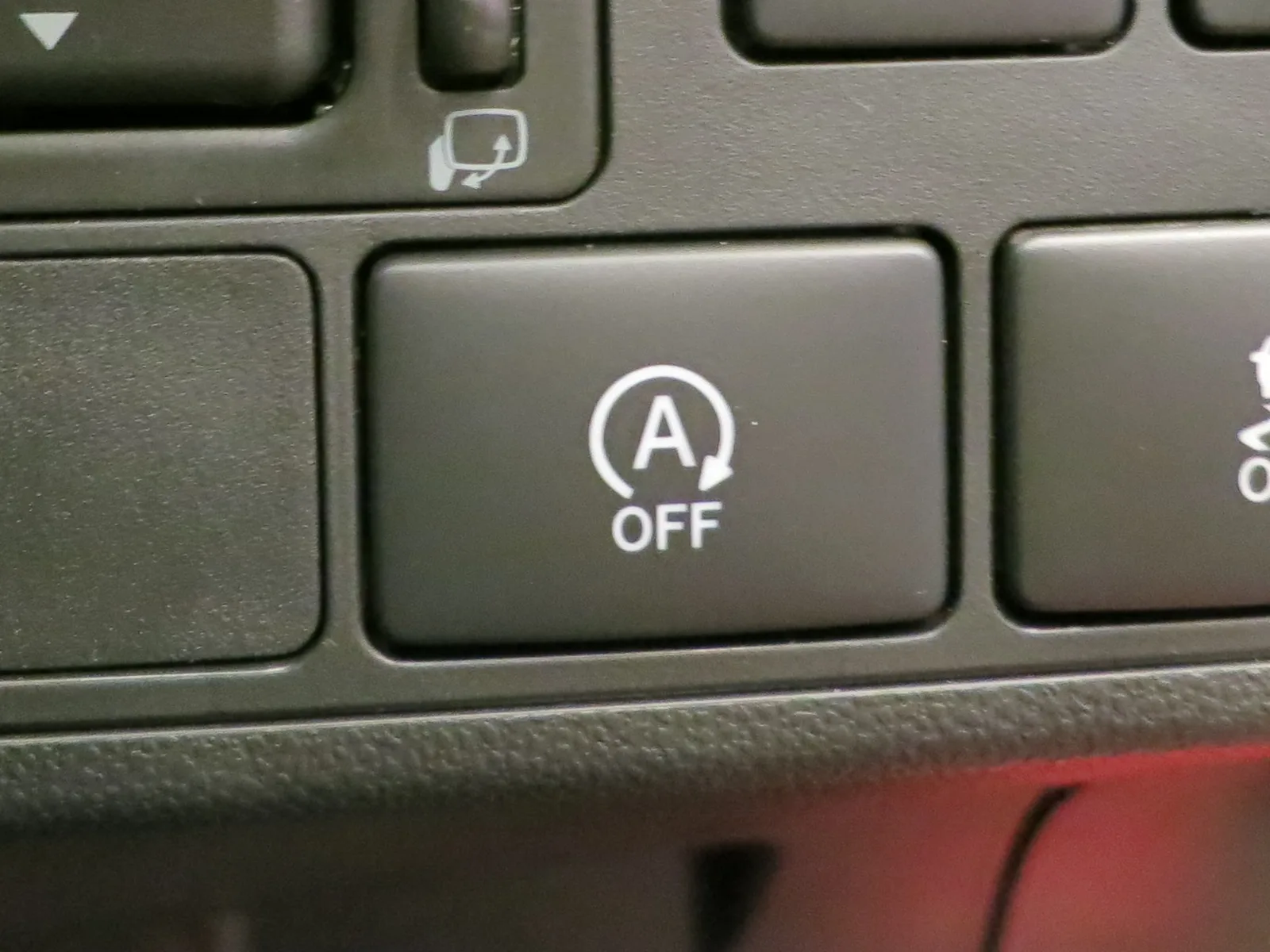
Fuel economy ratings have also raised questions. The US Environmental Protection Agency offers rating incentives to manufacturers that default their start-stop systems to the on position. If the system does not stay off after the car is switched off, the EPA rates fuel economy only with the system engaged. If a maker lets the driver disable it permanently, the EPA averages the figures with the system on and off. Since that average is always lower, makers tend to switch the system back on at each restart, which some owners find inconvenient.