A DOHC aluminium V8 built from 1993 to 2011, with a limp-home mode, a 469 hp supercharged variant and Oldsmobile spin-offs.
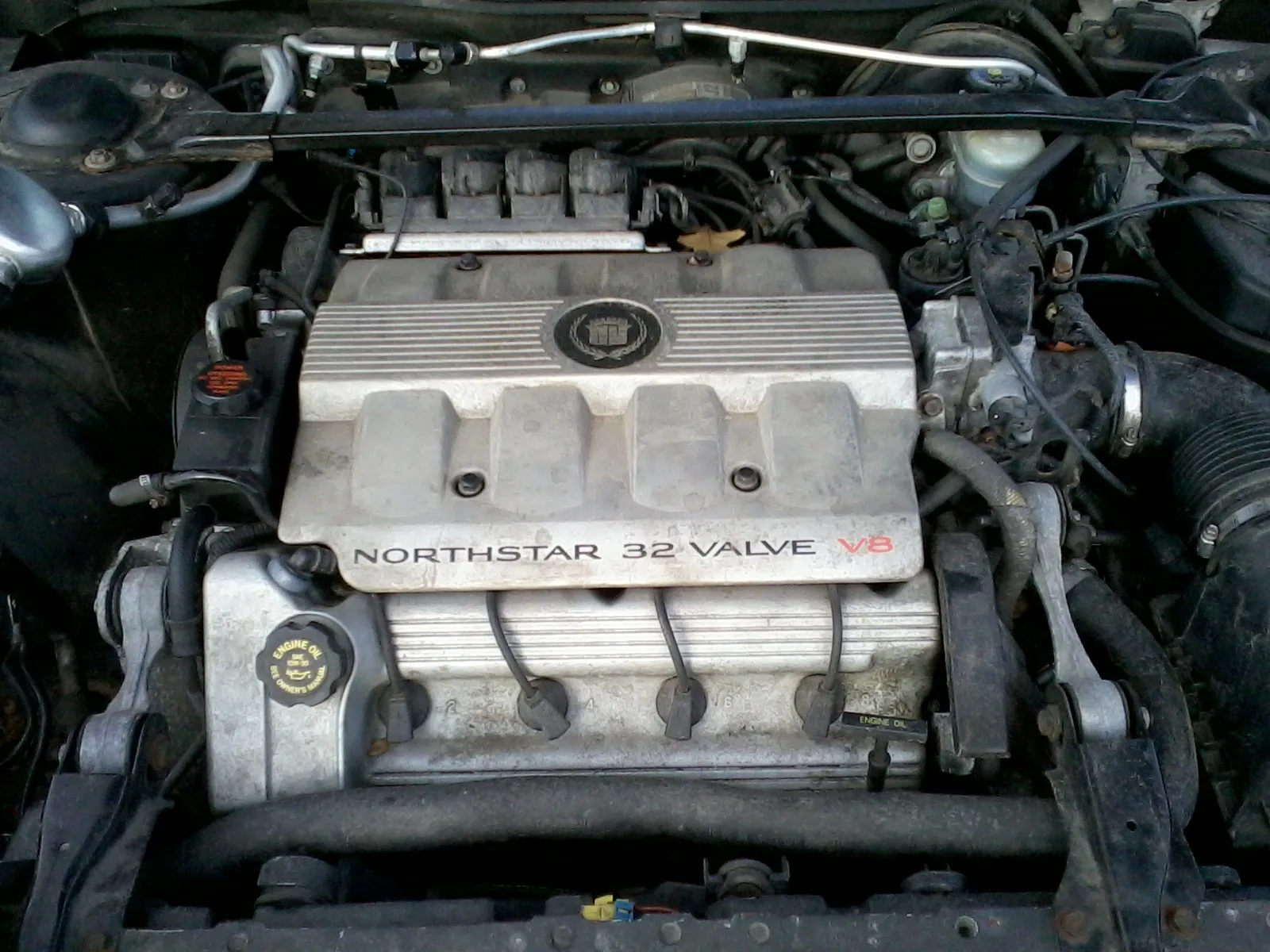
The Northstar was a DOHC aluminium V8 built by General Motors from 1993 to 2011, first for Cadillac. It ran from 4.6 litres in its basic form to a 4.4 litre supercharged version rated at 469 hp.
The Northstar was a family of high-performance 90-degree V8 engines that General Motors built from 1993 to 2011, and it is most closely associated with Cadillac. Its original design used double overhead cams, four valves per cylinder and an all-aluminium structure, which earned it a reputation as GM's most technically complex engine.
Where did the Northstar come from?
Work on the Northstar began at Oldsmobile R&D in 1984, aimed at the advanced dual overhead cam V8s that European and Japanese rivals were expected to introduce later in the decade. Although Oldsmobile engineers led the design, the engine became most closely linked with Cadillac and its Northstar series.
Cadillac was then using an aluminium overhead valve V8 that GM had rushed into production. Fuel economy rules for 1982 ruled out the V8-6-4 that had been planned for 1981, which added pressure on the replacement programme.
The company also declined to push the gas guzzler tax onto buyers, which added to the cost pressure on the new engine.
A DOHC aluminium V8 that promised luxury-class performance, then carried GM's complex engineering into two decades of Cadillac and Oldsmobile models.
Why did Cadillac need a new V8?
Cadillac wanted fresh models able to take on BMW and Mercedes-Benz, as well as Lexus, Acura and Infiniti. GM assembled a list of advanced features for the Allante and the updated Eldorado and Seville STS, and an engine exclusive to Cadillac was the centrepiece that dealers had asked for.
Those features grouped together as the Northstar System. The V8 at its heart needed the performance and sophistication to match an ever-growing list of imported challengers.
What made the block and heads unusual?
The engine's cast aluminium 90-degree V8 block placed bores 4 in (101.6 mm) apart, and the casting divided into an upper and a lower half, each a single unit. Its lower crankcase carried the crankshaft without conventional main bearing caps, and an oil manifold plate with a silicone gasket formed the oil gallery beneath.
The liners were cast iron, while the aluminium pistons had valve clearance pockets. Bronze piston pin bushings and free-floating pins completed the reciprocating assembly.
The Northstar is an interference engine, so the valves will strike the pistons if the timing is lost. A timing failure can therefore damage the valves and pistons.
How did the valvetrain and fuel system work?
Cast aluminium cylinder heads carried four valves per cylinder, operated by dual overhead cams driven through a maintenance-free chain case. The cams push hydraulic lifters that sit at the valve ends. Sequential fuel injection fed the cylinders through eight thermoplastic tubes.
Intake valves were inclined at 25 degrees and exhaust valves at 7 degrees, with platinum-tipped spark plugs mounted centrally. The cam covers were magnesium, chosen for lightness and sound damping.
Ignition was distributorless, using a waste-spark arrangement. The powertrain control module set spark and injection timing, along with the shift points for the transverse 4T80 four-speed. Every engine in the family shares one bellhousing pattern.
What was the limp-home mode?
The limp-home feature let the engine keep running for a limited time without coolant. Fuel went to only one cylinder bank at a time, which air-cooled the inactive bank. Combined with the all-aluminium construction and a large oil capacity, a Northstar-equipped car could be driven about 100 mi (161 km) with no coolant and no damage.
Some heavily electronic cars, including the Seville, DeVille and Eldorado, used a liquid-cooled alternator. GM went back to an air-cooled unit for 2001, removing potential leak points and extra tubing in the process.
How did the Northstar System fit together?
The Northstar System was a Cadillac trademark covering a bundle of performance features, first offered in mid-1992 on the 1993 Allante and later on the Seville and Eldorado. It coupled the 4T80-E transmission, road sensing suspension, variable power steering and four-wheel disc brakes with the high-output engines.
The road sensing suspension checked shock damping rates every 15 milliseconds and chose between two settings, and a continuously variable version was offered too. The steering was Magnasteer, which used magnetised rings around the output shaft to stiffen the steering as speed rose.
Bosch anti-lock brakes accompanied the four-wheel discs. The original Allante also brought traction control and adaptive suspension into the package.
What were the L37 and LD8 versions?
The L37 was the original high-output Northstar, tuned for responsiveness and power. The LD8 was a transverse engine designed to offer more torque than the high-revving L37, and it was introduced in 1994. Both were 4.6 L (4,565 cc) units.
The L37 was first rated at 290 hp (216 kW), but 1993 production cars were rated at 295 hp (220 kW). From 1996 to 2004 it reached 300 hp (224 kW) in the STS, DTS and ETC, which placed those front-drive cars among the most powerful domestic models ever built.
For 2005 the L37 became the Northstar NHP, rated at 290 hp (216 kW) under the new SAE certified rating system. The 2006 DTS Performance Package edged up to 292 hp (218 kW), and compression ratio dropped from 10.3:1 to 10.0:1 for engines built after 2000.
The LD8 carried a torque-led tune. The 1998 revision was quieter than earlier Northstars, thanks to hydraulic engine mounts and a tuned intake system. Most LD8 engines were rated at 275 hp (205 kW), and torque stood at 300 lb-ft (407 N-m).
How did the LH2 and LC3 differ?
The LH2 was a 2004 revision aimed at longitudinal layouts, serving the STS, SRX and XLR with rear or all-wheel drive. It gained continuously variable valve timing on both the intake and exhaust sides, and its output stood at 320 hp (239 kW), with 315 lb-ft (427 N-m) of torque.
Variable valve timing was devised for the longitudinal LH2, and the transverse engines went without it because of packaging constraints. The extra timing control accounts for most of the gain over the earlier L37 and LD8.
The supercharged LC3 was a 4.4 L engine built for the 2006 STS-V and XLR-V. Its bore was reduced for strength and better head gasket sealing. The STS-V made 469 hp (350 kW) at 6,400 rpm and 439 lb-ft (595 N-m) at 3,900 rpm with 9.0:1 compression.
The XLR-V produced 443 hp (330 kW) at 6,400 rpm, while its torque reached 414 lb-ft (561 N-m) at 3,900 rpm. Both LC3 versions used variable timing on the intake and exhaust sides.
What was the Aurora L47 V8?
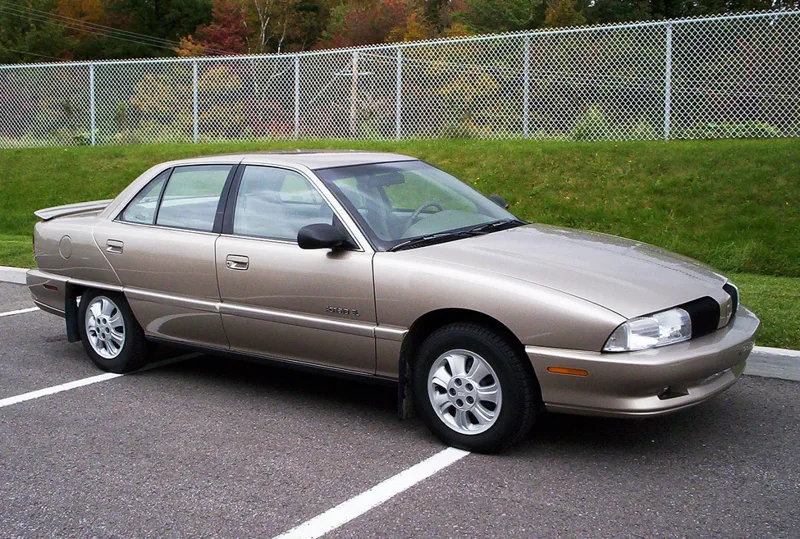
The L47 was a DOHC 4.0 L (3,995 cc) V8 based on the Northstar, built for the Oldsmobile Aurora during the 1995 to 1999 and 2001 to 2003 model years. Its output was 250 hp (186 kW), and torque reached 260 lb-ft (353 N-m). It also needed premium fuel.
Its bore was 87 mm and its stroke 84 mm, and the 10.3:1 compression ratio sat alongside a glass-filled thermoplastic intake manifold made in one piece. Oldsmobile also fitted simplified AC Rochester sequential injection to keep weight down.
A die-cast aluminium oil pan with baffling reduced oil starvation in hard driving. A starter interlock stopped the starter engaging while the engine was already running.
A highly modified race version made 650 hp (485 kW). GM racing used it for IMSA sports car competition in Oldsmobile Aurora GTS-1 and Riley and Scott LMP prototypes in 1995, and for Indy Racing League competition from 1997. The Cadillac Northstar LMP program later ran a twin-turbocharged version with the 4.0 L capacity.
The Aurora engine arrived in 1994 for the 1995 model year, and it also went into the Shelby Series 1. GM has not used it since Oldsmobile was retired in 2004.
What was the LX5 Shortstar V6?
The LX5 was Oldsmobile's DOHC V6, launched in 1999 alongside the Intrigue. Called the Premium V6, or PV6, during development and nicknamed the Shortstar by enthusiasts, it was based on the L47 Aurora V8 and displaced 3.5 L (3,473 cc).
Although its 90-degree V-angle matched the Northstar, the block was engineered from scratch, so its bore centres differ. The layout is even-firing, with a split-pin crank much like the one in Buick's 3800, and chain-driven dual overhead cams serve four valves per cylinder.
Peak output was 215 hp (160 kW), reached at 5,600 rpm, with torque of 234 lb-ft (317 N-m) at 4,400 rpm. Its bore measured 89.5 mm and its stroke 92 mm. Coil-on-plug ignition was new to GM with this unit, and the compression ratio was 9.3:1.
Development costs were high, and the engine appeared in few vehicles. A family of premium V6s from 3.3 L to 3.7 L was once promised, but only the LX5 was built before GM dropped the Shortstar for the High Feature V6 in 2004.
The LX5 was an unusual member of GM's DOHC V6 lineage. The Chevrolet Twin Dual Cam of 1991 to 1997 modified an older 60-degree block rather than starting afresh, and the Cadillac and Holden HFV6 arrived in 2004. Between them, GM had gaps in its DOHC V6 range in 1998 and 2003, apart from the 54-degree Opel V6 used in some cars.
How do the main Northstar variants compare?
| Variant | Years | Displacement | Output | Torque |
|---|---|---|---|---|
| L37 | 1993-2005 | 4.6 L (4,565 cc) | 295 hp (220 kW) in 1993; 300 hp (224 kW) from 1996 to 2004 | - |
| LD8 | 1994 onward | 4.6 L (4,565 cc) | 275 hp (205 kW) | 300 lb-ft (407 N-m) |
| LH2 | 2004 onward | 4.6 L (4,565 cc) | 320 hp (239 kW) | 315 lb-ft (427 N-m) |
| LC3 | 2006 | 4.4 L (4,371 cc), supercharged | 469 hp (350 kW) at 6,400 rpm | 439 lb-ft (595 N-m) at 3,900 rpm |
| L47 | 1995-1999 and 2001-2003 | 4.0 L (3,995 cc) | 250 hp (186 kW) | 260 lb-ft (353 N-m) |
| LX5 | 1999-2004 | 3.5 L (3,473 cc) | 215 hp (160 kW) at 5,600 rpm | 234 lb-ft (317 N-m) at 4,400 rpm |
The L37 and LD8 share the 4.6 L block, but they take different routes to power: one favours high revs and the other torque. The LC3 shows what forced induction could add to a platform that was never designed for it.
Why did the head gaskets fail?
Engines from 1995 to 2005 gained a reputation for head gasket failures linked to torque-to-yield head bolts. These bolts are stretched beyond their elastic limit on installation, so they wear and fatigue over time and lose service life.
Under heavy load the bolts could weaken and loosen in their threads. Once that happened the seal ruptured, and the head gasket blew. The problem was tied to the 4.6-litre engine used in models from 1995 to 2005.
How did the Northstar end?
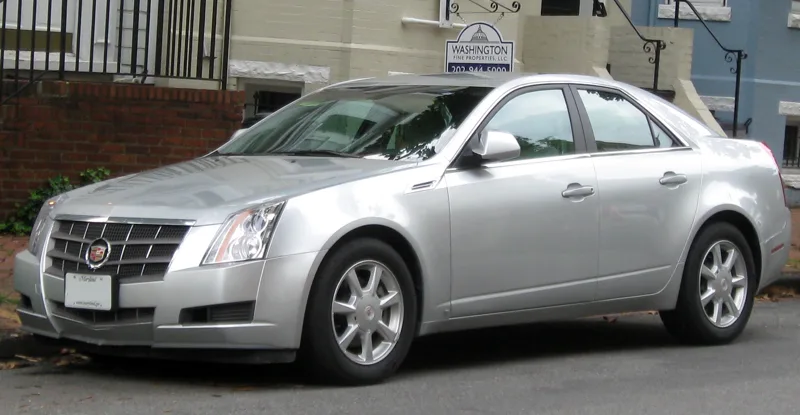
GM ended Northstar production in 2011, with the final cars the Cadillac DTS, Buick Lucerne and Cadillac STS. The engine was replaced by the GM LS small-block OHV V8 in newer Cadillac models such as the CTS-V, a move back to a simpler pushrod design.
For eight years after that, Cadillac's V8s were LS engines alone, until the clean-sheet Blackwing arrived in 2018 for the 2019 CT6-V. That Cadillac-only engine was dropped after two years, in early 2020.
Cadillac had also planned a V12 Northstar, probably for the Escalade, before economics and fuel economy rules ended the idea. The Northstar name itself was used exclusively by Cadillac for more than a decade before other GM brands adopted it.