A $4 billion bet on rear-drive sedans, a roadster built on the Corvette's platform and a crossover that became the best seller.
Cadillac rebuilt its range in the 2000s around four models. The CTS of 2002 brought a new rear-drive platform and, from 2004, V-Series performance, the STS became the flagship sedan, the XLR was a roadster sharing the Corvette's platform, and the SRX crossover grew into the brand's top seller at home.
General Motors spent $4 billion on the first Cadillac CTS, a rear-drive sedan whose badge stood for Catera Touring Sedan, in an effort to make Cadillac matter again. Over the next decade the CTS gained a coupe and a wagon, the STS took over at the top of the sedan range, the XLR added a roadster built on the Corvette's platform, and the SRX became the best-selling Cadillac in the United States.
The four cars came from the same push: new rear-drive platforms, a sharp-edged design language and V-Series performance versions aimed at BMW and Mercedes-AMG. Looking at them in order shows which ideas worked, which sold and which were quietly dropped.
What did the Cadillac CTS change in 2002?
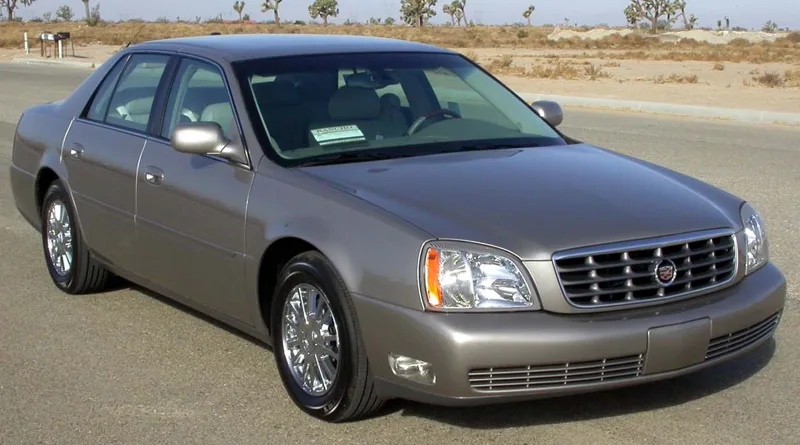
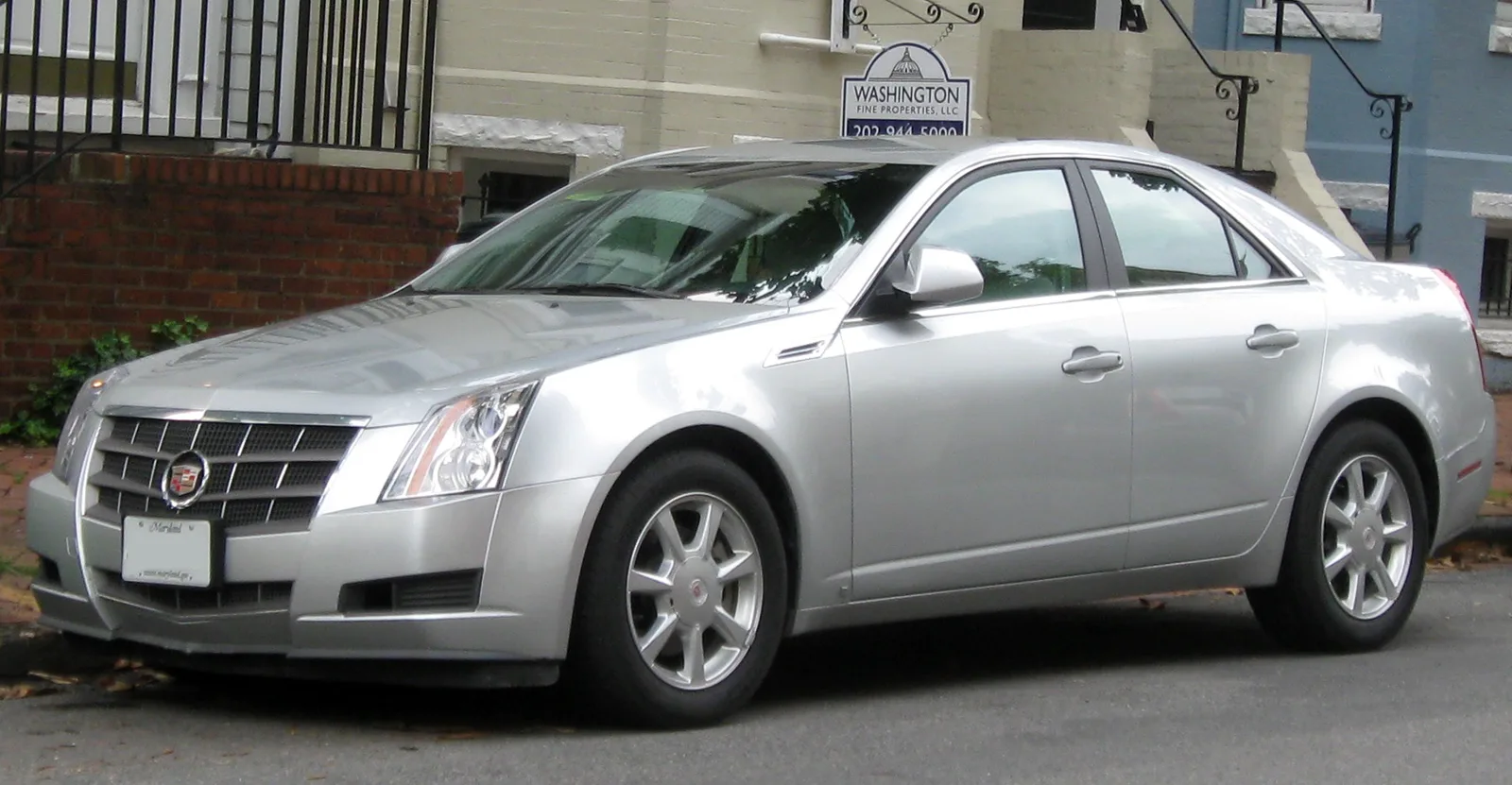
The first CTS was introduced in January 2002 as a 2003 model on GM's new rear-wheel-drive Sigma platform, with fully independent suspension and the Art and Science design language. It replaced the Opel-based Catera and no Cadillac had offered a manual gearbox since the 1988 Cimarron.
The money was meant to give Cadillac fresh styling, a new rear-drive platform and, above all, renewed relevance. Wayne Cherry and Kip Wasenko drew the exterior in a style first shown on the Evoq concept. Dan Neil, writing for The New York Times, called the design confident, distinctive and pure, and praised the brave bet on hiding cleverness beneath beauty. All first-generation cars were built at the Lansing Grand River plant in Michigan.
Power began with a 3.2-litre V6 making 220 hp. In 2004 a 3.6-litre DOHC V6 with variable valve timing offered 255 hp and 252 lb ft, and for 2005 a 2.8-litre V6 took over the entry level. Buyers could choose a five-speed automatic or a five-speed Getrag manual, which was replaced by an Aisin six-speed for the 2005 model year.
The first CTS-V
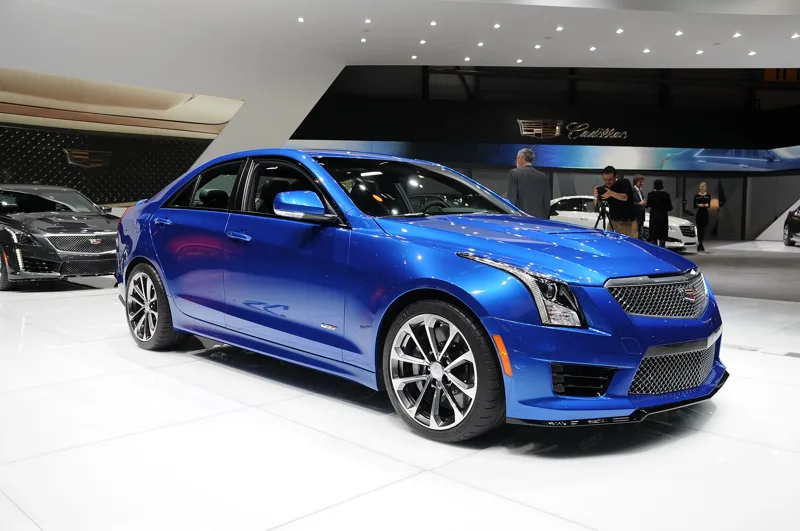
GM introduced the CTS-V in 2004 to take on the BMW M3 and M5, the Audi S4 and S6 and the Mercedes C- and E-Class AMGs. It carried the 5.7-litre LS6 V8 with 400 hp at 6,000 rpm and 395 lb ft, a Tremec T56 six-speed manual as the only gearbox, Brembo four-piston brakes and a stiffer suspension. For 2006 and 2007 the 6.0-litre LS2 took over with the same ratings.
GM quoted 4.6 seconds from 0-60 mph, a quarter mile in 13.1 seconds at 109 mph and a top speed of 163 mph. The brakes could stop it from 60 mph in 110 feet, and a lap of the Nurburgring Nordschleife in 8 minutes 19 seconds put it in company with the Mercedes E55 AMG and BMW M5.
The CTS name stood for Catera Touring Sedan, yet the car replaced the Catera and carried a $4 billion bet on Cadillac's relevance.
How did the CTS evolve across three generations?
The second CTS was shown at the Detroit show in January 2007 as a 2008 model, bigger than before at 191.6 inches long and offered as a sedan, coupe and Sport Wagon. The third generation was a sedan only, on a stretched Alpha platform, and the CTS ended in 2019 when the CT5 replaced it.
The 2008 and 2009 base car used a 3.6-litre V6 with 263 hp, with a direct-injection 3.6 making 304 hp as an option. A 3.0-litre V6 with 270 hp took over the base role for 2010 and the 3.6 rose to 323 hp for 2012. A six-speed manual was standard, a six-speed Hydra-matic automatic was optional, and all-wheel drive came with the automatic. Buyers could add a Bose 5.1 surround system, navigation with real-time traffic and weather, a hard drive for music, swiveling headlights and remote starting. GM had planned to relaunch Cadillac in Australia and New Zealand with this car, but the 2008 financial crisis cancelled the launch, and the cars already shipped were sold through Holden New Zealand dealers.
The coupe appeared as a concept in Detroit in 2008, was built from spring 2010 and sold from August as a 2011 model, with no B-pillar. A CTS-V Coupe at the 2010 Detroit show was Cadillac's first coupe since the Eldorado ended in 2002. The regular coupe left the lineup after 2014 while the CTS-V Coupe lasted through 2015. The Sport Wagon appeared at the 2008 Pebble Beach Concours d'Elegance, reached buyers in late 2009 as a 2010 model, gained a CTS-V version for 2011 and was dropped with the third generation.
The second-generation CTS-V used the Sigma II platform with BWI Group MagneRide dampers, adjusted on readings taken every millisecond, and six-piston Brembo front brakes. Its supercharged 6.2-litre LSA V8 made 556 hp and 551 lb ft, a pushrod design that was unusual among luxury performance rivals using overhead camshafts. A Tremec six-speed manual was the alternative to the automatic. The second-generation CTS-V sedan, coupe and wagon were marketed into 2014 and 2015 while the next CTS-V was developed, and the CT5-V Blackwing replaced the line in 2019.
Where did the Cadillac STS fit against the CTS?
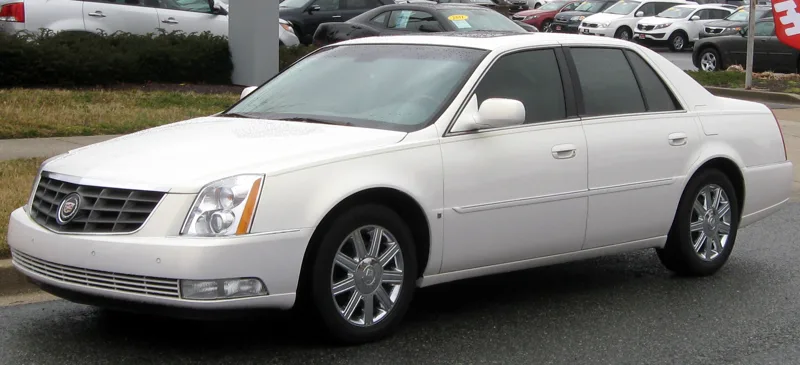
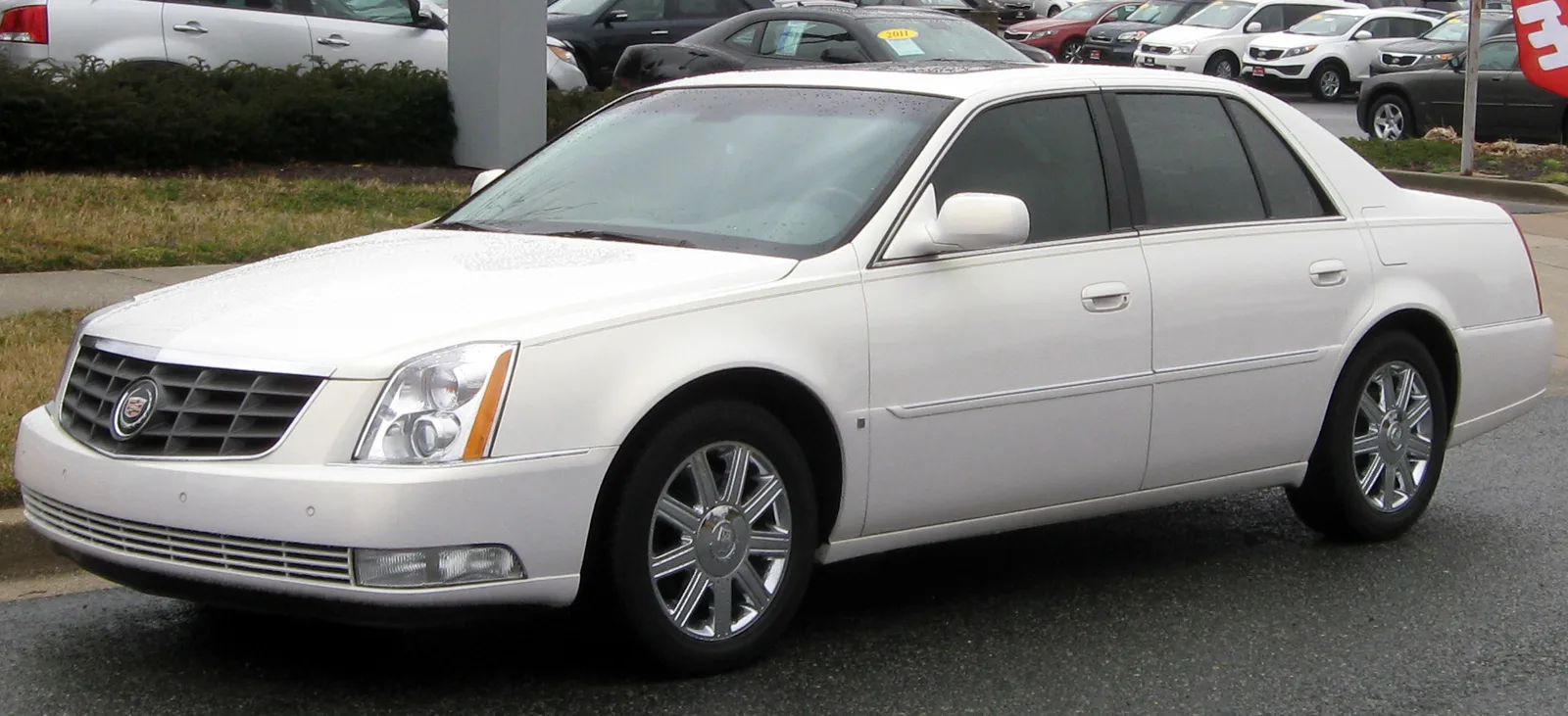
The STS, short for Seville Touring Sedan, was the flagship sedan of the brand from the 2005 to 2011 model years, smaller than the full-size DTS but more expensive. It replaced the front-drive Seville and rode on the same rear-drive Sigma platform as the CTS, and it was the first Cadillac sedan offered with all-wheel drive.
Engines were a 3.6-litre V6 with 255 hp and a 4.6-litre Northstar V8 with 320 hp, both with variable valve timing. The overall length was down 5 inches to 196.3 inches, while the wheelbase grew 4 inches to 116.4 inches, giving more interior space. Cadillac offered six trims plus the STS-V from 2006, and the equipment list included a 15-speaker Bose system, a head-up display and adaptive cruise control. The STS was the first vehicle with an in-dash DVD changer. Launch prices ran from $40,575 for the V6 to $47,025 for the V8, and AWD badges read STS4.
For 2008 the STS gained a larger grille and a direct-injected 3.6-litre V6 with 302 hp, and its options included lane departure warning from Mobileye and blind spot monitoring. The V8 was dropped for 2011 and the last STS was built on 4 May 2011. The bigger third-generation CTS, introduced in 2013 as a 2014 model with similar size and price, effectively replaced it.
STS-V and the Chinese SLS
The STS-V, introduced at the 2005 Detroit show, used a supercharged 4.4-litre Northstar V8 with 469 hp and 439 lb ft, larger Brembo brakes and a stiffer suspension. It reached 60 mph in 4.6 seconds and covered the quarter mile in 13.2 seconds. Visual clues were a wire mesh grille, a power-dome hood and six-lug wheels, and a two-tone Ebony and Tango Red interior was unique to it. It was discontinued in 2009.
China received the SLS, short for Seville Luxury Sedan, in November 2006 for the 2007 model year. Shanghai GM assembled it with a longer wheelbase than the STS, and trims ranged from the 2.8 Elite to the 4.6 Flagship. GM ended production in February 2013.
What was the Cadillac XLR?
The XLR was a two-seat roadster with a power retractable hardtop, built from 2003 to 2009 as a halo model for Cadillac. It shared its GM Y platform and much of its construction with the C6 Corvette, and both cars were built at the Bowling Green plant, but the XLR had its own engine, bodywork, interior and suspension tuning.
It was introduced at the 2003 Detroit show, inspired by the 1999 Evoq concept, and entered production a year before the Corvette. It was the first Cadillac with radar-based adaptive cruise control or heated and cooled seats, and it was nominated for North American Car of the Year for 2004. Bulgari designed the instrument cluster. It also had a head-up display and Magnetic Ride Control, an adaptive suspension with magneto-rheological dampers monitored by four displacement sensors.
Where the Corvette used a 6.0-litre LS2 V8 and a manual gearbox, the XLR had Cadillac's 4.6-litre Northstar V8, rated at 320 hp and 310 lb ft, and only automatic transmissions. Its hardtop folded away in less than 30 seconds, cutting the boot from 11.6 cubic feet to 4.4. For 2009 it received new front and rear fascias and Alcantara headlining, and the Bulgari logo came off the gauges. Production ended on 31 March 2009. The base price climbed from $75,385 to $86,215 over the run.
The supercharged XLR-V
The XLR-V made its public bow in a commercial during Super Bowl XXXIX on 6 February 2005, and the Super Bowl MVP, Deion Branch, was given an XLR. It used the supercharged Northstar from the STS-V, tuned to 443 hp and 414 lb ft, with Corvette Z51 brakes and 19-inch wheels. Car and Driver timed it at 4.6 seconds to 60 mph and 13.0 seconds through the quarter mile at 110 mph, with an electronic limit of 155 mph.
Cadillac projected sales of 5,000 to 7,000 a year, and the total produced was 15,460.
How do the two SRX generations differ?
The SRX had two generations. The first was a five-door, three-row, seven-passenger crossover from 2003 to 2009 on the rear-drive Sigma platform, and the second was a two-row, five-passenger model from 2010 to 2016 on the front-drive Epsilon II platform. The second went on to outsell every other Cadillac in the United States.
The SRX grew out of the Vizon concept, which rolled down a runway at the 2001 Detroit show like a fashion model. The production car offered a 255 hp V6 or the 320 hp Northstar V8, rear-wheel or all-wheel drive and MagneRide, with an all-leather interior and curtain airbags as standard. Heated front seats and wood trim came with the V8, and options included a DVD system, a sunroof, navigation and a power-folding third row. Car and Driver named it its luxury SUV in the Five Best Trucks list for 2004, 2005 and 2006. The Insurance Institute for Highway Safety, however, found that 2005 to 2008 models had the worst driver fatality rate in their class, 63 against a class average of 23. No V-Series version was ever made.
The second generation followed the Provoq concept and went on sale in January 2009 with a 3.0-litre direct-injection V6 or a 2.8-litre turbocharged V6. With a transverse engine driving the front wheels, all-wheel drive used a power take-off and a propeller shaft to the rear differential. GM recalled about 550 turbocharged 2010 SRXs in May 2010 over possible engine failure when regular fuel was used with aggressive driving. The turbo engine was dropped in January 2011, with fewer than 10 percent of buyers choosing it, and a 3.6-litre flex-fuel V6 followed for 2012.
The 2013 facelift brought the CUE infotainment system, and the 2015 model added 4G LTE and a Wi-Fi hotspot. The SRX gave way to the XT5 in spring 2016, as a 2017 model.
How do the four Cadillacs compare?
| Model | Years | Body | Performance version |
|---|---|---|---|
| CTS | 2002 to 2019 | Sedan, coupe, Sport Wagon | CTS-V, up to 556 hp |
| STS | 2004 to 2011 | Flagship sedan | STS-V, 469 hp |
| XLR | 2003 to 2009 | Two-seat retractable hardtop | XLR-V, 443 hp |
| SRX | 2003 to 2016 | Crossover, three-row then two-row | None |
What replaced the CTS and SRX
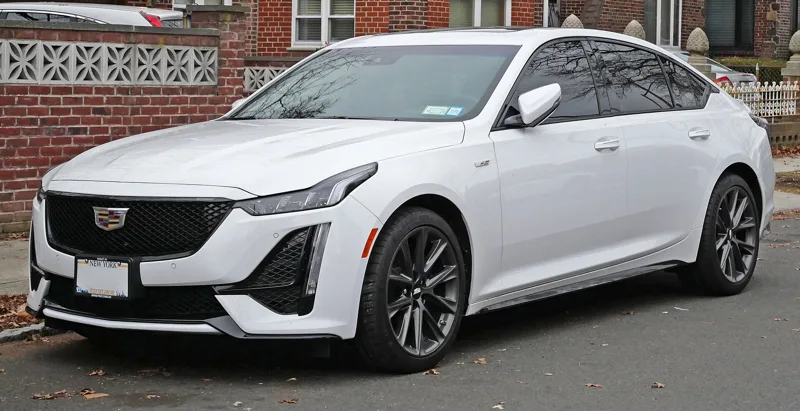
Production of the CTS stopped in 2019. The CT5, which shares its platform with the third-generation CTS, replaced it alongside the smaller CT4. The XT5 replaced the SRX in spring 2016.