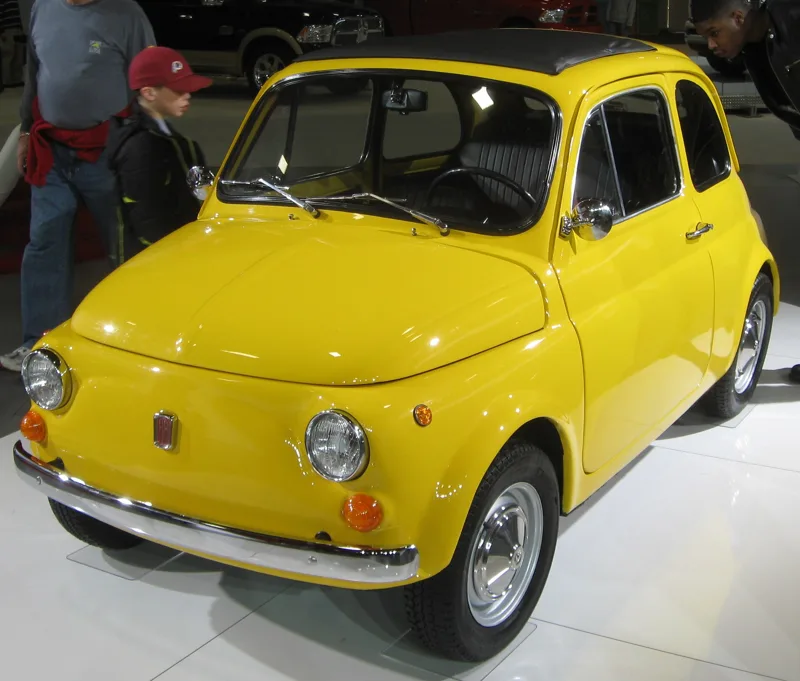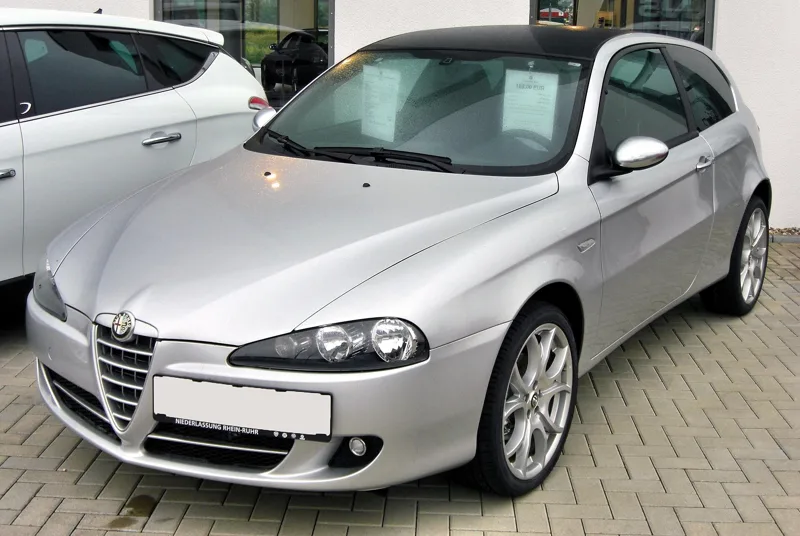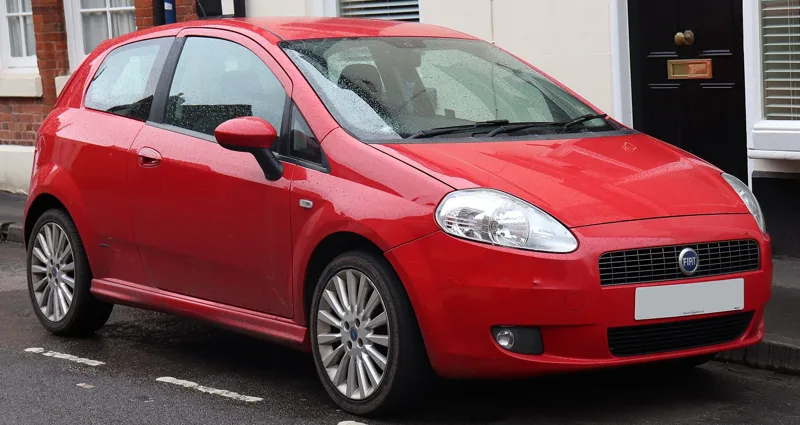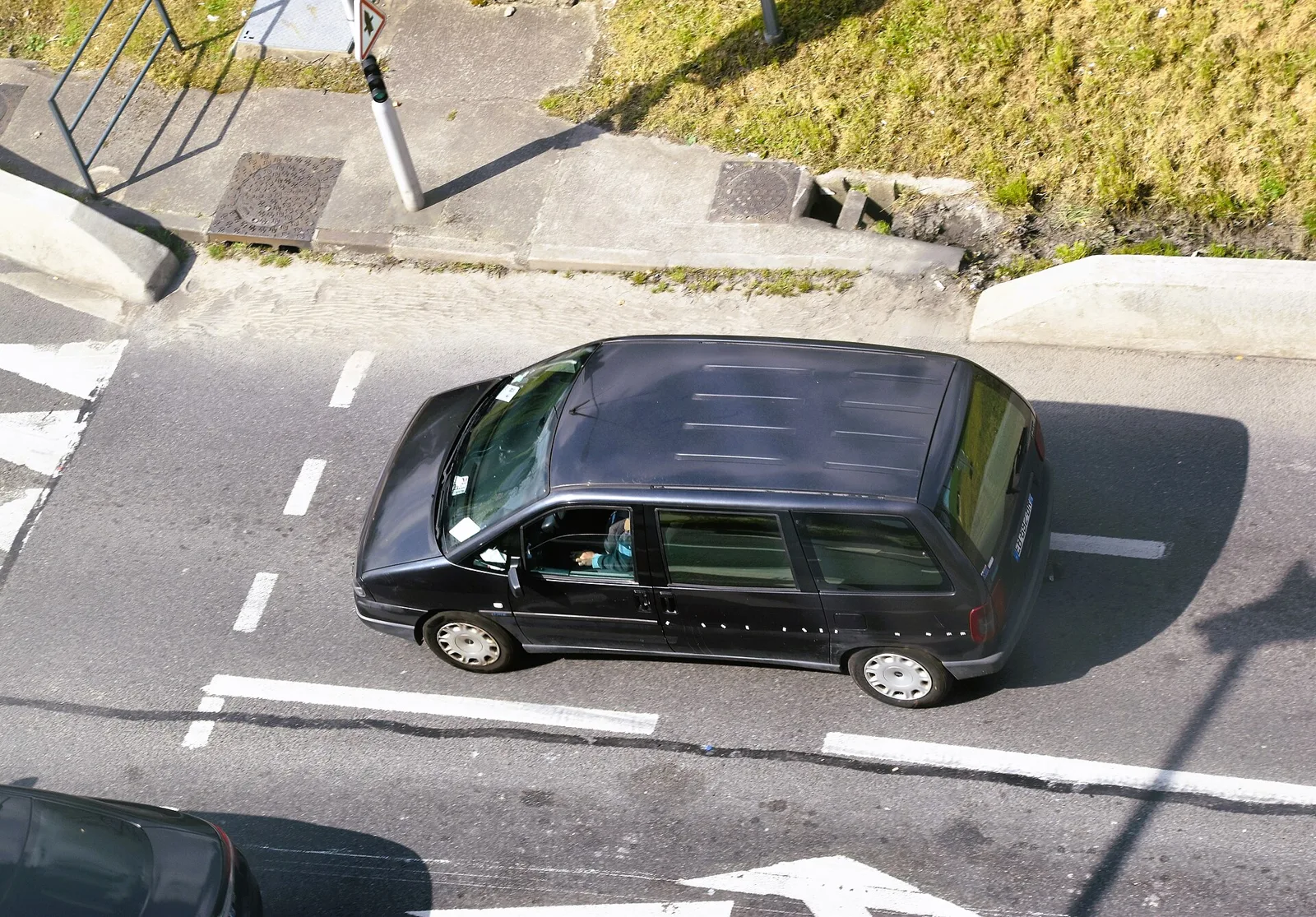
From the 1.2 Multijet to the 2.2 Multijet Evo, Fiat's common-rail diesels came out of a joint venture with General Motors and reached vehicles under dozens of brands.
Multijet is Fiat's name for its turbo common-rail direct-injection diesels, many of them built with General Motors through a joint venture formed in 1996. The family spans 0.9 to 3.0 litre engines and was fitted to vehicles from dozens of brands, including Alfa Romeo, Jeep, Opel and Suzuki.
Fiat's Multijet engines grew out of a joint venture with General Motors, set up in 1996 to build turbocharged common-rail diesels. Vehicles from dozens of brands have used them, and the family spans a 0.9 litre three-cylinder up to a 3.0 litre V6. The name Multijet describes how the fuel is delivered, with several short injections in each combustion cycle instead of one large one.
What is the Fiat JTD engine?
JTD is an initialism for UniJet Turbo Diesel, the name Fiat gave to its first common-rail diesel. Its successors were branded Multijet, and the two names are often used together. Both describe a turbocharged, direct-injected diesel in which an electronic control unit decides how and when fuel is delivered.
Some of the Multijet designs remain jointly owned with General Motors, which was part of a settlement that followed a failed merger between the two groups. GM Powertrain in Turin manages that shared interest. Some PSA Peugeot Citroen diesels are also rebadged JTD units, and the traffic has run in both directions.
Several short injections per cycle turned a noisy diesel into a quieter, cleaner engine that Fiat sold under dozens of badges.
How does Multijet injection differ from the first JTD?
The first-generation JTD used a smaller pilot injection followed by a larger main injection. Multijet expanded that to as many as five injections per cycle, which gave better cold running, stronger performance at low revs, quieter operation and lower emissions. The gap between injections was reduced to 150 microseconds, and the smallest quantity fell from two microlitres to under one.
The control unit adjusts the pattern according to engine speed, the torque requested by the driver and coolant temperature. On the second-generation Multijet, injection pressure was limited to between 1,400 and 1,600 bar, depending on the version, which gave the system room to shape each injection precisely.
Fuel economy gains from this approach were noticeable on mid-sized sedans. The Alfa Romeo 156 and Lancia Lybra with the 1.9 litre JTD could manage well over 45 miles per US gallon on country roads, while delivering the torque of a 3.0 litre 24V V6.
Why did Fiat and General Motors share the design?
The joint venture was set up in 1996 to develop turbocharged common-rail diesels, which both groups then used in their own vehicles. Ownership of some Multijet designs remains shared, a position that followed a settlement after a planned merger between the two companies failed. Under that arrangement, GM's interest is managed from Turin.
The partnership explains why many GM-badged small cars carried Fiat-derived engines in the early years of the venture. Chevrolet and Opel models were fitted with versions of the 1.3 and 1.9, and GM later developed its own derivatives from the same starting point, which spread development costs across two companies.
What did Multijet II add?
Fiat Powertrain introduced the third generation, called Multijet II, in 2009. It used new injectors with a hydraulically balanced solenoid valve and an injection pressure of 2,000 bar. The system can deliver up to eight consecutive injections per cycle, which allows finer control of the fuel than the earlier design.
Injection Rate Shaping, a feature of Multijet II, uses two very close pilot injections to make fuel delivery more continuous and modulated. The result is a quieter engine with smoother running, lower emissions, better fuel mileage and higher performance than the generation before it. The Multijet II 1.3 with variable geometry turbocharging produces up to 95 PS (70 kW; 94 hp).
How small did the Multijet engines go?
The smallest member of the family is a 0.9 litre three-cylinder, known as XSDE or Smartech Diesel. Its development was shared between GM's Torino powertrain group and its Indian technical centre, and it produces 57 bhp (43 kW; 57 hp) with 150 N m (111 lb ft) of torque. It was used in the Chevrolet Beat in India from 2011 to 2017.
The 1.2 litre engine, referred to as the 1.3 in some documents, was introduced in February 2003 as a compact four-cylinder. It was produced in Poland, in India by the Fiat-Tata joint venture and by Maruti Suzuki. Over 5 million 1.2 MultiJet engines had been built by 2013, and the Fiat-Tata plant alone completed 800,048 engines over 12 years.
The 1.3 Multijet 75 PS version was chosen as the International Engine of the Year in its class in 2005. Its torque figures ran from 180 to 210 N m, and at launch it was the smallest four-cylinder diesel available, returning 3.3 L/100 km in some applications.
The original 1.3 met Euro IV without a particulate filter, and the Multijet II versions later reached Euro V. That record kept the small engine in use as emissions rules tightened.
The 1.6 Multijet followed in 2006 as a downsized 16-valve replacement for the older 1.9 unit with 8 valves. It served in the Alfa Romeo Mito, the Fiat Punto and the Jeep Renegade, with outputs of 90, 105, 120 and 130 PS.
How did the 1.9 JTD start the Multijet story?
The most common JTD was the 1.9 litre straight-four. It first appeared in the Alfa Romeo 156 in 1997, where its 105 PS (77 kW; 104 hp) made the car the first common-rail diesel passenger car. In 1999 it reached the Fiat Brava, Bravo and Marea, along with the Punto JTD, which used a smaller fixed-geometry turbocharger.
The Alfa Romeo 156 launch mattered beyond its own range, because it proved that common-rail injection could sit comfortably in a mainstream passenger car.
The second-generation 1.9 offered seven power outputs, including 101, 120 and 130 PS in the 8-valve version and 134, 138, 150 and 170 PS in the 16-valve version. Except for the 101 PS unit, every engine used a variable-geometry turbocharger. The block weighs roughly 125 kg (276 lb), and the cylinder head carries an overhead camshaft with directly actuated valves.
A two-stage turbo version arrived in 2007 with 180 PS and 190 PS outputs, both producing 400 N m at 2,000 rpm. Opel used a related unit as its CDTI engine, built in Pratola Serra and Kaiserslautern, and it appeared in Vectra, Signum, Astra and Zafira models.
What did the 2.0 and 2.2 Multijet engines deliver?
A new 1,956 cc Multijet came in 2008 in the third-generation Lancia Delta, producing 165 PS at first. By 2009 it was fitted to the Alfa Romeo 159 as a 170 PS variant, and it also reached the Jeep Compass and Jeep Cherokee, which showed how the engine suited larger vehicles. General Motors later developed its own version, the twin-turbocharged BiTurbo, which produces 195 PS (143 kW; 192 hp) in the Insignia and the Astra J.
The 2.2 Multijet II, introduced by Fiat Chrysler in mid-2015, is offered in 185 and 200 PS guises, equal to 136 or 147 kW and 182 or 197 hp, with 440 N m of torque at 2,500 rpm in the Jeep Cherokee. It improved on the 2.0 with higher injection pressure, variable displacement oil pumping and counterbalance shafts that reduce noise and vibration. It also met Euro 6 norms without diesel exhaust fluid injection.
The 2.2 Multijet III followed on the Fiat Ducato in 2021, with power outputs of 120, 140, 160 and 180 hp. A newer 2.2 Multijet Evo, code B2.2, started production in 2024, and Euro 7 approval followed in 2025. It is built at the Pratola Serra factory in Avellino and is fitted to the Ducato, the Peugeot Landtrek and the Fiat Toro.
How big were the five-cylinder and V6 Multijet engines?
The 2.4 litre five-cylinder was based on the 124 PS TD engine that powered the first Fiat Marea and the Lancia Kappa. Its early JTD version used a 10-valve head, while a 20-valve Multijet produced 175 PS. The latest version of the five-cylinder makes 210 PS and 400 N m at 1,500 rpm.
A separate 2.4 Multijet, displacing 2,442 cc, was developed by Mitsubishi for its L200 pickup and later appeared in the Fiat Fullback. Its existence shows how the Multijet name could cover engines that originated outside the Fiat group.
The 3.0 litre V6 is a double overhead camshaft engine with four valves per cylinder and common-rail direct injection. A North American variant, the FPT Multijet II, reached Jeep vehicles. The Jeep Grand Cherokee of 2011 used the V6 with 241 PS (177 kW; 238 hp) and 550 N m (406 lb ft), and the same family later appeared as the EcoDiesel in Ram and Jeep trucks.
In the Ram 1500 of 2019 to 2023, the EcoDiesel produced 264 PS (194 kW; 260 hp) with 650 N m, which made it one of the more powerful diesel pickups of its era. The Gladiator from 2021 to 2023 used the same family with 600 N m.
| Engine | Displacement | Typical output | Introduced |
|---|---|---|---|
| 0.9 XSDE | 936 cc | 57 bhp (43 kW; 57 hp), 150 N m | 2011 |
| 1.3 Multijet | 1.2 L | 75 PS (55 kW; 74 hp) to 95 PS | 2003 |
| 1.6 Multijet | 1,598 cc | 90 to 130 PS | 2006 |
| 1.9 JTD | 1.9 litre | 101 to 170 PS | 1997 |
| 2.0 Multijet II | 1,956 cc | 165 to 170 PS | 2008 |
| 2.2 Multijet II | 2,184 cc | 185 or 200 PS, 440 N m | 2015 |
| 3.0 V6 Multijet | 2,987 cc | 241 PS to 275 PS | 2011 |
Which vehicles used Multijet engines?
Multijet engines appeared under Fiat, Alfa Romeo, Lancia and Jeep badges, and also in Opel, Saab, Suzuki, Tata and Maruti models. The main groups are listed below to show how far the design travelled.
- Fiat: Punto, Panda, 500, Doblo, Ducato and Strada
- Alfa Romeo: MiTo, Giulietta, 147, 156, 159 and Tonale
- Opel and Vauxhall: Corsa, Astra, Zafira and Insignia
- Suzuki and Maruti: SX4, Swift, Ertiga and Baleno
- Jeep: Renegade, Compass, Cherokee and Wrangler
- Saab and Cadillac: 9-3, 9-5 and BLS
How did the Multijet family come to an end?
The Multijet line did not end in a single moment. The 1.2 Multijet production in India stopped in January 2020, when BS6 emission regulations took effect on 1 April 2020. The Pratola Serra plant continued with the 2.2 Multijet Evo, which replaced the older PSA 1.5 and 2.0 HDi engines in the K0 family of commercial vehicles from 2025.
The Evo engine shows where the design was heading: higher efficiency and tighter emissions limits, with a commercial focus. Earlier Multijet units continue to be found in older cars and vans across the world.