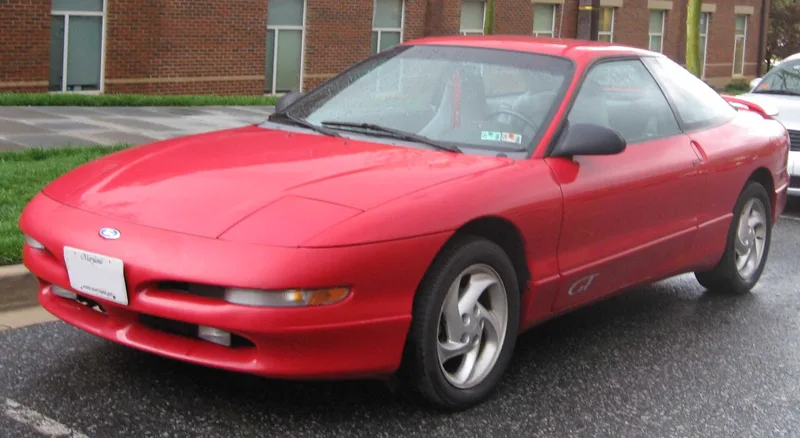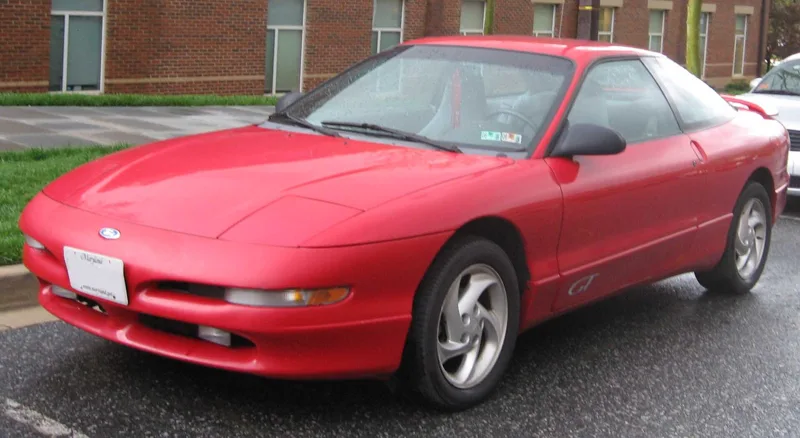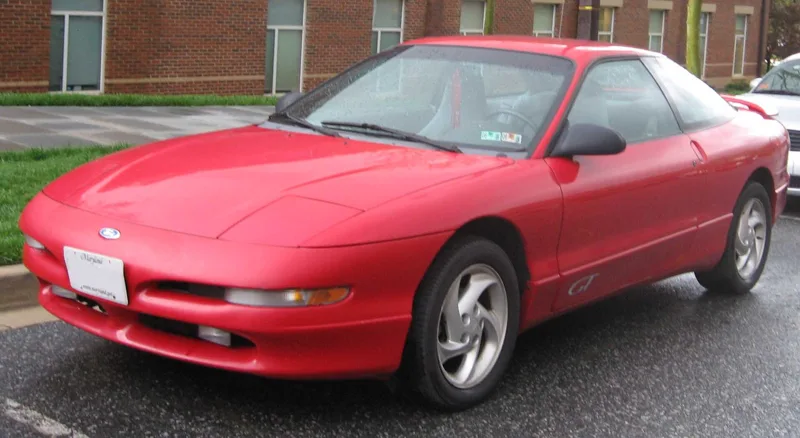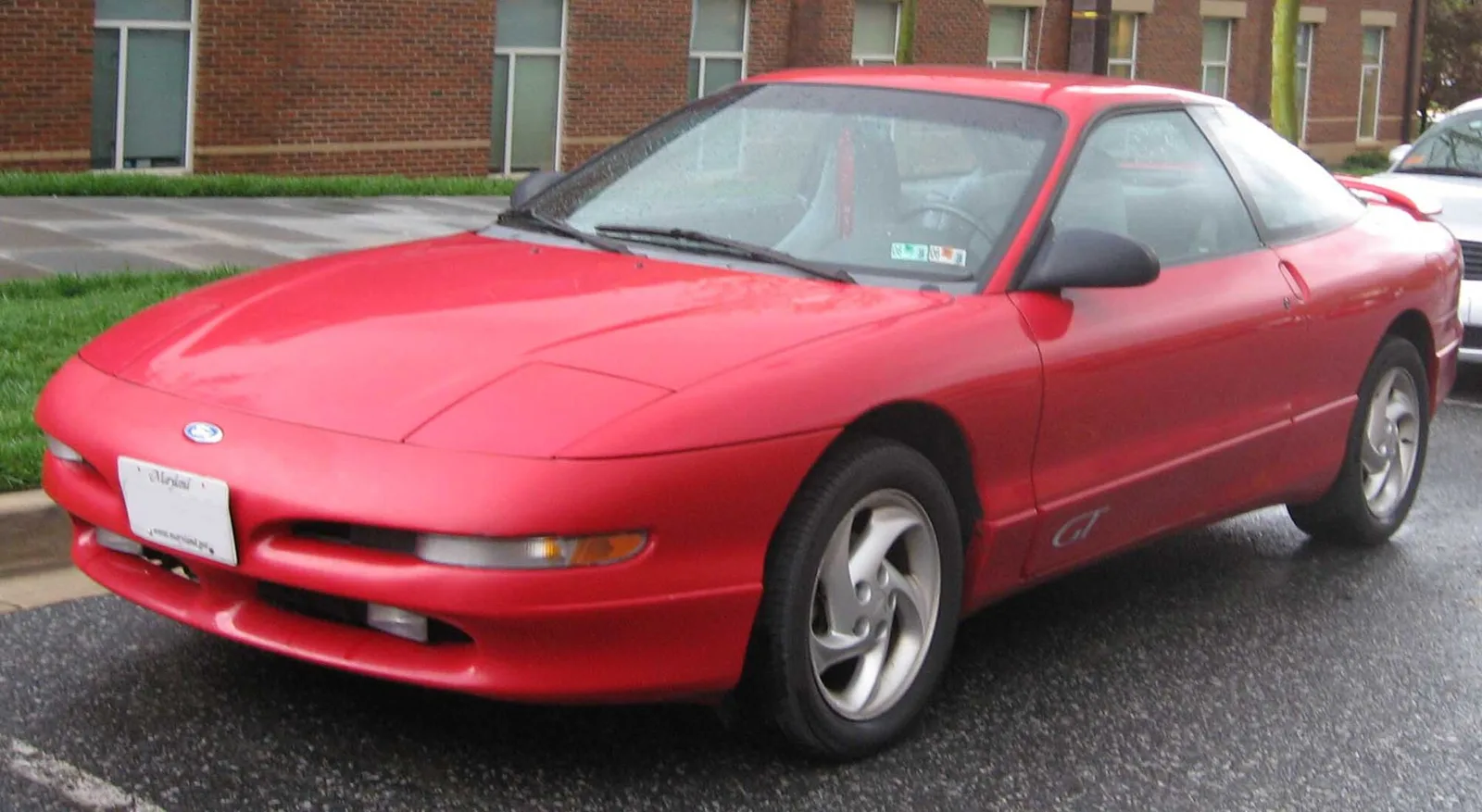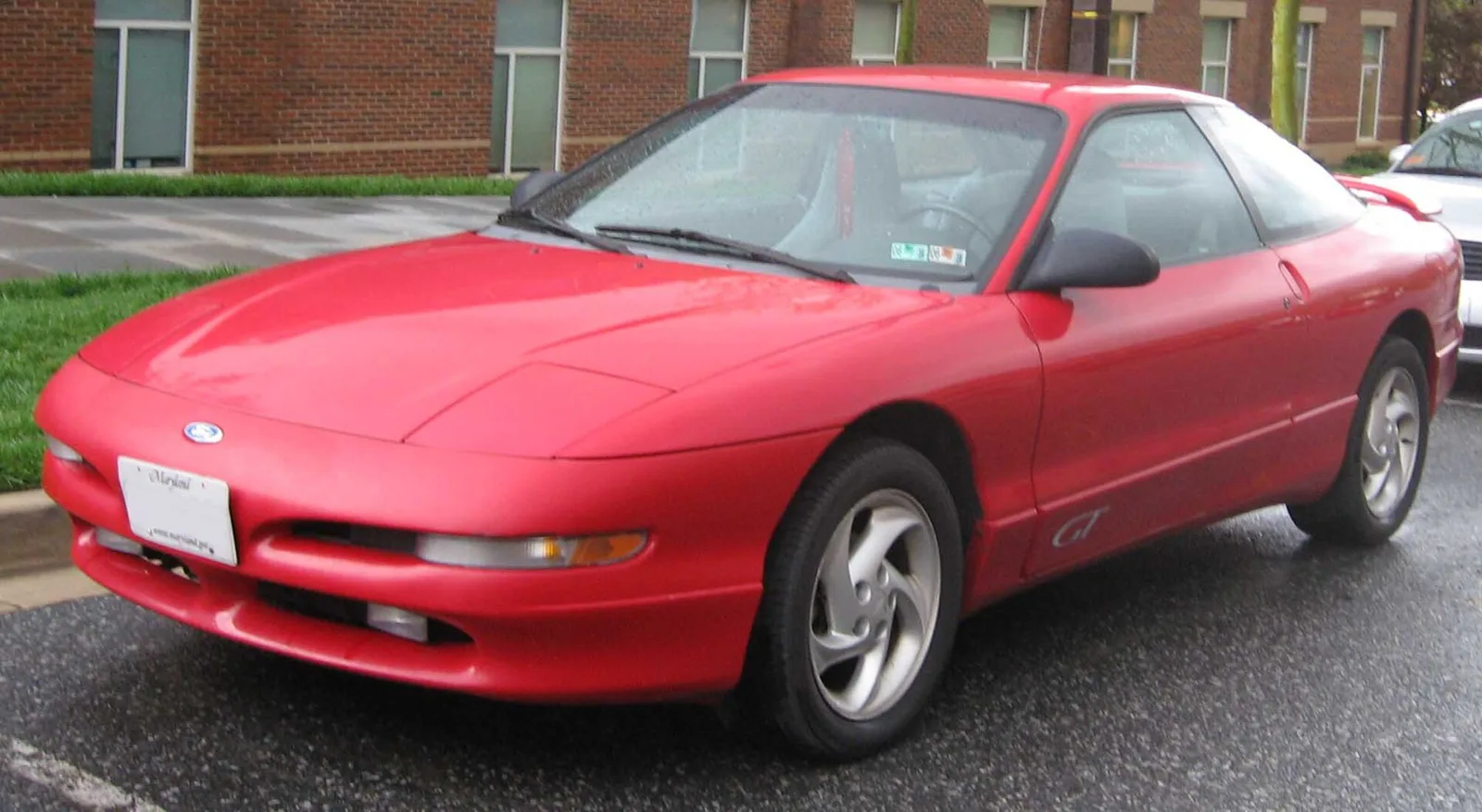
The Probe was designed as a Mustang and ended up as a sports coupe, while the Silvia was a Nissan sports car family that had been on sale since 1964.
Ford's Probe was a Mazda-based coupe built from 1988 to 1997 and pitched at imports, including the Nissan 200SX. The Silvia that became the 200SX began as a hand-built Nissan coupe in 1964 and ran through several generations, many of them sold abroad.
The Ford Probe and the Nissan Silvia were both sporty coupes, but they came from very different places. The Probe was a 1988 to 1997 Ford built with Mazda, while the Silvia was a Nissan sports car family that began with a 1964 prototype and ran through several generations. Their paths crossed in the Probe's launch years, when the Silvia was sold in North America as the Datsun 200SX and the Nissan 200SX.
Were the Ford Probe and Nissan Silvia rivals?
Yes, in North America. Ford's Probe was pitched against imported sports coupes, and the Nissan 200SX, the export name of the Silvia, was one of the cars listed among its rivals alongside the Acura Integra, Isuzu Impulse and Toyota Celica.
The two cars were built for different buyers at first. The Probe grew out of a Mustang project, and Ford pitched it at imports rather than at the Camaro and Firebird. The Silvia was a sports car from a Japanese maker that had been developing the badge since the early 1960s.
Their overlap came mainly in the late 1980s, when the Probe was new and the S12 Silvia was on sale until 1989. In that period the two cars were competing for the same kind of buyer, one who wanted a sporty coupe rather than a family saloon.
A Ford born from a Mustang project against a Nissan sports car family that started life as a hand-built coupe.
When did each car go on sale?
The Probe was marketed from the 1988 model year to 1997, when Ford announced its discontinuation on March 17, 1997. The Silvia began as the CSP311, which debuted at the Tokyo Motor Show in September 1964, and it was produced in several generations after that.
The S10 was built until production stopped in 1979. The S12 was produced from August 1983 to 1989, with revisions in 1986 that the company called Mark II.
The Probe's own timeline was shorter but busy. Its second generation arrived for 1993, and it was based again on the Mazda MX-6 and 626. A third generation was in development when the line ended, and it would have been sold as the Mercury Cougar.
Where did the Silvia come from?
The Silvia's origins go back to the early 1960s. Albrecht Goertz, who had created the BMW 507, saw potential in Japanese manufacturers in 1962, and a sports car project linked to Yamaha and Nissan later contributed to the Silvia. Yamaha had its own sports car project and a working relationship with Nissan, which is how the ideas reached the Silvia's team.
The CSP311 was first shown as the Datsun Coupe 1500. It was a hand-built coupe based on the Fairlady platform, with a 96 PS (71 kW) 1.6 L Nissan R series engine and twin SU carburettors.
Hand construction limited output. Only 554 were built, mostly in 1965, and production stopped in 1968. Most stayed in Japan, although 49 were sent to Australia and 10 more to other markets.
What changed in the S10 and S11 Silvia?
The S10 was the first mass-produced Silvia on Nissan's S platform, and it was based on the Datsun Sunny Coupe. Its planned Wankel engine was dropped during the oil crises of the 1970s, and in Japan it went on sale as the New Silvia with a 1.8 L straight-four.
In 1976 the car became the S11, meeting tighter emissions rules and gaining a new LSE top trim with fuel injection. The 1977 update brought interior upgrades, a body-coloured front grille, new wheels and hubcaps, rubber bumper corners and a Type-G trim level.
Over the four-year life of the S10 and S11, more than 145,000 cars were produced before the line ended in 1979. Nissan's NAPS emissions technology was featured from the car's introduction, which helped it meet the regulations of the day.
How did the Silvia's engines compare with the Probe's?
Production Probe engine figures are not recorded in this comparison, so a full engine-by-engine match is not possible. The only Probe engines described in detail are the concept units, including the turbocharged 16-valve 1.9 L inline-4 of the Probe V.
The Silvia's engines changed with each generation. The S10 used a 1.8 L L18S straight-four producing 105 PS (77 kW) at 6,000 rpm, and top speeds ran from 165 to 175 km/h (103 to 109 mph) depending on the gearbox fitted.
In North America the 200SX of 1981 used a single engine, producing 100 hp (75 kW; 101 PS) with a five-speed manual or three-speed automatic. For 1982 the car gained a 2.2-liter engine rated at 103 hp (77 kW) SAE, and the S12 later offered a 3.0-litre V6 option in some markets.
How did the Silvia perform in motorsport?
The Silvia family had a strong competition record in its own way. The actor and racer Paul Newman prepared a 1977 Datsun 200SX for the 1978 IMSA Class C, and the car won 19 of its 22 starts, even though the standard model had a poor reputation for handling.
The 240RS was a homologation special, with the 2.4-liter DOHC FJ24 engine. About 200 road cars were built between 1983 and 1985, and it became Nissan's official World Rally Championship car from 1983 to 1985, with a second-place finish in the 1983 New Zealand Rally as its best result.
Nissan also raced the regular Silvia in rallies. The Violet GTS first ran at the 1982 Rallye de Portugal, where team leader Timo Salonen retired after the suspension broke. The Datsun Violet GTS, a Silvia-based coupe homologated in 1982, finished fourth in the 1982 Rally New Zealand. The Probe's competition record is not recorded in this comparison.
What are the Ford Probe and Nissan Silvia specifications?
| Specification | Ford Probe | Nissan Silvia |
|---|---|---|
| Years | 1988 to 1997 model years | CSP311 from 1964; S10 to 1979; S12 from August 1983 to 1989 |
| Body | Sport compact coupe | Coupe and hatchback; hardtop coupe and three-door hatchback in the S110 |
| Drive and layout | Front-wheel drive, Mazda G platform | Rear-wheel drive; S10 on the all-new S platform |
| Early engine | not recorded for production cars | S10: 1.8 L L18S, 105 PS (77 kW) at 6,000 rpm |
| North American engine | not recorded for production cars | 200SX from 1981: 100 hp (75 kW; 101 PS); 1982: 2.2-liter at 103 hp (77 kW) SAE |
| Special version | not recorded | 240RS: 2.4-liter DOHC FJ24, about 200 built |
| Headlights | Pop-up headlamps on the Probe I concept | Retractable pop-up headlights on the S12 |
| Drag coefficient | Probe I 0.25; Probe III 0.22; Probe IV 0.152; Probe V 0.137 | not recorded |
| Launch price | not recorded | Datsun 200SX MSRP US$4,399 in 1976 |
| Production | not recorded | 554 CSP311s; over 145,000 S10 and S11 |
| Successor or end | Discontinued March 17, 1997 | S12 production ended in 1989 |
Which car used pop-up headlights?
Both cars had pop-up headlights at some point. The Probe I concept of 1979 used pop-up headlamps as part of its drag reduction, while the S12 Silvia used retractable pop-up headlights in production.
The Silvia's 1987 facelift updated the bumpers and fitted a reverse-cowl hood bulge to clear the 3.0-litre V6 in facelifted models. Pop-up headlights stayed on the sporty coupe and hatchback alike.
The Silvia's pop-up headlights came with a sporting shape. The S12 was sold as a coupe, sometimes described as a notchback, and as a hatchback that bore a resemblance to the Toyota Corolla Levin and Sprinter Trueno AE86.
The Probe's pop-up headlamps were a concept feature. Probe IV had its engine tilted to lower the bonnet, and its radiator sat at the rear, a sign of how far the concept series went.
Which car sold more?
The Silvia sold far more in its early generations, with over 145,000 S10 and S11 cars produced before production stopped in 1979. Its success in both Japan and North America was limited, however, and most buyers of the S10 chose the Celica instead.
The Probe's sales were strong in its first model year, and demand exceeded supply in 1988. Buyers were paying list price or more, and the Chicago Tribune columnist Jim Mateja urged buyers who could not find one to consider the Mazda MX-6.
The Probe's total production is not recorded here, and the S12's total is not recorded either, so a complete sales race cannot be called. The figures that are available suggest the Silvia had the larger early volume, while the Probe made the bigger splash in its launch year.
How did the Probe concepts compare with the Silvia's design?
The Probe concepts were built to test aerodynamic limits. Probe I reached a drag coefficient of 0.25 with fully skirted rear wheels and pop-up headlamps, while Probe V reached 0.137 and was the lone mid-engine car of the series.
The Silvia's design was more conventional. Its S110 body was shared in style with the Nissan Leopard, and its S12 styling included a honeycomb radiator grille and long corner lights in its first form.
The Probe's aerodynamic story stays in the concept series, while the Silvia's design story runs through generations of production cars.
Which car suits which buyer?
The Probe suits a buyer who wanted a front-drive American coupe with a Mazda-based chassis and a sleek shape. The Silvia suits a buyer who wanted a rear-drive Japanese sports coupe with a long history and a range of engines and bodies.
The figures here do not settle which is the better car. The Silvia had the longer family history and the motorsport record, while the Probe had the stronger launch and the more ambitious aerodynamic story.