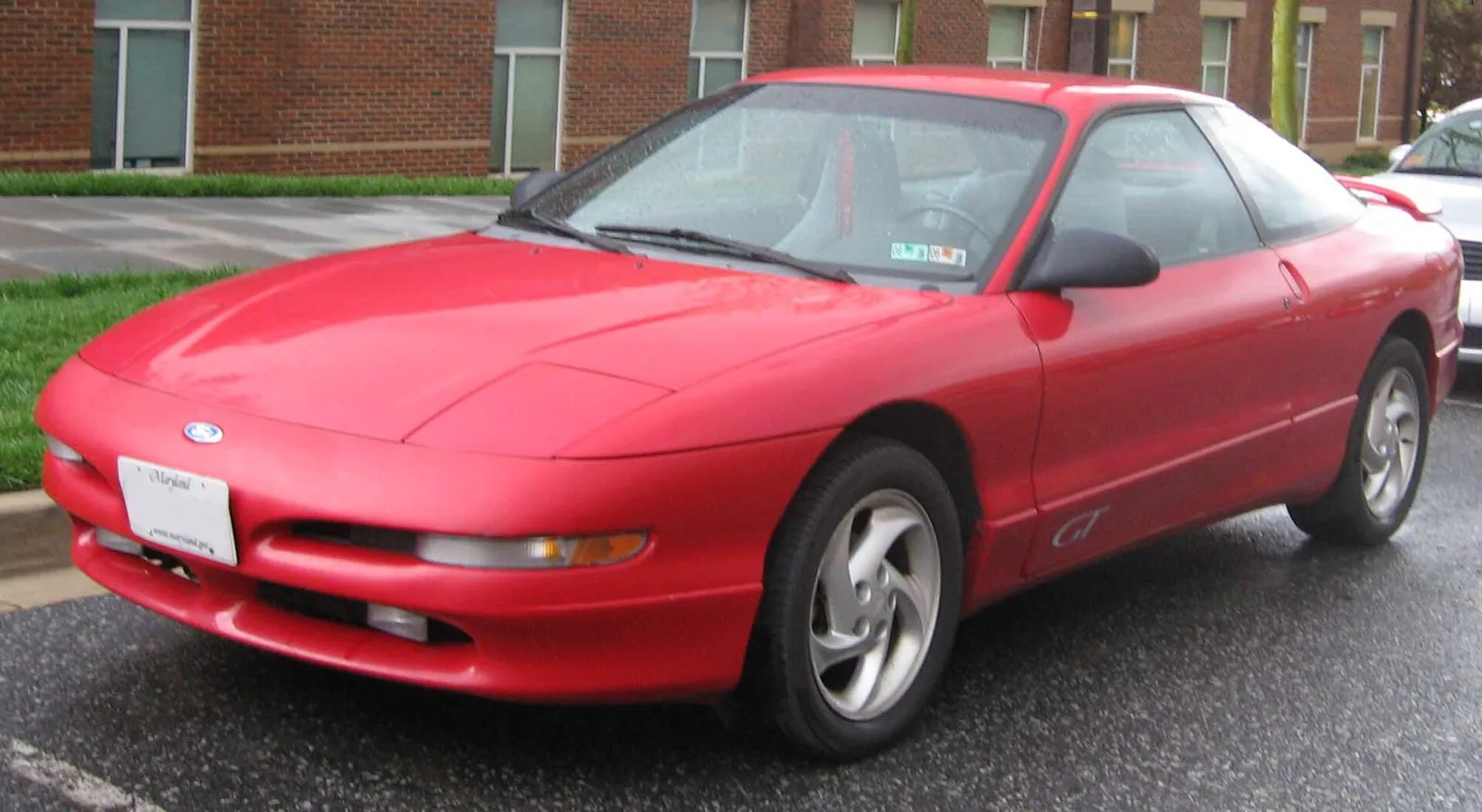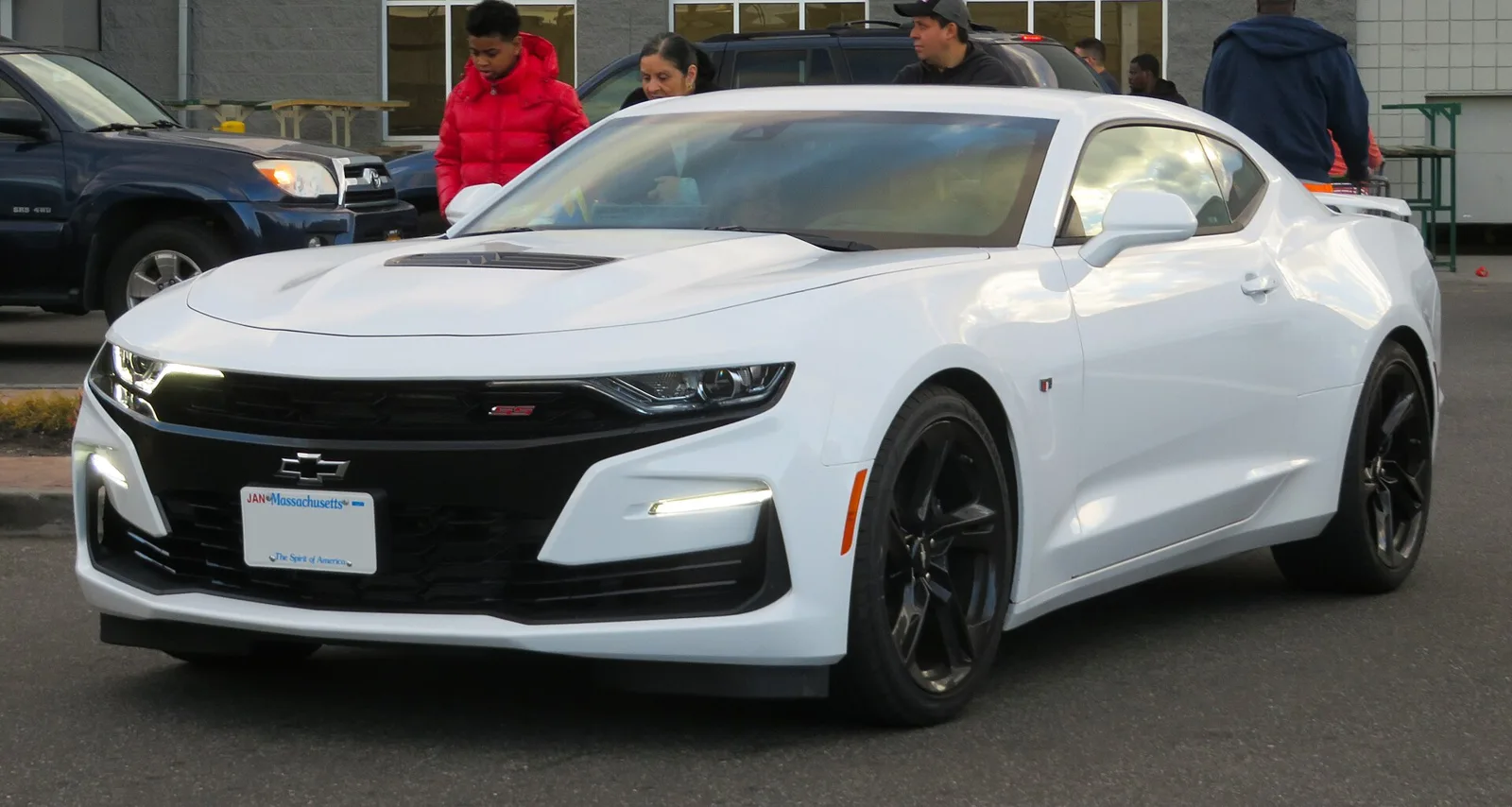
Chevrolet's sixth-generation Camaro and Ford's Mazda-built Probe never went on sale together, yet both were shaped by arguments about what a sports coupe should be.
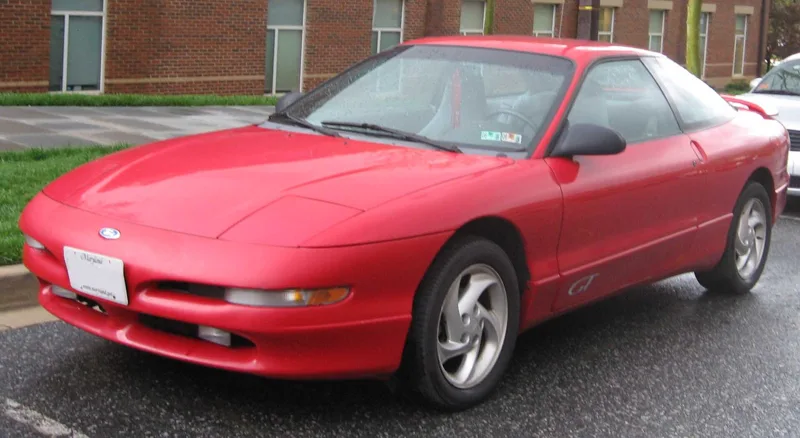
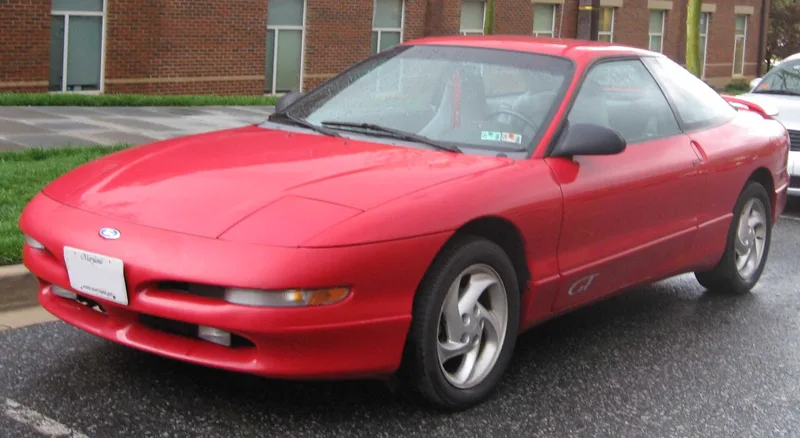
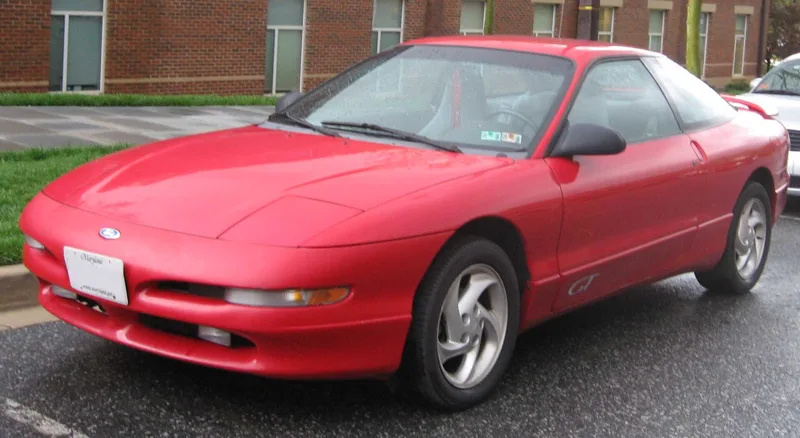
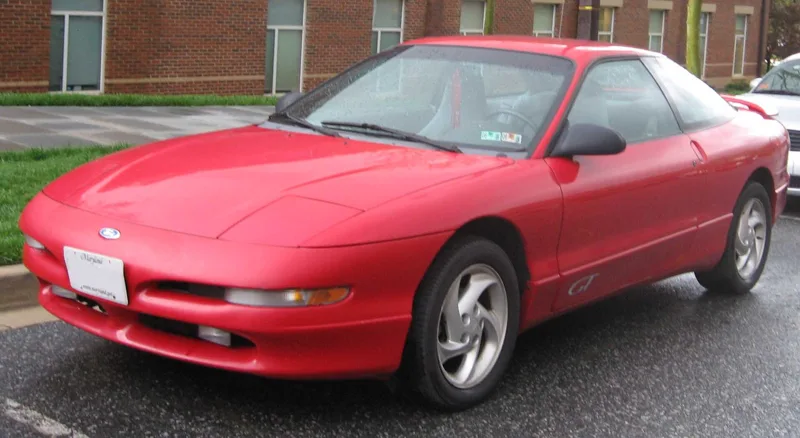
The Chevrolet Camaro sixth generation was an American pony car sold from 2015 to 2023, with the 650 hp ZL1 at the top. The Ford Probe was a Mazda-based coupe from 1988 to 1997, aimed at imported sports cars, and the two never went on sale together.
The Chevrolet Camaro and the Ford Probe were both sporty two-door coupes, but they were never on sale together. The Probe ran from 1988 to 1997, while the sixth-generation Camaro went on sale for the 2016 model year and ended production in December 2023. The comparison is really about two different answers to the same question: what a sports coupe should be.
Were the Chevrolet Camaro and Ford Probe rivals?
Not directly. The Probe was pitched against imported sports coupes, while the Camaro's traditional opponent was the Mustang. Because their production years never overlapped, the two cars did not meet head to head in showrooms, although they both appealed to buyers who wanted a sporty coupe.
The Probe was not built to fight the Camaro at all. Ford decided to aim it at imported sports coupes such as the Toyota Celica and the Honda Prelude, rather than at the Chevrolet Camaro and the Pontiac Firebird that the Mustang faced.
The Probe's competition was also wider than the Camaro's. Its rivals included the Acura Integra, the Isuzu Impulse, the Nissan 200SX and the Toyota Celica, so it was measured against a broad field of smaller, sportier imports rather than a single American pony car.
Two sporty coupes that never went on sale together, yet both show how sharply a sports car could be pushed in its own era.
When did each car go on sale?
The Probe was marketed from the 1988 model year to 1997, when Ford announced its discontinuation on March 17, 1997. The sixth-generation Camaro was first shown to the public on May 16, 2015, with sales starting for the 2016 model year, and production ended on December 14, 2023.
The Probe's name came from a line of futuristic concept vehicles. Ford and the Italian coachbuilder Ghia produced a series of Probe concepts between 1979 and 1985, exploring aerodynamic efficiency and design features that later appeared on production Fords.
Probe production centred on the Flat Rock Assembly Plant in Michigan. Mazda operated the plant at first, and in 1992 Ford bought a 50% stake in the operation. The second generation of the Probe arrived for 1993, again based on the Mazda MX-6 and 626.
The Camaro's return to American production was a notable change in its own right. The fourth and fifth generations had been assembled in Canada, while the sixth generation was built in the United States again.
How were the two cars designed and engineered?
The Camaro used General Motors' Alpha platform, which it shared with the Cadillac ATS and CTS, and it switched to MacPherson struts at the front. The Probe used Mazda's G platform, the same base as the Mazda 626, and it was a front-wheel-drive car.
General Motors said 70 percent of the new Camaro's architectural components were unique to the car. The sixth-generation car was also smaller than the one it replaced, at 2.3 in (58 mm) shorter, 0.8 in (20 mm) narrower and 1.1 in (28 mm) shorter in height.
The Camaro also weighed less. With similar equipment and engines, it was more than 200 lb (91 kg) lighter than the previous generation, which helped offset the extra technology that modern buyers expect.
The Probe's front-wheel-drive layout was credited with better fuel economy and lower production costs than the older Fox platform. Ford also marketed the Mazda partnership as a way to hold down production costs.
What are the Chevrolet Camaro and Ford Probe specifications?
| Specification | Ford Probe | Chevrolet Camaro (sixth generation) |
|---|---|---|
| Years on sale | 1988 to 1997 model years | Sales from 2015 for 2016 model year; production ended December 14, 2023 |
| Body styles | Sport compact coupe | Coupe and convertible |
| Platform | Mazda G platform, the base of the Mazda 626 | GM Alpha platform, shared with Cadillac ATS and CTS |
| Front suspension | not recorded | MacPherson struts |
| Drive | Front-wheel drive | not recorded |
| Size change | not recorded | 2.3 in (58 mm) shorter, 0.8 in (20 mm) narrower, 1.1 in (28 mm) shorter in height than the previous generation |
| Weight change | not recorded | More than 200 lb (91 kg) lighter than the previous generation |
| Performance flagship | not recorded | ZL1: 650 hp (485 kW; 659 PS), 0 to 60 mph in 3.5 seconds, top speed 198 mph (319 km/h) |
| Mid-range V8 | not recorded | SS: 455 hp (339 kW; 461 PS), 0 to 60 mph in 4.0 seconds |
| Track model | not recorded | ZL1 1LE: 300 lb (136 kg) of downforce at 150 mph (241 km/h) |
| Concept drag coefficients | Probe I 0.25; Probe III 0.22; Probe IV 0.152; Probe V 0.137 | not recorded |
| Replacement or successor | Model line rebranded as Mercury Cougar, with Escort ZX2 also replacing it | not recorded |
| Sales | Demand exceeded supply in 1988 | not recorded |
How fast were the Camaro SS and ZL1?
The Camaro SS used a 6.2 L LT1 V8 that produced 455 hp (339 kW; 461 PS) and reached 0 to 60 mph in 4.0 seconds. The ZL1 went further with a supercharged 6.2 L LT4 V8 making 650 hp (485 kW; 659 PS), 0 to 60 mph in 3.5 seconds and a top speed of 198 mph (319 km/h).
The ZL1 reached a quarter mile in 11.4 seconds at 127 mph (204 km/h). It came with a rev matching 6-speed manual or a 10-speed automatic, and that 10-speed unit was developed in collaboration with Ford before General Motors built its own version.
The ZL1 1LE pushed the track focus further. It added 300 lb (136 kg) of downforce at 150 mph (241 km/h), 19-inch wheels that were 3.3 lb (1 kg) lighter each, and a weight saving of 60 lb (27 kg) against the standard ZL1. A ZL1 1LE set a Nurburgring lap of 7 minutes, 16.04 seconds in 2017, 13.6 seconds faster than the standard car.
Both the SS and the ZL1 were reported to be banned for sale in California and Washington. The reason given was the brake pad materials, which contained toxic metals and asbestos, and rules on brake pad copper content that came into force in January 2021.
How did the Probe concepts shape the production car?
Ford's Probe concepts explored how far aerodynamic drag could be cut. The drag coefficient fell from 0.25 on the 1979 Probe I to 0.137 on the 1985 Probe V, which was described as the most aerodynamic drivable car ever built.
Probe I was a wedge-shaped coupe with fully skirted rear wheels and pop-up headlamps. It used a Ford Fairmont chassis and the 2.3 L turbocharged inline-4 from the Mustang. A trailer fire destroyed it in August 2024, after its appearance at the Pebble Beach Concours d'Elegance.
Probe III, from 1981, was designed by Ford of Europe and previewed the Ford Sierra. Probe IV, from 1983, was a front-engined car with a turbocharged 1.6 L inline-4, and its radiator sat at the rear.
Probe V was shown at the 1985 Tokyo Auto Show. It was the lone mid-engined car in the series, with a turbocharged 1.9 L 16-valve inline-4 mounted sideways, and it had two rear-sliding doors.
Why did the Probe start out as a Mustang?
The Probe began life as a front-drive Mustang project, codenamed ST-16, that was transferred to Mazda in Hiroshima. Ford's executives later concluded that a front-drive car could not be the Mustang, so the ST-16 was sold as the Probe from 1988 instead.
The plan became public in April 1987, when AutoWeek revealed it on the magazine's cover. The reaction from Mustang fans was immediate and hostile, with letters of complaint sent to Ford executives and to car magazines alike.
Inside Ford the split was just as sharp. Neil Ressler, then chief of small car engineering, described one faction that welcomed a modern front-drive car and another that was appalled by the idea of replacing the Mustang with a car from a different culture.
John Coletti, who led small-car engineering and opposed the ST-16 Mustang, led a skunkworks team to develop a rear-drive successor on a heavily revised Fox platform. That car became the fourth-generation Mustang for the 1994 model year.
Which car sold more?
Neither car's total sales are given in this comparison, so a sales race cannot be called. What can be said is that the Probe was a sales success in its first model year, with demand running ahead of supply in 1988.
In 1988 buyers paid list price or more for a Probe. The Chicago Tribune's automotive columnist, Jim Mateja, urged buyers who could not find a Probe to consider its sibling, the Mazda MX-6.
The Camaro's final years were different. In 2024 General Motors cut production, produced fewer units, ended fleet and government orders and removed employee discounts. Several options were dropped too, including the turbocharged 2.0 L I4 and the base 1LS trim.
How did the special editions compare?
The Camaro had a run of special editions, including the 50th Anniversary, Hot Wheels, Redline, ZL1 Garage 56 and Collector's Editions. The Probe's special editions are not recorded in this comparison, so the two lines cannot be matched edition for edition.
The 50th Anniversary Special Edition arrived in 2017 on 2LT and 2SS models, with Nightfall Gray Metallic paint and 20-inch wheels. The Hot Wheels Special Edition was revealed at the SEMA Show in October 2017 with unique Crush Orange paint.
The ZL1 Garage 56 Edition was based on the ZL1 1LE and was built to mark the 2023 24 Hours of Le Mans race, with graphics inspired by the race car. Production was limited to 56 units.
Which car suits which buyer?
The Camaro suits a buyer who wants a modern American pony car with a choice of V8 power, from the 455 hp SS to the 650 hp ZL1. The Probe suits a buyer who wanted a 1990s front-drive sports coupe with a Mazda-based chassis and a futuristic look.
The figures do not settle which is the better car, because the two were built in different periods with different missions. The Camaro was a traditional American pony car, while the Probe was aimed squarely at buyers who might otherwise have chosen an import.