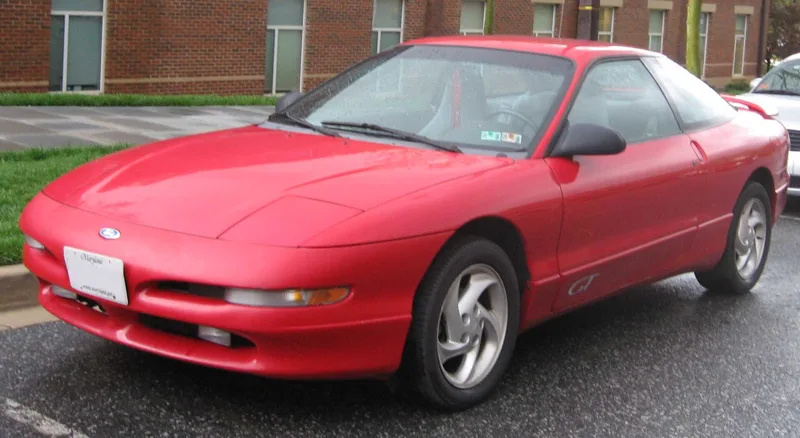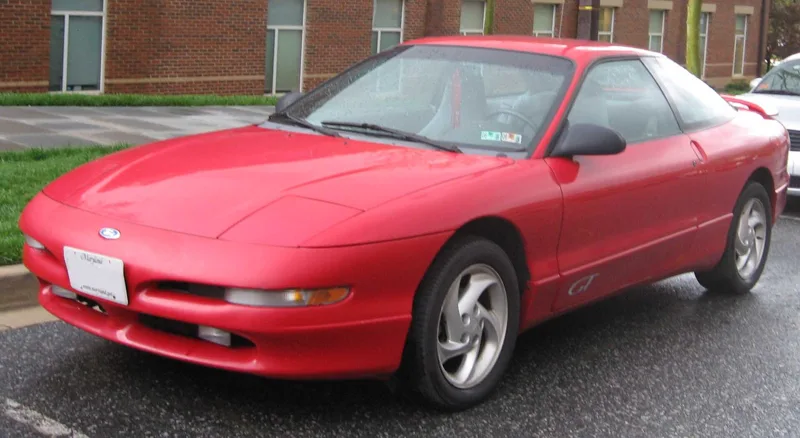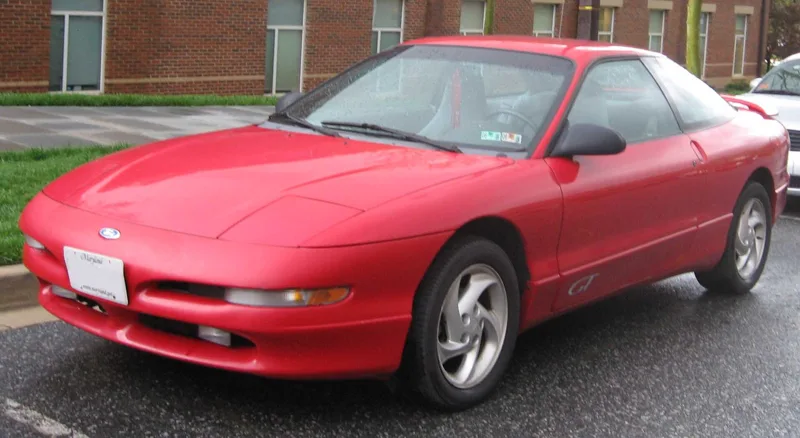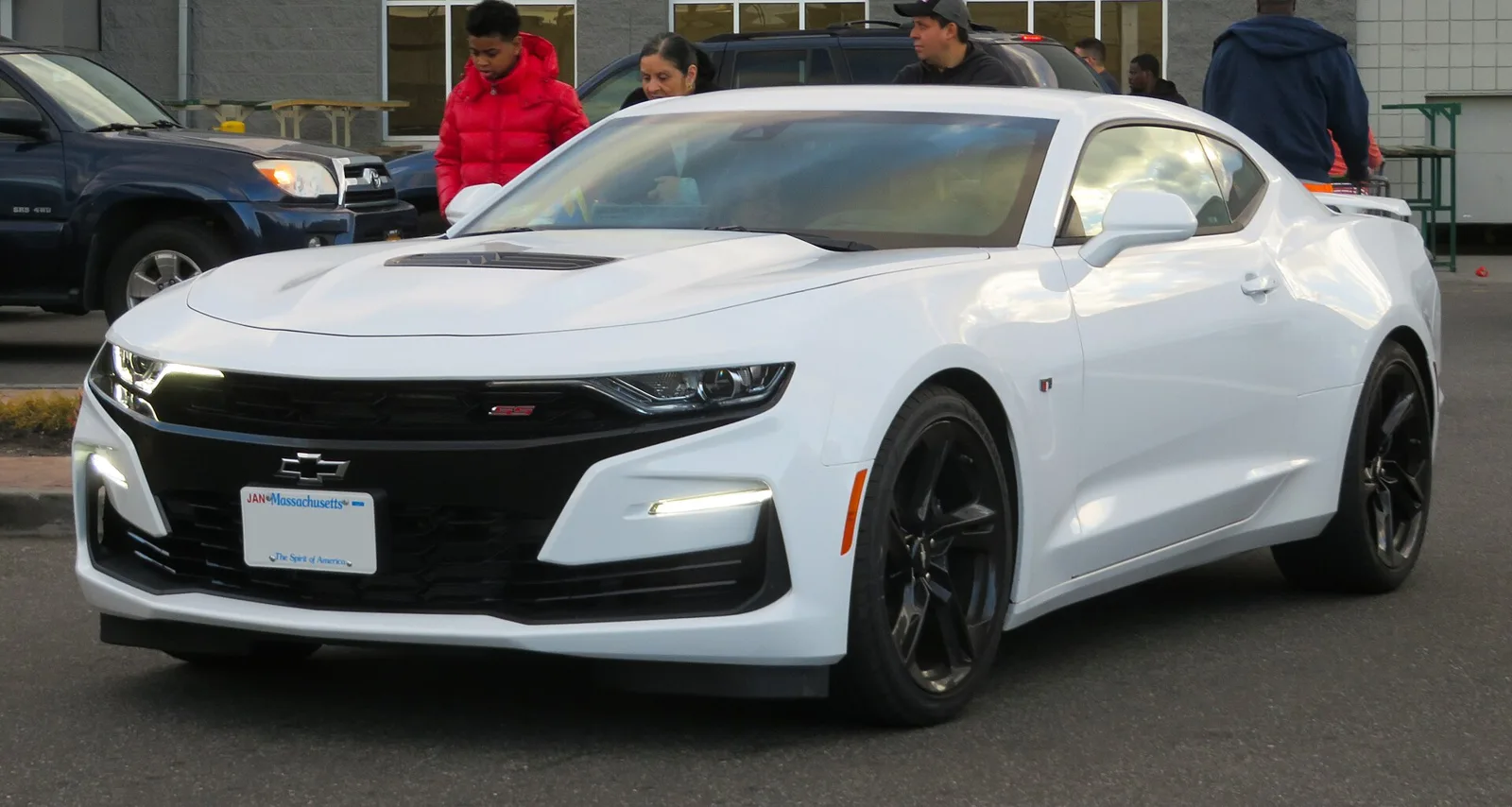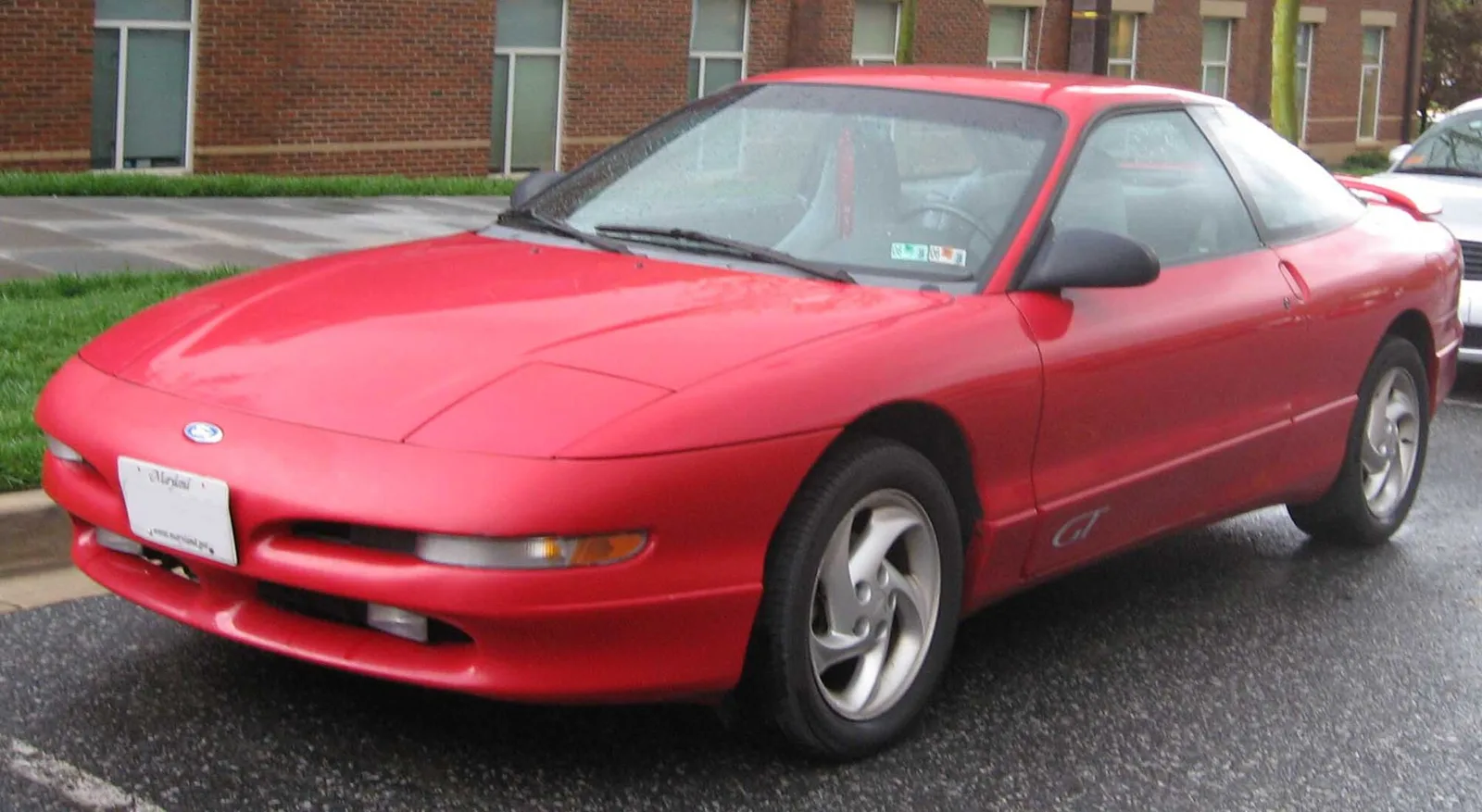
Ford's Probe was pointed at imported sports coupes, and the Honda Prelude was one of its named targets, so the two went head to head on design, engineering and sales.
The Ford Probe was a Mazda-based sport coupe from 1988 to 1997, aimed at imports including the Honda Prelude. The Prelude ran from 1978 to 2001, and its later third generation could be ordered with four-wheel steering that Honda had not expected many buyers to choose.
The Ford Probe and the Honda Prelude were both sporty two-door coupes aimed at buyers who could just as easily have bought an import. Ford pointed the Probe straight at the Prelude and similar Japanese models, and both cars were on sale for much of the Probe's life. The comparison pits a Mazda-built American coupe against a Honda that had already set the template.
Did Ford build the Probe to beat the Honda Prelude?
Ford aimed the Probe at imported sports coupes, and the Honda Prelude was one of the named targets when the car launched in 1988. Because the Prelude was produced until 2001, the two cars spent most of the Probe's run in the same showrooms.
Ford chose that target deliberately. Rather than position the Probe as a successor to the Mustang, or a rival to the Chevrolet Camaro and Pontiac Firebird, it was pitched against popular imported coupes such as the Toyota Celica and the Honda Prelude.
The Prelude had already established the formula. Its first generation arrived in 1978 as a two-door coupe loosely derived from the Accord, and it was the first Honda to fit a moonroof as standard. The Probe was therefore chasing a car that already had a loyal following.
Two sporty coupes that were built to share the same buyers, one from a Mazda-based chassis and one from a Honda that had already set the template.
When did each car go on sale?
The Prelude went on sale in Japan on 24 November 1978, and its first generation was built until 1982, when the second generation arrived. The Probe was marketed from the 1988 model year until Ford announced its discontinuation on March 17, 1997.
The second generation of the Probe arrived for 1993, again based on the MX-6 and 626. When the line ended, the third-generation model that had been in development was rebranded as the Mercury Cougar, and the smaller Escort ZX2 also took over part of the Probe's role.
The Prelude was shown to Europe early, with a world premiere at the 1979 AutoRAI in Amsterdam about two months after its Japanese launch. Its European sales were less strong, partly because of a high asking price.
The Probe's story began earlier. Ford and the Italian coachbuilder Ghia produced a concept series from 1979 to 1985, and the production car took its name from that line of futuristic concepts.
The concepts explored drag reduction in detail. Probe I used fully skirted rear wheels and pop-up headlamps to reach a drag coefficient of 0.25, and it borrowed the turbocharged inline-four of the Mustang on a Ford Fairmont chassis. Probe III, designed by Ford of Europe in 1981, lowered that figure to 0.22 and previewed the Ford Sierra.
Probe IV, from 1983, used a turbocharged inline-four with its radiator at the rear, and it reached a drag coefficient of 0.152. Probe V, shown at the 1985 Tokyo Auto Show, was the lone mid-engine car of the series, with a turbocharged 1.9 L 16-valve inline-4 and a drag coefficient of 0.137.
How were the two cars engineered?
The Probe was developed in collaboration with Mazda and was a counterpart of the Mazda MX-6. It used the Mazda G platform, the same base as the Mazda 626, and it was front-wheel drive, a layout Ford presented as offering better fuel economy and lower production costs than the older Fox platform.
The Probe was built at the Flat Rock Assembly Plant in Michigan. Mazda operated the plant at first, and in 1992 Ford bought a 50% stake in the operation, which became AutoAlliance International.
The Prelude was a different kind of machine. It was derived loosely from the Accord, but its chassis was all new, developed by chief engineer Hiroshi Kizawa for the sporting Prelude. Its four-wheel independent struts, brakes and engine were borrowed from the first-generation Accord.
Both cars were fairly compact. The first-generation Prelude measured 4,090 mm long, 1,635 mm wide and 1,290 mm high, on a 2,320 mm wheelbase that was 60 mm shorter than that of the original Accord.
Why did the Probe start life as a Mustang?
The Probe began as a front-drive Mustang project codenamed ST-16, which was transferred to Mazda in Hiroshima. Ford first intended the car to replace the Mustang, but its executives later decided that a front-drive car could not carry the Mustang name.
The plan became public in April 1987, when AutoWeek revealed it on its cover. The reaction from Mustang fans was immediate and hostile, and Ford and many car magazines received strongly worded letters of criticism.
Alex Trotman, then vice president for Ford's North American operations, decided that the ST-16 would not make a suitable Mustang. John Coletti, Ford's small-car engineering manager, led a skunkworks team that developed a rear-drive successor on a heavily revised Fox platform, which became the fourth-generation Mustang for 1994.
Because production was already under way, Ford sold the ST-16 as the Probe in 1988 instead. It was aimed at imported sports coupes rather than at the Camaro and Firebird that the Mustang faced.
What are the Ford Probe and Honda Prelude specifications?
| Specification | Ford Probe | Honda Prelude |
|---|---|---|
| Years | 1988 to 1997 model years | 1978 to 2001 across five generations; reintroduced 2025 |
| Body | Sport compact coupe | Two-door coupe |
| Base | Mazda G platform, the base of the Mazda 626 | Loosely derived from the Accord |
| Drive | Front-wheel drive | not recorded |
| First-generation size | not recorded | 4,090 mm long, 1,635 mm wide, 1,290 mm high; 2,320 mm wheelbase |
| Launch engine | not recorded | 1,602 cc SOHC, 80 PS (59 kW) at 5,000 rpm |
| Strongest Japanese engine | not recorded | 2.0 L DOHC 16-valve, 160 PS JIS (118 kW) at 6300 rpm |
| Standard steering | not recorded | Power steering standard on the first generation; four-wheel steering option from 1987 |
| Drag coefficient | Probe I 0.25; Probe III 0.22; Probe IV 0.152; Probe V 0.137 | 0.34 on the third generation |
| Sold through | Ford and Mazda Autorama channels in Japan | Honda Verno dealerships in Japan |
| Output | not recorded for production cars | 313,000 first-generation cars, 1978 to 1982 |
| Awards | not recorded | Wheels Car of the Year 1987; European Car of the Year 1988, third place |
| Successor | Mercury Cougar and Escort ZX2 replaced the line | Fourth-generation Integra in 2001 |
What made the third-generation Prelude stand out?
The third-generation Prelude, released in Japan on 9 April 1987, offered mechanical four-wheel steering as an option. Honda had expected 30% of buyers to take it, but 80% opted for it in the first year.
The system used two steering boxes and a dedicated shaft. The front and rear wheels turned in opposite directions once the steering wheel had turned 140 degrees, which helped at highway speed and in parking manoeuvres.
The third-generation car also carried a 0.34 drag coefficient and was powered by variants of the B20A engine, with the engine tilted back by 18 degrees to lower the bonnet. Its engineers also made the design less tall than before.
How did the Prelude handle compared with the Probe?
Honda's Prelude earned strong handling marks in the late 1980s. Road and Track's slalom test put the 1988 Prelude 2.0Si 4WS at 65.5 mph (105.4 km/h), ahead of a Chevrolet Corvette C4 at 64.9 mph (104.4 km/h).
The Probe's handling is not recorded in this comparison, so no direct handling verdict can be given. The Probe's front-wheel-drive layout and Mazda chassis do, however, show what Ford was trying to achieve with a cheaper, more efficient coupe.
The Prelude's engineering was also recognised by judges. Wheels named it Car of the Year for 1987, and it finished third in the 1988 European Car of the Year contest.
How fast were the Prelude and the Probe?
Probe performance figures are not recorded in this comparison. The Prelude's early performance was measured by Motor Trend, which timed an early car at 18.8 seconds for the quarter-mile, reaching 70 mph at the end of the run.
The Prelude's engine line grew over time. The first generation's EL engine produced 80 PS (59 kW) at 5,000 rpm, while the second generation's 2.0 L DOHC 16-valve engine reached 160 PS JIS (118 kW) at 6300 rpm in Japan.
In North America the second-generation 1.8 offered 100 hp (75 kW) at 5,500 rpm, and the 2.0 offered 110 hp (82 kW) at the same speed. The facelift for the 1990 US model year brought a 2,056 cc engine with 145 hp (108 kW) for American buyers.
Which car sold more?
The Prelude's first generation built 313,000 units from 1978 to 1982, with over 80% of them sold outside Japan. The Probe's total production is not recorded here, so a complete sales comparison is not possible.
The Probe had a strong start. Demand exceeded supply in 1988, buyers paid list price or more, and the Chicago Tribune columnist Jim Mateja urged buyers who could not find one to consider the Mazda MX-6 instead.
The Prelude sold less well at home. Only 41,190 Preludes were sold in Japan during the first generation's run, which reflects how much of its success came from export markets.
Which car suits which buyer?
The Probe suits a buyer who wanted a front-drive coupe from an American brand with a Mazda-based chassis and a futuristic design. The Prelude suits a buyer who wanted a Honda coupe with a long engineering pedigree, a choice of engines, and in later years the option of four-wheel steering.
The figures do not settle which car was better. Both were designed to win the same kind of buyer, and each had strengths. The Prelude's record on handling and awards is clearer than the Probe's, while the Probe's launch sales were notably strong.