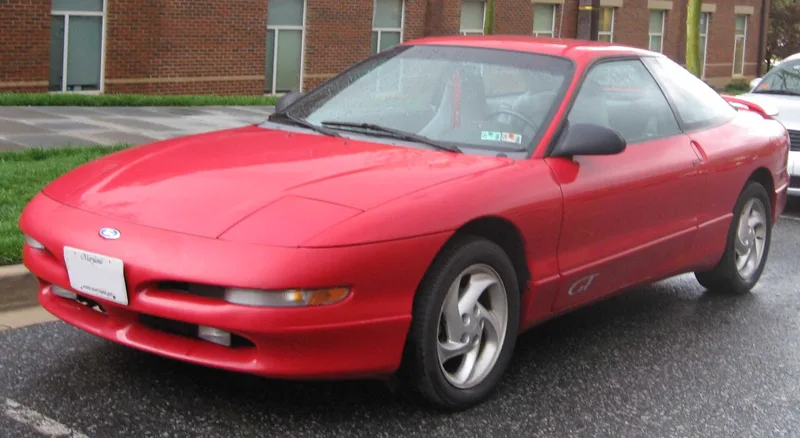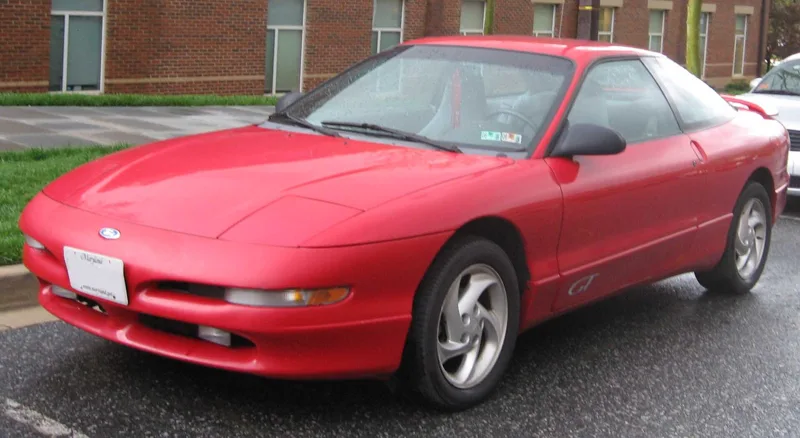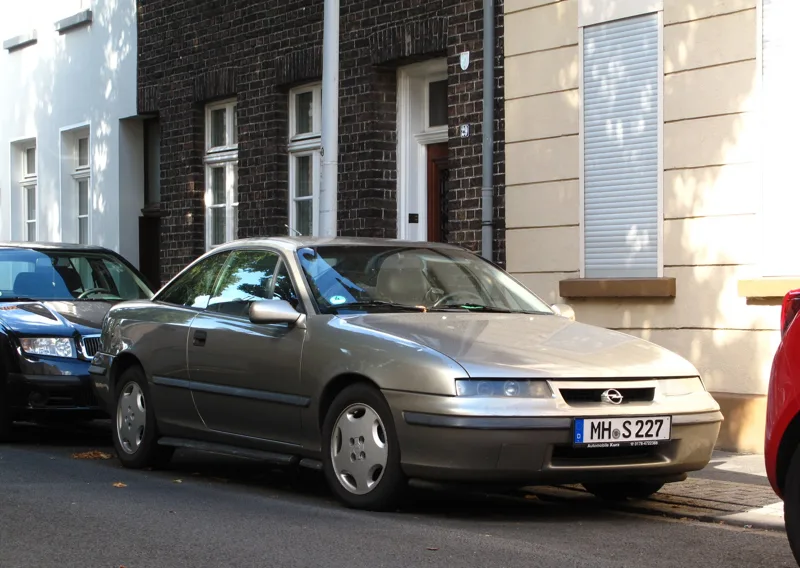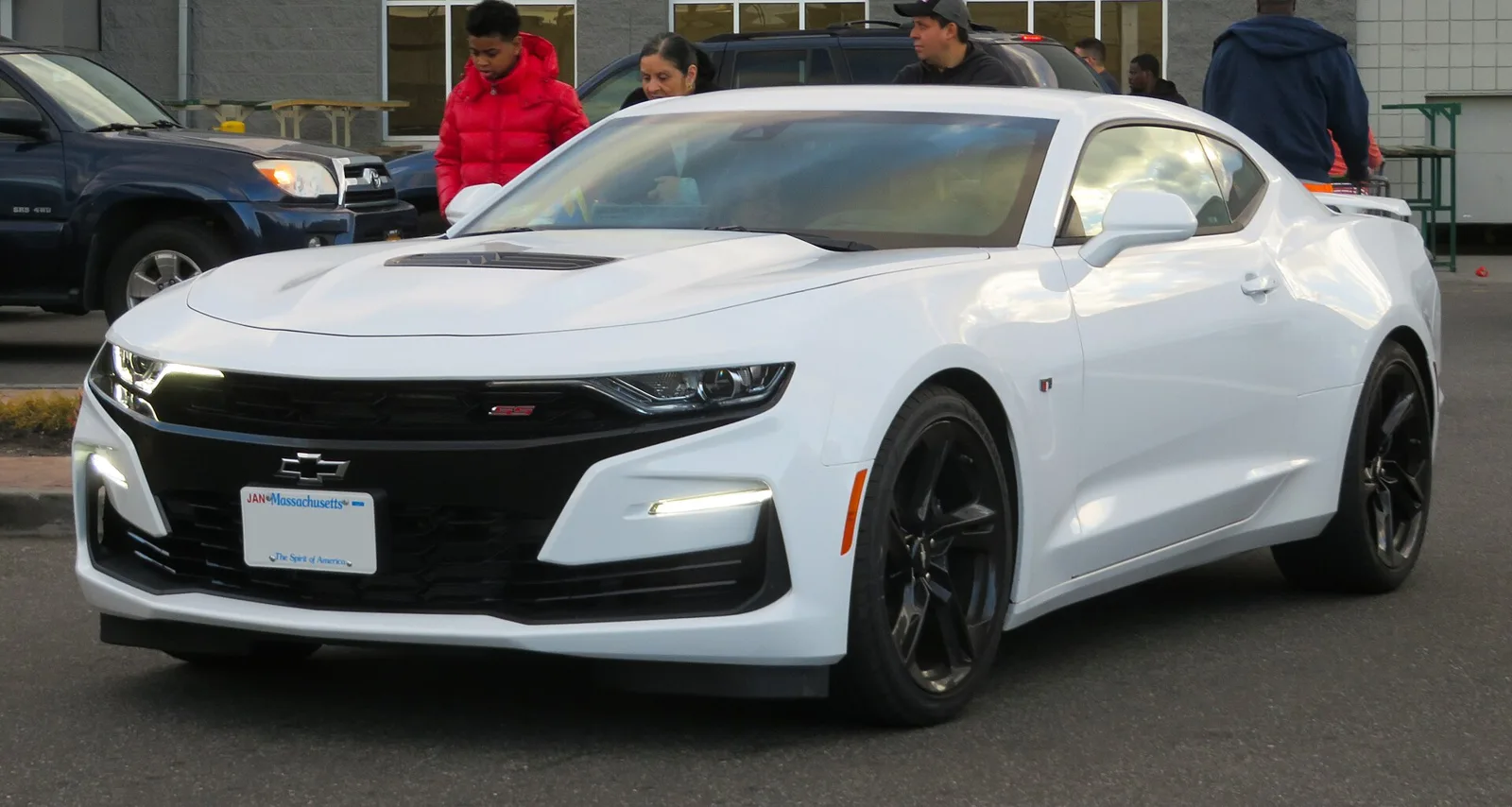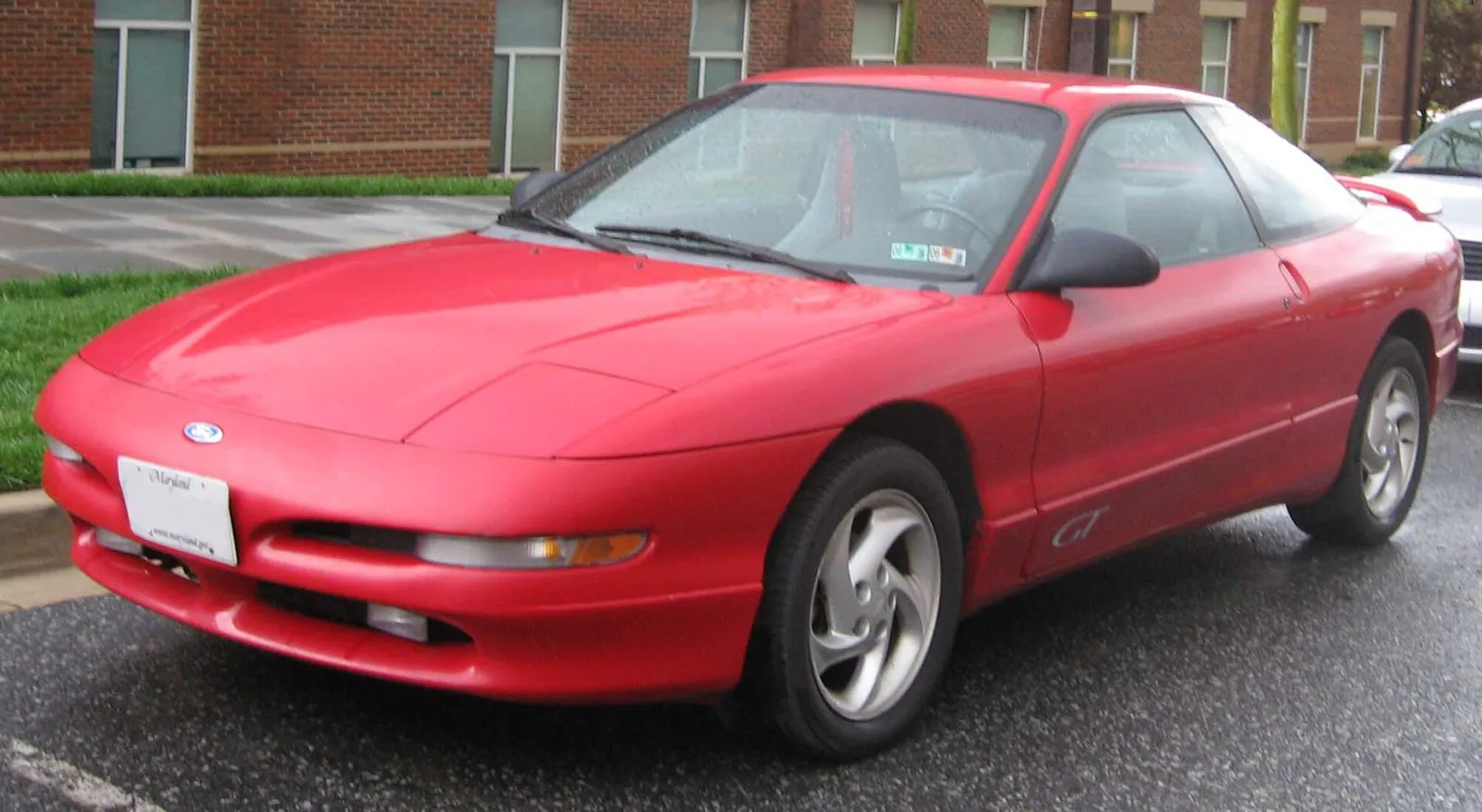
Ford's Mazda-built Probe and Opel's Vectra-based Calibra were both sold on slippery shapes and sporty intent, and the Calibra outsold the Probe in Europe.
The Ford Probe was a Mazda-based sport coupe from 1988 to 1997. The Opel Calibra, built from 1989 to 1997 on Vectra running gear, was the stronger seller in Europe and held the production drag record at its launch. It also kept that aerodynamic lead until 1999.
The Ford Probe and the Opel Calibra were both sporty coupes that depended on low drag and sharp styling to win buyers. The Probe was built on a Mazda platform and sold from 1988 to 1997, while the Calibra arrived in 1989 on the running gear of the Vectra and stayed in production until 1997. The two cars competed directly in Europe, and the Calibra came out ahead on sales.
Were the Ford Probe and Opel Calibra direct rivals?
Yes, in the sense that they were aimed at the same kind of buyer in the same years. Both were coupes built to look and feel different from the family saloons they shared components with, and both were sold through the 1990s,.
In Europe the Calibra was the bigger seller. The Probe was considered underpowered and very American for most European drivers, and the Calibra outsold it in Europe.
The Calibra was introduced to replace the Manta and to counter the Japanese sports coupes of its period. The Probe was positioned in a similar way, against imported sports coupes, so both cars were built to answer the same competitive pressure.
Two coupes built on slippery shapes and sporty intent, with the Calibra taking the honours on the European sales charts.
When did each car go on sale?
The Probe was marketed from the 1988 model year to 1997, when Ford announced its discontinuation on March 17, 1997. The Calibra was launched on 10 June 1989 and remained in production until June 1997.
The Calibra was built both at Opel's Russelsheim plant in Germany and at Valmet Automotive in Uusikaupunki, Finland. Production was consolidated in Finland in November 1995, and the Calibra's four-wheel-drive version arrived from November 1990.
The Probe's second generation arrived for 1993, again based on the MX-6 and 626, and the first generation had sold strongly in 1988. The line was discontinued on March 17, 1997.
The Probe also had a multi-stage history. Its concept series ran from 1979 to 1985, and the production car was built at the Flat Rock Assembly Plant in Michigan, which Mazda operated before Ford took a 50% stake in 1992.
How were the two cars engineered?
The Probe was developed with Mazda and used the Mazda G platform of the Mazda 626. It was front-wheel drive, a choice that Ford presented as offering better fuel economy and lower production costs than the older Fox platform.
The Calibra was a front-wheel-drive three-door hatchback coupe on the Vectra A chassis. Its ride and handling were not dramatically better than the family saloon it grew from, though the coupe had a stiffer chassis overall.
The four-wheel-drive turbo version of the Calibra used independent rear suspension, with a rear axle taken from the Omega A with minor changes. Irmscher suspension on the sporty limited editions gave sharper handling than the base cars.
How did the Calibra's design stand out?
The Calibra was styled by GM designer Wayne Cherry with German designer Erhard Schnell. Its most distinctive feature was a slim 7 cm high headlamp, made possible by ellipsoid technology developed with Hella, and it seated four average passengers with 300 liters of luggage.
The Vectra A chassis and hatchback rear made the Calibra more practical than many coupes of its size. Taller adults found the rear seats cramped, but for most buyers the car offered more room than a typical sports coupe.
The launch drag figure of 0.26 came from careful shaping. Tapering the rear waistline and rear side windows, refining the panel lines and transition points, and adding an integrated front spoiler all cut the figure, as did a panel that linked the fuel tank to the rear bumper.
What are the Ford Probe and Opel Calibra specifications?
| Specification | Ford Probe | Opel Calibra |
|---|---|---|
| Years | 1988 to 1997 model years | 1989 to 1997 production |
| Body | Two-door sport compact coupe | Three-door hatchback coupe |
| Platform | Mazda G platform, the base of the Mazda 626 | Vectra A chassis, from the Vectra running gear |
| Drive | Front-wheel drive | Front-wheel drive; four-wheel drive from November 1990 |
| Launch engine | not recorded for production cars | 2.0 litre 8-valve C20NE, 117 PS (86 kW; 115 bhp) |
| Mid-range engine | not recorded for production cars | C20XE 16-valve, 152 PS (112 kW; 150 bhp), 1990 to 1995 |
| Top engine | not recorded for production cars | C20LET turbo, 207 PS (152 kW; 204 bhp); V6 at 170 PS (125 kW; 168 bhp) from 1993 |
| Drag coefficient | Probe I 0.25; Probe III 0.22; Probe IV 0.152; Probe V 0.137 | 0.26 at launch; 0.29 on later 16V, V6, 4x4 and turbo models |
| Luggage and seats | not recorded | Seats four average passengers; 300 liters of luggage |
| Built | not recorded | 238,164, 238,647 or 239,118, depending on source |
| Successor | Mercury Cougar and Escort ZX2 took over the line | Opel Speedster roadster from July 2000 |
Which car had the better aerodynamics?
Later Calibra versions were less slippery. The 16V, V6, 4x4 and turbo models had a drag coefficient of 0.29, because of changes to the cooling system, the underbody, the use of spoked wheels and glass detail, so the 0.26 figure was a launch number rather than a constant.
The Calibra had the stronger claim in production form. When it launched on 10 June 1989, it was the most aerodynamic production car in the world with a drag coefficient of 0.26, and it kept that rank until the Honda Insight arrived in November 1999 with a figure of 0.25.
The Probe's aerodynamic story is told through its concepts. The Probe I drag coefficient of 0.25 was reduced to 0.22 on the Probe III and to 0.152 on the Probe IV, and the Probe V reached 0.137, the lowest figure in the concept series.
The Calibra's engineers reached their record figure through detailed work. Models were tested in the DNW wind tunnel in the Netherlands, and changes to the rear waistline, the side windows and the panel lines each cut the drag figure further.
How did the Calibra's engines compare with the Probe's?
Production Probe engine figures are not recorded in this comparison, so a full engine-by-engine comparison cannot be made. The only Probe engines described in detail are the concept units, such as the turbocharged 16-valve 1.9 L inline-4 of the Probe V.
The Calibra had a wide engine range. It started with the 2.0 litre 8-valve C20NE at 117 PS (86 kW; 115 bhp), and the Cosworth-designed C20XE 16-valve made 152 PS (112 kW; 150 bhp) from 1990 to 1995.
The turbocharged C20LET arrived in 1992 with 207 PS (152 kW; 204 bhp), paired with a six-speed Getrag manual on the four-wheel-drive model. The claimed top speed was 245 km/h (152 mph), and the V6 added a 2.5 litre option at 170 PS (125 kW; 168 bhp) from 1993.
What was the Calibra's Turbo like to drive?
The Calibra Turbo was the fast model in the range, and it stood out for five stud wheel hubs and strong negative camber at the rear.
The V6 was less fast but more civilised, and it was considered more reliable than the complex four-wheel-drive Turbo. The 1995 Ecotec X20XEV reduced the 16-valve output to 138 PS (101 kW; 136 bhp), while the turbo kept the C20LET.
The four-wheel-drive transfer gearbox was the weak point. It was the same unit used in the Vauxhall Cavalier AWD, and it could be damaged by small differences in tyre wear or pressure between the front and rear axles.
Which car sold more?
The Calibra sold more, and it outsold the Probe in Europe. Its total production is reported as 238,164, 238,647 or 239,118, depending on the figures used, and around 100,000 were sold in Germany alone.
The Calibra's UK sales were strong for a while, with more than 40,000 sold there. Its UK sales target of up to 15,000 examples a year was never reached, but the car still became one of the best-known coupes of its decade in Europe.
The Probe had a strong launch. Demand exceeded supply in 1988, and buyers paid list price or more. Its position in Europe was weaker, and it was considered underpowered for European tastes.
How did special editions shape each car?
The Calibra had a long run of special editions, starting with the Tickford conversion in October 1991, of which only 26 were converted. Vauxhall then launched its SE1 to SE9 editions between 1993 and 1997.
Continental Europe had its own line-up, including the Keke Rosberg, DTM, Cliff and Last editions. Each of those was produced in roughly a thousand cars, and the Last edition was the final limited version with a full Irmscher set.
The Probe's special editions are not recorded in this comparison, so the two lines cannot be matched edition for edition. The Probe's own story is more about its design, its concept cars and its Mustang origins.
Why did the Probe begin as a Mustang?
The Probe began as a front-drive Mustang project codenamed ST-16, which was transferred to Mazda in Hiroshima. Ford intended it to replace the Mustang, but executives decided a front-drive car could not carry the Mustang name.
AutoWeek revealed the ST-16 on April 13, 1987, and Mustang purists were angry. Alex Trotman, then in charge of Ford's North American operations, decided that the ST-16 would not make a suitable Mustang.
John Coletti led a skunkworks team to develop a rear-drive successor on a heavily revised Fox platform. That car became the fourth-generation Mustang for the 1994 model year, while the ST-16 went on sale as the Probe in 1988.
Ford chose to sell the Probe alongside the Mustang, which carried on in its then-current form with minor refreshing. The Probe was pointed at imported coupes rather than at the Camaro and Firebird, which is why its rivals were the likes of the Toyota Celica and the Nissan 200SX.