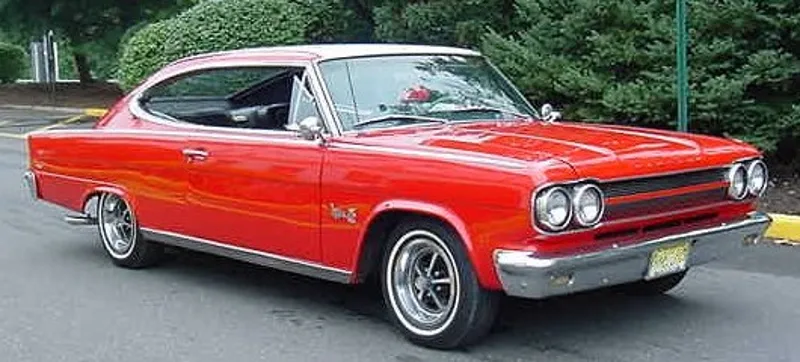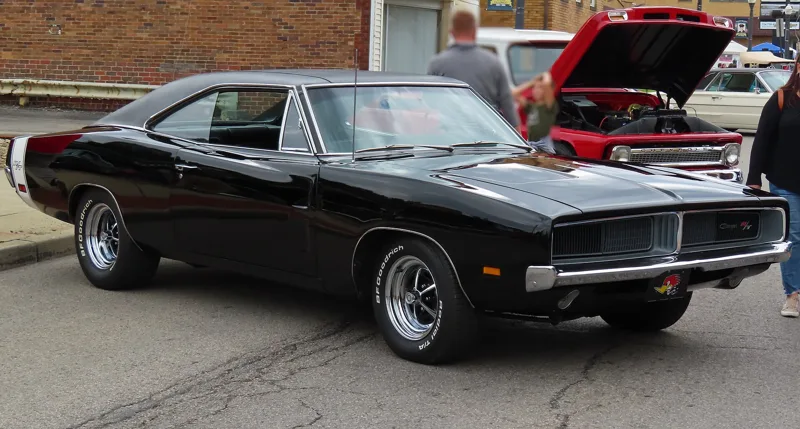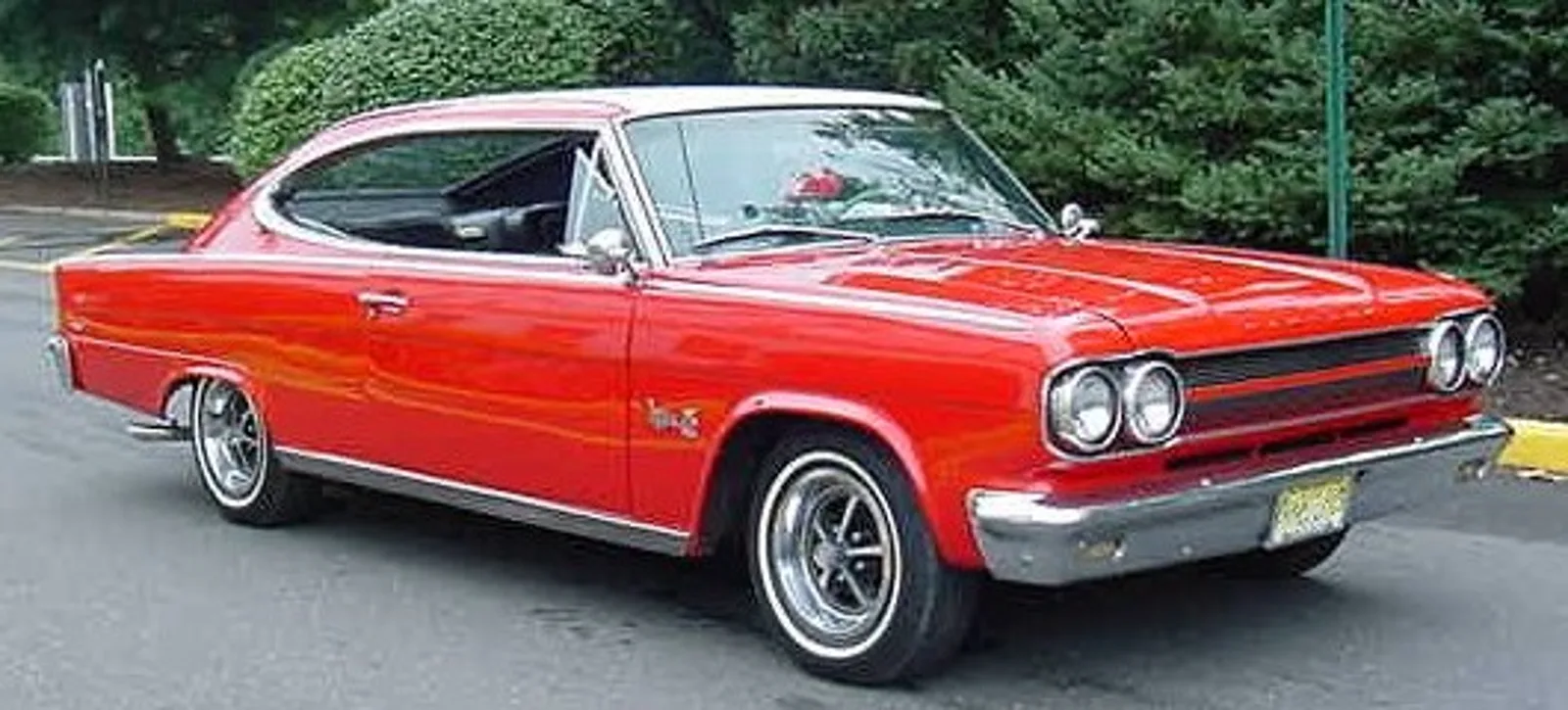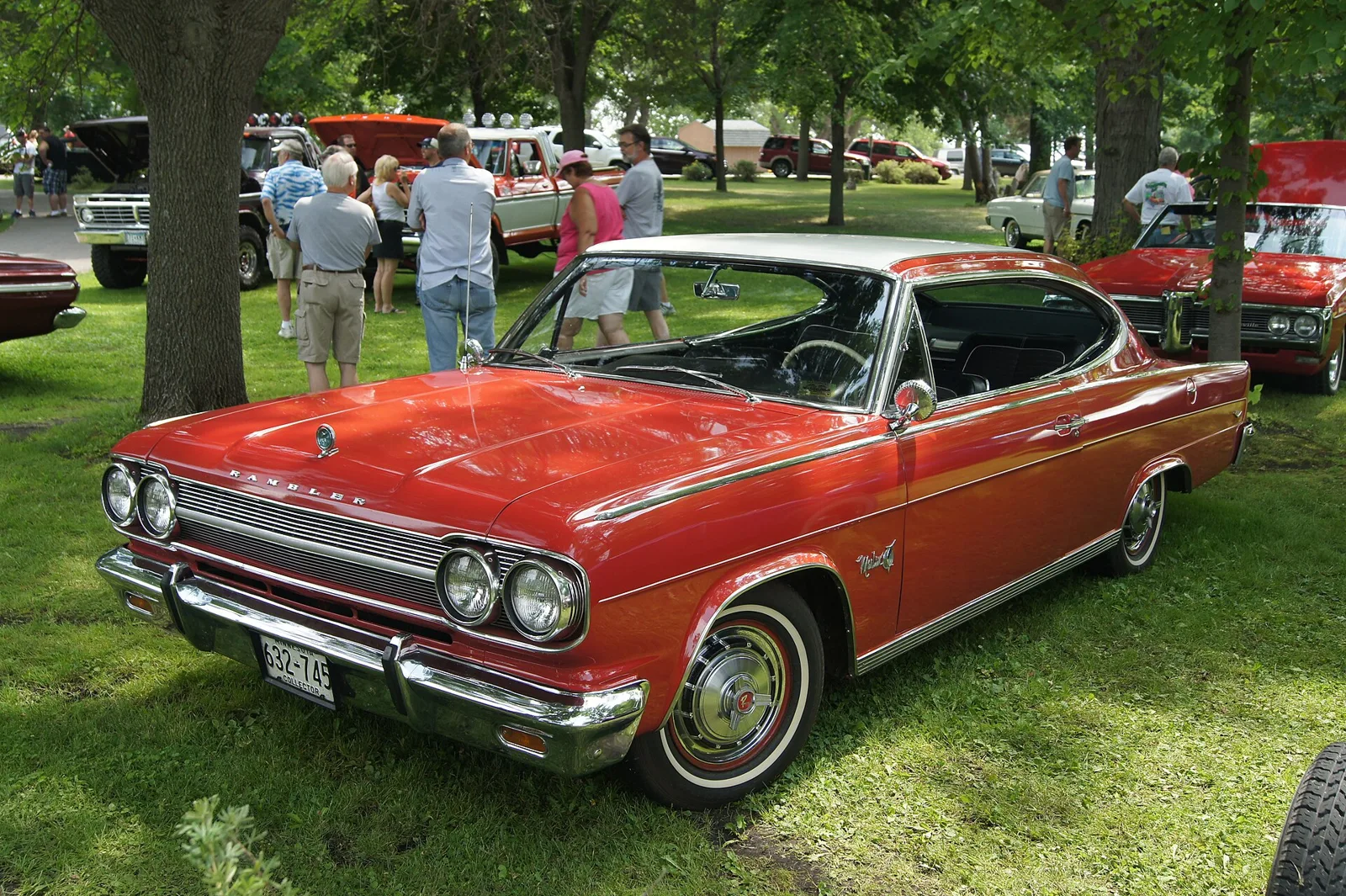
AMC's Marlin was a roomy halo fastback that sold in thin numbers, while Dodge's Charger was a rival that arrived mid-season and sold far more.
The AMC Rambler Marlin was a 1965 two-door fastback built on the Rambler Classic and sold as a halo car. The Dodge Charger arrived mid-season in 1966 as a Coronet-based rival, and built 37,344 cars that year against the Marlin's 4,547.
The AMC Rambler Marlin and the Dodge Charger were both fastback two-door cars from the mid-1960s, and both were pitched at buyers who wanted something sportier than a sedan without the price of a true performance machine. The Marlin arrived first, as American Motors' halo car. The Charger came later, as Dodge's answer, and it went on to sell far more units in its debut year.
Why were the Marlin and Charger rivals?
The Marlin was a two-door fastback built by American Motors from 1965 to 1967 and marketed as a personal luxury car. Chrysler's Dodge Charger debuted in mid-1966 and was positioned to take on the Marlin, as well as the Ford Mustang and the Plymouth Barracuda. The Charger was better looking to many eyes, though it cost slightly more, at US$2,850 to US$3,100.
Both cars were fastbacks with a sloping roofline, and both were intermediate-sized rather than pony-car sized. Their paths split in the marketing. The Marlin was a halo car for a company that needed attention, while the Charger was a Dodge model built with the dealers in mind.
One car was built to put American Motors on the map, the other was built to win back Dodge dealers, and only one of them had the sales to show for it.
How did the Marlin come about?
Roy Abernethy, who succeeded George Romney as American Motors' chief, wanted to compete with the Big Three by moving into new segments. He sought a sporty, roomy six-passenger sedan that would fill a niche, and the result was the Marlin, which he hoped would give the company a distinctive image.
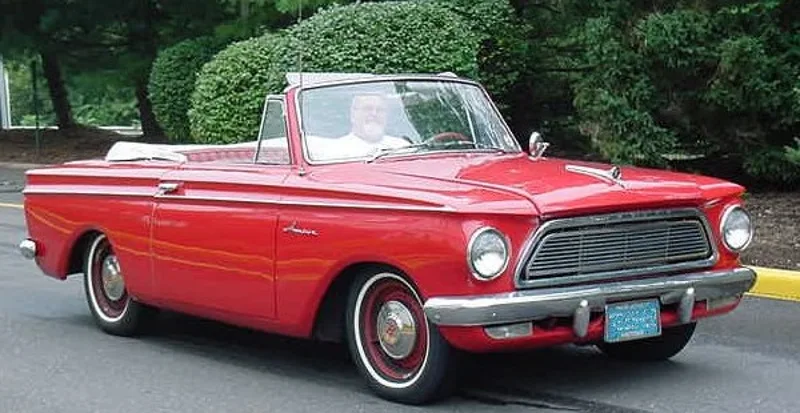
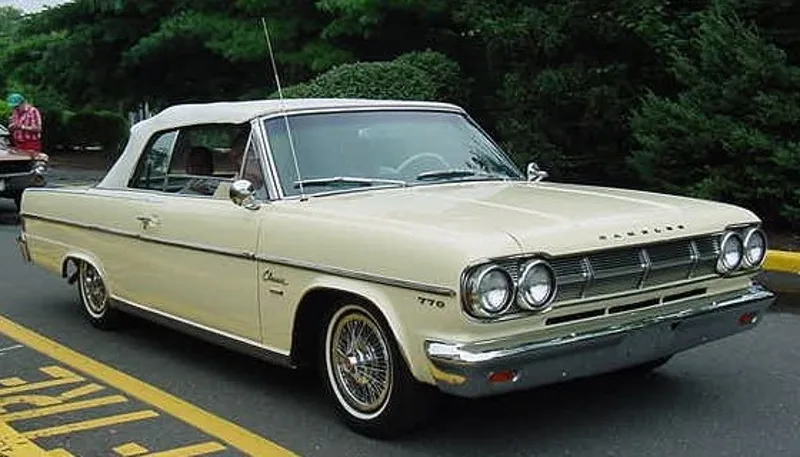
An earlier fastback study, the Rambler Tarpon, had been built on the compact Rambler American platform, but its V8 would not fit and the six alone would not satisfy buyers. The Marlin was built instead on the intermediate Rambler Classic platform, and its design team under Dick Teague worked with much smaller budgets than the Big Three.
Abernethy stood six foot four, and he insisted on being able to sit in the back seat of the design studies. That raised the roof over the rear passengers, which spoiled the otherwise unbroken fastback sweep that Teague had planned.
How did the Marlin launch?
American Motors billed the Marlin as a new addition to its Sensible Spectaculars line. The car was advertised in 2,400 newspapers on its launch day, and AMC's releases described it as a sporty fastback that was also roomy and comfortable. It was meant to fill a niche that the rival fastbacks, the Barracuda and the Mustang, had left open.
Dealers received one or two cars each to bring people into the showroom, and AMC sent bulletins explaining how to use the Marlin to sell the Rambler Classic. Early advertisements said the car was now in limited production, a line that reflected how few the company planned to build.
The Marlin's styling borrowed signatures from the Ford Galaxie Sports Roof, the Mustang 2+2 and the 1965 fastbacks of General Motors, including the Chevrolet Impala Sport Coupe. Within a year Chrysler would enter the market with the Charger, and a year later Ford would follow with the Mercury Cougar.
Marlin and Charger compared on paper
| Specification | AMC Rambler Marlin | Dodge Charger (1966) |
|---|---|---|
| Launch | Announced 10 February 1965; showrooms 19 March 1965 | Mid-season 1966, shown at the Rose Bowl on 1 January 1966 |
| Platform | Intermediate Rambler Classic | Coronet-based B platform |
| Body | Two-door fastback | Two-door fastback |
| Standard engine | 232 cu in six, 145 hp (108 kW) | 318 cu in V8, two-barrel |
| Largest engine | 327 cu in V8, 270 hp (201 kW) | 426 Street Hemi, 7.0 L |
| Brakes | Front disc standard; rear drums without servo | not given |
| Interior | Reclining bucket seats, engine-turned aluminium dash | Full-length console, bucket seating front and rear |
| Price | US$3,100 at launch; US$2,601 for 1966 | US$2,850 to US$3,100 |
| 1966 output | 4,547 cars | 37,344 cars |
| Later change | 1967 redesign on the Ambassador chassis | 1968 redesign with coke-bottle styling |
What engines did the Marlin offer?
The smallest engine was a 232 cu in six making 145 hp (108 kW; 147 PS), and only 2,005 Marlins were built with it. The 327 cu in V8 with 270 hp (201 kW) was the most popular choice, taking 42 percent of production, often with an automatic transmission on a floor console.
The Marlin's most unusual transmission was the Twin-Stick, a manual with overdrive, which allowed five effective gears through a second, shorter lever. Fewer than six percent of cars had it, whatever the engine.
The Marlin was also one of the first American cars with front disc brakes as standard. They were four-piston Bendix units, while the rear drums had no servo assistance, a weakness that a later road test would single out.
How did the Charger's shape come together?
Dodge's chief engineer, Burt Bouwkamp, recalled that Lynn Townsend had been at odds with the Dodge dealers, who wanted a sporty car. Townsend asked for a specialty car, but he told Bouwkamp not to make it a derivative of the Barracuda, so the new car would not be a Barracuda rival.
Dodge built a Charger idea car that it showed at auto shows in 1965 to test interest. Visitors were told it was only an idea, but the design was already approved, and the car that followed was built largely as the show car had been.
The Charger's designer, Carl Cameron, named the Marlin as the only competition for his car, although he said the two were very different. He denied that the Charger was a copy of the Marlin, saying his starting point had been a 1949 Cadillac fastback, and he argued that the Marlin's squared-off roof was a weakness next to the Charger's rounder treatment.
What engines did the Charger offer?
Every 1966 Charger had a V8. Buyers could pick the 318 cu in two-barrel, the 361 cu in two-barrel, the 383 cu in four-barrel or the new 426 Street Hemi, and only 468 Chargers were built with the 426.
Transmissions included a three-speed steering-column manual with the base engine, a console-mounted four-speed manual and a three-speed automatic. The full-length console was inspired by the 1960 to 1962 Chrysler 300, and the rear seats folded forward to give cargo room.
In 1967 the 440 Magnum arrived, rated at 375 bhp (280 kW) with a single four-barrel carburettor, and the 383 four-barrel was rated at 325 bhp. The R/T package was introduced that year, and the 426 remained optional.
What did the Marlin's interior offer?
The standard Marlin interior was taken from AMC's two-door Ambassador, including its dashboard and instrument panel, but the Marlin's dash was trimmed with engine-turned aluminium. Its door panels were carpeted with stainless steel trim, when many rivals used cheap stamped vinyl on cardboard.
Retractable front seatbelts were optional, and the reclining bucket seats could be fitted with headrests. Options were long: Solex tinted glass went into about 70 percent of cars, power steering, a heavy-duty suspension, a Twin-Grip limited-slip differential, air conditioning and power windows were all offered.
Radios were popular, with an AM set or an AM/FM monaural unit in about half of production, a Duo Costic rear speaker and a Vibra Tone system that imitated stereo at a time when stereo broadcasting was not yet widespread in America. Only 221 Marlins were built without a radio.
How did the Charger's interior and instruments work?
The Charger's instrument panel did not use bulbs to light its gauges. Electroluminescence lit the four chrome-ringed circular dash pods, the needles, the radio and the shifter indicator, and the dash carried a 0 to 6000 rpm tachometer and a 0 to 150 mph speedometer.
In 1967 the full-length console was shortened, because buyers complained about getting in and out of the back seats. Bucket seats became standard, and a folding armrest and column shifter allowed three people to sit in front. A vinyl roof became an option that year, and the R/T package was added.
How did the Charger change in 1968?
The 1968 B-body range was redesigned, and the Charger was set further apart from the Coronet. Its coke-bottle styling came from Richard Sias, with curves around the front fenders and rear quarter panels, and Harvey Winn designed the front and rear sheet metal. The fastback roof gave way to a flying buttress, and the rotating headlights were replaced by a vacuum-operated cover.
The interior was downscaled, with a fixed rear bench in place of the folding bucket seats and a vinyl mat in the trunk. Midway through the year the standard 318 gave way to a 225 cu in slant-six. The R/T package carried the 440 Magnum as standard, with the 426 Hemi optional.
The 1968 film Bullitt made the Charger famous. A black Charger R/T 440 was chased by Steve McQueen's Mustang GT through the streets of San Francisco, and a 1969 Charger later became the General Lee in the television series The Dukes of Hazzard.
How did the cars perform in the press?
Popular Mechanics recorded 0 to 60 mph in 10.8 seconds for a Marlin, using manual shifts on its automatic transmission. Tom McCahill of Mechanics Illustrated managed 9.7 seconds with the 327 engine, and Hot Rod timed the quarter-mile at 17.43 seconds, with the car doing 79 mph (127 km/h) at the finish line.
The reception was mixed. Motor Trend found the Marlin well balanced, and the San Francisco Chronicle praised its effortless cruising at 80 mph (129 km/h). Automobile Quarterly, however, thought the car very ugly and criticised the rear view, the steering wheel position, the soft front seats and the pedals.
A 1966 Popular Science test of three fastbacks, the Ford Mustang, the Plymouth Valiant and the Marlin, praised the Marlin's quiet interior and well-finished upholstery. Its 287 cu in two-barrel V8 went 0 to 60 mph in 11.7 seconds, the quietest but least responsive of the group, and the test car's drum brakes were criticised as inadequate.
How did the Marlin and Charger sell?
The Marlin sold 10,327 units in its abbreviated first year. AMC cut the base price to US$2,601 for 1966 and offered more options, but production fell to 4,547 cars that year. AMC's sales vice-president, Tom Coupe, said the basic reason for building the Marlin was to attract attention to American Motors.
The Charger's 1966 output was 37,344 cars, a much larger figure for a car that arrived mid-season. Its 1967 sales dropped to 15,788 units, however, and automotive historian Patrick Foster noted that the Marlin and the first Charger both struggled as sporty buyers preferred compact pony cars.
The 1968 Charger sold 96,100 units, including more than 17,000 R/Ts, after a redesign. In 1969 production was around 89,199, and the Charger's later fame came from the R/T and from film and television.
How did the Charger's racing history begin?
Dodge took the Charger into NASCAR in 1966, but the fastback proved difficult on the faster tracks because its body generated lift. Drivers said it was like driving on ice, so Dodge fitted a small lip spoiler on the trunk lid, which became a dealer option late in 1966.
Because of NASCAR homologation rules, the 1966 Charger became the first US production car to offer a spoiler. David Pearson, driving Cotton Owens-prepared Dodges, won the 1966 Grand National championship with 15 first-place finishes, though only one of them, at Richmond, was in a Charger.