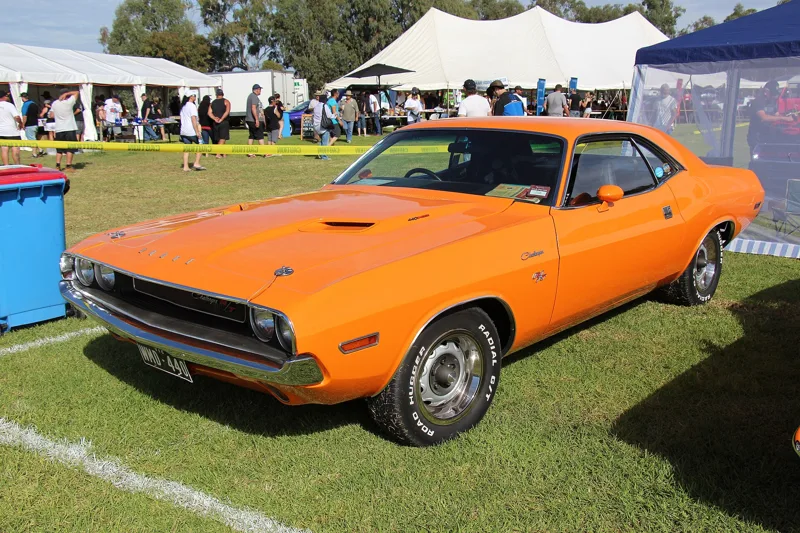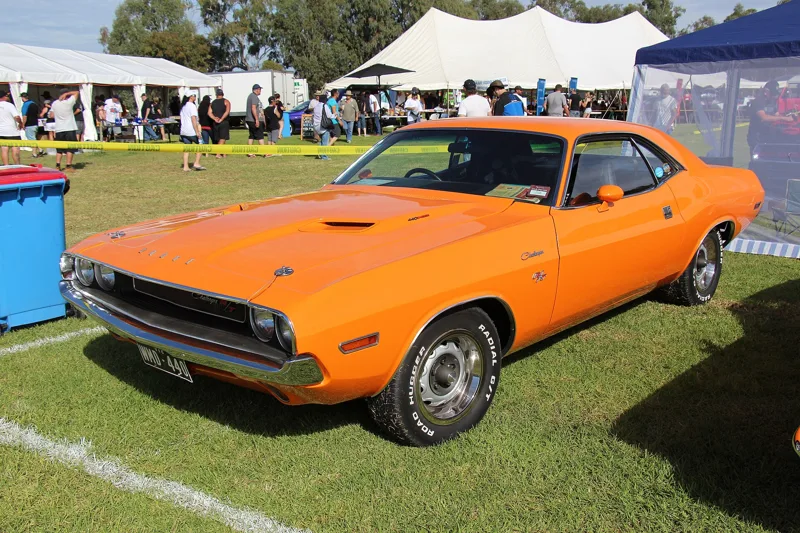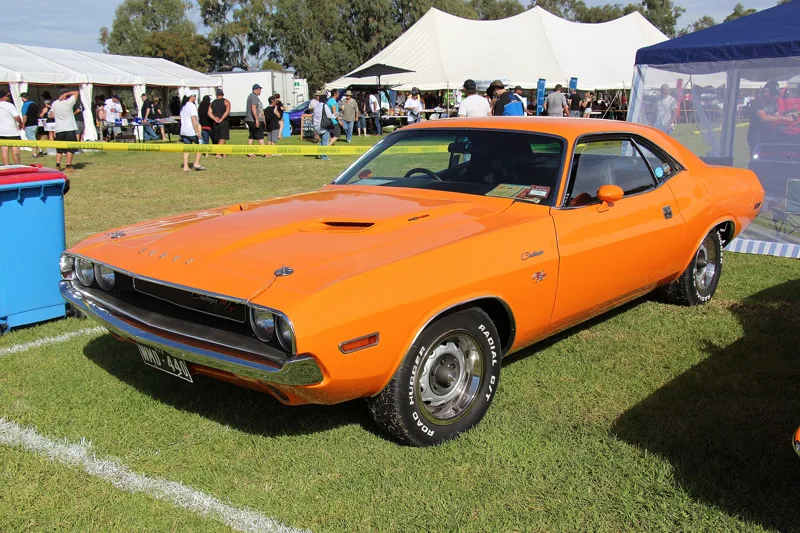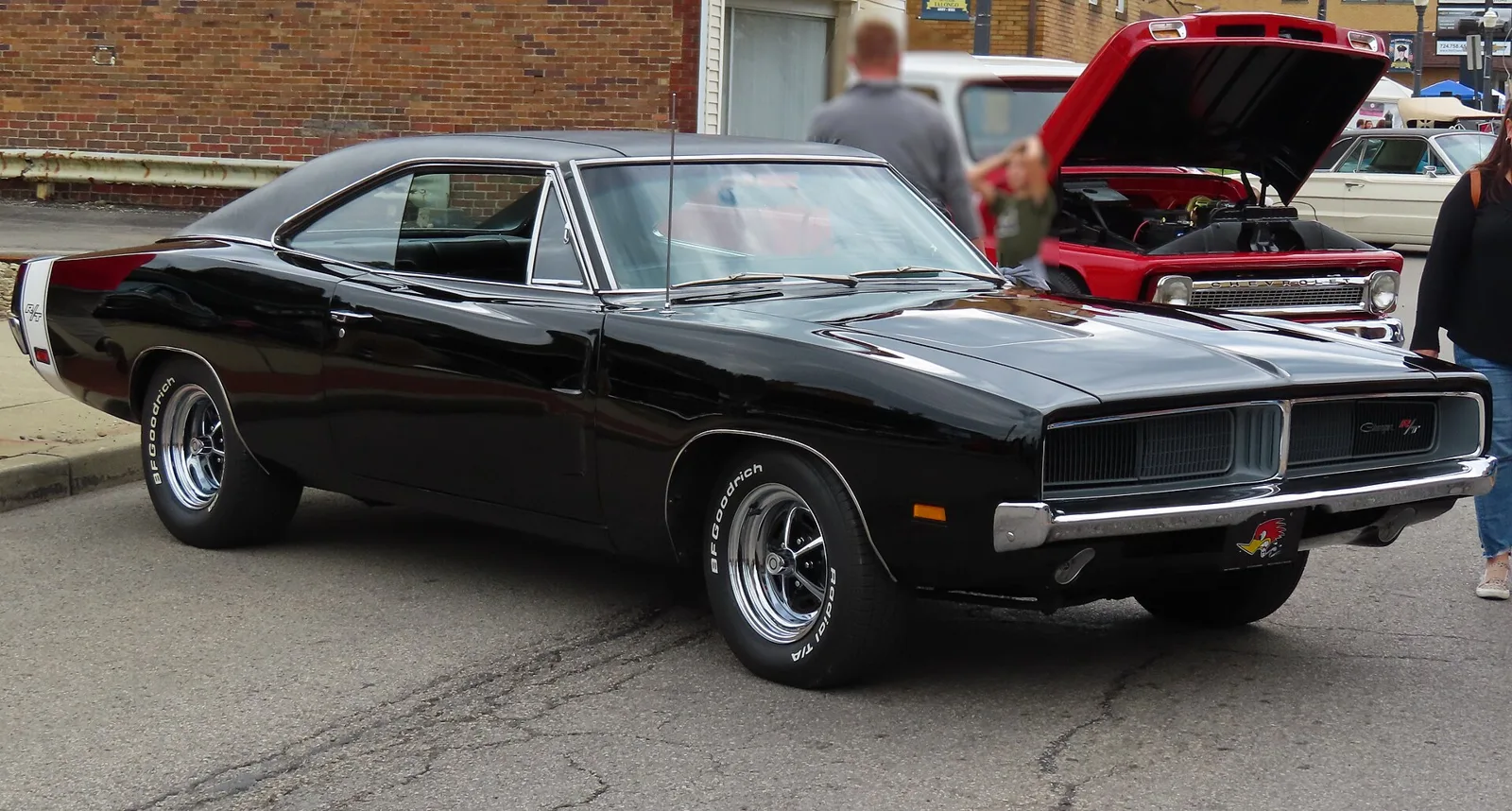
A Coronet-based fastback with Carl Cameron styling, a V8-only line-up from 5.2 L to 7.0 L, and a NASCAR spoiler that changed the car.
Introduced mid-way through 1966, the first Charger was a fastback variant of the Coronet, styled by Carl Cameron and sold only with V8 engines. Dodge built 37,344 cars in its first model year as it chased the Marlin and Mustang.
The 1966 Dodge Charger was a two-door fastback built on the Coronet's chassis to fill a space between the Ford Mustang and the Ford Thunderbird. Its styling broke sharply with the rest of the Dodge range, and it reached the market in the middle of the 1966 model year. Only the 1966 and 1967 cars share this first-generation design, which is the subject of this profile.
Why did Dodge build the Charger?
Chrysler was slow to enter the specialty car market, so Dodge was handed a mid-size sporty coupe. It was meant to sit between the Mustang and the Thunderbird, a fastback look built with as much existing company hardware as possible. Shared parts kept the programme's costs down.
The dealers' council wanted something like the Plymouth Barracuda, and a Mustang-style car drew little argument inside the company. Lynn Townsend was at odds with those dealers and keen to win them round, so in 1965 he called Burt Bouwkamp to his office. Bouwkamp, Dodge's chief engineer during the 1960s, later described that meeting in a speech given in July 2004.
Townsend wanted a specialty car, but he did not want a copy of the Barracuda. Dodge built a 1965 idea car, displayed it at auto shows and told the press it was only a concept that would go ahead if buyers liked it. The production car followed in 1966, so the show circuit had served as a test of demand.
A Coronet-based fastback that Dodge built to fill a gap between two Fords, then had to tame at NASCAR speeds.
How did Dodge launch the Charger?
Dodge first showed the Charger to viewers of a Rose Bowl broadcast on 1 January 1966, where it was introduced as the Leader of the Dodge Rebellion. Production started mid-season, so the 1966 model year was only partly a full-year product. The car had grown out of a dealer request and the 1965 concept.
Dodge chose a television audience for its first public look, and the Leader of the Dodge Rebellion label set the car apart from the mainstream models it sat beside. The car was being sold as a rebellion from the start, which says a good deal about how Dodge wanted it read.
What did the 1966 Charger look like?
The 1966 Charger had a sweeping fastback roof, a pot-metal grille and headlamps that rotated fully. Carl Cameron, known as CAM, designed the car, and its full-width taillight carried chromed CHARGER lettering across the back. It was a clear break from the rest of Dodge's range.
The grille was cast in pot metal, a low-cost alloy, and the rotating headlamps were rare on a Chrysler product. The company had not used that feature since the 1942 DeSoto. Richard Langworth credited the car's long side windows with stopping the sweeping roof from looking heavy on a mid-size body.
Dodge did not aim the Charger squarely at the performance pony cars. The company positioned it as an upscale car, even though the options list reached Chrysler's 426 Hemi. That mix of luxury trim and serious power is what makes the first Charger hard to categorise neatly.
The 1965 Marlin and the 1966 Charger together pushed radical fastback styling into American mid-size cars. The Charger's body and interior were different from every other car in the company's range, and that separation was deliberate.
What was inside the 1966 Charger?
The 1966 Charger had four bucket seats and a full-length console running from the front to the back. Its rear seats and rear armrest folded forward to open cargo room, and its dash gauges were lit by electroluminescence rather than ordinary bulbs.
The standard car came with a simulated wood-grain steering wheel, vinyl upholstery and premium trim. Several features, including door panels and courtesy lights, were exclusive to the Charger. Four chrome-ringed circular pods housed the main gauges: a tachometer reading 0 to 6000 rpm, a speedometer running to 240 km/h (150 mph), and alternator, fuel and temperature gauges as standard.
The cabin drew on the 1960-1962 Chrysler 300 for its seating, and the layout echoed the 1964 Pontiac 2+2. The end result was an interior unlike anything else in the Chrysler range, which suited a car that was meant to look different from the rest of the Dodge lineup.
How did the rear seats and cargo area work?
The rear seats were pseudo-buckets that folded down, opening floor space that could be reached through the rear hatch. The trunk divider also dropped back, so the car could carry luggage without giving up its four-seat layout. Both changes made the Charger more practical than its sporty lines suggested.
The full-length console made entry and exit at the back awkward. Owners had found the back seats hard to reach, and the 1967 revision was aimed at that problem.
Passengers in the back therefore sat in individual bucket-style seats, which gave the car a more upscale cabin than its fastback silhouette might suggest. The Charger borrowed its underpinnings and nose panels from the Coronet, so the luxury feel came from the interior.
Which engines could you order in 1966?
Every 1966 Charger had a V8. The range ran from a 5.2 L (318 cu in) two-barrel up to the 7.0 L (426 cu in) Street Hemi, with a 5.9 L (361 cu in) two-barrel and a 6.3 L (383 cu in) four-barrel in between. The 426 was the largest engine offered that year.
The 426 went into just 468 Chargers in 1966, so the Hemi car was always a small-volume choice. Buyers could pair the engines with three transmissions: a three-speed manual on the steering column for the base engine, a four-speed manual on the console, or a three-speed automatic.
Engine choice was the main way a buyer shaped how the car drove, because the body and interior stayed the same whichever V8 was ordered.
What did Dodge change for 1967?
The 1967 Charger kept its fastback body, offered a vinyl roof and revised its interior and signal lights. The full-length console was replaced by a regular-sized one, and turn signal indicators moved to the tops of the front fenders. Those fender indicators became the main outside clue that separates a 1967 car from a 1966.
Buyers could still choose a folding armrest and column shifter, which let three people sit in the front. Bucket seats were standard, but the option turned the front into a three-across arrangement.
Apart from the vinyl roof option, the body was largely unchanged, so most of the differences between the two years sit under the skin.
How did the 1967 engine line-up change?
The 1967 range dropped the 361 and added a 440 Magnum rated at 280 kW (375 bhp). The 318 gained wedge-shaped combustion chambers, and the 426 Street Hemi stayed on the list at 425 bhp (317 kW), making it the most powerful choice on the sheet.
Its 361 was replaced by a 6.3 L (383 cu in) engine, and the 383 with a four-barrel carburettor produced 325 bhp (242 kW). Output now ran from 230 bhp (170 kW) on the 318 to 425 bhp (317 kW) on the Hemi.
Standard power came from the 318, now an LA-series two-barrel, replacing the polyspherical design of 1966. Only 118 Chargers were built with 426 engines that year, down from 468 in 1966.
Did the Charger win races in NASCAR?
Yes, although the car struggled at first. Its fastback lifted at speed on the high-banked ovals, and David Pearson won the 1966 Grand National championship with 15 first-place finishes, but only one of those wins came in a Charger.
Dodge entered the car in NASCAR during 1966, hoping the fastback would suit the high banks. Instead the body generated lift, and drivers later said that running at those speeds was like driving on ice.
The championship came from the No. 6 team that Cotton Owens prepared, and most of its wins came in cars other than the Charger. The car's first season on the circuit was therefore a mixed one.
Why did the trunk-lid spoiler matter?
The small lip spoiler on the trunk lid improved traction above 150 mph (240 km/h). Dodge sold it as a dealer-fitted extra from late 1966, and by 1967 NASCAR homologation rules had made the spoiler a production item.
The spoiler was a fix for a handling problem rather than a styling exercise. Quarter panel extensions followed in 1967, and the car is recorded as the first US production vehicle to offer a spoiler.
How many Chargers were sold?
Dodge built 37,344 Chargers in 1966, a total that covered the mid-year launch. Sales fell to 15,788 units in 1967, a sharp drop from the introductory period. Those two totals show how hard the first Charger had to work to find buyers in a market crowded with pony cars.
The automotive historian Patrick Foster said the Marlin and the first Charger both struggled because sporty car buyers preferred compact pony cars. That view places the 1967 slump in the wider shift toward pony cars rather than a fault in the car itself.
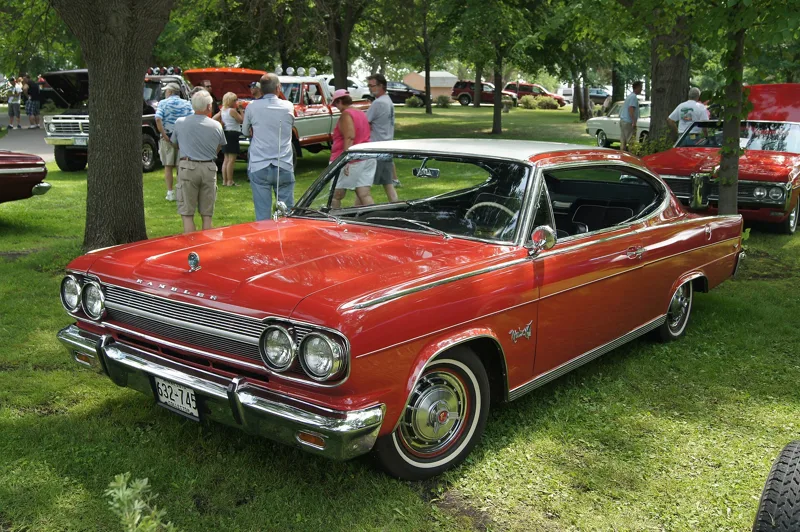
How did the Charger compare with the Rambler Marlin?
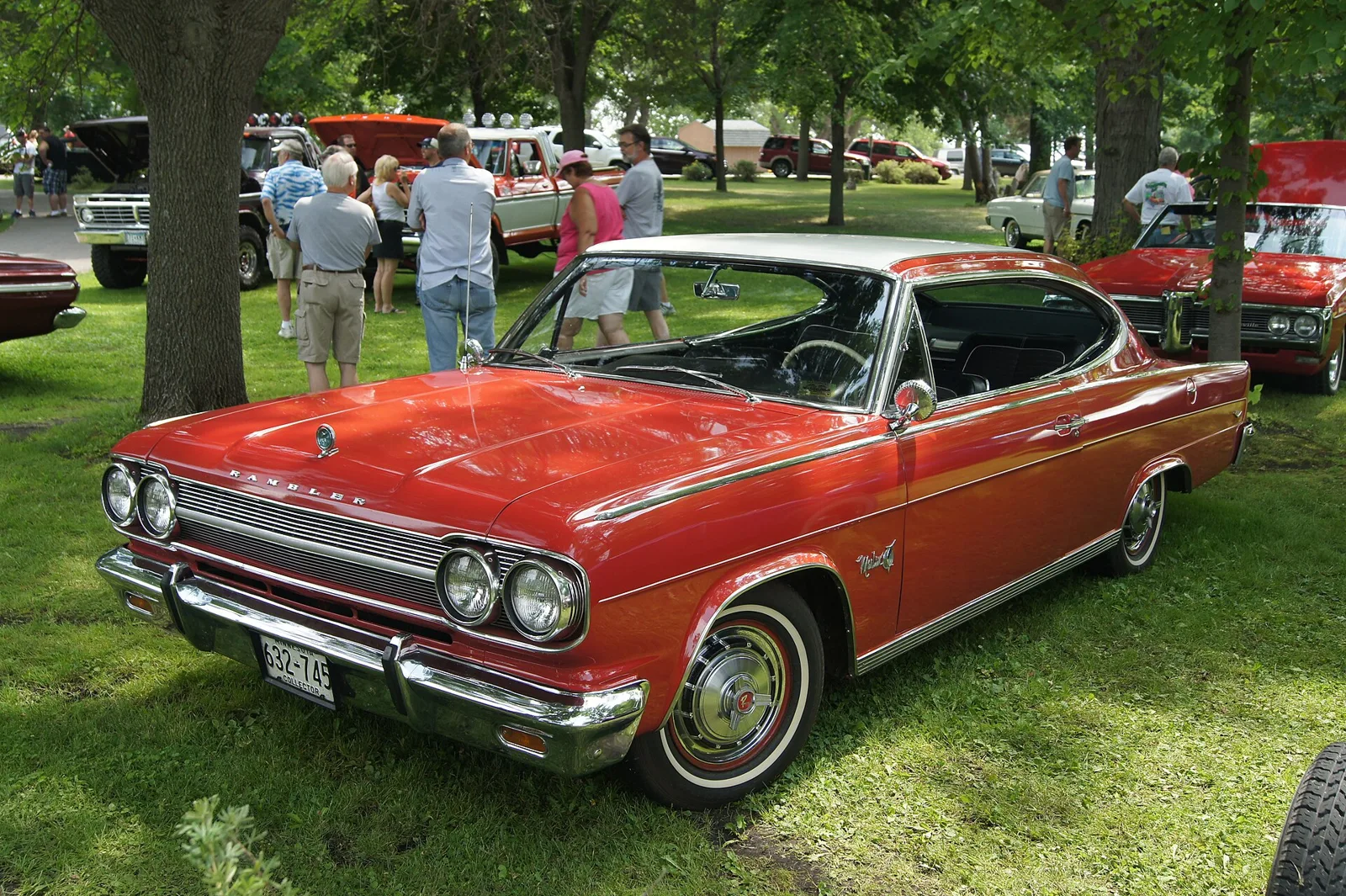
The Charger was the better-looking of the two, though it was also somewhat more expensive. AMC's Rambler Marlin was its closest rival, and both cars pushed fastback styling into the mid-size market.
The Charger was priced from $2,850 to $3,100 in 1966, about $28,281 to $30,762 in 2025 money. That put it above the Marlin on price, which fits Dodge pitching it as an upscale model rather than a budget alternative.
Dodge introduced the Charger in response to the Marlin, the Mustang and the Barracuda, so the Marlin was one of several targets rather than the only one. Its strengths were its looks and its cabin.
What were the 1966 and 1967 Charger specifications?
| Specification | Detail |
|---|---|
| Model years | 1966-1967 |
| Body | Two-door fastback coupe |
| Platform | Chrysler B platform, Coronet-based |
| Engines, 1966 | 5.2 L (318 cu in) 2-bbl; 5.9 L (361 cu in) 2-bbl; 6.3 L (383 cu in) 4-bbl; 7.0 L (426 cu in) Hemi |
| Engines, 1967 | 318 LA 2-bbl 230 bhp (170 kW); 383 4-bbl 325 bhp (242 kW); 440 Magnum 375 bhp (280 kW); 426 Hemi 425 bhp (317 kW) |
| Transmissions, 1966 | Three-speed column manual; four-speed console manual; three-speed automatic |
| Instruments | Tachometer 0-6000 rpm; speedometer 0-240 km/h (0-150 mph) |
| Launch price, 1966 | $2,850 to $3,100 |
| Production, 1966 | 37,344 units |
| Sales, 1967 | 15,788 units |
The Charger's first generation used the Chrysler B platform and a fastback body in both model years, with a list price of $2,850 to $3,100 in 1966. Its V8 options spanned 230 bhp (170 kW) to 425 bhp (317 kW).
What replaced the 1966 Charger?
The 1968 model year brought a redesigned body that dropped the fastback roof for a flying buttress, and the gauges became conventional instead of electroluminescent. The Charger name carried on, but the first generation ended with the 1967 cars.
Those changes are the reason the 1966 and 1967 cars count as a separate first generation. This profile covers only those two model years, so the later bodies are left for their own profiles.