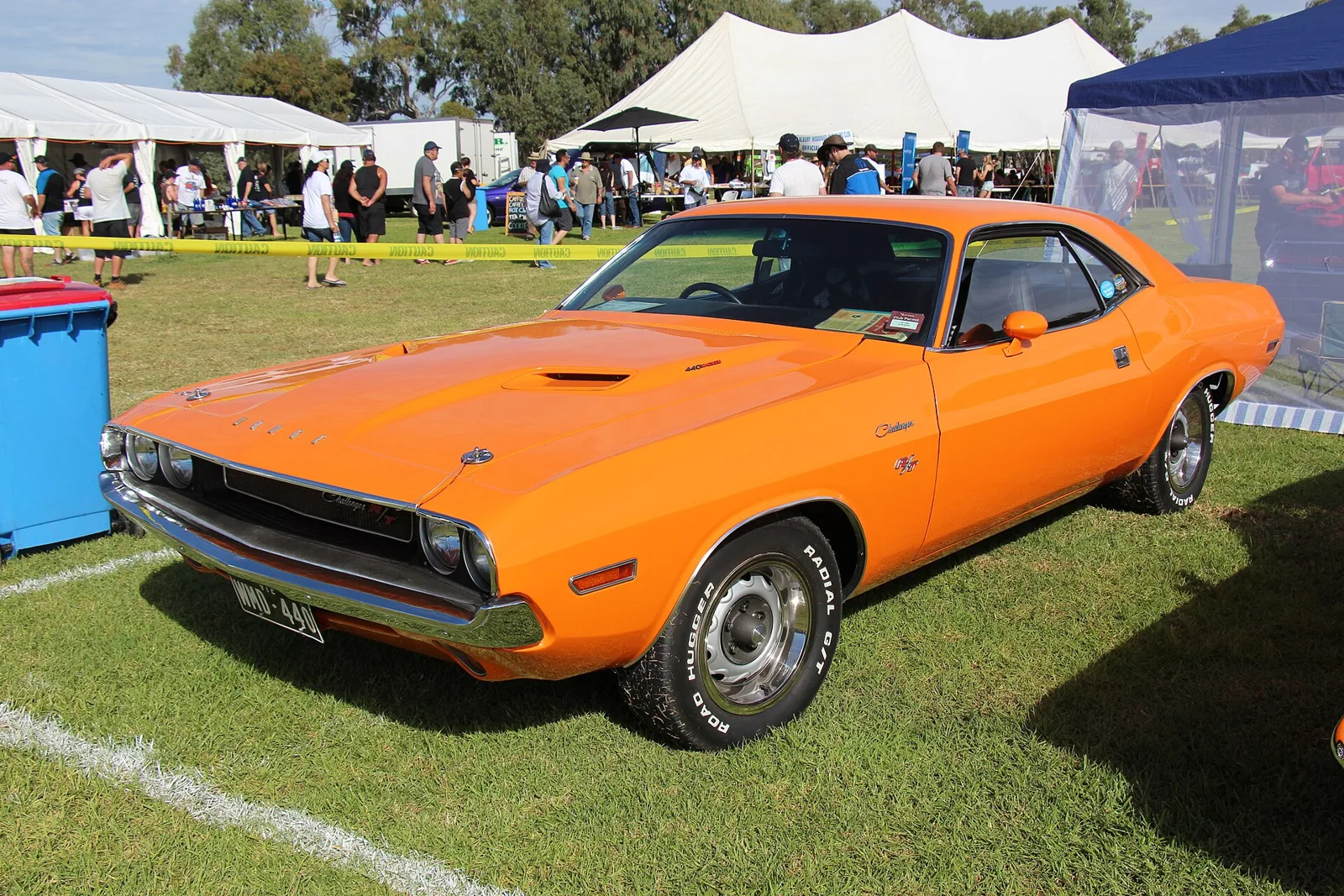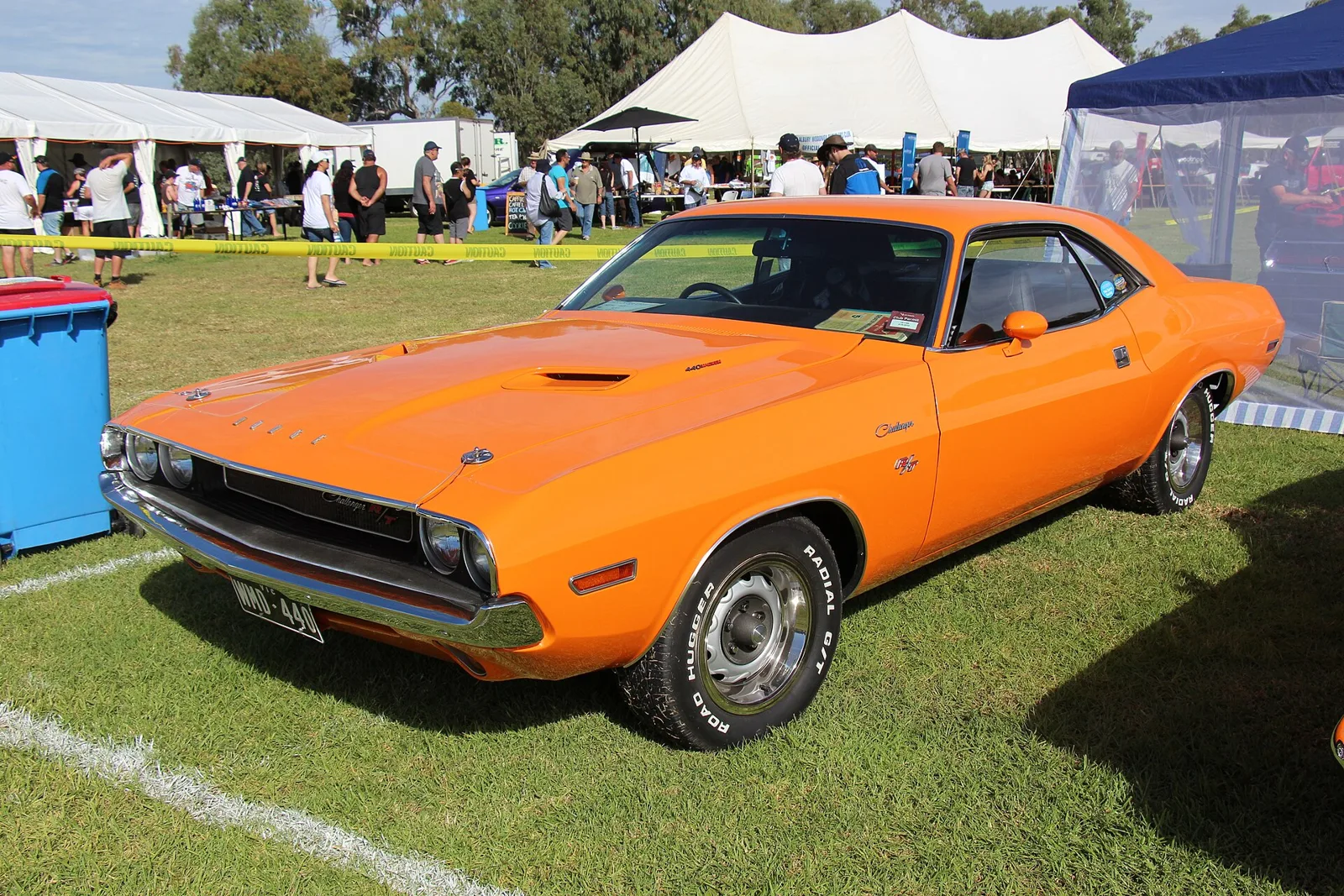
Chrysler's late answer to the pony car boom faced a Mercury that had already gone upmarket, and the two cars split buyers along a clear line.
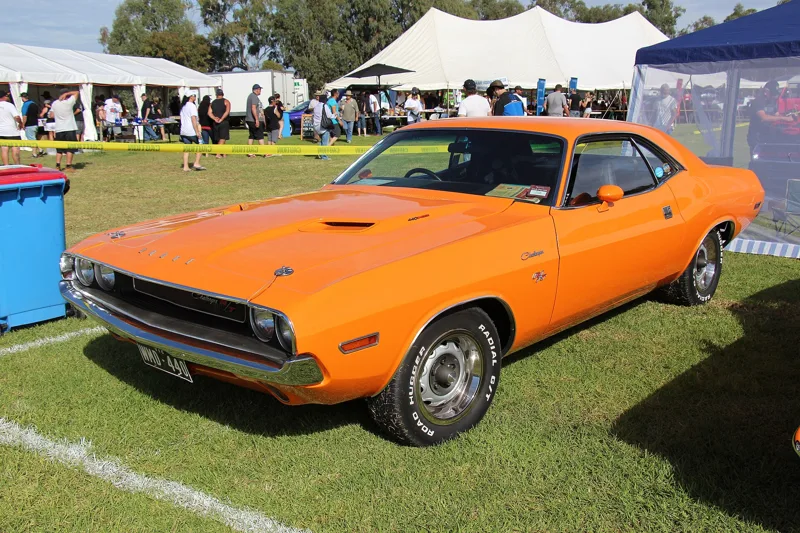
The Dodge Challenger (1970) and Mercury Cougar were rival pony cars. The Challenger arrived for 1970 with a bigger body, a luxury interior and a Hemi V8 rated at 425 hp (317 kW). The Cougar, launched in 1967, went on to 2,972,784 examples across eight generations.
The Dodge Challenger and the Mercury Cougar both sold as pony cars, yet each was pitched at a slightly different buyer. The Challenger arrived for the 1970 model year with a longer wheelbase and a more luxurious cabin than its Plymouth sibling, a step prompted by Mercury's 1967 launch of the Cougar. Dodge gave the Challenger access to nearly every engine in Chrysler's range, while Mercury kept its car closer to comfort and style.
Where did the Challenger come from?
Dodge launched the Challenger in autumn 1969 as a 1970 model. It sat on Chrysler's E-body platform alongside the Plymouth Barracuda, a slightly smaller car, and the two shared major components. Coming late to the pony car market, Chrysler still wanted the Challenger to be the most potent pony car the company had ever offered.
Ford's Mustang had set the pattern in April 1964, so Dodge was reacting rather than leading. A buyer could pick from a long menu of trims, options and engines, and the car was offered as a two-door hardtop, a Special Edition hardtop or a convertible.
Chrysler's late pony car was built to be the most potent of its kind, while Mercury's Cougar had already shown what a more comfortable buyer wanted.
Why did the Cougar push Dodge upmarket?
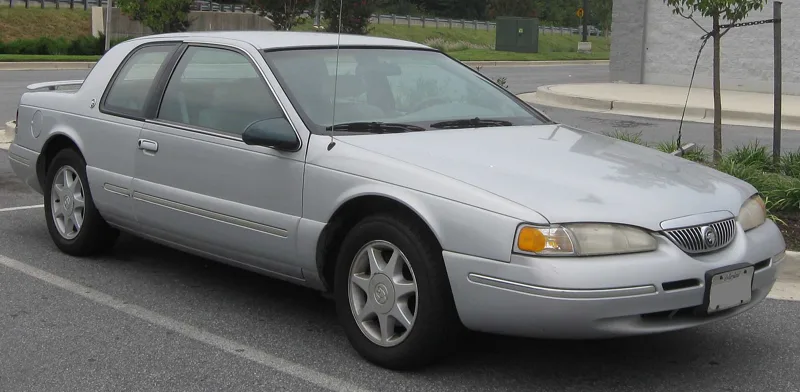
Mercury launched the Cougar in 1967 as a bigger, plusher pony car aimed at affluent young buyers. Its arrival prompted Dodge to lengthen the Challenger, enlarge its body and fit a more luxurious interior. Mercury had placed the Cougar between the Mustang and the Thunderbird, offering more comfort than the Mustang.
The Cougar reached showrooms on 30 September 1966 as a two-door hardtop only, and it sold far beyond its projections. Mercury priced the base car at $2,854 ($28,320 in 2025 dollars), which was $284 more than an equivalent Ford Mustang. A fully optioned XR-7 was priced at $4,500 ($44,654 in 2025 dollars), about what a base Thunderbird cost. The Cougar accounted for nearly 40% of Lincoln-Mercury division sales in 1967.
Specifications side by side
| Specification | Dodge Challenger (1970) | Mercury Cougar |
|---|---|---|
| Launch | Autumn 1969 for the 1970 model year | 30 September 1966, first generation for 1967 |
| Wheelbase | 110 in (2,800 mm) | 111 in |
| Body styles at launch | Two-door hardtop, Special Edition hardtop, convertible | Two-door hardtop; convertible added in 1969 |
| Base engine | 3.7-litre (225 cu in) straight six | 4.7-litre (289 cu in) V8, 200 hp (149 kW) with two-barrel carburettor |
| Top road engine | 7.0-litre (426 cu in) Hemi, 425 hp (317 kW) | 7.0-litre (427 cu in) GT-E V8, 390 hp (291 kW) in 1968 |
| Performance model | R/T with 6.3-litre (383 cu in) Magnum V8, 335 hp (250 kW) in 1970 | Eliminator with Boss 302 V8, 290 hp (216 kW) from April 1969 |
| Competition | Factory Trans-Am team; 2,399 T/As built | Two Boss 429 hardtops built as factory drag cars |
| Production | 165,437 first-generation cars | 2,972,784 across eight generations |
| Original price | None given | $2,854 base (1967) |
| Awards | None given | 1967 Motor Trend Car of the Year |
Which engine gave the most power?
The Challenger had the bigger headline figure. Its 7.0-litre (426 cu in) Hemi was rated at 425 hp (317 kW), while the strongest Cougar of the first generation was the 7.0-litre (427 cu in) GT-E V8, rated at 390 hp (291 kW) in 1968.
Dodge's base Challenger used a 3.7-litre (225 cu in) straight six. Higher trims came with a 5.2-litre (318 cu in) V8 on a two-barrel carburettor, and the options climbed through 5.6-litre (340 cu in), 6.3-litre (383 cu in), 7.2-litre (440 cu in) and 7.0-litre (426 cu in) V8s. The R/T carried a 6.3-litre (383 cu in) Magnum V8 with 335 hp (250 kW) in 1970, and a drop in compression took it to 300 hp (224 kW) for 1971.
Buyers who wanted more could specify the 375 hp (280 kW) 7.2-litre Magnum, the 390 hp (291 kW) Six-Pack, or the Hemi, whose peak turning force was 490 lb ft (664 Nm), reached at 4,000 rpm. The R/T's Rallye cluster carried a 240 km/h (150 mph) speedometer and an 8,000 rpm tachometer, a clear sign of the car's intent.
The Cougar's first generation was V8 only. Its entry 4.7-litre (289 cu in) V8 offered 200 hp (149 kW) with a two-barrel carburettor or 225 hp (168 kW) with a four-barrel. The 6.4-litre (390 cu in) Marauder produced 320 hp (239 kW) in GT trim. By 1970 the four-barrel 351 cu in Cleveland V8 was rated at 300 hp (224 kW), while the Boss 302 V8 in the Eliminator delivered 290 hp (216 kW) from April 1969. For 1970 the 390 was dropped, leaving the 428 Cobra Jet and the Boss 302 as the performance options beside the Cleveland.
What was the Challenger T/A?
The T/A was a 1970-only car built so Dodge's Trans-Am racer could be homologated for the SCCA's Trans-Am championship. The street version used the 340 with three two-barrel carburettors, the so-called Six Pack, and Dodge rated it at 290 hp (216 kW), while the standard 340 made 15 hp (11 kW) less.
Air entered through a suitcase-sized scoop in a matte-black fibreglass hood, and the exhaust exited through chrome-tipped outlets in front of the rear wheels. The T/A ranked among the first American muscle cars to fit different tyre sizes at each end, with E60x15 tyres at the front and G60x15 at the rear. That set-up contributed to severe understeer in fast corners, largely because of the smaller front tyres. Dodge built 2,399 T/As in all.
Who had the better racing record?
The Challenger had the more serious race programme. Dodge ran a factory Trans-Am team in 1970, while the Cougar's competition links were mostly drag racing and the Boss 302 Eliminator, plus a 1967 and 1968 appearance package that Mercury tied to the model's success in competition.
Ray Caldwell's Autodynamics, based in Marblehead, Massachusetts, ran the Dodge team. Sam Posey drove the No. 77 car, which the team built from a showroom car taken off a local dealer's floor, and a second car on a chassis from Dan Gurney's All American Racers joined mid-season. The T/A scored a few top-three finishes, but a limited development budget and short-lived race engines meant Dodge left the series at the end of the season.
Two Boss 429 hardtops were built as factory drag cars, which shows that Mercury also pursued straight-line speed.
How did the styling differ?
Carl Cameron penned the Challenger's exterior, and its 110 in (2,800 mm) wheelbase gave it 2 in more length than the Barracuda. The 1970 front end was a clear identifier: the Challenger had four headlights, while the Barracuda had two.
Mercury fitted hidden headlamps to the Cougar, the first Lincoln-Mercury car to have them, and the doors were opened by vacuum drawn from the engine. Sequential turn signals were standard, borrowed from the Thunderbird. The 1969 facelift added a body crease that swept down from the bonnet to the rear wheels, and the 1970 model brought back the split electric-shaver grille.
Both cars changed over their lives. The Challenger's 1972 options list lost its convertible and most big-block engines, and the R/T gave way to the Rallye. In 1974 the 340 was replaced by a 5.9-litre (360 cu in) V8 rated at 245 hp (183 kW), and that year production ended in late April.
What did the interiors and options offer?
The Challenger's 1970 Special Edition hardtop came with a vinyl roof, bucket seats in leather and vinyl, and an overhead console holding door-ajar, low-fuel and seatbelt warning lights. The Cougar's XR-7 added a simulated wood dashboard, full instrumentation and toggle switches.
Mercury offered nearly every option on the Cougar, though power windows were not among them.
The Special Edition was a 1970-only trim, with SE medallions on the pillars and a smaller, more formal rear window. Buyers could add air conditioning and a rear window defogger to the Challenger. A cheaper Deputy coupe arrived mid-year in 1970 with fixed rear quarter windows and less trim, and its name came from a sheriff-type character who appeared in Dodge television commercials of the time.
On the Cougar, a power-operated Tilt-Away steering wheel was offered, which swung clear when the driver's door opened with the car in park and the ignition off. For 1970, Mercury added a locking column and seats with high backs, in place of adjustable head restraints. In 1968 the Cougar also became the first Ford Motor Company car to offer an electrically operated sunroof, though few buyers ordered it.
Special trims and one-off details
The Cougar GT package, offered on the standard and XR-7 models in 1967 and 1968, paired a 6.4-litre (390 cu in) Marauder GT V8 rated at 320 hp (239 kW) with upgraded suspension, larger brakes, wider wheels and tyres, and a low-restriction exhaust. The 1970 Cougar also carried a houndstooth vinyl roof and matching upholstery styled by the fashion designer Pauline Trigere, in brown-and-black or white-and-black check.
The Challenger's 1972 Rallye package added four simulated vents on the front fenders, with matte black strobe-tape stripes running out of them. The 1972 engines were detuned to run on unleaded petrol, and their ratings were restated on the more accurate SAE net basis. Five mph bumpers arrived in 1973, the year the convertible had already disappeared from the range.
How many did each sell?
The first-generation Challenger sold 165,437 units between 1970 and 1974. Sales rose for 1973 to more than 27,800 cars, but production ended in late April 1974. The Cougar went much further, with 2,972,784 examples across eight generations over 34 years, making it the highest-selling Mercury vehicle.
The pony car segment was already declining when the Challenger arrived, and sales fell sharply after 1970. Edmunds Inside Line ranked the 1970 Challenger as a great year and the 1971 car as a good one, and it judged 1972 to 1974 to be progressively weaker.
Which buyer suits each car?
A buyer who wanted the most aggressive engine options had the Challenger, with the 425 hp Hemi and the R/T's Magnum V8s at the top of the list. A buyer who wanted a plusher pony car with a Mercury badge, a wider model family and a much longer production life had the Cougar.
The figures do not name one winner, because the two cars answered slightly different questions in 1970.