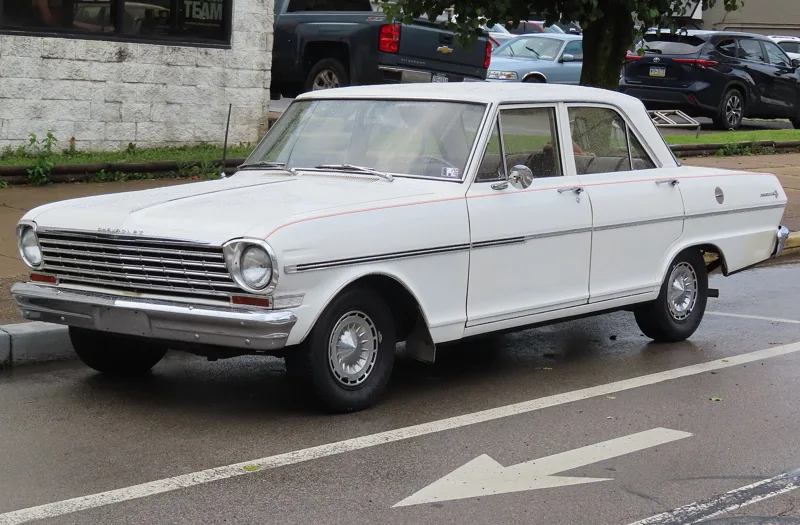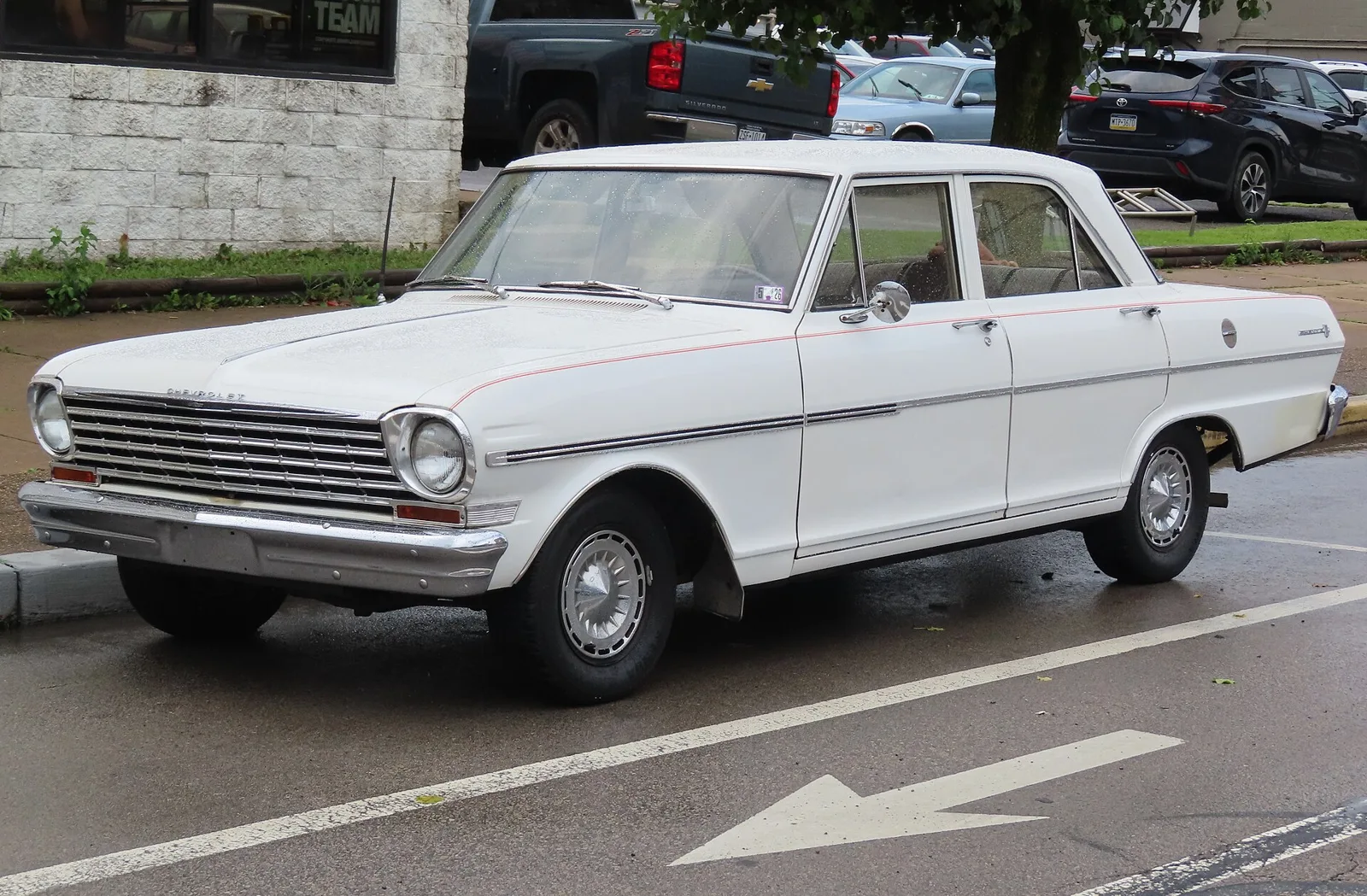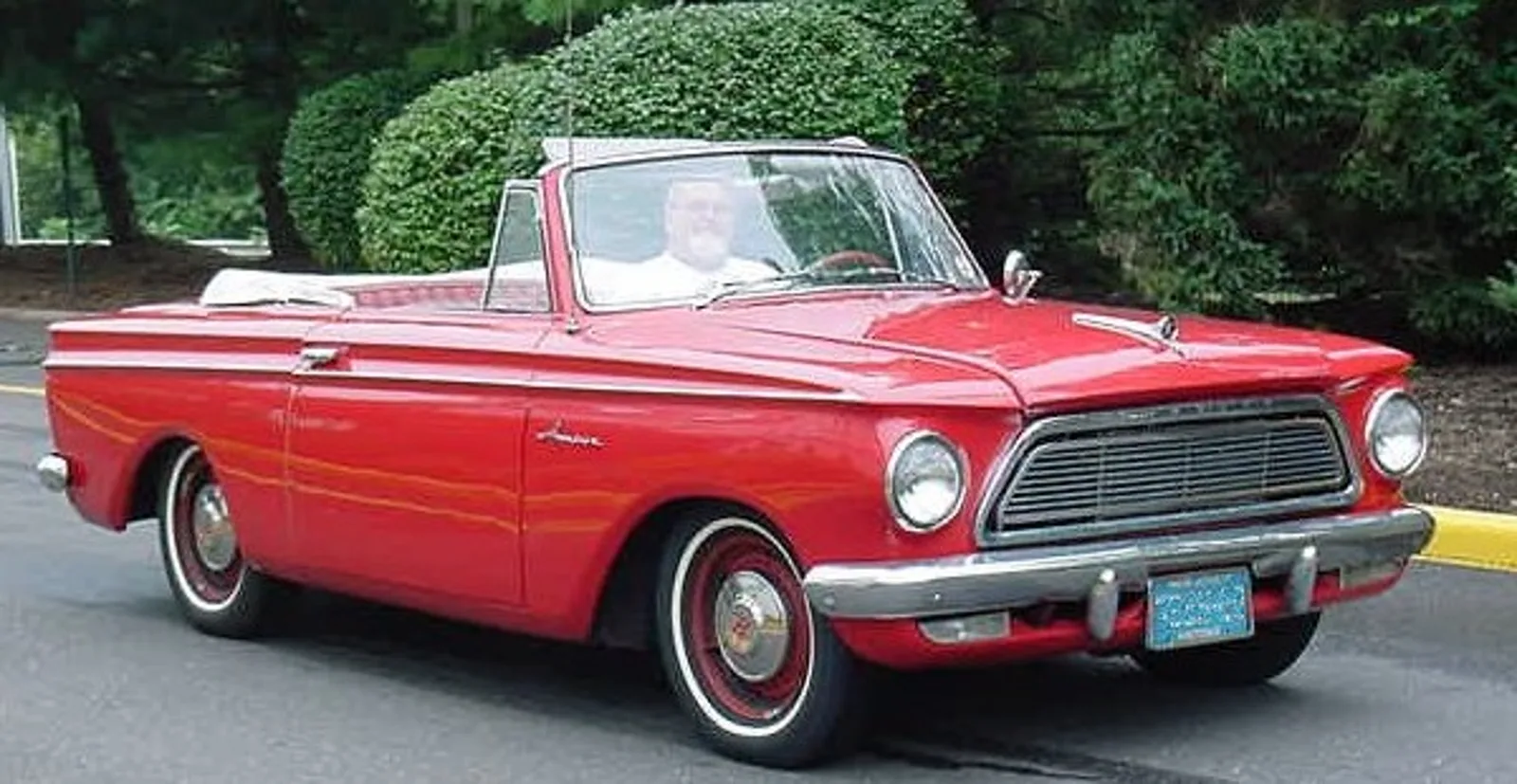
Economy-minded cars from American Motors and Dodge, followed through their body styles, engines, brakes and the sales figures that each one recorded.
The Rambler American was a compact built by American Motors in three generations from 1958 to 1969. The Dodge Dart was a compact produced in North America from 1959 to 1976, and both were sold as economical, low-priced American cars.
The AMC Rambler American and the Dodge Dart were budget-minded American cars, and their production runs overlapped for most of the 1960s. The Rambler American was built from 1958 to 1969 in three generations. The Dart was produced in North America from 1959 to 1976, and it became a true compact for 1963.
Were the Rambler American and the Dart rivals?
Neither car's history names the other as a direct target, so any rivalry is one of market position rather than design intent. Both were low-priced American cars built around economy, and both were sold to buyers who wanted a practical car at a modest price. The fit is close enough to compare them, even though neither maker set out to beat the other.
The two cars also started from different places. American Motors revived an older design to fill a gap, while Dodge created its Dart to replace the Plymouths in its own showrooms. The sections below follow those different starting points through the years when both cars were on sale.
Two low-priced American cars that never set out to beat each other, but sold on the same promise of running costs and value.
Where did each car come from?
The Rambler American came from a financial position that left American Motors no room for an entirely new model. Under George W. Romney, the company reintroduced a modified 1955 Nash Rambler with a 100 in (2,540 mm) wheelbase as a third car line. The timing suited a recession, and Rambler's reputation for fuel economy and Mobil Economy Run wins helped it sell.
The Dart had a more complicated start. The name first appeared on a 1956 Chrysler show car with a body by Ghia, and a second Ghia show car followed for 1957. When the production Dart arrived, it was built to replace Plymouths in Dodge's low-priced segment, and it used a 118 in (2,997 mm) wheelbase on its sedans and coupes.
How did the Rambler American change over its life?
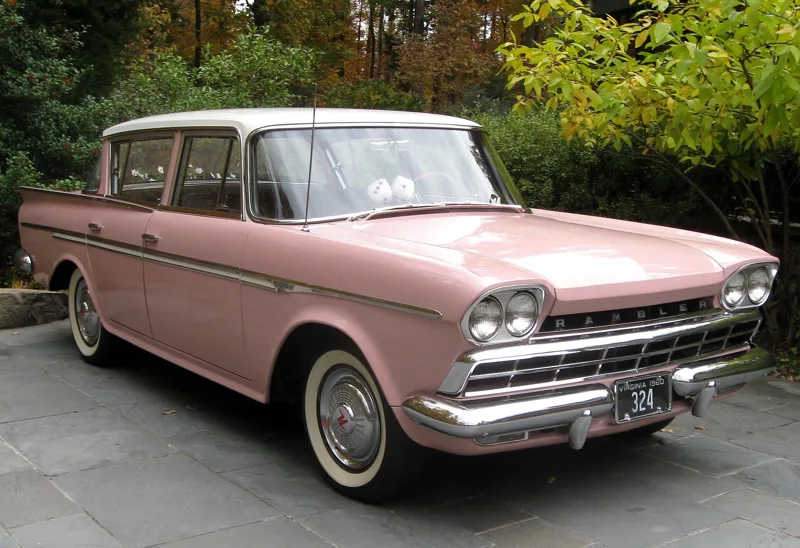
The first generation covered 1958 to 1960. For 1958 the car was only a two-door sedan, with a 195.6 cu in (3.2 L) flathead six rated at 90 hp (67 kW; 91 PS). A station wagon arrived in 1959, and a four-door sedan and the Custom trim came in 1960, when the Custom's overhead-valve six produced 125 hp (93 kW; 127 PS).
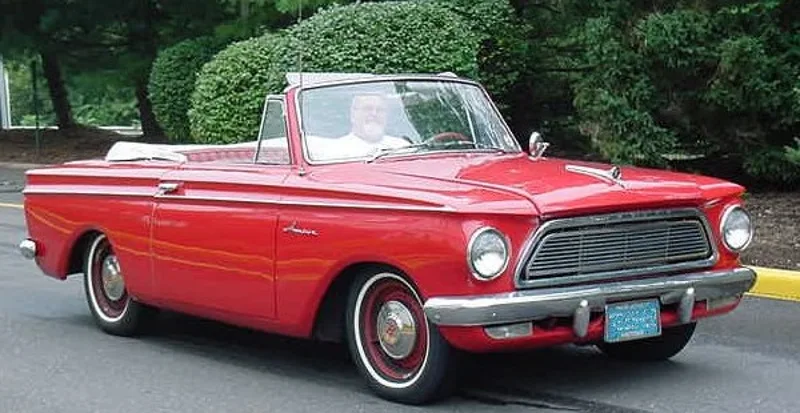
The second generation, from 1961 to 1963, was a heavy restyle with the same mechanicals. The body became squarer, so the car ended up 76 mm (3 in) narrower and shorter overall at 4,397 mm (173.1 in). A four-door wagon and a two-door convertible were added for 1961, and the car gained room for six passengers. A new Brampton plant in Ontario was built for the American and the larger Classic.
The third generation ran from 1964 to 1969. Late in the period the optional second-generation AMC V8 gave the car a more muscular image, and its 390 cu in (6.4 L) version developed with Hurst Performance was marketed as the SC/Rambler. The platform also spawned the Tarpon concept, the Marlin, the Javelin and the Hornet.
How did the Dart change over its life?
The Dart's first generation covered 1960 and 1961, built on the unibody Plymouth platform. Its engines ran from a 225 cu in slant-six up to 318 and 361 cu in V8s, and the car sat in a three-trim line of Seneca, Pioneer and Phoenix. Sales were strong, with Dodge building 367,804 cars in 1960, but the 1961 styling by Virgil Exner was widely disliked.
The 1962 Dart moved to a new lightweight B platform with Torsion-Aire front suspension, and the mid-year Ramcharger V8 became its performance headline. For 1963 the car became a senior compact on a 111 in (2,819 mm) wheelbase, with 170, 270 and GT trims and a choice of sedans, a hardtop, a wagon and a convertible.
The 1965 Dart Charger, a yellow GT hardtop with a 273 engine rated at 235 bhp (175 kW), introduced the Charger name to Dodge. Its fourth generation ran from 1967 to 1976, when the base slant-six grew to 198 cu in in 1970 and the Demon and Sport versions used the Plymouth Duster's shorter wheelbase.
What did the Dart's 1963 redesign change?
The 1963 Dart was a new senior compact, and its wheelbase grew to 111 in (2,819 mm) from the Lancer's 106.5 in (2,705 mm). The car used the A-body suspension of the Valiant and the defunct Lancer, which gave more rear seat legroom than either of those cars offered. The turning diameter was 38.9 ft (11.9 m).
Sales responded quickly. The Dart was an instant market success, with sales up sharply on the 1962 Lancer. Dodge kept the car popular through the end of production in 1976, against the Ford Falcon and Chevrolet Nova in the same class.
How do the specifications compare?
| Feature | AMC Rambler American | Dodge Dart |
|---|---|---|
| Production | 1958 to 1969, three generations | 1959 to 1976 model years in North America |
| Body styles | Two-door sedan (1958); wagon (1959); four-door sedan (1960); four-door wagon and convertible (1961) | Two- and four-door sedans, hardtop, wagon and convertible (1963) |
| Base engine | 195.6 cu in (3.2 L) flathead six, 90 hp (67 kW; 91 PS) in 1958 | 170 cu in (2.8 L) slant-six, 101 hp (75 kW) in 1963 |
| Upgraded engine | 125 hp (93 kW; 127 PS) overhead-valve six in the 1960 Custom | 273 cu in (4.5 L) V8, 180 bhp (130 kW) from 1964; 235 bhp (175 kW) in 1965 |
| Largest V8 | 390 cu in (6.4 L), developed with Hurst Performance | 413 cu in (6.8 L) Ramcharger, 415 hp (309 kW), mid-1962 |
| Transmissions | Advertised as the only small car with an automatic in 1958; E-stick option in 1962 | Pushbutton TorqueFlite optional from 1961; last pushbutton year 1964 |
| Brakes | Twin-circuit brakes on all models from 1962 | 11-inch drums in 1960; disc brakes optional from 1965 |
| Price | US$1,789 Deluxe two-door in 1958; $1,795 suggested delivered price in 1960 | Not reported |
| Sales | 30,640 buyers in 1958; 120,603 in 1960 (7.5% of the US market) | 142,708 Darts built in 1961; Dodge total of 367,804 in 1960 |
| Service intervals | Oil changes extended from 2,000 to 5,000 miles (3,219 to 8,047 km) in 1962 | Not reported |
| Competition | Mobil Economy Run wins | 1962 Ramcharger built for drag racing |
How did the two cars compare on value?
Value was the shared promise. American Motors advertised the 1958 Deluxe as the lowest-priced car made in America, and it later noted that resale values ranked among the highest. Dodge positioned the Dart in its low-priced segment, and the car went on to outsell the Dodge Polara and Matador it sat beside.
Running costs were part of the pitch on both sides. The Rambler's 1962 maintenance changes cut service frequency, with oil changes extended to 5,000 miles (8,047 km) and coolant guaranteed for two years or 24,000 miles (38,624 km). The Dart's price is not reported, so the value comparison has to rest on the Rambler's own figures.
What safety and brake features set them apart?
The Rambler led on brakes. American Motors fitted twin-circuit Double-Safety braking to all Ramblers in 1962, a feature that only Rolls-Royce, Jaguar and the 1962 Cadillac also offered at the time. The United States later mandated twin-circuit systems for all cars from 1967.
The Dart's safety story is about the later 1960s. Front seat belts became standard in 1965, and disc brakes became optional that year, which required the 14 in (356 mm) wheels to clear the calipers. Factory air conditioning arrived in the same model year.
What did the Rambler's 1962 maintenance changes mean for owners?
The 1962 changes were aimed at cutting the cost of keeping the car on the road. Owners got self-adjusting brakes, oil change intervals of 5,000 miles (8,047 km) instead of 2,000 miles (3,219 km), and larger cellulose-fiber air filters for longer life. Automatic transmissions were given longer gaps between fluid changes.
Two other items stood out. The manual transmission was designed never to need draining, and the factory-filled engine coolant was guaranteed for two years or 24,000 miles (38,624 km). Deep-dip rustproofing was another part of the package, and every American was dipped in rust proofing as standard from the start in 1958.
A Popular Science test over 10,000 miles (16,093 km) described the 1962 car as sturdy, solid and dependable, a good buy for what it was built for. That kind of owner-level praise was the backbone of the Rambler's reputation, and no comparable maintenance programme for the Dart is recorded here.
How did the Rambler's sales compare with the Dart's?
Rambler's sales rose steadily in its first years. The American found 30,640 buyers in the abbreviated 1958 model year, and production tripled to 91,491 cars in 1959. In 1960 the American sold 120,603 units, which gave AMC 7.5% of the US market and a Rambler total of 485,745 cars, third among domestic brands.
The Dart's sales figures are harder to set side by side because the series of Dodge totals mixes Darts with other models. Dodge built 367,804 cars in 1960, and the Dart's own tally was 142,708 in 1961, of which the Seneca line made up 66,100. The 1961 Darts were a fraction of Dodge's overall output, so the comparison is between one model and a whole brand.
Which buyer suits which car?
The facts do not settle which car was better, so the choice depends on what the buyer wants. The Rambler American suits a buyer who values low running costs, early twin-circuit brakes and a body that stayed within a compact footprint. The Dart suits a buyer who wanted a conventional compact with more body styles and a V8 option.
A practical buyer would also note that the Rambler's V8 options came late, in 1966, while the Dart offered V8s from its first year, 1960.