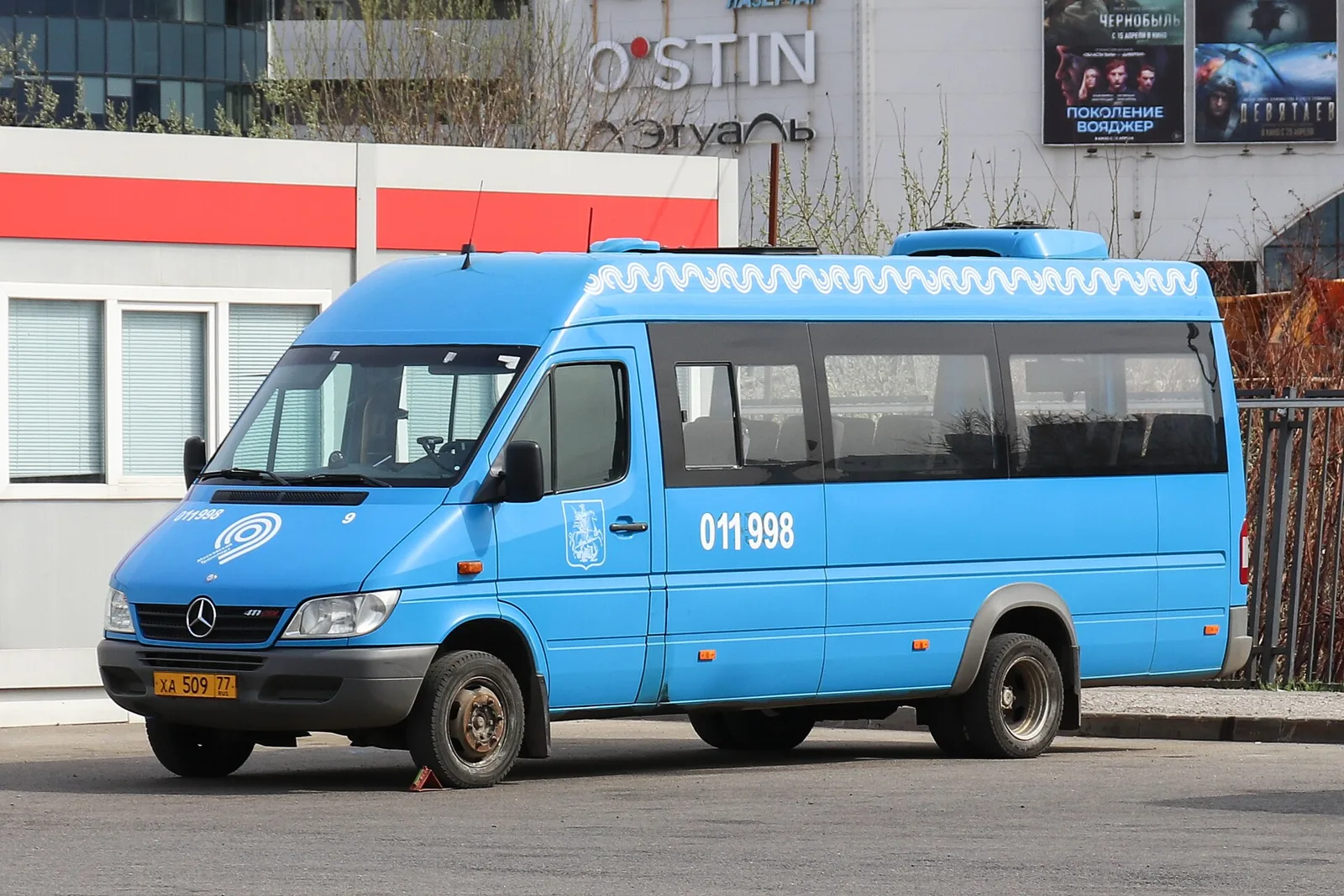
A van design first launched in 1995, revived since 2013 for Russian and Eastern European buyers and built at Nizhny Novgorod.
Revived from the 2000 to 2006 Sprinter, the Classic has been built since 2013 at Nizhny Novgorod for Russian and Eastern European buyers. Its Phase II 2002 to 2006 grille and 2000 to 2006 dashboard both date from that range.
The Sprinter Classic is a throwback in Mercedes-Benz's van range, reviving the 2000 to 2006 Sprinter for a narrower market. Built at Nizhny Novgorod, it borrows its grille, dashboard and steering wheel from different points in the Sprinter's history. Its story starts with the first Sprinter, which Mercedes-Benz launched in Europe in 1995.
What is the Mercedes-Benz Sprinter Classic?
The Mercedes-Benz Sprinter Classic is the 2000 to 2006 Sprinter, revived since 2013 for Russian and Eastern European buyers only. The Gorky Automobile Plant, located at Nizhny Novgorod, builds it, and the car wears the Phase II 2002 to 2006 grille beside a 2000 to 2006 dashboard.
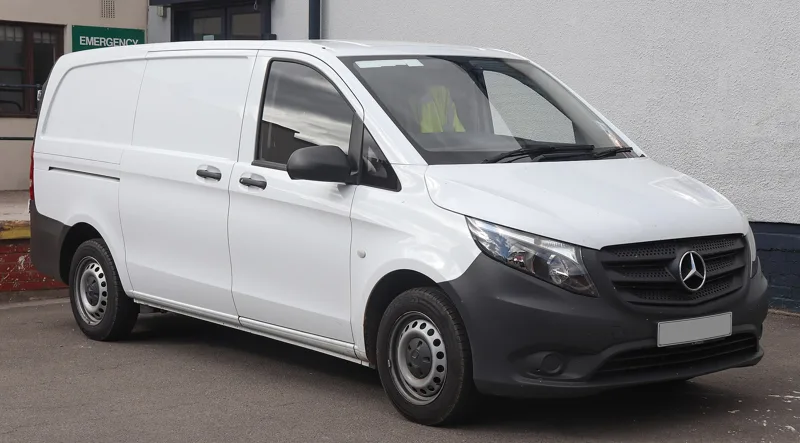
The Sprinter is a light commercial van from Mercedes-Benz Group AG, which is based in Stuttgart. It is offered as a large van, a chassis cab, a minibus or a pickup. Within the brand's van range it is the largest model, with the mid-size Vito and the small Citan below it.
The Sprinter has also been sold under the Dodge and Freightliner names, and Volkswagen Commercial Vehicles offered re-badged versions as the LT and Crafter. Mercedes-Benz now markets the van itself under its own name.
A 2000 to 2006 Sprinter design, revived in 2013 and built at Nizhny Novgorod for Russian and Eastern European buyers.
Where did the Sprinter Classic's design come from?
The Classic carries the design of the 2000 to 2006 Sprinter, which was itself a refinement of the original 1995 van. Its Phase II grille is the one fitted from 2002 to 2006, its dashboard follows the 2000 to 2006 layout, and its steering wheel comes from the 2006 to 2014 range.
Europe received the first-generation Sprinter in 1995, as the successor to the T1 Transporter of 1977. The engine sat 290 mm (11 in) farther forward than on the T1, which gave the cabin more room, and the van also cut aerodynamic drag.
Mercedes-Benz made the Sprinter its first product to carry a name instead of an alphanumeric code. Its brakes were four-wheel discs with anti-lock control, and its 90 kW (120 hp) diesel was the most powerful in its class at launch. The van was named International Van of the Year for 1995.
Updates to the styling came in 2000 and again in 2002, when standard electronic stability control also arrived. Those changes produced the design that the Classic revives more than a decade later.
How did the Sprinter reach North America?
The first-generation Sprinter reached North America for the 2002 model year, initially badged as a Freightliner. Dodge branding followed in 2003, and DaimlerChrysler chose not to use the Mercedes-Benz badge, judging that a utilitarian van would clash with the brand's luxury image.
Freightliner and Dodge versions were identical apart from minor styling details and badging. Cargo vans were built in Dusseldorf in partly disassembled form and then shipped to Gaffney, South Carolina for reassembly, a route that avoided the 25% chicken tax on complete light trucks. Passenger vans fell outside that classification and came in fully assembled through Mercedes-Benz in Jacksonville, Florida.
The 2002 and 2003 North American vans used only the 2.7-litre OM612 inline-five diesel, sold in 49 states because it did not meet CARB rules. From 2004 to 2006 the OM647 engine swapped in a water-cooled exhaust gas recirculation valve for the earlier air-cooled one, which made those vans CARB compliant. The only gearbox was a five-speed 5G-Tronic.
The launch team sat within DaimlerChrysler Vans LLC, a modest unit in Huntersville, North Carolina. Sales and service duties passed to the Chrysler Commercial Vehicle Division in 2004, and most staff stayed on when the base moved to Auburn Hills, Michigan.
Where else did the Sprinter go?
The Sprinter was sold in Japan as the Mercedes-Benz Transporter T1N, because Toyota already used the Sprinter name for a Corolla-based car. Iran Khodro Diesel still assembles the model 314 first generation as an ambulance, and Mercedes Benz Vietnam assembled it in Ho Chi Minh City using CKD kits, which sidestepped heavy local import duties.
From 2014 Algeria began manufacturing the 319 and 519 for civilian and military use.
What hybrid versions did Mercedes-Benz test?
In 2004 Mercedes-Benz built a plug-in hybrid prototype and a non-plug-in version of the van. The plug-in had a 70 kW (94 hp) electric motor, a 14kWh NiMH battery and an all-electric range of up to 30 km (19 miles).
Recharging from the mains took roughly 6 hours for the plug-in version. The non-plug-in prototype had a smaller 30 kW (40 hp) motor and 3 kWh batteries, which allowed electric-only driving of 1.9 to 2.5 mi (3 to 4 km).
Neither prototype became part of the production range. The hybrid work remained a testing exercise.
How did the second generation change the Sprinter?
The second-generation Sprinter, nicknamed the NCV3 after New Concept Van 3, arrived in Europe in 2006 as a 2006 model. It collected Van of the Year honours for 2007 and 2008 from Professional Van and Light Truck Magazine, and North America received its own version for 2007.
By 2010 a BlueTEC version with the OM642 engine had arrived. BlueTEC allowed much of the EGR to be removed, lifting output to 188 hp (140 kW) from the non-BlueTEC engine's 154 hp (115 kW).
The US cargo version came with 144-inch and 170-inch wheelbases, standard and high roofs of 60.6 and 72.4 inches, three lengths and two weight classes. It was reassembled from kits at Ladson, South Carolina, while the passenger models came from Germany.
Argentina produced the second generation for export from 2007 to 2010, and from 2011 a plant in Buenos Aires built it with the new OM 651 engine. Since 2012 the van has supplied the Mercosur bloc and 40 other countries, and 70% of output is exported.
The Sprinter was built at Daimler's Dusseldorf and Ludwigsfelde plants. Mercedes-Benz Vans shifted roughly 134,000 units of the newer model across Europe and North America between July 2013 and May 2014.
What changed with the 2013 and 2014 updates?
The 2013 update added Euro VI compliance, a redesigned radiator grille and new assistance systems, including optional collision avoidance and blind spot monitoring, adaptive high beams and lane departure warning. For 2014 North America received a 2.1-litre OM651 two-stage turbo diesel and a 7-speed automatic, and the same year brought LED running lights.
On the 3500-series models air suspension became an option, and the 2014 model also added navigation and iPod compatibility, with Blind Spot Assist and Collision Prevention Assist available as extras.
US models went on sale in autumn 2013 as 2014 vehicles, offering a 2.1-litre four-cylinder turbo diesel and a 3.0-litre V6 turbo diesel, both with automatic gearboxes. Ordering began in June 2013 with deliveries from September, and early models offered an ECO-Gear six-speed manual or a seven-speed 7G-TRONIC PLUS automatic with lock-up clutch.
In September 2018 Amazon said it had contracted for 20,000 Amazon-badged Sprinters for small business partners of its logistics service.
For the UK in 2015 Mercedes-Benz sold 1,200 special-edition vans to mark two decades of Sprinter production. The package added air conditioning, integrated satellite navigation, a comfort seat for the driver, plus an armrest, wheel trims, a chrome grille and chrome 'Sprinter 20' badging.
What did the third generation bring?
The third-generation van had its debut on 6 February 2018 at Mercedes-Benz's Duisburg logistics centre, with sales from June 2018. It was the first generation to offer a front-wheel-drive van, and a gasoline model using the M274 four-cylinder was added before being discontinued in 2024.
Mercedes-Benz moved North American production to complete knock-down kits in 2015 and expanded the Ladson factory from 2016. The first Ladson-built third-generation van rolled out in September 2018.
For the 2023 US model year the third generation gained an all-wheel-drive option, replacing the selectable 4x4, and a 2.0-litre four-cylinder OM654 diesel. Power steering moved from hydraulic to electromechanical at the same time.
In spring 2024 Europe dropped the front-wheel-drive 910 variant, whose wheelbase differs from every other Sprinter. The electric eSprinter had been announced in February 2018 and built at Dusseldorf from December 2019.
How did the eSprinter develop?
The first eSprinter had an 85 kW (114 hp) motor and 295 Nm (218 lbf ft) of torque, with usable batteries of 35 or 47 kWh. Its estimated range was 115 km (71 mi) or 168 km (104 mi), depending on the battery, and it was initially sold only as a high-roof panel van.
Mercedes-Benz announced the successor in December 2020. The eSprinter 2.0 uses the Electric Versatility Platform, which places the drive motor on the rear axle and allows pickup, chassis cab and cutaway variants. It has a usable battery of 113.0 kWh and an 81.0 kWh option, with 134 hp or 201 hp. Production was planned for the second half of 2023 at Ladson, Dusseldorf and Ludwigsfelde.
How were Sprinters used?
The Sprinter is designed mainly for business use, although conversions for recreation exist. In North America most go to cargo expediters, and its 13.5 ft (4.1 m) cargo area can take three 48 x 48 in pallets, where earlier vans held two.
Its payload capacity is about 1,400 kg (3,000 lb) of cargo. Police in Hong Kong, the United Kingdom and Poland have adopted it, and several ambulance services use it, including the NHS's 515 CDI in the United Kingdom.
Converters turn the van into campervans, limousines, wheelchair-accessible vehicles and golf vans, and several RV and coach makers have built Sprinter conversions. Chilled box versions also served much of the UK supermarket home delivery fleet.
The Sprinter also appears in passenger form. Mobility minibuses seat 8 to 18 and run 6.9 to 7.4 metres, Transfer models seat 13 to 22, and Travel buses carry 17 to 19 on a high floor. The City variant seats 10 to 16 and holds 22 to 40 with standing passengers.
What are the Sprinter Classic specifications?
The Classic's core facts are its market, its builder and its design lineage. It is sold only in Russian and Eastern European markets and assembled at Nizhny Novgorod, while its first-generation origins date back to 1995.
| Specification | Detail |
|---|---|
| Revived model | 2000-2006 Sprinter |
| Revived since | 2013 |
| Markets | Russian and Eastern European markets only |
| Builder | Gorky Automobile Plant, Nizhny Novgorod |
| Grille | Phase II 2002-2006 grille |
| Dashboard | 2000-2006 design |
| Steering wheel | From the 2006-2014 Sprinter |
| Original launch | 1995 in Europe, replacing the T1 Transporter of 1977 |
| First-generation diesel | 90 kW (120 hp) at launch |
| Second generation | 2006 in Europe, as the NCV3 |
| Third generation | Debut on 6 February 2018 |
| eSprinter 2.0 | 113.0 kWh usable battery; 134 hp or 201 hp |