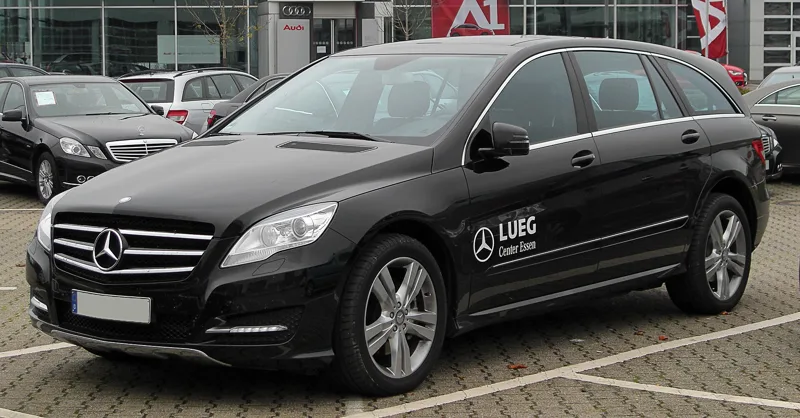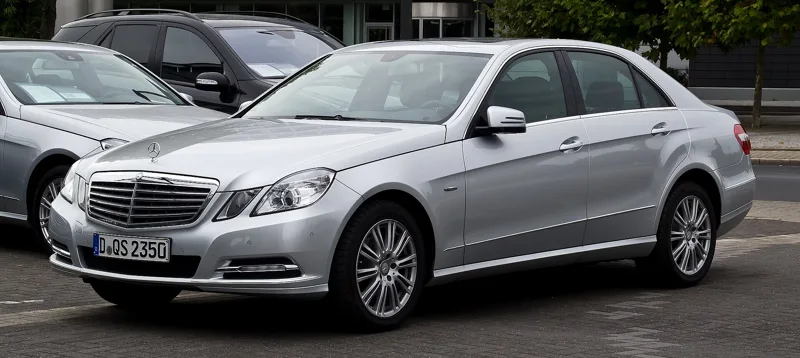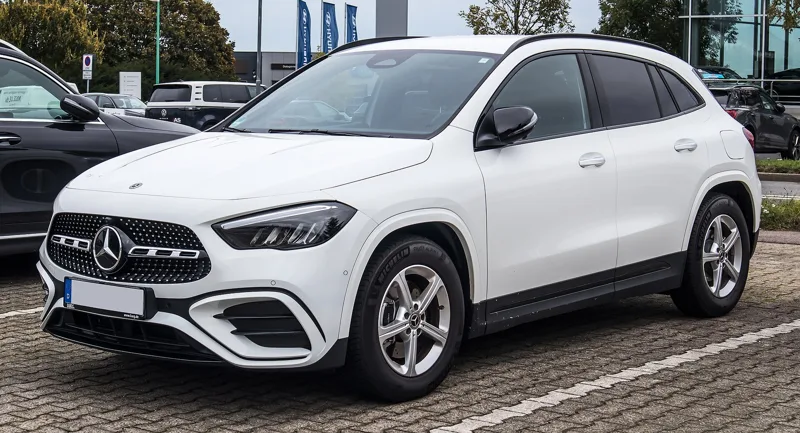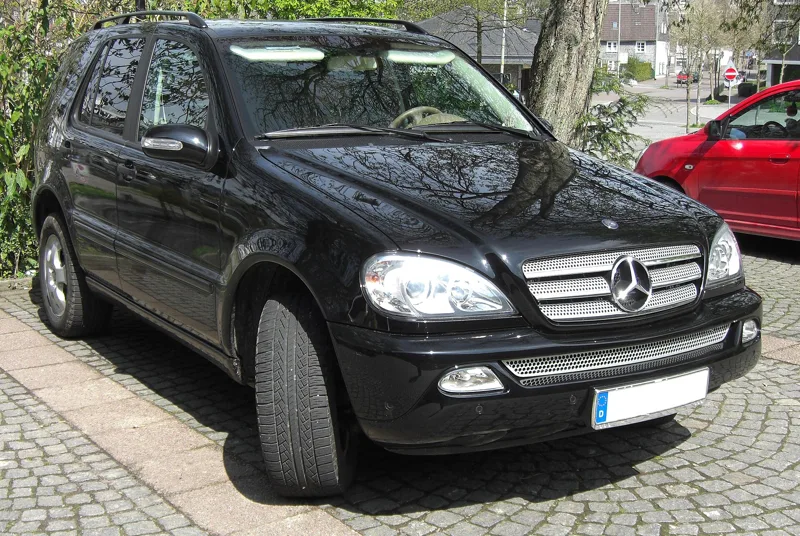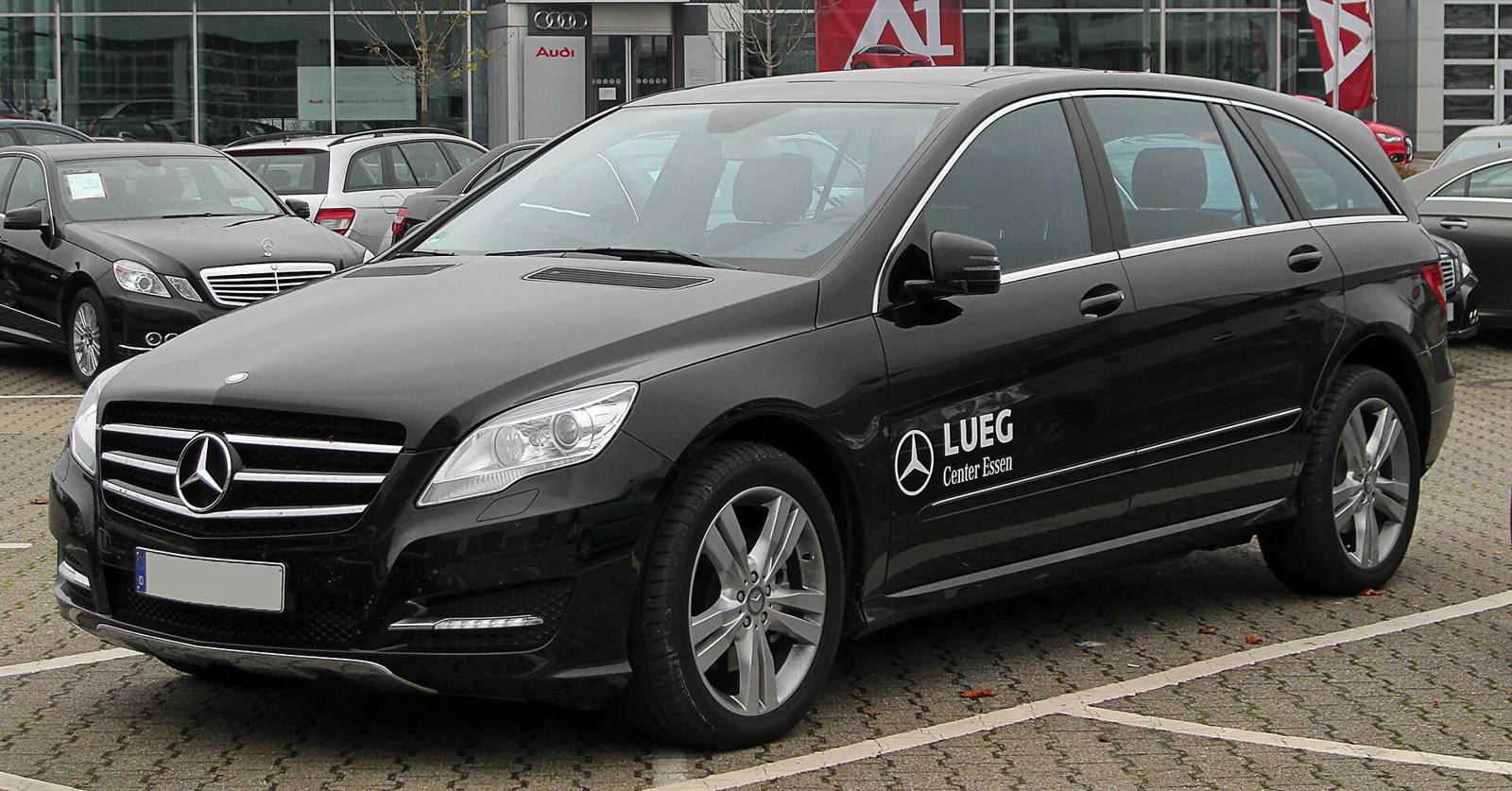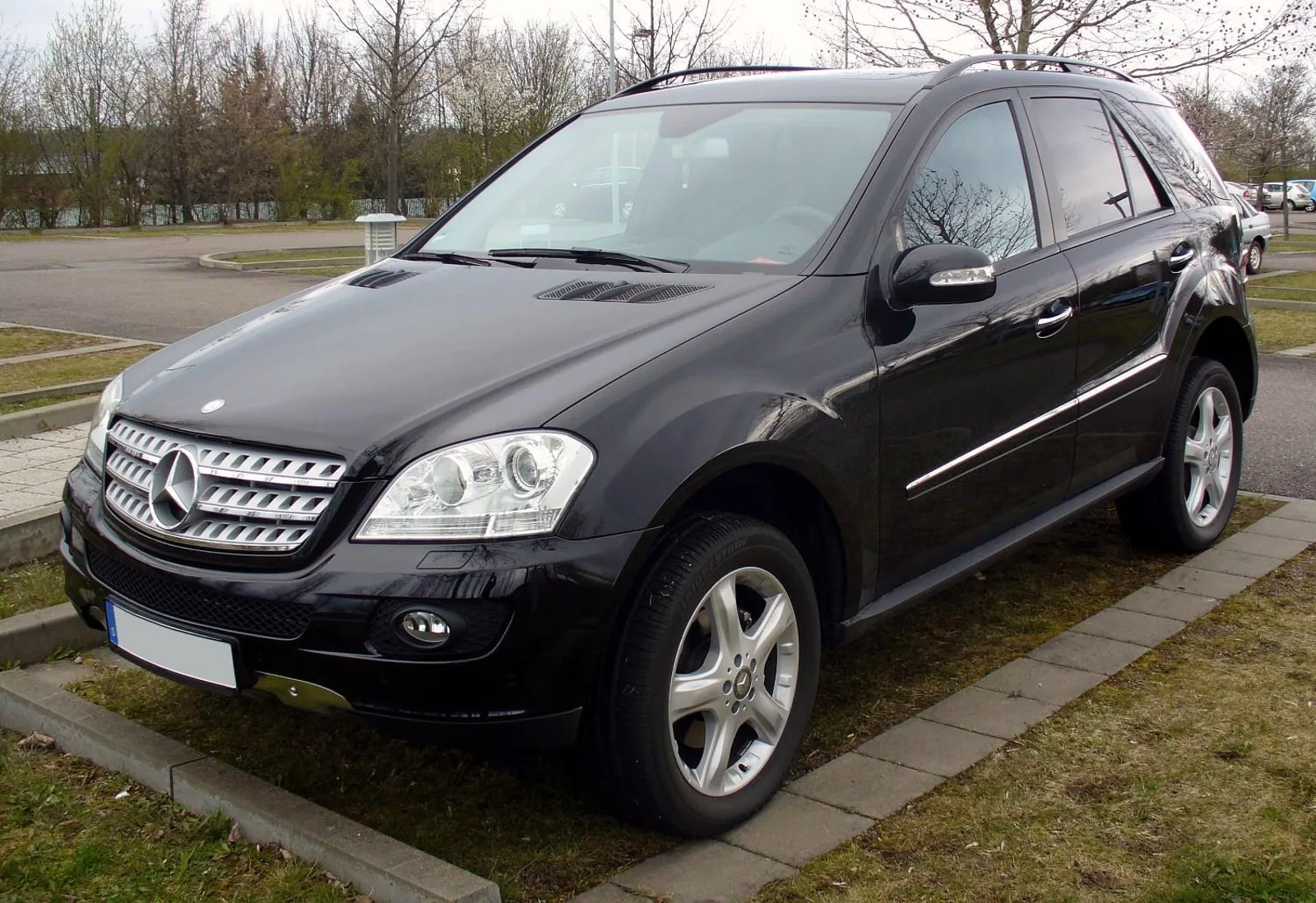
The second-generation M-Class from its 2005 debut to the 2008 facelift, the ML63 AMG, the hybrid ML 450 and the Edition 10 and Grand Edition specials.
The Mercedes-Benz W164 is the second-generation M-Class, launched in January 2005 and built until June 2011. It was longer, wider and more aerodynamic than its predecessor, with a 7G-Tronic automatic, permanent four-wheel drive and V6 and V8 engines. Variants included the ML63 AMG and a hybrid ML 450.
The Mercedes-Benz W164 succeeded the first M-Class, and it came from the German maker as an off-roader. Its first public showing came in January 2005 at the North American International Auto Show, and production ran from April 2005 until June 2011, when the W166 replaced it. The W164 grew in size and took on a more sporting, aerodynamic look.
How was the W164 designed?
Work on the successor to the W163 began in 1999, and the design project was finished by the end of 2001. The company's executive board approved the documents in 2002. Patent filings for the styling were made on 10 June 2003 in Germany and on 25 July in the US.
The design project was led by Steve Mattin under the strict direction of Peter Pfeiffer, and the documents passed through the board in 2002.
Prototype testing ran through 2003 and 2004 and was completed in early 2005, after about six years of development in total. DaimlerChrysler invested heavily in its plant at Tuscaloosa in Alabama, where more than 600 million dollars was earmarked for the W164 and R-Class assembly lines.
A bigger, slipperier M-Class that added AMG V8 power and a hybrid option before the W166 arrived.
What changed in the 2005 car?
Compared with the first generation, the W164 measured 71 mm more in width, 150 mm more in length, and sat 5 mm lower. Painstaking body work brought the drag coefficient down from 0.40 for the first generation to 0.34. The wheelbase grew by 95 mm to 2,915 mm (114.8 in).
Build quality improved with a fully galvanised body, extra organic coating in critical spots and large plastic panels on the underbody. The platform was shared with the new GL-Class, and unlike the W163 its components were more tightly integrated.
Which gearbox and drive systems did it have?
The W164 used a seven-speed automatic, 7G-Tronic, and the manual gearbox was dropped. The gear selector moved to the steering column, and optional adaptive front lighting, known as AFS, used bi-xenon headlamps. Height-adjustable air suspension was also available.
The permanent four-wheel drive, 4MATIC, carried over, and it was paired with 4-ETS electronic traction control. Outside the US, most markets could order an Off-Road Pro package that added rear and centre diff locks, low-range gearing and adjustable ground clearance.
The Off-Road Pro package also offered a compass, a manual mode for the automatic gearbox and five-stage adjustment of the AIRMATIC air suspension with adaptive damping.
What engines did the W164 offer at launch?
The petrol range was the ML350, with a 3.5-litre V6 producing 272 PS, and the ML500, with a 5.0-litre V8 producing 306 PS. A new 3.0-litre V6 diesel with Common Rail, piezoelectric injectors and direct injection debuted alongside the car.
Diesel models included the ML280 CDI at 190 PS and the ML320 CDI at 224 PS (165 kW; 221 hp), which produced 510 Nm (376 lb ft) at 1,600 rpm. The new petrol ML 350 generated 200 kW (272 PS; 268 hp) and 350 Nm (258 lb ft).
How fast was the top version?
The top ML500, with its five-litre 306 PS engine, reached 100 km/h from a standstill in 6.9 seconds. That was almost a second quicker than the engine of the previous generation.
A separate high-performance version, the ML63 AMG, followed at the 2006 North American show.
What was the ML63 AMG?
The ML63 AMG was presented at the 2006 North American International Auto Show. Under the bonnet sat a 6.3-litre M156 engine rated at 510 PS (380 kW), with 630 Nm (465 lb ft) of torque. Production was set up at Affalterbach in Germany.
The 6,208 cc (378.9 cu in) V8 worked with the upgraded seven-speed 7G-Tronic, which had its own control programme. Kerb weight rose to 2,310 kg (5,093 lb), while acceleration from 0 to 100 km/h fell to 5 seconds. The top speed reached 250 km/h (155 mph), limited electronically.
The Mercedes-AMG engineers reworked the suspension as well, which made the ML 63 AMG more pleasant to drive, more stable and more comfortable.
How did the 2008 facelift change the car?
The facelifted version was presented at the New York International Auto Show in March 2008, and dealers had it from autumn of that year. The front bumper and headlamps were revised, and the radiator grille was enlarged with chrome edging. The rear bumper gained integrated reflectors, and roof rails and larger exterior mirrors became standard.
Inside, the steering wheel was redesigned with four leather-wrapped spokes, and seats with four-way lumbar support could be ordered. PreSafe anticipatory protection and NeckPro head restraints came as standard on the M-Class from that point, while the door furniture was covered in artificial leather.
Which engine names changed in the facelift?
The diesel line was renamed. Three diesel names changed: the 280 became the 300, the 320 became the 350, and the 420 was relabelled as the 450. Every standard car kept four-wheel drive and the 7G-Tronic transmission.
The ML63 AMG received wider tyres, 295/40 R20 as standard and 295/35 R21 to order, while its engine stayed unchanged. The changes made the high-performance model look more imposing and aggressive.
What did BlueTEC bring to the range?
In 2008 and 2009 models using BlueTEC technology joined the diesel line-up. BlueTEC added urea injection to the diesel power units.
At the W164's debut the German range offered petrol and diesel units in both V6 and V8 configurations, including the new V6 diesel.
How did the ML 450 Hybrid work?
Mercedes-Benz showed the ML 450 Hybrid at the 2009 New York show, after announcing it on 8 April that year. It combined a conventional combustion engine with two electric motors built into the gearbox housing, each with a different job.
The first electric motor sits closer to the combustion engine and boosts performance. The second, placed at the gearbox output, handles pulling away on electric power alone and helps acceleration. Three planetary gear sets and four clutches, run by an electronic control unit, were fitted to manage the system.
The hybrid used nearly 50% less fuel than the ML 550 and produced 335 PS (250 kW; 330 hp) with 517 Nm (381 lb ft) of torque. It could travel on electric motors alone for 2.5 km (1.6 mi).
In the US Environmental Protection Agency's testing, the car managed 9.8 l/100 km (28.8 mpg-imp; 24.0 mpg-US) on the highway, against 11 l/100 km (25.7 mpg-imp; 21.4 mpg-US) in town.
What did the exterior packages add?
Body-coloured aspherical mirrors, fog lamps with matching rear fog lamps, and decorative trim on the lower bumpers were part of the exterior update, along with lighting for the surrounding area. Bumpers, trim strips and door handles were also finished in body colour.
A Sport package added AMG front and rear bumpers, chrome trim, special sill panels, synthetic suede and artificial leather upholstery, sport seats, the COMMAND system with an APS navigation module, five-spoke light alloy wheels and oval AMG-style exhaust pipes.
The AMG package brought front and rear spoilers in body colour, and a bolder nose with four large air intakes covered in black mesh. Its 19-inch five-spoke wheels measured 8.5 x 19 and were fitted with 255/50 R 19 tyres.
Large round fog lamps with chrome surrounds, and an optional active cornering light system, completed the front view.
How roomy was the interior?
The interior was redesigned with a large number of higher-quality materials. Passenger space grew: the front-to-rear seat distance grew 15 mm, with 35 mm more for knees and 32 mm more for elbows.
The rear seat backrests split 63:37 and folded down. A front armrest with a double box, rear seat ventilation and a rear armrest with a cup holder were fitted, and walnut wood trim was available to order. Cargo capacity reached 2,050 litres by the VDA method, which is 30 litres more than the predecessor.
What safety equipment did the M-Class carry?
Safety systems included adaptive two-stage airbags for driver and front passenger, front side and window airbags, and belt tensioners with force limiters on all seats. When the car was struck from behind, the optional NECK-PRO active head restraints offered additional protection for driver and passenger.
Electronic systems included ABS, Brake Assist and the Electronic Stability Program, whose sensors identify dangerous manoeuvres and can work together with PRE-SAFE. A 610-watt audio system was also available to order.
Standard equipment also covered electric window lifters, a combined air filter, a CD radio with a keypad, cruise control with speed adjustment, heated mirrors, a rain sensor, and central locking with an immobiliser.
How did the W164 score in crash tests?
In autumn 2005 the US regulator, the National Highway Traffic Safety Administration, gave the W164 five stars out of five in its side-impact and rollover tests.
The Insurance Institute for Highway Safety tested the W164 at the end of 2006, the first year it included SUVs in its programme, and the car earned the Top Safety Pick title in its class. Frontal, side and neck-injury assessments were all rated highest. Electronic stability also became a mandatory criterion for the award, and the W164 had it as standard.
The car also went through the Euro NCAP safety test in 2008.
Which special editions did Mercedes build?
Edition 10 ran from late 2007 to mid-2008 across five models, and it marked ten years of the M-Class. It had 20-inch silver wheels, darkened housings for the headlamps and fog lamps, bi-xenon headlamps, and two-tone black and beige full leather trim.
Orders for Edition 10 opened in autumn 2007. The Grand Edition followed from May 2010 until production stopped in June 2011, with LED daytime running lights, 19-inch Y-spoke wheels, an AMG-style radiator grille and poplar wood trim.
The Grand Edition's starting price was 42,100 euros, across a range that began with the ML 300 CDI 4MATIC BlueEFFICIENCY and ended with the ML 500 4MATIC.
How many were built, and how did production end?
The second-generation M-Class built about 250,000 units in its first two years. Work on the facelift followed in 2007, and the new design features were patented in Germany on 23 November 2007.
Production ended in 2011, and the Mercedes-Benz W166 took over. Between 2006 and 2011 the company produced more than 13 thousand ML63 AMG cars.
Key figures at a glance
| Feature | Detail |
|---|---|
| Debut | January 2005, North American International Auto Show |
| Production | April 2005 to June 2011 |
| Drag coefficient | 0.40 for the first generation, 0.34 for the W164 |
| Wheelbase | 2,915 mm (114.8 in) |
| ML350 petrol | 200 kW (272 PS; 268 hp), 350 Nm (258 lb ft) |
| ML320 CDI | 165 kW (224 PS; 221 hp), 510 Nm (376 lb ft) |
| ML63 AMG engine | 6,208 cc (378.9 cu in), 510 PS, 630 Nm (465 lb ft) |
| ML63 AMG kerb weight | 2,310 kg (5,093 lb) |
| ML 450 Hybrid output | 335 PS (250 kW; 330 hp), 517 Nm (381 lb ft) |
| Cargo capacity | 2,050 litres (VDA) |
| Grand Edition starting price | 42,100 euros |