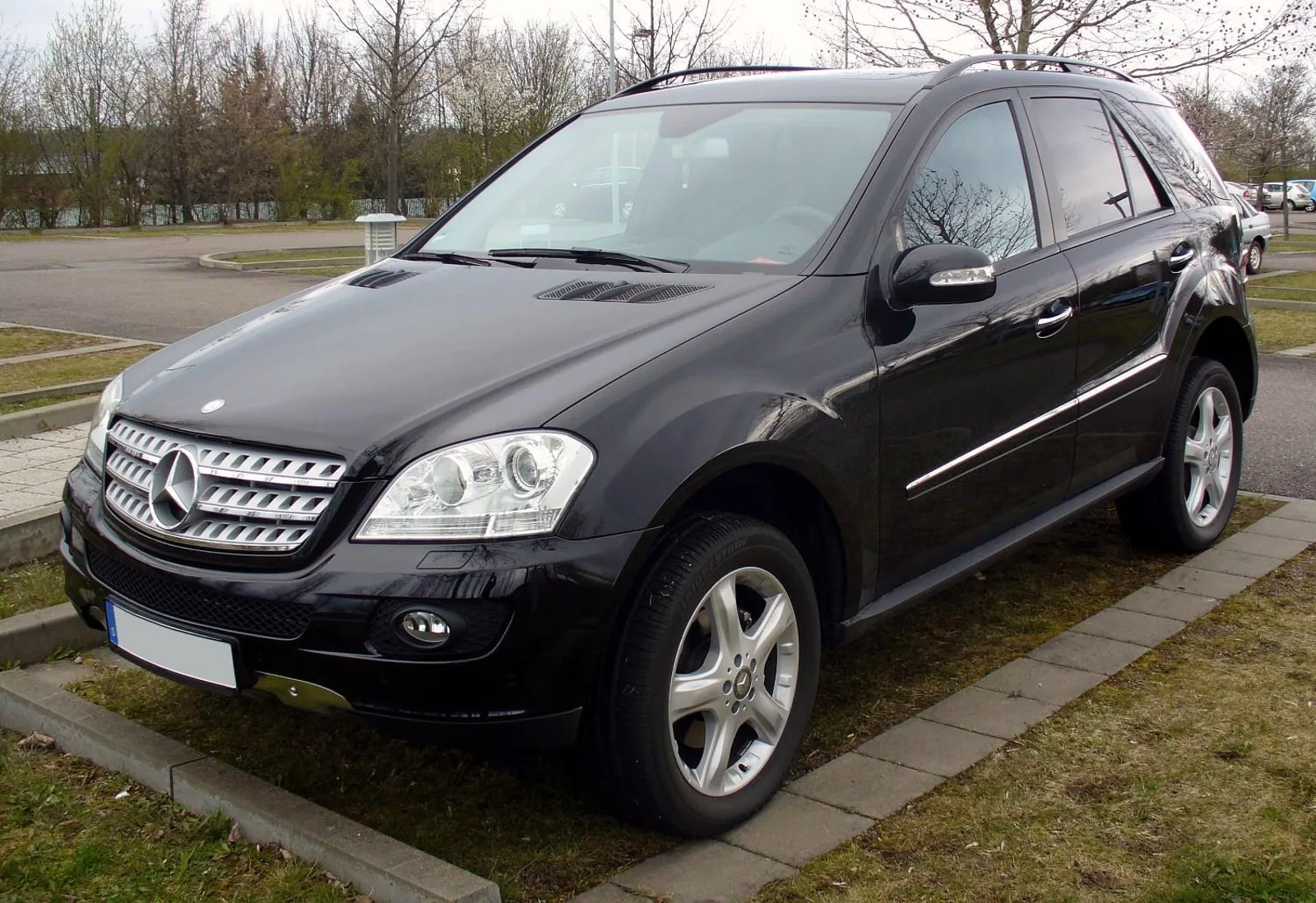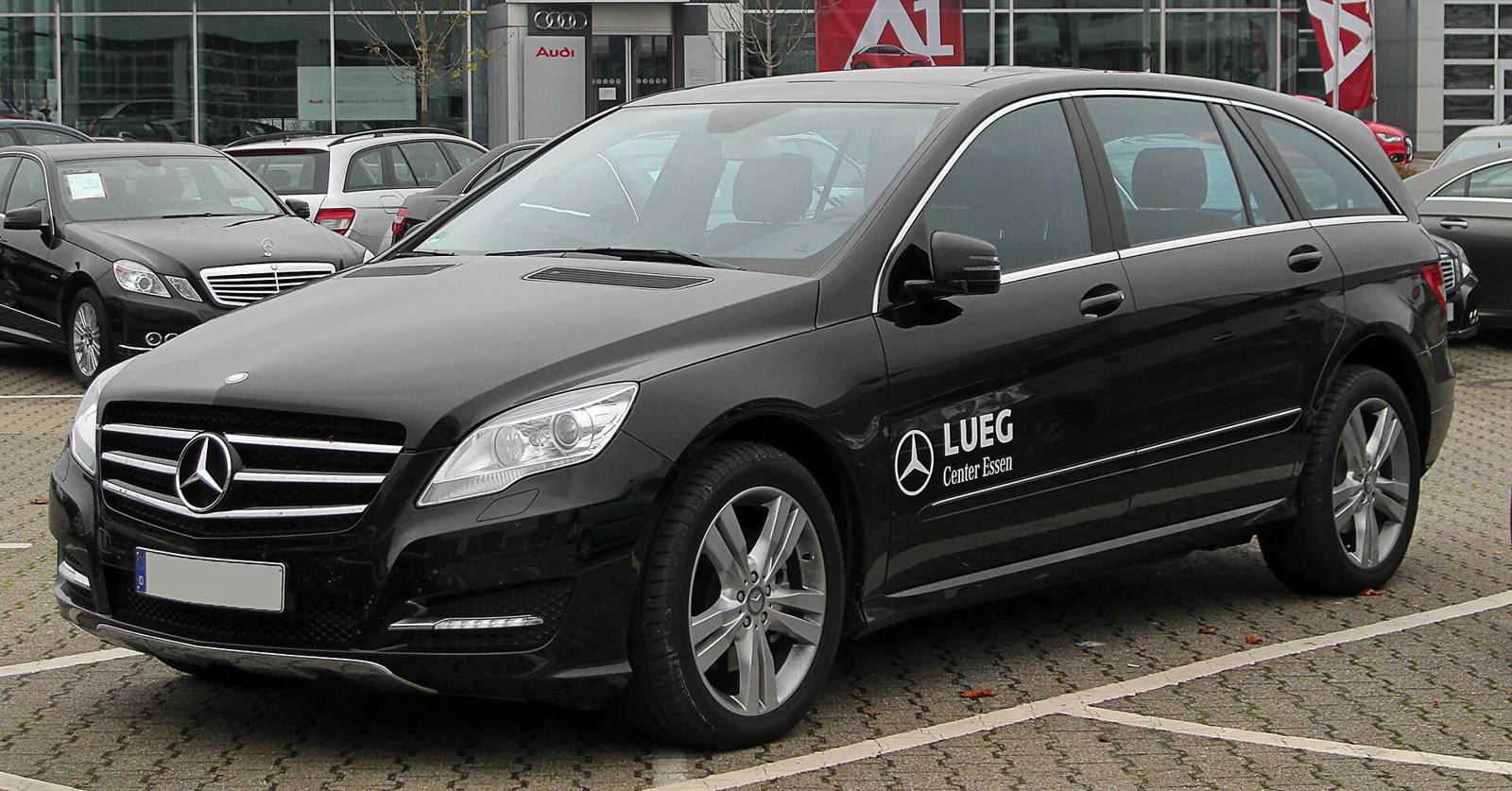
The first-generation R-Class minivan, from its 2002 concept and 2005 launch to the R63 AMG and the 2010 restyle.
The Mercedes-Benz W251 launched in 2005 as the first R-Class, a premium minivan built in Alabama for families, leisure and business use. Sales fell short of the company's plans, the car gained a 510 PS AMG flagship, and from 2015 production moved to the AM General plant in Indiana.
The Mercedes-Benz W251 was the first generation of the R-Class, a premium minivan that the German brand presented in June 2005. Built at Tuscaloosa in Alabama and aimed at buyers who wanted one car for leisure, family trips and business travel, it sold well below the maker's plans and was withdrawn from the United States in 2012.
The story runs from a 2002 concept, through a launch that won magazine awards, to a 2010 restyle that brought new lights and a sportier interior. Along the way the car gained an AMG flagship, a diesel with BlueTEC technology and a rear-wheel-drive version, before production moved to Indiana in 2015.
Where did the R-Class come from?
The R-Class began as a concept that Mercedes-Benz showed in January 2002 at the Detroit Auto Show. The Vision GST, short for Grand Sports Tourer, was presented as the answer for customers who wanted a stylish and technologically advanced car for family trips, sporting outings and work assignments alike.
The concept was fitted with a 5.5-litre V8 from the Mercedes-AMG division producing 360 PS (265 kW; 355 hp). Its drivetrain was an all-wheel-drive setup with the 4-ETS function, managed electronically, and it rode on AIRMATIC air suspension. The brakes were a new system, Sensotronic Brake Control, which used a high-pressure hydraulic pump.
The concept also had a large electrochromic glass roof that could be darkened at the press of a button. Inside, a three-dimensional display projected direction arrows, road maps and graphic elements, and the engineers integrated a long list of modern technologies into the car.
In September 2003 Mercedes-Benz released the first sketches of the production line. The concept had shown butterfly-type swing doors, but the production car would have conventional doors, and the darkening roof was not mentioned in the release. The production version was nevertheless known to have all-wheel drive, air suspension, a seven-speed 7G-Tronic gearbox and a preventive occupant safety system.
The new class was to be assembled in Alabama, where the M-Class was already built. A prototype called Vision GST 2 followed in January 2004 at the North American International Auto Show, and in September 2004 a new concept, the Vision R, appeared at the Paris Motor Show. By early 2005 it was clear that the production minivan would be sold as the R-Class.
Sales fell well short of the 50,000 cars a year that Mercedes-Benz had planned for the R-Class.
How did the R-Class launch in 2005?
A pre-series car of the first-generation R-Class appeared in 2005 at the Frankfurt and New York motor shows, and output and customer deliveries started that year. The technical base was borrowed from the M-Class, and the standard fuel tank held 80 litres.
The R-Class came in two body sizes. The long-wheelbase V251 measured 5,157 mm (203.0 in) overall with a 3,215 mm (126.6 in) wheelbase, while the short-wheelbase W251 measured 4,922 mm (193.8 in) with a 2,980 mm (117.3 in) wheelbase.
Readers of the German magazine Auto Zeitung picked the R-Class as the top German MPV soon after its premiere, and the car won the "Auto Trophy 2005" award. The series repeated the win in 2006.
The company also presented the Vision R 63 AMG at the Frankfurt Motor Show in September 2005, a more dynamic and sporting interpretation of the R-Class. Its new 6.2-litre AMG V8 developed 375 kW (510 PS; 503 hp) and a maximum torque of 630 Nm (465 lb ft).
What was the R63 AMG like to drive?
The production R63 AMG was shown in February 2006 at the North American International Auto Show. The rear-wheel-drive model used the M156 V8 of 6.2 litres, producing 510 PS and 630 Nm of torque, and it came with the 7-speed 7G-Tronic AMG SPEEDSHIFT automatic with three modes.
Paddle shifters were introduced for manual control of the transmission. From 2006 a permanent 4MATIC all-wheel-drive system was available on the AMG model in the European market, with a torque split of 40:60 between the front and rear axles.
The short-wheelbase R63 AMG reached 100 km/h from a standstill in 5 seconds, and the long-wheelbase version took 5.1 seconds. Its top speed was electronically limited to 250 km/h (155 mph).
The exterior set it apart from the standard car, with dark titanium-grey paintwork, matt grey titanium trim and distinctive AMG front and rear panels. The sporting seats had nappa leather upholstery with Alcantara inserts, and the cabin also had a special AMG instrument display and a RACETIMER lap-timing tool.
The car was sold only on special order. Because of low sales, however, it was taken out of production in 2007.
Specifications at a glance
| Version | Engine | Output | Detail |
|---|---|---|---|
| R63 AMG | 6.2-litre V8, M156 | 510 PS (375 kW; 503 hp), 630 Nm (465 lb ft) | 0 to 100 km/h in 5 seconds, short wheelbase |
| R500 4MATIC | Reworked powertrain after the 2007 update | 285 kW (388 PS; 383 hp) | Fuel consumption fell by 7% |
| R280 | 3-litre petrol V6 | 170 kW (231 PS; 228 hp) | 0 to 100 km/h in 9.6 seconds |
| R280 CDI 4MATIC | Diesel | 440 Nm of torque | 9.3 litres per 100 km average |
| R350 BlueTEC | Diesel with BlueTEC | 155 kW (211 PS; 208 hp) | Met the Euro 6 emission norms |
| 2011 V8 | 5.5-litre petrol | 388 PS (285 kW; 383 hp) | Offered in Europe for 2011 |
What did the 2007 update change?
In May 2007 Mercedes-Benz announced an update to the first-generation range. A rear-wheel-drive version joined the all-wheel-drive model, with the R280 CDI, R280 and R350, and more flexible seat layouts with five, six or seven seats were offered.
The model range also gained a three-litre petrol V6 with 231 PS, the R280, and a diesel version, the R280 CDI. Models with the short wheelbase had usable space of up to 939 litres when loaded to the roof, while long-wheelbase cars could carry up to 1,118 litres.
Both versions had storage compartments of 51 and 52 litres. The outer rear seats gained ISOFIX anchor points for child seats, and extra side airbags were fitted to improve passive safety.
The update also changed the lights. Flashing brake lights appeared, and company research showed that drivers reacted on average 0.2 seconds sooner to a red flashing light ahead than to conventional stop lamps.
How fuel-efficient was the R-Class?
The R280 CDI was the most fuel-efficient model, with a combined consumption of 8.9 litres per 100 km under the NEDC cycle. The R280 petrol V6 averaged 10.9 litres per 100 km on the same cycle and accelerated from 0 to 100 km/h in 9.6 seconds.
The R500 4MATIC was reworked and produced 285 kW (388 PS; 383 hp), while its fuel consumption fell by 7%, according to the company's representatives. The R500 also took the 19-inch wheels that the top version was given.
BlueTEC exhaust cleaning arrived for the first time in 2008, on the R320 BlueTEC that was built for the American market to the strict Bin-5 standard and the Euro 6 norms. The R350 BlueTEC, at 155 kW (211 PS; 208 hp), already met the Euro 6 standard planned to become mandatory from 2014.
Did the R-Class pass its safety tests?
Yes, with a few caveats. In 2010 the W251 earned a "good" crash-test score from the US Insurance Institute for Highway Safety (IIHS). Before that, the car had been rated "acceptable" because side-impact tests had loaded the dummy's chest heavily.
Changes to the seat belts and doors made after September 2008 earned the W251 the IIHS Top Safety Pick award. The Thatcham's New Car Whiplash Ratings organisation tested the car by its own methodology and also rated it good.
As standard the cars had ABS, electronic stability control, seat belts, adaptive front airbags and window and side airbags. To order, the PRE-SAFE system pulled the belts tight, shut the windows and sunroof, and put the front seats in the best position if a crash looked likely.
How big was the R-Class inside?
The R-Class was built to work in many settings, and it offered more cabin room than comparable luxury saloons. Passengers had about 64% of the car's overall length to use.
The distance between the first and second rows was 920 mm (36.2 in), and between the second and third rows 840 mm (33.1 in). The second row could be adjusted to create up to 990 mm (39.0 in) of space, and the maximum distance between the second and third rows reached 920 mm (36.2 in), depending on seat position.
The cabin was 1,530 mm (60.2 in) wide at shoulder height, and the distance from the seat cushion to the roof was 1,027 mm (40.4 in). With the four rear seats folded, the usable load space rose to a maximum of 2,057 litres, based on the measurements used by the German automotive industry association VDA.
An optional centre console between the rear seats offered storage and cup holders, and a DVD or CD player could be fitted for the rear rows, with headphone sockets and colour displays built into the seats. Options also included Thermotronic multi-zone climate control, DISTRONIC adaptive cruise control and the COMAND multimedia system.
Seating was 4+2 as standard, and from April 2007 a 5+2 layout became available with five seats in a row and two as an option. The 2010 update made 2+3+2 the only available seating layout.
Why did the R-Class sell poorly?
Sales did not match the manufacturer's expectations. They were well below the planned 50,000 cars a year, and in 2007 only 13,031 units were sold worldwide.
In 2012 the top R550 model was dropped, as its volumes were too low to justify it.
By mid-2012 the R-Class had left the US market, and by mid-October it had gone from all other markets. Demand in China kept the long-wheelbase version in production, sold as the R 320 4MATIC and R 400 4MATIC.
What changed in the 2010 restyle?
The updated model was shown at the Geneva show in spring 2010, with a model year of 2011. It received a new front end styled to match the current Mercedes-Benz range, with new headlamps that were no longer oval, a more vertical radiator grille and a less angular bonnet.
The lower panel was revised and borrowed from the E-Class and GL-Class. The rear lights became LED, the rear bumper was changed, and the interior changed only slightly, with new colour combinations including almond beige with mocha brown.
Buyers could also order a sportier AMG-style cabin, fitted with special seats, a steering wheel with paddle shifters, extra lighting and stainless-steel pedals.
The standard gearbox for all versions was the 7-speed 7G-Tronic automatic, and the Blind Spot Assist system and NECK-PRO active head restraints became available as extra safety equipment.
For the 2011 model year three petrol engines and two diesel engines became available in Europe, including a 5.5-litre V8 with 388 PS. In 2010 AutoScout24, the largest online car marketplace in Europe, listed about 1.8 million vehicles, and it named the R-Class the most popular minivan in the category.