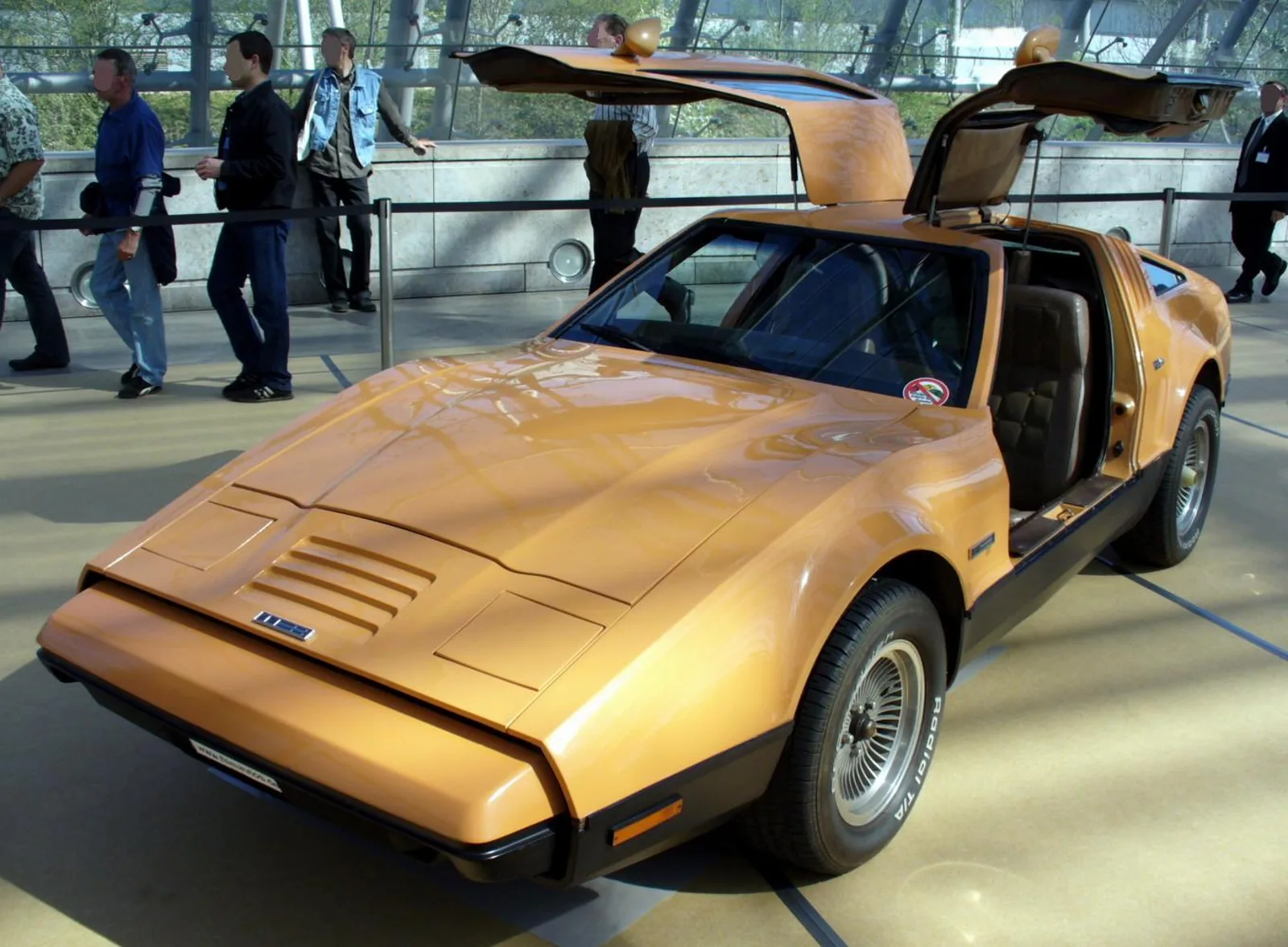
A two-seat sports car with gull-wing doors and acrylic-over-fibreglass bodywork, built in Canada from 1974 until early 1976 with public money.
Malcolm Bricklin's SV-1 ran as a two-seat gull-wing sports car from 1974 until early 1976. It had acrylic-over-fibreglass bodywork, was assembled in New Brunswick, Canada, and ended with just under 3,000 cars built.
The Bricklin SV-1 was a two-seat sports car built by American entrepreneur Malcolm Bricklin from 1974 until early 1976. It was known for its gull-wing doors and for body panels made from coloured acrylic resin bonded to fibreglass, and it was assembled in Saint John, New Brunswick, Canada. The car has become a cautionary tale about public money, weak quality control and an ambitious design.
Where was the SV-1 built and who paid for it?
The Bricklin plant was in the Grandview Industrial Park in Saint John, New Brunswick, while a separate facility in Minto, New Brunswick, produced the bodywork. The project had the support of provincial premier Richard Hatfield, and the provincial government provided $4.5 million in financing.
The government believed the money would cover the cost of starting production. In practice it went largely on engineering and development, along with salaries and operations for the company, which was headquartered in Phoenix.
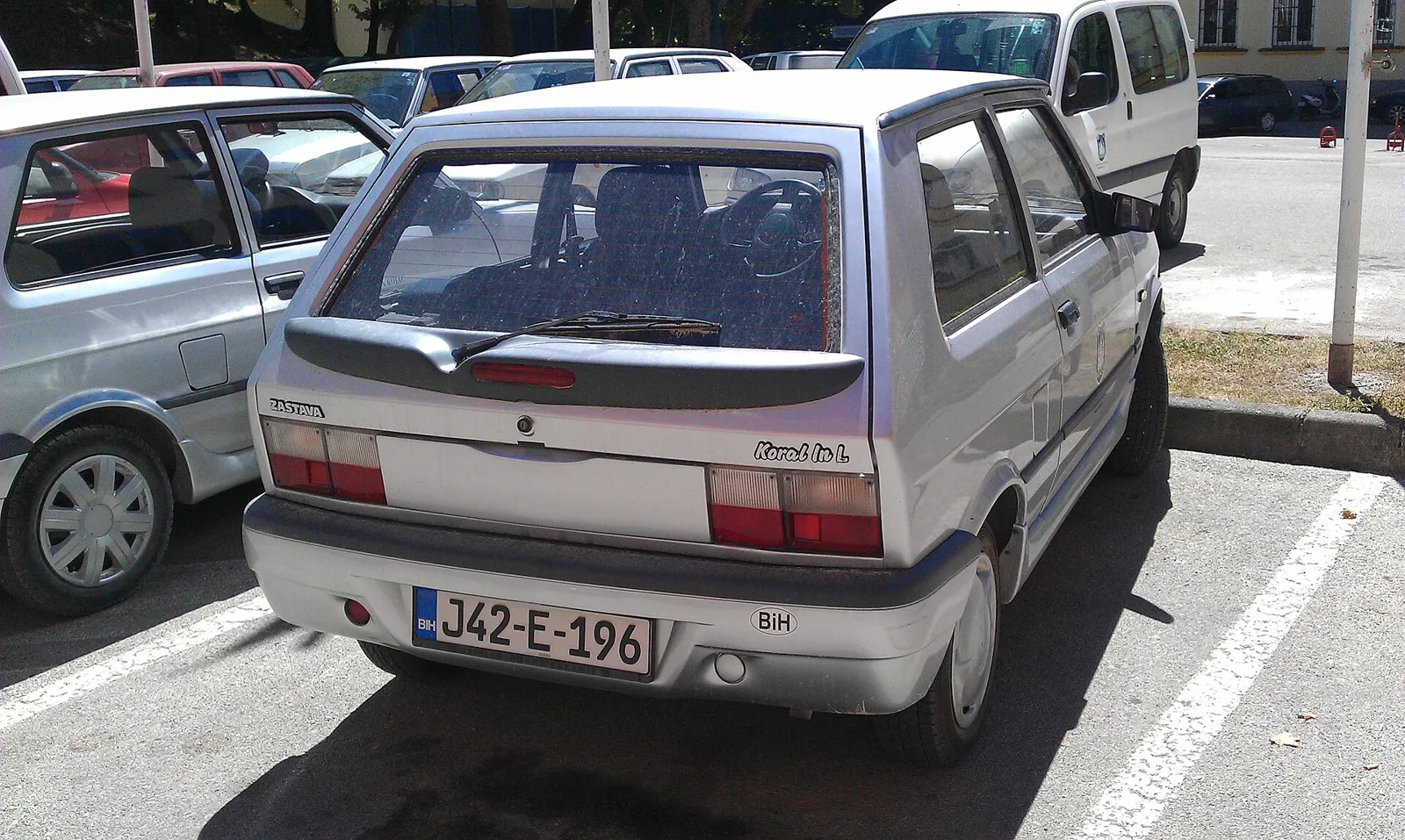
Bricklin had already gained a reputation as a businessman. He was the first to import the Subaru brand into the United States, in 1968, and he later brought Zastava cars to North America as the Yugo.
A gull-wing sports car whose body panels failed and whose price doubled in two years.
How did the SV-1 begin?
Bricklin wanted a small, affordable sports car with gull-wing doors, powered by a four-cylinder Opel engine. He first gave the proof-of-concept design to Bruce Meyers, but responsibility soon passed to Marshall Hobart. Dick Dean built the prototype, which was complete by December 1972 and became known as the Grey Ghost.
The Grey Ghost ended up with a six-cylinder Chrysler Slant-6 rather than the planned four. Its rear suspension came from a Datsun 510, its brakes drew parts from Opel, Datsun and Toyota, and its tilting steering wheel came from a Chevrolet.
In 1972 the company teamed up with Herb Grasse Design and AVC Engineering, which reworked the car's engineering. AVC helped build three prototypes, and its engineer Tom Monroe later became Bricklin's chief engineer.
Who designed the production SV-1?
Herb Grasse, a graduate of the ArtCenter College of Design, drew the production car. He had earlier worked for both Chrysler and Ford, and he had helped George Barris turn the 1955 Lincoln Futura show car into the television Batmobile.
Grasse is said to have used the taillamps from his own DeTomaso Pantera on the Bricklin. The Carello units were also used on Maserati and Lamborghini cars, and they first appeared on the Alfa Romeo 2000 Berlina.
The first of the original prototypes, the Red Car, is said by some references to have had a Chrysler slant-six, but pictures show it with an Argentine-sourced inline six. Every later prototype had a V8, and as many as eight prototypes were built in all.
Why did the body panels cause trouble?
The bodywork was an acrylic and fibreglass composite, with the colour impregnated in the acrylic. That was meant to cut costs by removing the need for a separate paint stage, and buyers could choose from five Safety colours.
The composite was troublesome from the start. The first acrylic resin blistered at temperatures as low as 150 degrees Fahrenheit (65.6 degrees Celsius). A tougher substitute was thinner, which meant an extra fibreglass layer and more weight, so Bricklin went back to the original resin.
Ultraviolet light could also pass through the acrylic and degrade the polyester bonding it to the fibreglass. The company brought in polymer specialist Archie Hamielec from McMaster University to address the adhesion problem.
Losses were severe. Company sources said as much as 60% of the acrylic used in the first months was lost to failures during pressing and bonding, and another 10% was damaged in transit from Minto to Saint John. The only integrity test was a seven pound hammer blow suggested by Malcolm's father, Albert Bricklin, and a part that did not delaminate passed. Even after a bonding method was found, losses from poor bonding in 1975 were still 15% to 25% of parts.
How did the SV-1 perform and how was it reviewed?
In a May 1975 test, Car and Driver found the Bricklin's performance comparable to the Corvette, which was then the only other V8-powered two-seat plastic-bodied sports car in North America. The company had also touted its integrated roll-over structure and energy-absorbing bumpers as safety features.
Automotive critic Dan Neil took a harsher view. He found the car underwhelming because of its weight and placed it on his list of 50 Worst Cars of All Time, writing that this thing could not outrun the Rose Bowl Parade.
How did the gull-wing doors work?
The doors weighed 90 lb (40.8 kg) each and were raised by hydraulic cylinders controlled by switches inside the car. They took up to 12 seconds to open or close, and the system was sensitive to the battery condition and prone to breakdown.
Opening one door while closing the other could destroy the pump, because the single hydraulic pump has no interlock between the doors. The chassis was a steel perimeter frame with an integral roll cage.
What engines did the SV-1 use?
Cars built in 1974 used a 360 cu in (5.9 L) AMC V8 with a single four-barrel carburettor, producing 220 hp (164.1 kW) and 427.1 Nm (315 ft lb) of torque. Transmission options were a 3-speed Torque Command automatic or a BorgWarner T-10 four-speed manual, and 137 of the 772 cars built in 1974 had the manual.
Cars built in 1975 mounted a 351 cu in (5.8 L) Ford Windsor V8, which required a redesigned subframe. With a two-barrel carburettor it reached 175 hp (130.5 kW), with 387.8 Nm (286 ft lb) of torque, and Ford had no manual transmission certified for that engine, leaving only the FMX three-speed automatic.
The SV-1 had no cigarette lighters, no ashtrays and no spare tyre provision, and its front suspension used A-arms and coil springs from a range of AMC models. The rear used a Hotchkiss leaf-spring live axle.
Was the SV-1 used as a police car?
In November 1974 Bricklin announced five SV-1s for the Scottsdale, Arizona police department, but only three 1974 cars were delivered. The city leased them for $1 each, and they wore the same paint scheme as the regular cruisers with a single roof beacon.
The cars were mostly used for public relations. Officers found them hard to climb in and out of, and the Arizona heat caused battery problems that stopped the electric doors from opening.
What was the Chairman?
In 1975 development began on a more exclusive model called the Chairman, to help raise capital. It was to have a larger engine than the standard SV-1, a black interior and a black body with gold stripes, gold-coloured wheels and a gold-plated toolkit.
Buyers would be flown to the plant to watch their car being built and receive a gold jumpsuit with it. Two existing SV-1s were used to prototype the car, and work moved from Arizona to Livonia by July 1975. The Chairman never reached production.
How did the SV-1 come to an end?
Reasons given for the failure included quality control problems that never went away, nepotism, supplier shortages, worker absenteeism, and price rises that more than doubled the car's cost in two years. Production ended with just under 3,000 cars built.
Consolidated Motors acquired the defunct company's inventory, completed some partly assembled cars and built a small number from bare chassis. These were sold as 1976 models, which had minor body changes. An estimated 1,700 Bricklins were still on the road in 2012.
Where did the Bricklin's reputation go afterwards?
Canada issued the Bricklin stamp as part of a series commemorating historic land vehicles on June 8, 1996, with a face value of 45 cents. In June 2003 the Canadian mint issued a $20 sterling silver coin with selective gold plating.
The Bricklin Story, a 30-minute promotional film from 1974, aired on CBC and was roundly panned. Later productions included the 2006 dramatised film La Legende Bricklin, which used three Bricklins once owned by the Irving family, and a 2010 musical, The Bricklin: An Automotive Fantasy.
What are the SV-1 specifications?
| Specification | Detail |
|---|---|
| Production | 1974 to early 1976 |
| Body | Two-door, two-seat hatchback with gull-wing doors |
| Assembly | Saint John, New Brunswick, Canada |
| 1974 engine | 360 cu in (5.9 L) AMC V8, 220 hp (164.1 kW) |
| 1974 torque | 427.1 Nm (315 ft lb) |
| 1975 engine | 351 cu in (5.8 L) Ford Windsor V8, 175 hp (130.5 kW) |
| 1975 torque | 387.8 Nm (286 ft lb) |
| Door weight | 40.8 kg (90 lb) each |
| Front brakes | 279 mm (11 in) power-assisted discs |
| Rear brakes | 254 mm (10 in) drums |
| Total built | Just under 3,000 |