From the yellow teapot turbo of 1977 to Alonso's 2005 and 2006 titles, the Enstone team and an engine programme that ended after 2025.
Renault was in Formula One from 1977 to 2025 as a team owner and engine maker. It introduced the turbo engine, won titles with Williams and Benetton engines and Alonso won Enstone championships in 2005 and 2006 before the works engine programme closed after 2025.
Renault was a French car maker that was part of Formula One as a team owner and engine maker from 1977 to 2025. It pioneered the turbo engine in the sport, won titles as an engine supplier and as a team, and then closed its works engine programme at the end of 2025. Its story is one of repeated returns.
What is Renault's Formula One record?
Renault entered Formula One as a constructor in 1977, introducing the turbo engine with its EF1. It returned in 1989 as an engine manufacturer and won five drivers' and six constructors' titles between 1992 and 1997 with Williams and Benetton. As an engine maker it has 12 constructors' and 11 drivers' championships and more than 160 wins.
A turbo pioneer that won titles as an engine maker and a team, then closed its works engine programme after 2025.
How did Renault's turbo era begin?
Renault Sport, the company's motorsport arm, first appeared with Jean-Pierre Jabouille driving the sole car in the final five races of 1977. The RS01 used a Renault-Gordini V6 1.5 L turbocharged engine, the first regularly used turbo engine in the sport's history. Its early unreliability earned it the nickname Yellow Teapot.
The team's first points came in 1978, when the car finished fourth at Watkins Glen. Later that year Renault gave its first finish at Monaco, when Jabouille came tenth, four laps down on the winner.
When did Renault first win a Grand Prix?
Renault's first win came at home in 1979. Jabouille took pole at Dijon for the French Grand Prix and won, the first driver in a turbocharged car to do so, while Rene Arnoux finished second. The result legitimised the team in a classic race.
Arnoux finished second at Silverstone in the next race and repeated that at Watkins Glen, which showed the result was not a fluke. Renault was becoming a frontrunner.
What did Prost and Arnoux achieve in the early 1980s?
Arnoux won in Brazil and South Africa in 1980, both high-altitude circuits where the Renaults were dominant. Jabouille won in Austria that year, but a heavy crash at the Canadian Grand Prix ended his career as a Grand Prix driver.
Alain Prost joined for 1981. Over three years the Renaults finished third in the constructors' standings twice and second once, and Prost won nine races with the team. In 1983 Renault and Prost came close to the drivers' title, but Nelson Piquet of Brabham-BMW beat them at the last race in South Africa.
Why did the Renault works team leave in 1985?
Prost was dropped two days after the 1983 season, following public comments about the team's lack of development of the RE40. He joined McLaren, and the team turned to Patrick Tambay and Derek Warwick. Tambay gave the team its last pole position at the 1984 French Grand Prix at Dijon.
Major financial problems emerged at Renault in 1985. CEO Georges Besse cut the team back to an engine supplier for 1986 and then took it out of Formula One at the end of that year.
How did Renault return as an engine supplier in 1989?
Renault returned in 1989 when turbo engines were banned, in partnership with Williams. The Viry factory produced the RS1, a 3.5 V10 with pneumatic valves. The Williams-Renault combination won its first race at the wet 1989 Canadian Grand Prix with Thierry Boutsen.
By 1992 Williams had active suspension and better engines, and Nigel Mansell won the drivers' title. The championship was won again by Williams in 1993, when Alain Prost took the drivers' title after winning seven of the 16 rounds.
How did Renault's engine titles unfold in the 1990s?
In 1994 Ayrton Senna was killed at the San Marino Grand Prix, which left Damon Hill as team leader. Hill came within one point of Michael Schumacher before the final race in Adelaide, where the two collided, and Williams kept the constructors' title.
In 1995 Renault adapted the RS7 for the three-litre rules, and Benetton, using Renault engines, won the constructors' title by 29 points with Schumacher winning the drivers' title by 33 points. Williams won both titles in 1996 and 1997, and Renault left works Formula One at the end of 1997.
What were the key phases of Renault's Formula One story?
| Period | Role | Headline result |
|---|---|---|
| 1977 to 1985 | Works team and turbo engine | First turbo win at the 1979 French Grand Prix; team withdrawn at the end of 1985 |
| 1989 to 1997 | Engine supplier to Williams and Benetton | Five drivers' and six constructors' titles between 1992 and 1997 |
| 2002 to 2006 | Renault F1 works team at Enstone | Alonso wins the drivers' and constructors' titles in 2005 and 2006 |
| 2007 to 2009 | Renault F1 Team | Alonso's 2008 Singapore win; race-fixing charges in 2009 |
| 2011 to 2013 | Red Bull engines | Red Bull won four drivers' and constructors' titles with Renault engines |
| 2016 to 2020 | Renault Sport F1 Team | Fifth in 2019 and 2020; Alpine rebrand for 2021 |
| 2014 to 2025 | V6 turbo-hybrid engine supplier | Works engine programme ended after 2025 |
How did Red Bull use Renault engines?
Red Bull used Renault engines from 2007 under an agreement signed in September 2006. The partnership delivered the team's first victory at the 2009 Chinese Grand Prix, and Sebastian Vettel and Mark Webber took five more wins that year, lifting Red Bull to second in the constructors' standings.
In 2010 Vettel and Red Bull won both championships, the ninth title for a Renault engine. The team repeated the double in 2011 with the RB7, which claimed 18 pole positions, and again in 2012 despite reliability problems linked to the RS27 alternator. The 2013 Indian Grand Prix brought a fourth consecutive title, and the team closed the year with nine straight victories.
How did Renault return to the Enstone team?
In 2000 the Renault-Nissan Alliance bought Benetton Formula for $120 million on 16 March 2000, to return to the sport. The team had started in 1981 as Toleman Motorsport in Witney, and it moved to Enstone in 1992 or 1993. The Renault name came to the team in 2002.
In 2002 Benetton was rebranded as Renault F1, with Jarno Trulli and Jenson Button as drivers. Button was dropped in 2003, and Fernando Alonso replaced him. Alonso won the 2003 Hungarian Grand Prix, the first Renault win since the 1983 Austrian Grand Prix.
How did Renault win back-to-back titles in 2005 and 2006?
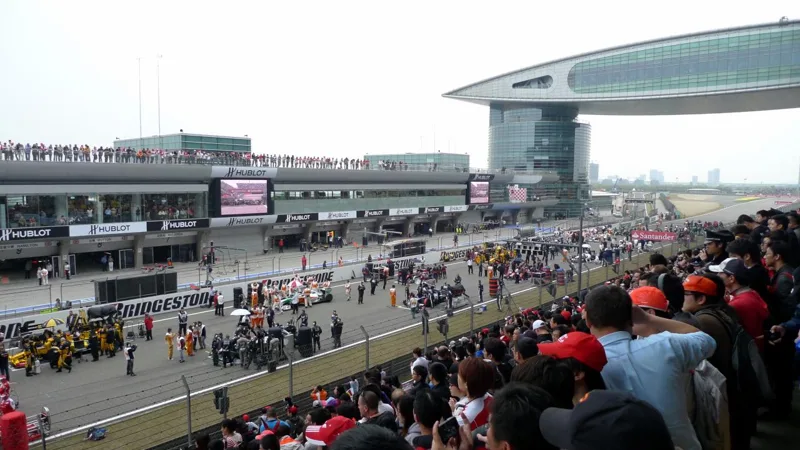
Alonso won the drivers' title in 2005, the youngest driver ever to win it at that point. Renault then secured the constructors' title after a win in China, which broke Ferrari's six-year stranglehold on that championship. It was the first time Renault had won the title as a manufacturer.
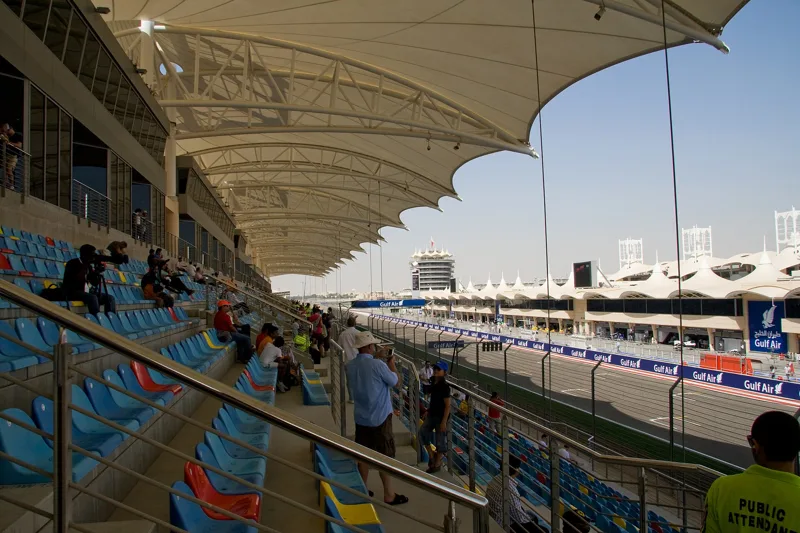
In 2006 Alonso won the opening Bahrain Grand Prix and then took wins at his home Grand Prix in Spain and at Monaco. The team's Brazilian points secured the 2006 constructors' title. Renault had also worked to develop the mass damper system, which the FIA banned that summer.
Why did the team decline in 2007 and 2009?
The 2007 car, the R27, struggled, and the team scored just one podium all season, from Heikki Kovalainen in second at the Japanese Grand Prix. It finished third in the constructors' standings on 51 points. On 8 November 2007 the FIA charged Renault with having McLaren technical information, and it found the team in breach of article 151c but did not penalise it.
Alonso returned in 2008 and won the Singapore Grand Prix after his teammate Nelson Piquet Jr. crashed, which was later revealed as deliberate. The 2009 season produced race-fixing charges, and Renault was banned from Formula One, though the ban was suspended for two years. Flavio Briatore was banned from FIA events for life, and Pat Symonds received a five-year ban.
How did the team's sale affect Renault's Enstone era?
In 2010 Renault sold a majority stake to Genii Capital, a Luxembourg investment company, but kept 25% and continued as an engine supplier. Robert Kubica was signed as Alonso's replacement, and Vitaly Petrov was signed as his teammate, becoming Russia's first Formula One driver.
Kubica took his first podium with the team at the 2010 Australian Grand Prix, and he finished third in Monaco. Petrov scored his first points in China and recorded a fifth in Hungary. The team's 2011 season began with the Lotus Renault GP name, and the Lotus Cars deal left Renault as an engine supplier only.
What happened to the second Enstone era?
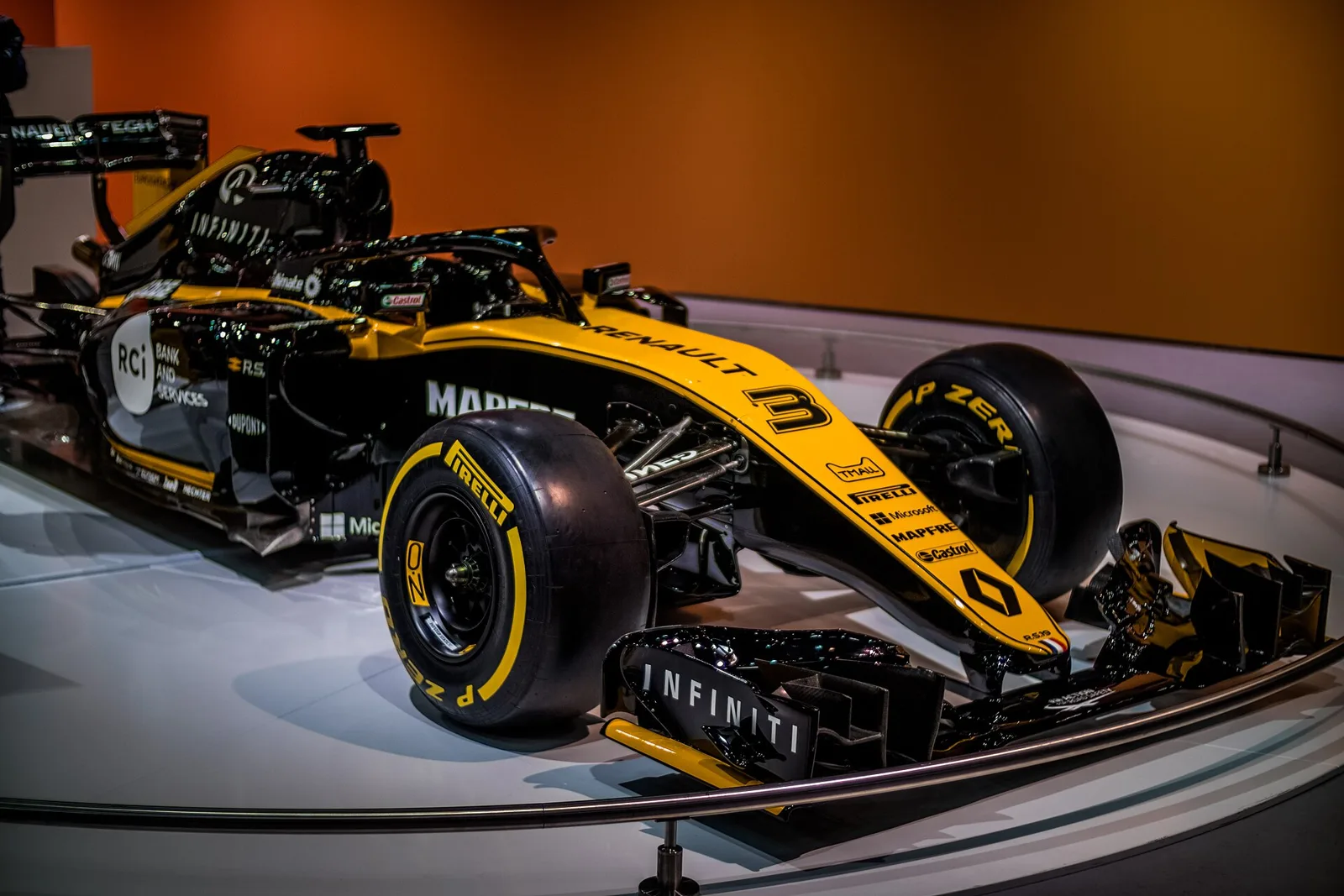
Renault bought the Lotus F1 Team on 3 December 2015, and the team raced as Renault Sport Formula One Team in 2016. The 2016 team finished ninth with 8 points, and Frederic Vasseur left after disagreements with team personnel in January 2017.
The team improved, finishing sixth in 2017 with 57 points and fourth in 2018 with 122 points. In 2019 it finished fifth, and in 2020 Ricciardo finished third at the Eifel Grand Prix while Ocon took second at the Sakhir Grand Prix. The team finished fifth with 181 points, and Renault was rebranded Alpine for 2021.
What went wrong with the 2014 V6 engine?
Renault's new 1.6-litre V6 turbo, the Energy F1-2014, showed turbo and energy recovery problems in early tests at Jerez. Software upgrades were introduced before the Bahrain pre-season test, but the unit was widely criticised for poor reliability and a lack of top speed.
Red Bull's Christian Horner called the performance unacceptable after a poor showing at the Austrian race. In 2015 Red Bull ended its 2016 contract, alleging a lack of performance, before renegotiating, and the 2016 power units ran under the TAG Heuer badge.
Why did Renault end its engine programme after 2025?
Renault struggled with its V6 turbo-hybrid engines from the 2014 start of the era, with early reliability problems and poor top speed. Red Bull ended its contract for 2016 with Renault, although the two later renegotiated, and McLaren moved to Renault customer engines from 2018 before switching to Mercedes for 2021.
On 29 September 2024 Renault announced it would end its works engine programme after 2025. Renault's chief executive, Luca de Meo, cited financial reasons, saying it would be cheaper to buy a power unit than to keep developing one. Alpine then said it would use Mercedes engines and gearboxes from 2026.