A 6.213 km public road that doubles as a racing circuit, climbs a 174 m mountain at grades of up to 1:6.13 and has hosted Australia's great touring car endurance race since 1963.
Set on a mountain outside the town of Bathurst, the 6.213 km circuit climbs and drops 174 m and is a public road on most days. It hosts the Bathurst 1000 each October and the Bathurst 12 Hour each February.
Mount Panorama Circuit is a motor racing track in Bathurst, New South Wales, built on a mountain that the Wiradjuri people call Wahluu. It is a 6.213 km (3.861 mi) street circuit that doubles as a public road for most of the year, and it is best known as the home of the Bathurst 1000 each October. Its steep grades and blind crests have made it one of the most demanding circuits in Australia.
How did racing begin on the mountain?
Before European settlement the area was home to the Wiradjuri people, who called the mountain Wahluu, meaning to watch over. It was also an initiation site for young men, and the mountain's story is still part of its name today.
Racing in the area dates back to 1906, when public roads around Bathurst were used for events. Circuits of 33.0 km (20.5 mi), 24.9 km (15.5 mi), 100.6 km (62.5 mi) and 11 km (7 mi) followed in turn between 1906 and 1937. Construction of the Mount Panorama circuit began in mid-1936, and the first race meeting was held on 16 April 1938.
Racing pioneers came early. Dr. Machattie talked two local builders into making the long trip from Melbourne to Bathurst, a 793 km (493 mi) journey in a steam-powered Thomson. The first race, the 1938 Junior Tourist Trophy for motorcycles, was won by 20-year-old Les Sherrin from Queensland on a Norton. The first car race was the 1938 Australian Grand Prix, held two days later, which Peter Whitehead won in an ERA.
A 174 m mountain climb that is also a public road, a touring car speed test and the home of the Bathurst 1000.
What is the layout of the circuit?
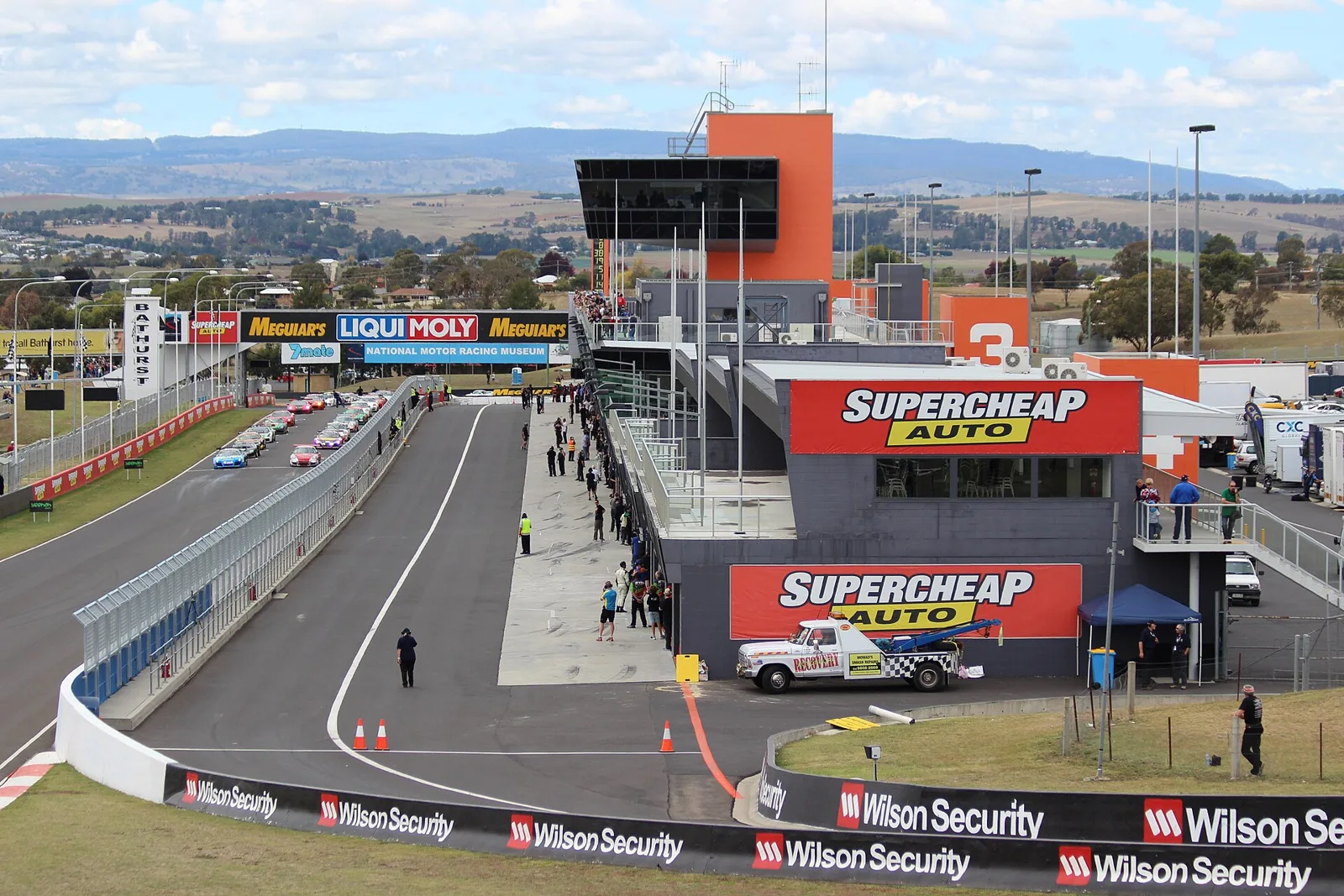
The lap starts at the short pit straight, then turns tightly left into the long, steep Mountain Straight. The pit straight also has its own start line, which for the standing start only sits 143 m (156 yd) closer to Hell Corner, so that traffic does not run too far around Murray's Corner. The track crosses the narrow top of the mountain before descending on Conrod Straight, past the fast Chase and back onto the pit straight. The vertical difference between the highest and lowest points is 174 m (571 ft), and grades reach 1:6.13.
| Section | Detail |
|---|---|
| Full lap | 6.213 km (3.861 mi) |
| Vertical difference | 174 m (571 ft) |
| Steepest grade | 1:6.13 |
| Conrod Straight | 1.916 km (1.191 mi), the fastest section |
| Speed limit on public days | 60 km/h (37 mph), enforced by Bathurst Police |
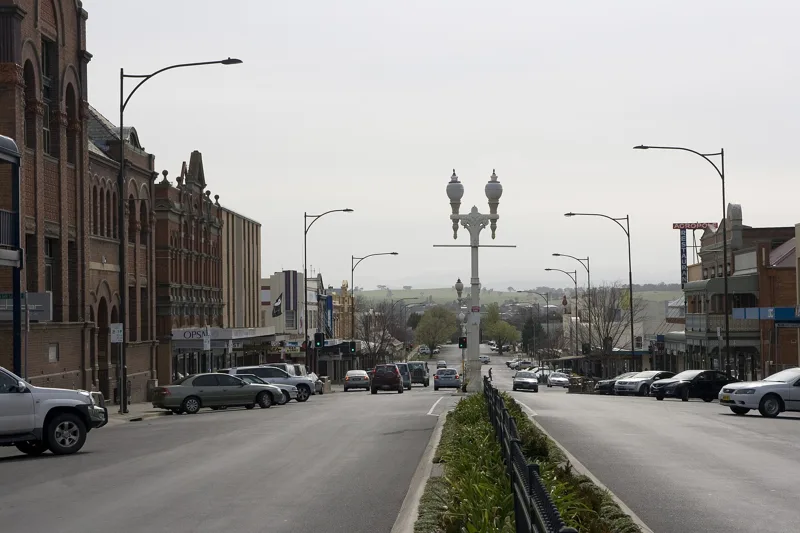
Murray's Corner, a 90-degree left-hander, is the final corner and the lowest point of the circuit. It was previously called Pit Corner, before Bill Murray crashed a Hudson racing car there in 1946. Because the track is a public road on non-race days, cars can drive both ways around it at no charge, and the National Motor Racing Museum sits beside it.
Why are the corners so famous?
Hell Corner is named after a tree stump that stood at the apex of the turn. A popular belief held that motorcycle riders who hit the stump would be doomed, but the origin of the name is widely misunderstood, and the corner's name is more about its history than any curse.
Several corners carry names with stories behind them. Griffins Bend is named after Martin Griffin, the Mayor of Bathurst whose vision created the circuit. David Besnard crashed there in 2011 after coming straight out of the pit lane with new brakes and insufficient front brake pressure. Forrest's Elbow was renamed after the motorcycle racer Jack Forrest, who crashed on the first day of official practice in October 1947 and was later honoured by fellow rider Harry Hinton.
Conrod Straight takes its name from a con-rod failure that ended the 1939 Easter race for Frank Kleinig in his Kleinig/Hudson. Reid Park is named after Bathurst City engineer Hughie Reid, who redesigned sections of the track. Quarry Corner is named after the quarry below its outside wall, and Brock's Skyline was renamed in late 1997 to honour nine-time race winner Peter Brock.
The Chase is the circuit's most celebrated speed section. It was added in 1987 to comply with an FIA rule limiting straights to 1,200 m, and it contains a fast right-hander known as The Kink. Commentator Mike Joy compared that corner to Road America's Kink, and the kink at the Chase entrance is often described as the fastest corner in touring car racing.
How fast do the cars go?
Conrod Straight itself is 1.916 km (1.191 mi) long and most drivers reach the start of the Conrod chicane at over 290 km/h (180 mph). The chicane was introduced to reduce top speeds on the straight, yet it created one of the fastest corners in the world.
Speeds have climbed steadily. Tom Walkinshaw was timed at 290 km/h (180 mph) in a V12 Jaguar XJS during qualifying for the 1984 James Hardie 1000. By the 1990 Tooheys 1000, Tony Longhurst was reportedly timed at 295 km/h (183 mph) in a Ford Sierra RS500 during official qualifying. Shane van Gisbergen reached 300.5 km/h (186.7 mph) in a session before the 2023 Bathurst 1000.
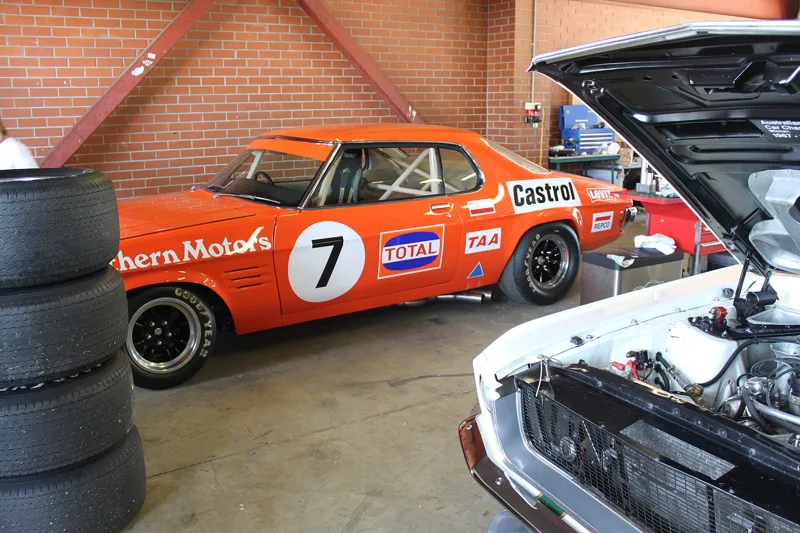
A campaign that began in late 2022 seeks to rename Mountain Straight Moffat Straight or Moffat Straight, honouring Allan Moffat and his battles with Peter Brock in the Ford versus Holden rivalry. That rivalry helped make the annual 500 mile race a national event. Mountain Straight is also a significant speed test. V8 Supercars reach up to 290 km/h (180 mph) before the braking point for Griffins Bend. Early drivers had to lift off over the crest halfway up the straight, because cars could become airborne there.
How did safety work change the circuit?
A sand trap and concrete retaining wall were installed at McPhillamy Park before the 1985 James Hardie 1000. The banking that had sat outside the track was pushed back about 30 m (33 yd) to make room, and the trap has grown over time as cars became faster.
The circuit's safety work was ongoing. A quarry wall was built before the 1979 Hardie-Ferodo 1000, and before that the fence there had been made of railway sleepers and fence posts. The Chase itself was added partly to reduce terminal speeds on Conrod Straight, and tighter safety rules have since removed motorcycle racing from the circuit altogether.
What were the major incidents?
The Cutting is a pair of left-handers leading onto a steep 1 in 6 exit where overtaking is difficult. Marcos Ambrose and Greg Murphy collided there in the 2005 Supercheap Auto 1000 after both refused to give the other room late in the race.
Several famous accidents shaped the circuit's reputation. At Quarry Corner on lap 18 of the 1980 Hardie-Ferodo 1000, Dick Johnson crashed after hitting a rock that had been pushed from the spectator area. The car was destroyed, and a public appeal during the telecast helped restart his career.
At McPhillamy Park, a tyre failure sent Bill Brown's Ford Falcon into a barrel roll during the 1971 Hardie-Ferodo 500. A crash between Bob Morris and Christine Gibson blocked the track and stopped the 1981 James Hardie 1000 on lap 120. Dick Johnson and John French were then declared winners.
Other crashes have been fatal. Don Watson died after a brake failure at the Chase during qualifying for the 1994 Bathurst 1000, and Mark Porter was killed at Sulman Park in a 2006 V8 Supercar Development Series race. Denny Hulme, the 1967 World Drivers' Champion, died of a heart attack at the wheel of his car in 1992.
Who holds the lap records?
The official lap record is 1:59.2910, set by Christopher Mies at the 2018 Challenge Bathurst in an Audi R8 LMS. The fastest race lap belongs to James Golding, who ran 1:59.8375 in a Rogers AF01/V8 at the 2021 Bathurst 1000 on 2 December 2021.
| Record | Time | Holder and event |
|---|---|---|
| Official lap record | 1:59.2910 | Christopher Mies, 2018 Challenge Bathurst, Audi R8 LMS |
| Fastest race lap | 1:59.8375 | James Golding, 2021 Bathurst 1000, Rogers AF01/V8 |
| Original circuit | 2:09.7 | Niel Allen, 1970, McLaren M10B-Chevrolet |
| Unofficial, Formula One car | 1:48.88 | Jenson Button, McLaren MP4-23, 2011 |
Faster times have been recorded but are not recognised, because they were not set in officially sanctioned sessions. Romain Dumas ran an unofficial 1:56.3247 in an electric Ford SuperVan 4.2 on 25 February 2024, the fastest time ever recorded by a closed car at the track.
Early milestones came from Kevin Bartlett, who set the first 100 mph lap at the 1967 Easter meeting, and from Allan Grice, who set the first 160 km/h lap for a touring car in 1982 and a 100 mph Group A lap in 1986.
What races are held there?
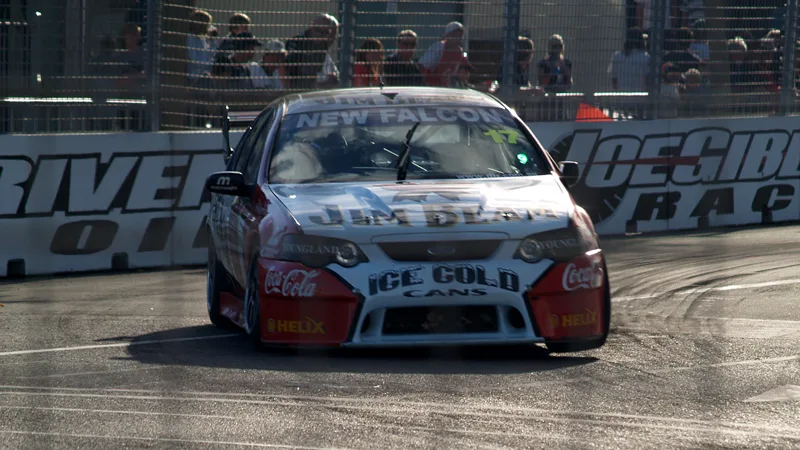
The Bathurst 1000 has been held at the circuit since 1963. It started in 1960 at Phillip Island, ran at Bathurst from 1963 to 1972 and moved to its 1000 km format in 1973. Since 1999 it has been a round of the V8 Supercars championship, previously the Australian Touring Car Championship.
The Bathurst 12 Hour is the other major event. It has been run in the February calendar since the 1990s, and it became an FIA GT3 race in 2011. It joined the Intercontinental GT Challenge in 2016. The Bathurst 6 Hour is held at Easter, and Challenge Bathurst is a time attack and track day held since 2016.
The circuit has also hosted sprint rounds of the Australian Touring Car Championship in 1966, 1969, 1970, 1972, 1995, 1996 and 2021. The 1972 round, a close fight between Ian Geoghegan and Allan Moffat, is regarded as one of the greatest races in the championship's history.
The first motorsport event at the site was a speed hillclimb run from Mountain Straight up to Reid Park. It is still held today as a round of the New South Wales Hillclimb Championship, and the circuit also staged a gravity sports world championship in 2008, with the race running from Skyline to Conrod Straight.
When did motorcycle racing end there?
Motorcycle racing was a fixture at Easter for decades, and nine editions were held as the Australian motorcycle Grand Prix. The Arai 500 ran from 1979 to 1988. The event was cancelled after the 1994 edition because of excessive risk to riders and small crowds, and a 2000 revival was unsuccessful.