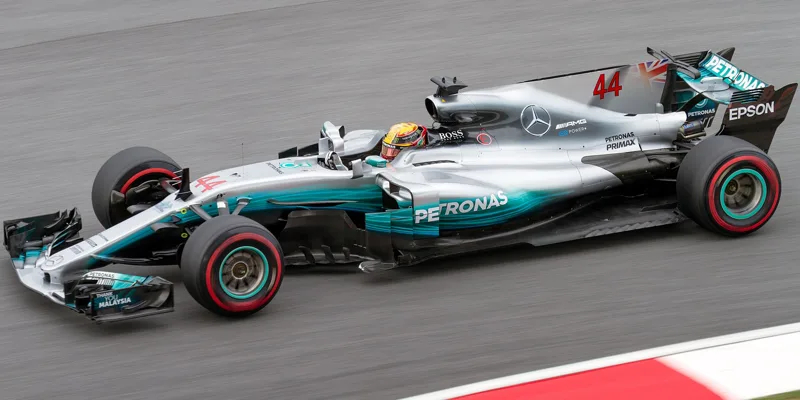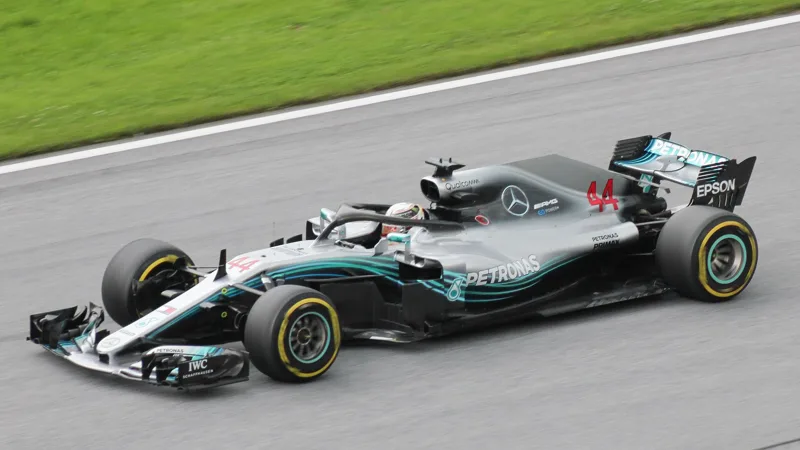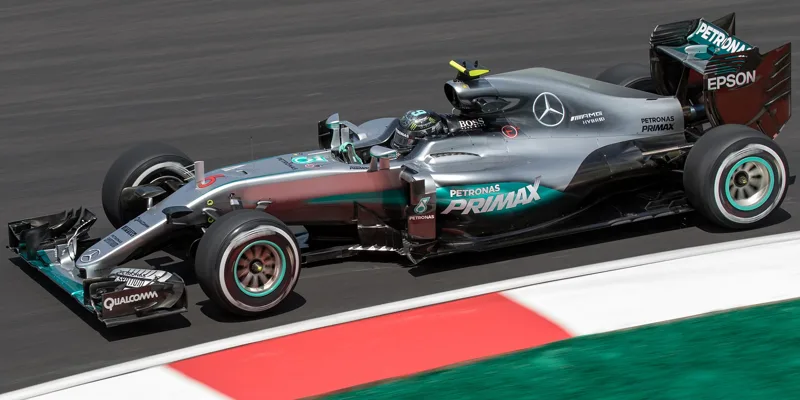
A strong slow-corner car, a Hamilton grand slam at Abu Dhabi and a sixth straight constructors' title that the team had to fight for.
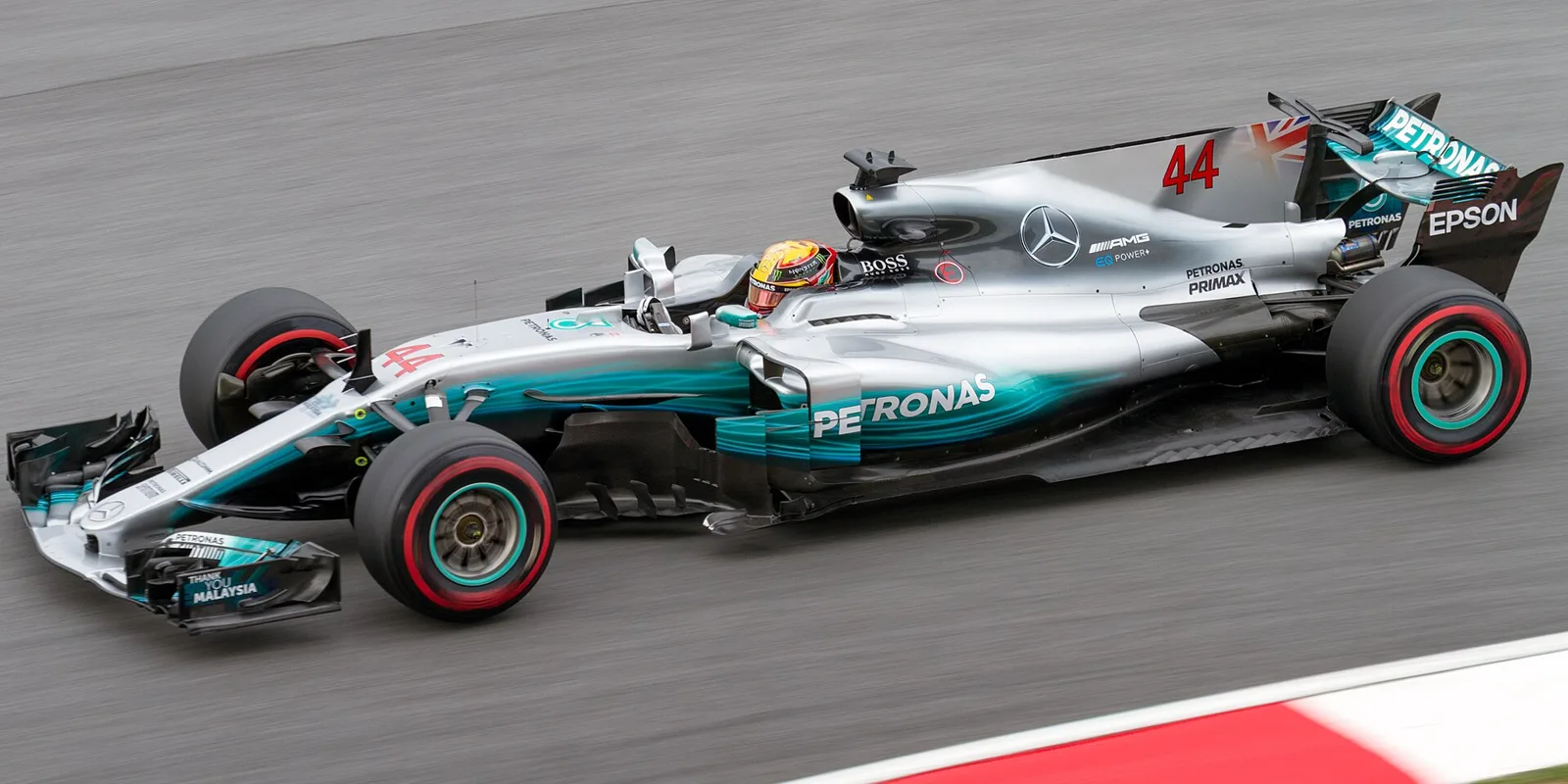
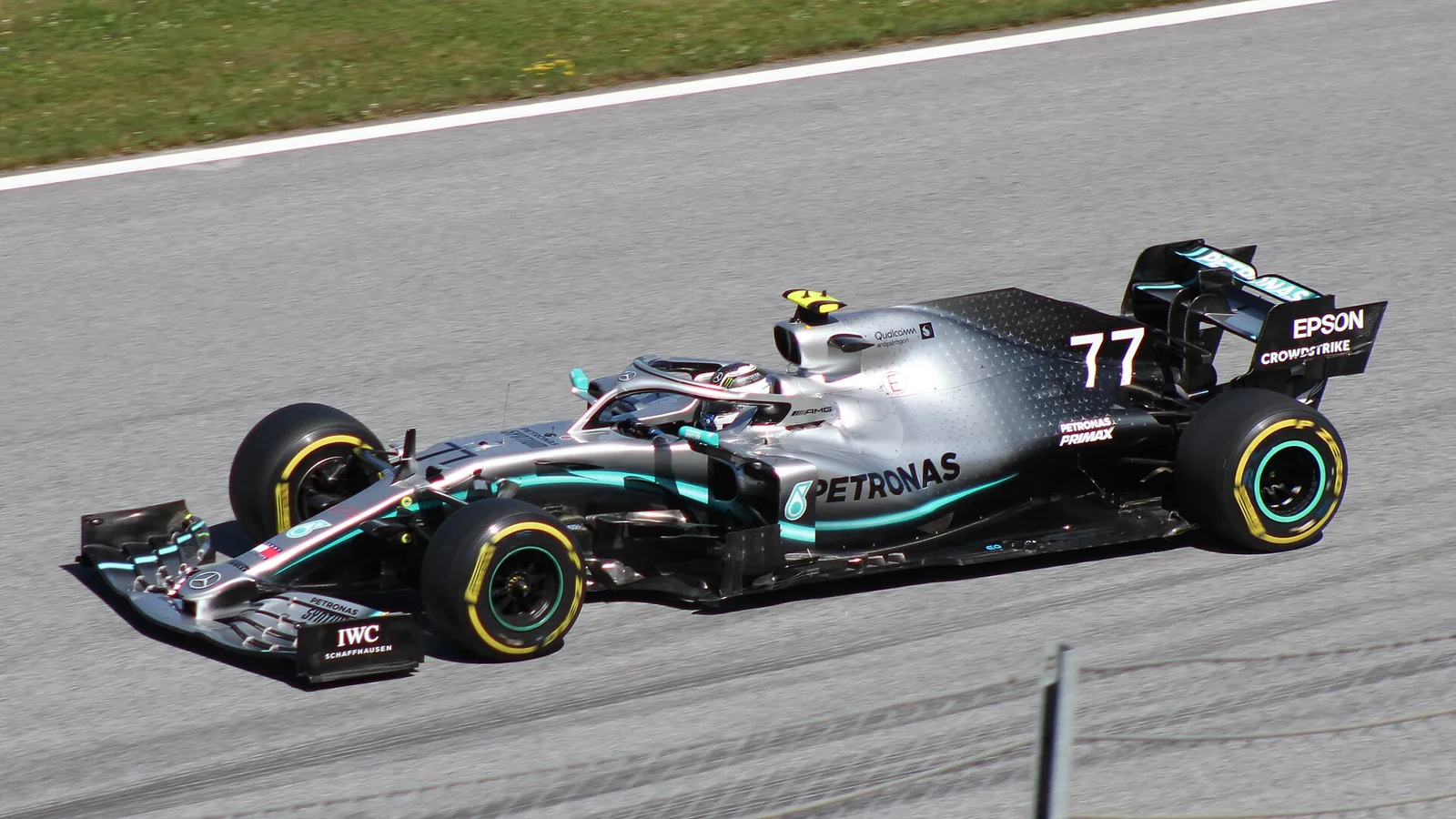
Built for 2019, the Mercedes W10 won 15 races and ten poles for Lewis Hamilton and Valtteri Bottas. It gave Mercedes a sixth consecutive constructors' championship and Hamilton his sixth drivers' title. The title matched a record that Scuderia Ferrari had held between 1999 and 2004.
The W10 carried Mercedes to a championship-winning 2019 season. It won 15 races, took its team to a record-equalling sixth consecutive constructors' title and gave Lewis Hamilton his sixth drivers' championship. The car's margin came from a strong start, a rebuilt cooling package and a late-season run that the team could not fully sustain.
The season was not a simple procession. Ferrari and Red Bull pushed hard, and the W10 had to answer with upgrades, driver skill and some fortunate strategy calls. Its title-winning record was built on the back of a car that was strong in slow corners and became the one to beat on most circuits.
What was the W10 designed to do?
The W10 was designed by Mercedes-Benz under James Allison, John Owen and Mike Elliott, with Loic Serra, Ashley Way and Emiliano Giangiulio among the wider group. It was the tenth Formula One car Mercedes had constructed since 2010. Its name carried on the EQ Power+ branding that promoted the company's electric road cars, and AMG recognised the link between Mercedes-AMG and Mercedes-Benz.
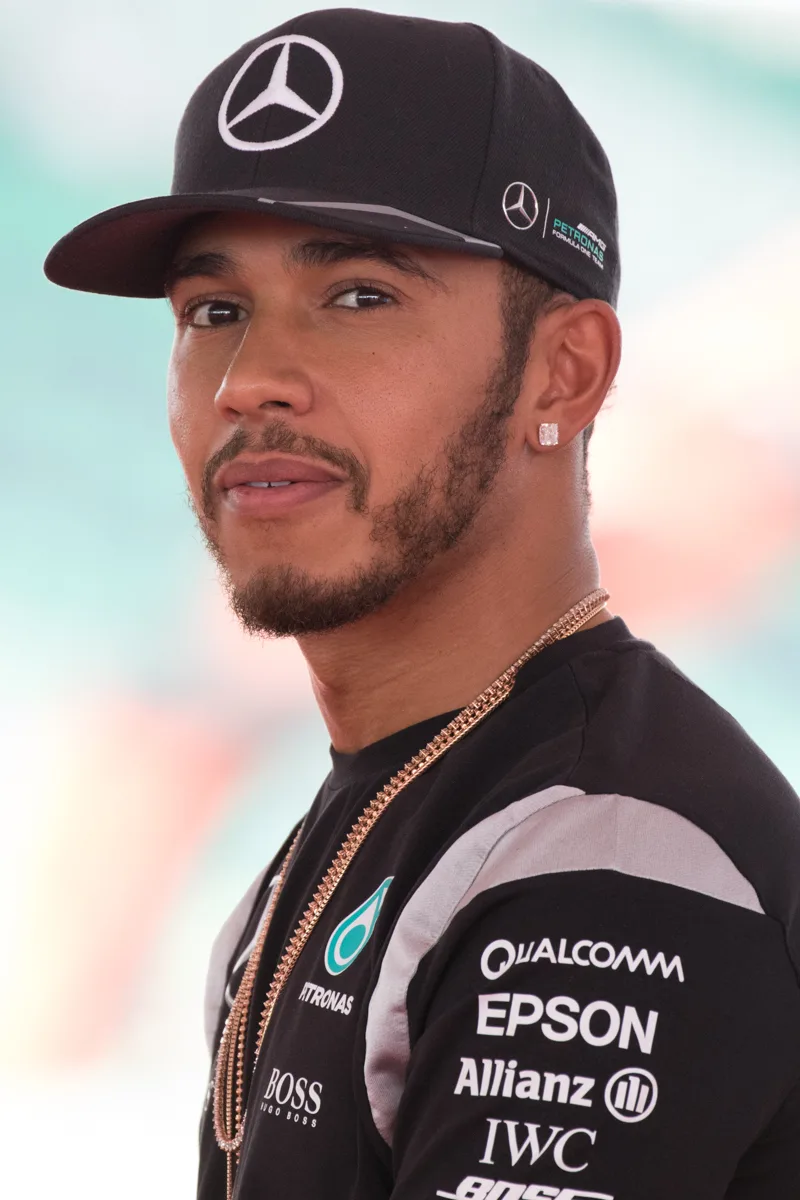
Hamilton was in his seventh season with the team, and Valtteri Bottas in his third. Esteban Ocon, who had come from Force India, was the reserve driver.
A car built for slow corners and new tyres that carried Mercedes to a sixth straight title, though the margin was never comfortable.
What were the W10's two aero packages?
Mercedes ran two distinct aerodynamic packages in pre-season testing, one with an inboard front wing philosophy and one with an outboard approach. The outboard version also received a substantially revised nose, bargeboards, floor and engine cover, and that was the package the team took into the 2019 races. Insiders referred to the two concepts as the A-spec and the B-spec.
The car was strong through slow and medium-speed corners, a clear step on from the previous year. Rivals such as Ferrari favoured straight-line speed and low drag, but the W10 was able to make the most of the new Pirelli tyres with its heavy downforce, and much of its success was put down to that ease of use.
How did the W10 evolve through 2019?
The W10 received its first major upgrade at Spain, following a front wing change in China, and that update included a reworked bargeboard known as the boomerang. A weakness appeared at Austria, where the tightly packaged cooling system struggled to work well at high altitude and in heat. Germany brought a larger package, with reworked rear cooling outlets, sidepod vanes, bargeboards and a fresh rear endplate. Belgium and Italy saw further low-drag changes to that same package.
Mercedes made a set of updates for Japan that covered the front wing, the sidepod deflectors and the floor. They were the final significant changes of the season, as the team turned its attention to the following year. The gains were real but modest, and they were masked by the extreme nature of the circuits and races at that stage of the year.
What was the power unit like?
The new Mercedes-AMG F1 M10 EQ Power+ trailed Ferrari's 064 on the key measures of qualifying power, straight-line pace and electrical output. Even so, it was regarded as the most fuel-efficient unit in the field. The third iteration, known as Phase 3, suffered significant failures at the Belgian and Italian Grands Prix, which raised reliability questions.
How did the season open?
Ferrari had looked fastest in pre-season testing, and many expected it to take the first race. Mercedes had other ideas. Hamilton topped every free practice session, and in qualifying he took pole from Bottas, seven tenths of a second ahead of Sebastian Vettel's Ferrari. He set a new lap record at Albert Park of 1m 20.486s, the sixth straight pole he had taken there, and a record-matching eighth pole at the Australian race.
On Sunday Bottas made a superb start, passed Hamilton and drove away to win by more than 20 seconds. He also took the bonus point for fastest lap, which gave him a full 26 points for the day.
Bahrain was tougher. Mercedes could not match the Ferraris in practice, and both of its cars started on the second row. Vettel won the start, and Bottas made an error on lap two that dropped him back. Hamilton sprang ahead of Vettel with a neat undercut, but Vettel retook him, and then Hamilton passed him on the outside of turn four on lap 38. Vettel spun himself while trying to respond. Leclerc's engine then failed, and Mercedes finished first and second.
China brought another milestone, the 1000th Formula One Grand Prix. Bottas took pole by twenty-three thousandths of a second from Hamilton, and Mercedes locked out the front row for the second time that year. Hamilton passed Bottas at the start and led every lap, and Bottas finished second to complete a third straight one-two. The start of that season gave Mercedes its best possible launch, and only Williams in 1992 had managed three one-twos in the opening races of a year.
Azerbaijan brought a fourth. Ferrari had been dominant in practice, and Leclerc looked the favourite for pole until a heavy crash in Q2 ended his session. Mercedes took advantage, and a cooler track and useful slipstreams in the final run gave it another front row lockout. Bottas took his second consecutive pole, fifty-nine thousandths of a second clear of Hamilton, and won from the lights. Hamilton followed him home, and the team's run of one-twos at the opening of a season set a fresh record, one more than Williams managed in 1992.
How did Spain and Monaco go?
Spain produced a fourth front row lockout of the season, with Bottas taking a third consecutive pole and setting a new track record of 1:15.406. Hamilton won the start, led every lap and claimed his third consecutive win at the Catalunya circuit. He also took the extra point for fastest lap. Bottas finished second, and the team's fifth successive one-two was a feat it had last managed in the 2015 and 2016 seasons.
The W10 was favourite at Monaco, and Hamilton took pole with a last-lap effort, setting a track record of 1:10.166 and beating Bottas by a margin of under a tenth. It was Mercedes's fifth front row of the year. An early safety car came out on lap 11 after debris from Leclerc's car, and Hamilton pitted for mediums and stayed ahead. Bottas was then hit by an unsafe release from Red Bull, which damaged him in the pit lane with a slow puncture and forced a second stop that dropped him to fourth.
Max Verstappen, penalised for his unsafe release, pushed hard for the lead. Hamilton, on the medium tyres that were the only compound used at the front, held a narrow lead while his front-left tyre was close to dead. In the closing laps Verstappen dived down the inside into the Nouvelle Chicane. Hamilton closed the door, and the two made light contact before Hamilton went on to win. He later called it probably the hardest race he had ever run. Verstappen was relegated to fourth by his penalty, which moved Bottas to third and gave Mercedes a double podium.
What happened in Canada and France?
Canada was messy for Mercedes from the start. Bottas had a fuel pressure issue in the first practice session, and Hamilton hit the wall at turn nine in the second, which ended his running early. Vettel took pole, and Bottas could only manage sixth after a spin and a series of mistakes in qualifying. On race morning engineers traced a hydraulic leak on Hamilton's car and repaired it in time.
Vettel won the start, and on lap 48 Hamilton pushed him into a mistake. Vettel ran wide at the chicane and squeezed Hamilton on the way back, and the stewards gave him a five-second penalty for rejoining unsafely. Hamilton stayed within that margin to the flag and took a record-equalling seventh win in Montreal, which matched Michael Schumacher. Bottas finished fourth and took the fastest-lap point after a late pit stop for soft tyres.
France was a dominant weekend. Mercedes locked out the front row, and Hamilton set a new track record to take pole, beating Bottas by more than two tenths. Hamilton won by 18 seconds, which was the team's eighth successive victory of 2019 and its sixth one-two of the season.
Why did Austria and Britain produce mixed results?
At Austria Hamilton reached second in qualifying but was given a three-place grid penalty for impeding Raikkonen in Q1. The penalties then applied in sequence, so he dropped only from second to fourth. Both Mercedes drivers struggled with overheating, and Hamilton had to change his front wing, which cost him time during the stops. Bottas took third, less than a second ahead of Vettel, and Hamilton finished fifth.
Britain was a different story. Mercedes locked out the front row again, and Bottas took pole by just six thousandths of a second, denying Hamilton a record seventh home pole. Leclerc was third, seventy-nine thousandths of a second behind the Finn. The race was a Mercedes procession: Bottas led and fought off his teammate until a Safety Car gave Hamilton a free stop, and he overtook. Hamilton won his home race for the sixth time, and the result was the team's seventh one-two of the season.
How did Germany and Hungary unfold?
Germany was chaotic. Mercedes had been behind Ferrari in practice, but technical issues on the Ferraris in qualifying let Hamilton take pole, with Bottas third behind Verstappen. The race was wet and full of strategy and driver errors. Bottas crashed while chasing Lance Stroll for third, and Hamilton ended up eleventh. Penalties later moved him to ninth, and Mercedes avoided its first pointless race since the 2018 Austrian Grand Prix.
In Hungary the new upgrade proved hard to set up for single-lap pace, and Verstappen beat Mercedes in qualifying. Hamilton held second early on after a clash with Bottas at the first corners, while Bottas was clipped by Leclerc and lost his front wing. Hamilton eventually caught and passed Verstappen as his tyres faded.
What went wrong after the summer break?
After the break Mercedes brought its latest power unit iteration in step with Ferrari, but that was not enough at Belgium and Italy. Leclerc beat both Mercedes drivers in those races, helped by Ferrari's low-drag concept. Singapore saw a major Ferrari aerodynamic upgrade that clearly outpaced Mercedes and Red Bull, despite a layout expected to suit those two teams. Hamilton finished fourth and Bottas fifth.
Russia and Japan went differently. Ferrari took pole in both, but team orders between Vettel and Leclerc, plus a car failure for Vettel in Russia, let the Mercedes drivers past. Both Ferrari drivers got away poorly in Japan and lost places. Mercedes often cited losses of more than half a second on the straights to Ferrari. Even so, a 1-2 in Russia and a double podium at Suzuka handed the constructors' title over for a sixth time, matching the record, with four rounds left.
How did the closing rounds decide the drivers' title?
Mexico was a tough weekend. The Mercedes power unit was too inefficient against Verstappen's Honda-powered Red Bull and not powerful enough against the Ferraris. Verstappen was penalised for a yellow-flag infringement after taking pole, which put him beside Hamilton. The two collided when they ran wide at the first corners and damaged both cars. Mercedes used sharp strategy calls to lift Hamilton into the lead and push Bottas to third, and Hamilton won, taking a major step towards his sixth drivers' title.
| Round | What happened |
|---|---|
| Mexico | Hamilton won after strategy moves; a big step towards the title |
| United States (Austin) | Bottas won, Hamilton second, enough to clinch the drivers' title |
| Brazil | Hamilton penalised after a crash with Albon and dropped to seventh |
| Abu Dhabi | Hamilton pole, fastest lap, every lap led and the win |
At Austin Hamilton had struggled in qualifying, but he fought to second on an alternative strategy. Vettel retired after a suspension failure and Leclerc faded, which let Bottas win and gave Mercedes a 1-2 finish. The result was enough to clinch Hamilton's sixth drivers' title, and it meant Mercedes had passed Ferrari's record for consecutive championship doubles with a sixth in a row.
Brazil was harder. Hamilton jumped Vettel at the start, ran second behind polesitter Verstappen, and then lost ground when Mercedes took an extra stop during a safety car period. He crashed with Alexander Albon while fighting for second, and he was later penalised for the move, which dropped him to seventh. Carlos Sainz took his first podium, the first for McLaren since 2014. Bottas retired with a power unit failure, and Mercedes had no podium finishes since Singapore.
Abu Dhabi closed the season. Hamilton started from pole, fastest lap included, led all the laps and won to complete a grand slam. Bottas started from the back after taking new power unit components, and fought back to fourth.
What else marked the season?
At Monaco the team honoured Niki Lauda, with the halo painted red and carrying the words Niki we miss you, and the nose cone bearing his signature and Danke Niki. The Chinese Grand Prix was celebrated with 1000th Grand Prix logos on the bargeboards and nose cone. At Germany the car appeared in a split silver and white scheme, marking 125 years of Mercedes in motorsport.
The W10 was also used after the season for testing, a modified version helping to evaluate 2022 tyre compounds following the 2021 Abu Dhabi Grand Prix.