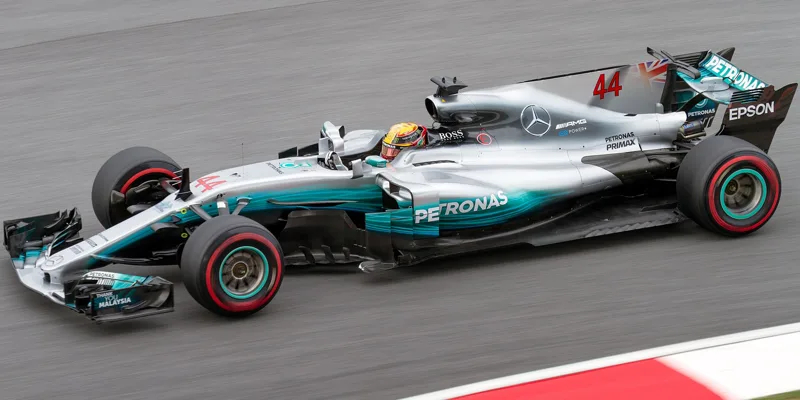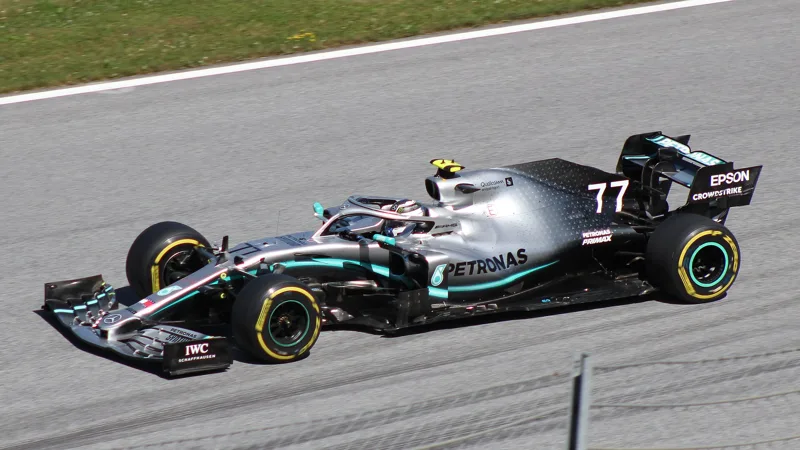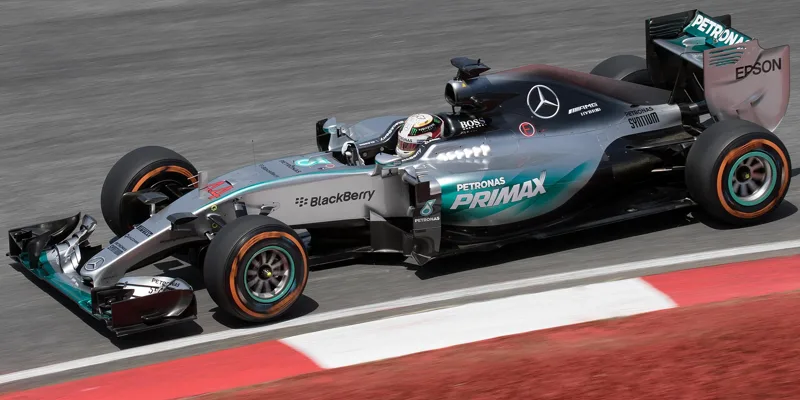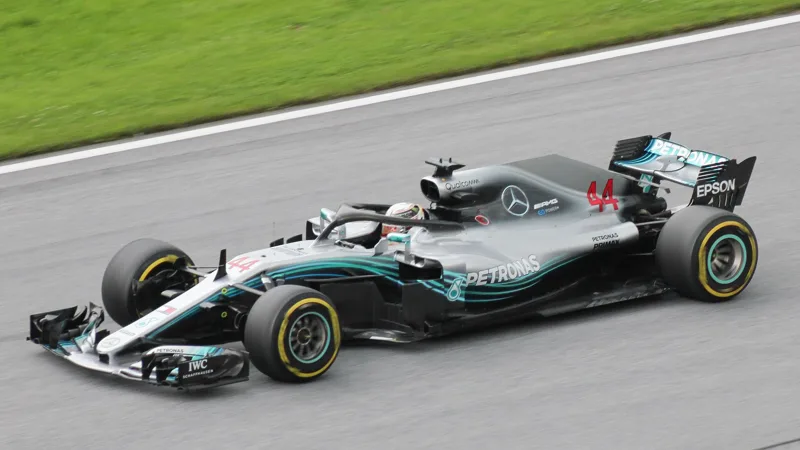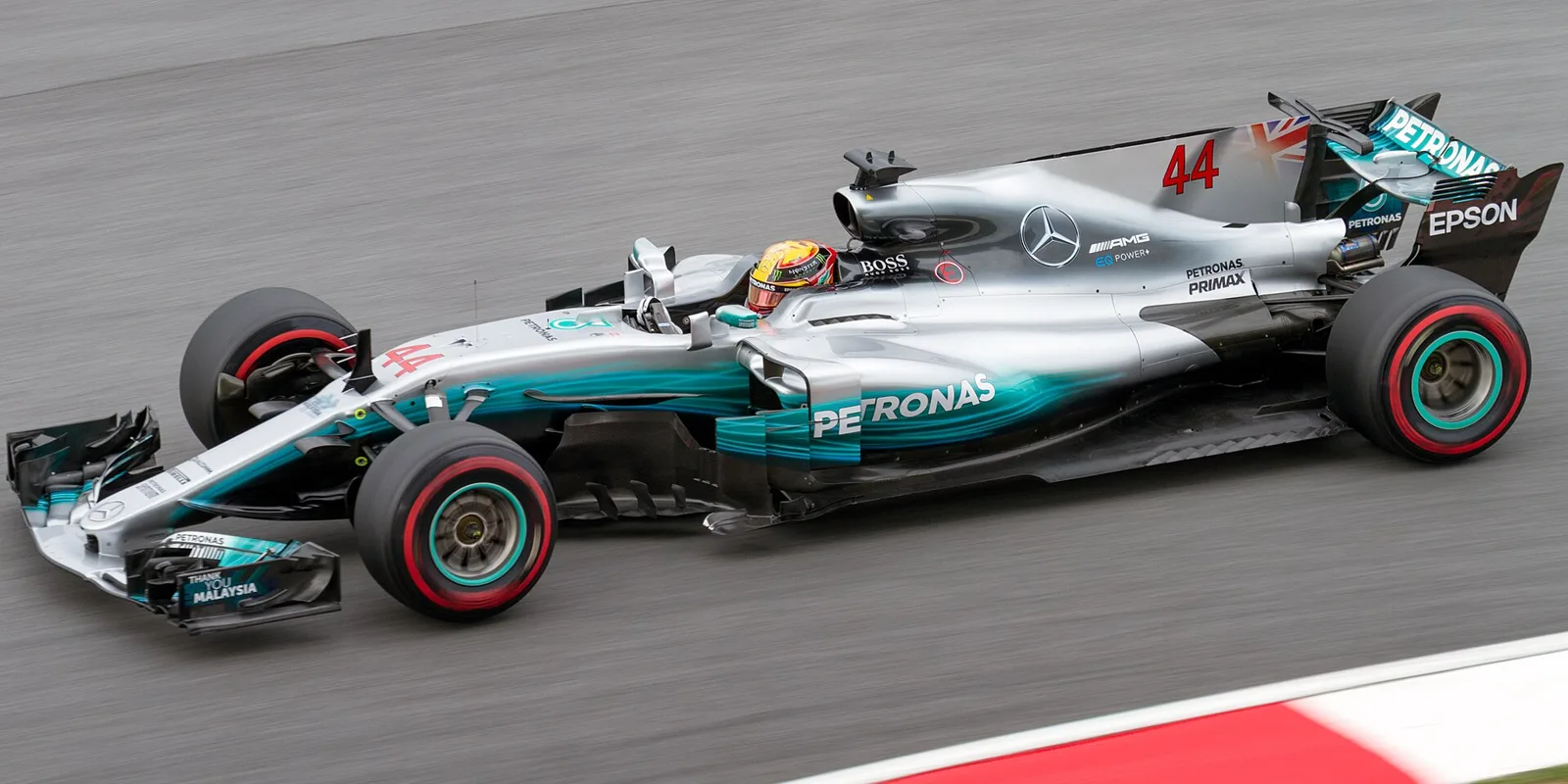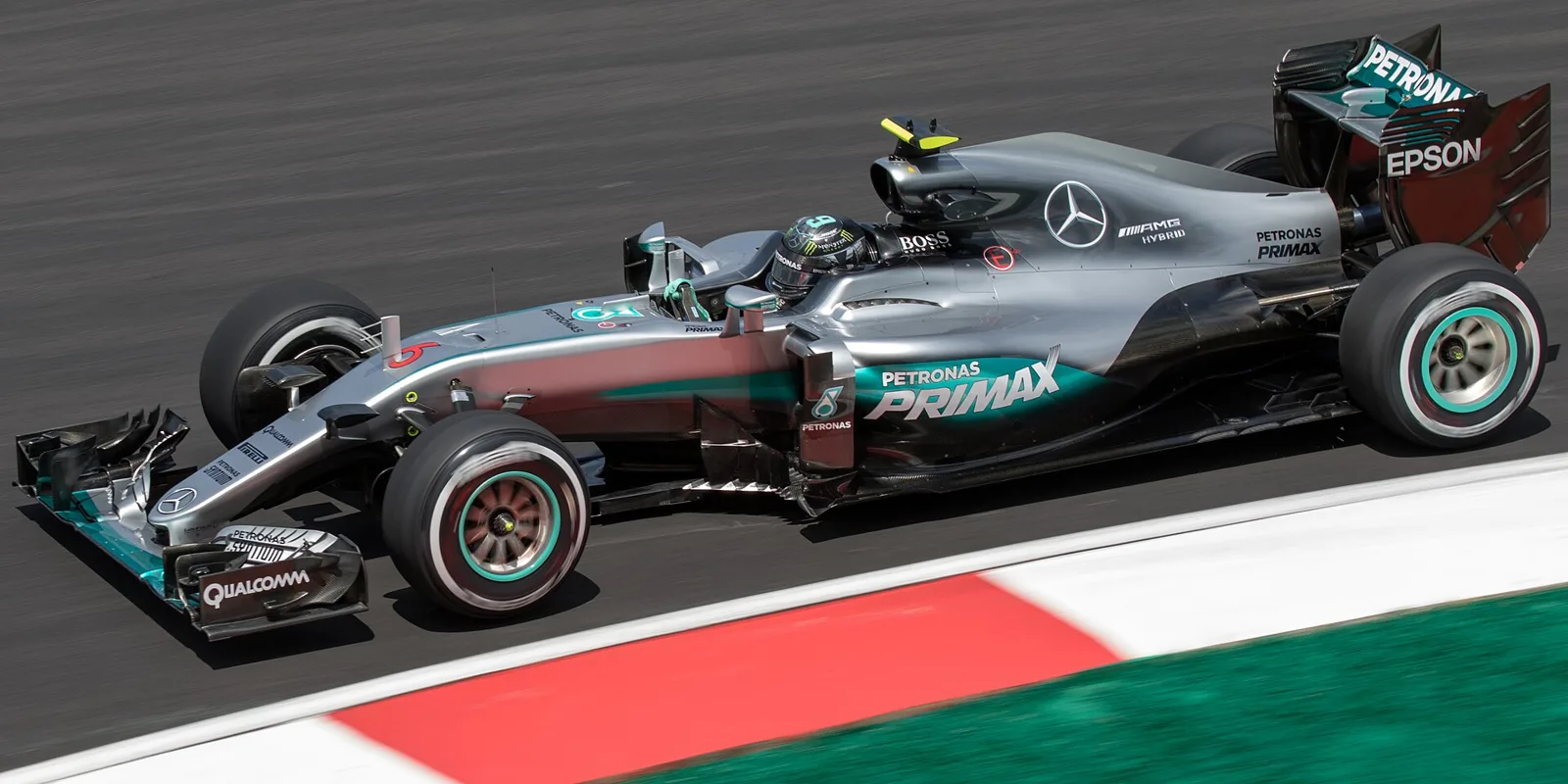
A record-setting Mercedes that carried Hamilton and Rosberg to 19 wins, then left the drivers' title to a five-point finish in Abu Dhabi.
Built for 2016, the Mercedes W07 won 19 of its 21 races, scored 20 poles and set a constructors' points record of 765. Nico Rosberg took the drivers' title by five points over Lewis Hamilton. It was the team's third straight constructors' title.
The Mercedes F1 W07 Hybrid contested the 2016 season and ranks among the most successful Mercedes designs of all time. It won 19 of the season's 21 races, claimed 20 poles and scored 765 constructors' points, a single-season record. Lewis Hamilton and Nico Rosberg drove it, and the title race between them went down to the final round.
The car was the successor to the W06 Hybrid, and it kept Mercedes at the front of the grid. Yet its season was also defined by a close rivalry that split the team's drivers and left Rosberg as champion by just five points.
What was the W07 built to be?
Designed in Brackley, with its engine supplied from Brixworth by Mercedes-AMG's powertrains operation, the W07 was the seventh Mercedes Formula One car built since 2010. Its name also reflected the fully integrated hybrid power units that the regulations required. Paddy Lowe, Aldo Costa and Geoff Willis were among the people who led the design work.
The team described the car as having a series of meaningful steps over the W06, a set of changes that helped it keep the advantage its predecessors had built since 2014. Hamilton, a three-time World Drivers' Champion, was in his fourth season with the team, and Rosberg in his seventh.
A car that won 19 races and then lost its drivers' fight by five points, a result the team still discusses.
What was the W07's power unit?
The car was designed around the PU106C Hybrid power unit, a development of the PU106B that had first appeared at the 2015 Italian Grand Prix. Estimates put its output at between 950 horsepower (710 kW) and 1,000 horsepower (750 kW), which was more than rival units from Ferrari, Renault and Honda.
The power unit was a central part of the package, but the W07 also gained through aerodynamics and reliability work. Many of the changes made during the season came from that combined effort, and they were judged to matter as much as the engine itself.
How did the W07's aerodynamics develop?
Mercedes continued refining its S-duct, which moves air from the front of the car towards the rear of the chassis with little disruption. At the Canadian Grand Prix the team added L-shaped turning vanes under the chassis and beside the bargeboards, and it fitted fins to the front wing to steer air around the outside of the front wheels.
A bowl-shaped rear wing arrived at Canada as well. Its purpose was to cut drag, which let the car reach more than 350 km/h (220 mph) while still producing downforce. A similar idea had been seen in 2015 as the curve rear wing, which returned for the European Grand Prix that followed. At Singapore Mercedes trialled a hydraulic third suspension element set crosswise in the upper chassis bulkhead, to control ride height and roll, and it developed brake discs with a concave surface to manage heat and keep tyres at a steady temperature.
How did the W07 perform in testing?
The car was unofficially introduced at Silverstone on 19 February 2016, when Rosberg and Hamilton completed a shakedown during a promotional event. It covered 98.2 km that day. The official launch followed online on 21 February, one day before the first pre-season test.
Testing at Barcelona ran over February 22 to 25 and March 1 to 4. Over those eight days the car logged 1294 laps and 6,024 km, or 3,743.1 miles, the equivalent of more than 19 race distances. Esteban Ocon, the 2015 GP3 Series champion, and Pascal Wehrlein, a regular driver for Manor Racing, also drove it during in-season running.
Why did the W07 start the season so strongly?
The car opened with a Hamilton pole in Australia, the first race run under a new qualifying format. Both Mercedes cars were slow away compared with the Ferraris, but a red flag after a crash between Fernando Alonso and Esteban Gutierrez on lap 19 let the team change tyres and bring Sebastian Vettel down to third, which gave Mercedes a one-two finish.
Bahrain followed the same pattern. Hamilton took pole again, but Rosberg got the better start and led, while Hamilton made contact with Valtteri Bottas at turn one and dropped to ninth on the opening lap. Hamilton recovered to third, and Rosberg won.
China was Rosberg's first pole of the year and his third win in a row. Hamilton had reliability trouble with the motor generator unit (MGU-H) and could not set a lap in qualifying, and he then fought from 22nd to seventh. Russia gave Rosberg his first career grand slam, which combined pole, fastest lap, leading every lap and the win. Hamilton, who had been hampered in qualifying again, climbed from tenth to produce a one-two finish for the team.
What went wrong at Spain and Monaco?
Spain brought Hamilton's third pole of the season, with both Mercedes drivers on the front row. Rosberg was briefly on the wrong engine mode at the start of the race and lost ground, and Hamilton closed in and made a move. Rosberg could not recover, and the two collided. Both cars ended in the gravel, which was the first time both Mercedes cars failed to finish since Melbourne in 2011 and ended any chance of a perfect season.
Monaco was a difficult weekend. Mercedes lost pole to technical problems, and conditions shifted from wet to dry in a way that favoured Hamilton. He won his first race of 2016, while Daniel Ricciardo finished second after a stop where his tyres were not ready. Rosberg struggled with suspected glazed brakes and finished seventh.
Canada then restored Hamilton's rhythm. He took pole by 61 hundredths of a second and held off Vettel to win for the fifth time at the circuit. Rosberg made contact with his teammate at the first corner and later suffered a puncture, and he finished fifth. After a third of the season Mercedes was 76 points clear of Ferrari.
How did the European rounds shape the title fight?
In Baku Rosberg earned a second grand slam, while Hamilton, after a qualifying error, started tenth and recovered to fifth, after an incorrect hybrid deployment setting cost him time. Austria was the turning point. Hamilton took his tenth career hat-trick, but the two Mercedes drivers collided on the final lap. Rosberg limped home fourth with a badly damaged car.
The team responded with a set of rules for its drivers, called Rules of Engagement, which set the terms on which the two men could race and promised penalties for on-track clashes. Silverstone brought Hamilton his third consecutive British Grand Prix win from pole, a record at the circuit. Rosberg, running second, was hit by a serious gearbox problem and was told how to manage it. The stewards investigated the radio exchange and added ten seconds to his time, dropping him to third behind Max Verstappen.
Hungary gave Hamilton the Drivers' Championship lead with a one-two finish, and it was a new record for wins at the circuit, passing Michael Schumacher. At Germany Hamilton won his fourth race in succession and left for the summer break 19 points clear of his teammate.
Belgium was a strange weekend. Hamilton was sent to the back after accumulating 60 grid penalties for using more engine parts than allowed, while Rosberg took pole and won his first Belgian Grand Prix. Hamilton climbed to third, which for the third time made him the first to finish on the podium after starting 20th or lower. Italy gave Rosberg his seventh win after Hamilton lost the lead to a poor start, and the gap in the championship closed to two points. Mercedes was 208 points clear of Red Bull after two-thirds of the season.
How did the second half of the season unfold?
Singapore gave Rosberg his third consecutive win and eighth overall, which put him back in front in the championship. Hamilton kept Raikkonen behind to take the final podium place. At Malaysia Hamilton was leading when his engine failed, and Red Bull claimed a one-two. Rosberg dropped to 17th after a first-lap clash with Vettel but recovered to third, and his lead over Hamilton grew to 23 points with five races remaining.
Japan produced a ninth win for Rosberg from pole, while Hamilton started poorly, fell to eighth and recovered to third. That result clinched Mercedes's third straight Constructors' Championship with four races to spare.
The United States Grand Prix handed Hamilton a seventh victory of the year from pole and his 50th career win. He became only the third driver to reach 50 wins, behind Alain Prost on 51 and Michael Schumacher on 91. Rosberg lost second to Daniel Ricciardo at the start and regained it through a free stop under a Virtual Safety Car triggered by Verstappen's retirement.
Mexico saw Rosberg take his twelfth front row lockout for the team, and then Verstappen made heavy contact with him at the first corner and both Mercedes cars ran onto the grass. The stewards looked at the incident and took no action. Hamilton won his eighth race of the season, and Rosberg held off a late attack from Verstappen to take second. Hamilton's 51st career win tied him with Prost for second on the all-time list, and the win gave Mercedes its 17th of the season, a record for a single year.
In Brazil Hamilton took his first win at Interlagos, starting from pole. Rosberg nearly spun in the wet but still finished second, giving the team its seventh one-two. The result also gave Hamilton a record for wins at different circuits, 24 in all, and kept his title hopes alive.
How was the title decided at Abu Dhabi?
The finale was a title decider between the two Mercedes drivers, and the team again took a front row lockout, its 14th of the season. Hamilton was a third of a second quicker than Rosberg in qualifying. Rosberg lost a place to Verstappen during a long pit stop, then chased Hamilton down, and Hamilton was told repeatedly over the radio to slow down so as not to risk the win.
Hamilton disregarded the instructions and kept shielding his teammate from Verstappen, arguing that the team should let them race. He took the flag four-tenths of a second ahead of Rosberg, who held off Vettel for second place. The result gave Hamilton his tenth win of the season, but Rosberg's points total had risen above his. Hamilton finished on 380 points and Rosberg on 385, so the 2016 Drivers' Championship went to Rosberg, his first and only title.
What did the W07 leave behind?
The team finished with 765 constructors' points, a record that broke its own 703-point mark from 2015. Red Bull finished 297 points behind, the largest margin between a champion and runner-up in Formula One history at the time. Mercedes also took the double of drivers' and constructors' titles for a third consecutive season.
The car also holds two season records: the highest pole percentage in the sport's history at 95.2%, from 20 poles, and 33 podiums in a single season.