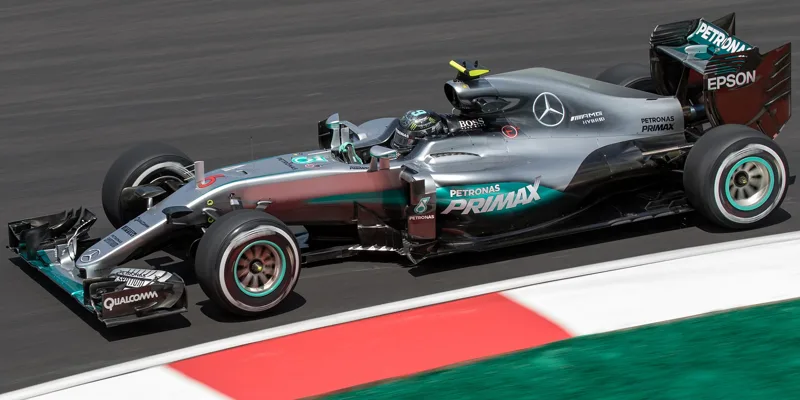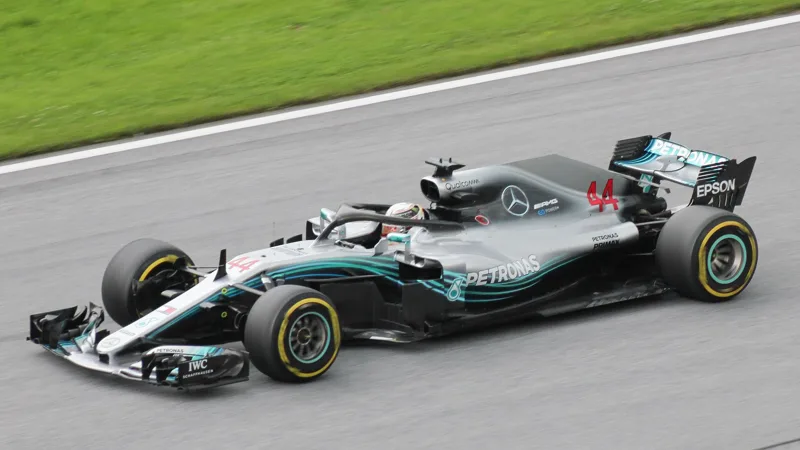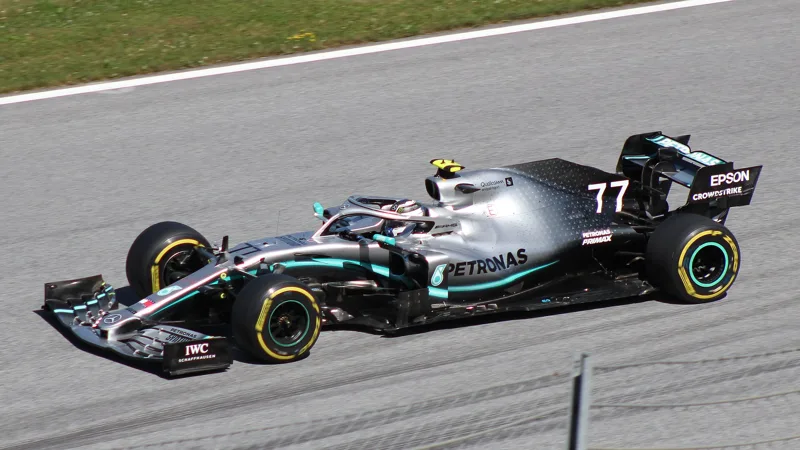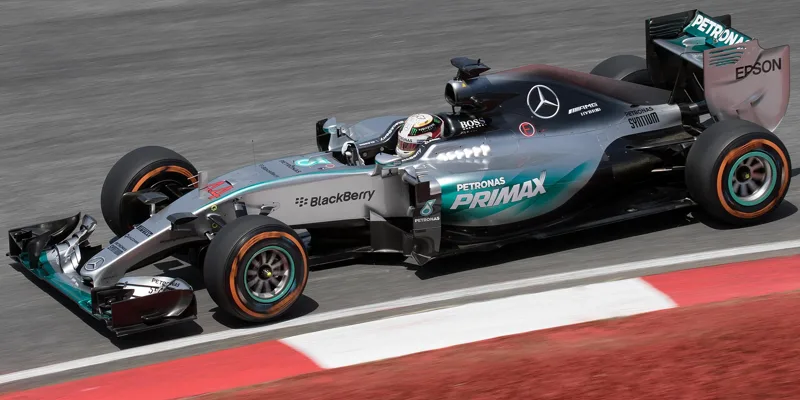
A less dominant season than its predecessors, with 12 wins, a Bottas maiden pole and a fourth drivers' title for Lewis Hamilton.
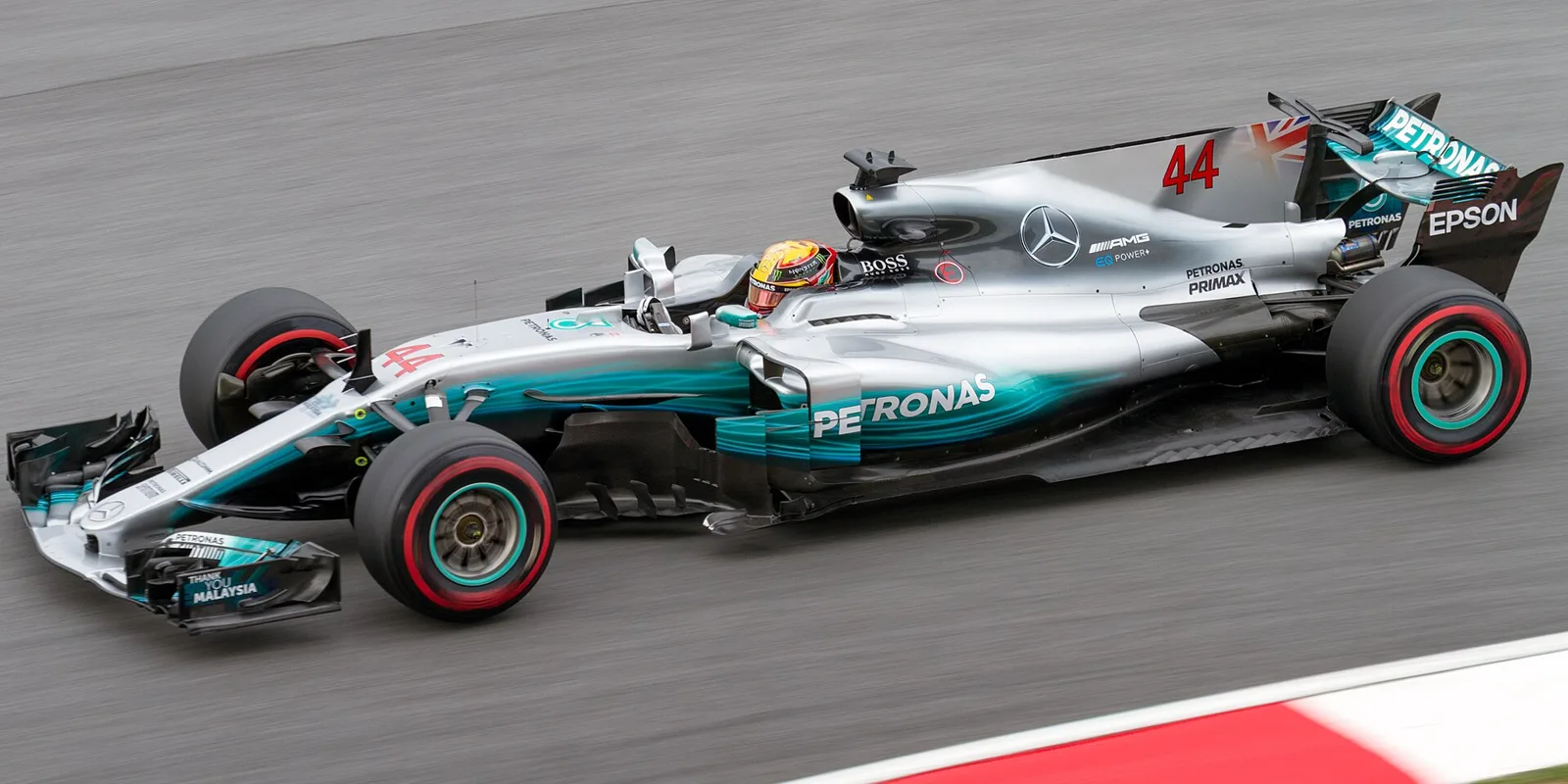
Built for 2017, the Mercedes W08 EQ Power+ won 12 races and 15 poles for Lewis Hamilton and Valtteri Bottas. It gave Mercedes a fourth straight constructors' title and Hamilton his fourth drivers' championship. It was less dominant than its predecessors, yet it still secured both championships.
For 2017 Mercedes fielded the W08 EQ Power+ in the Formula One championship, driven by Lewis Hamilton and Valtteri Bottas. It won 12 races, took a fourth straight constructors' championship and helped Hamilton to his fourth drivers' title, although it was a less dominant machine than the cars that had come before it.
The W08 rode on the momentum of a long run of success, and its performance was judged against that record. Mercedes had to work harder for its results in 2017, fighting Ferrari in the early rounds and leaning on driver skill when the car was not quite right.
What was the W08 designed to do?
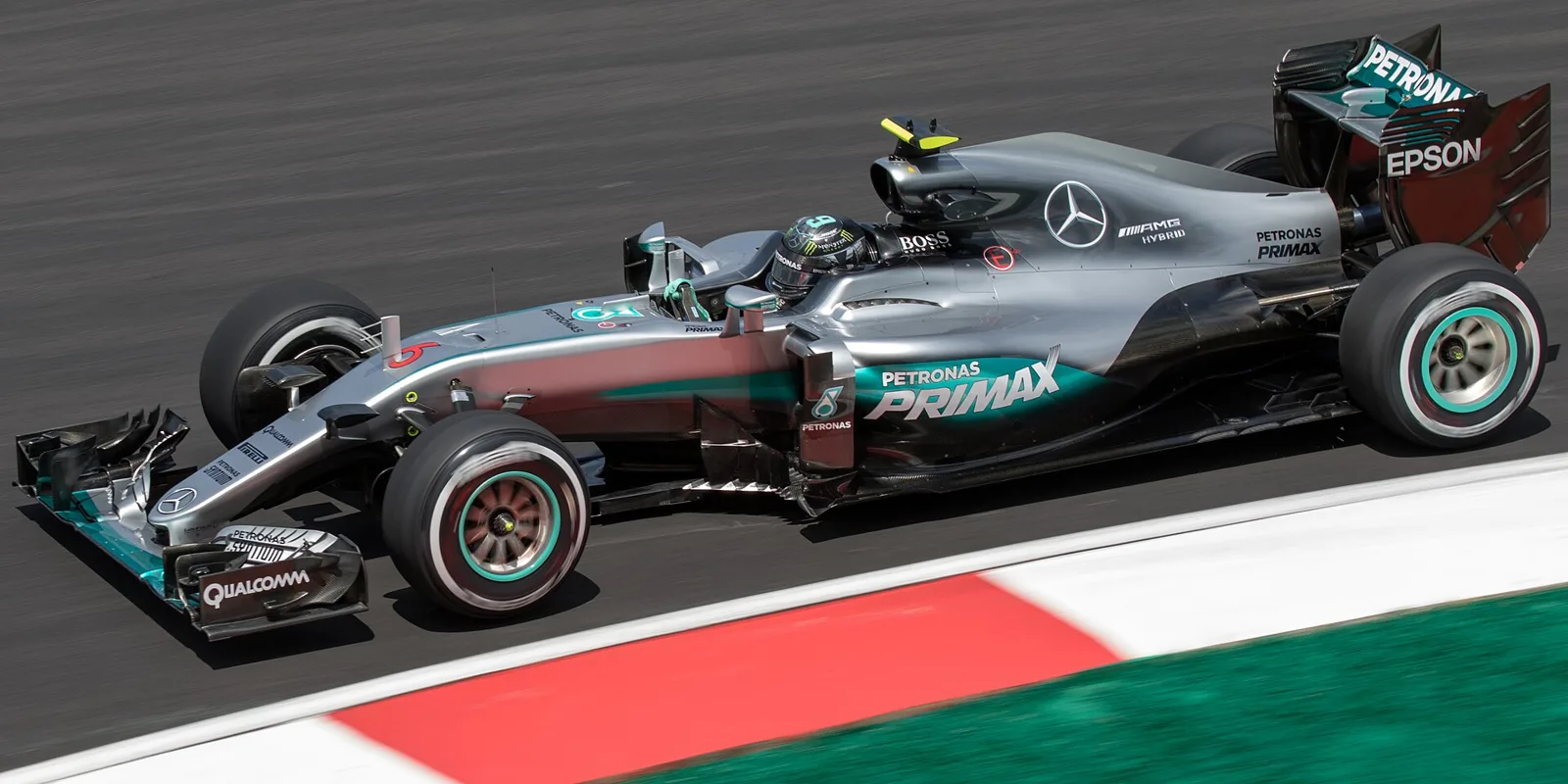
The W08 was designed under Paddy Lowe and Aldo Costa, with Geoff Willis, Loic Serra and several other engineers in the group. It was the eighth Formula One car Mercedes had built since 2010. The name carried two messages: EQ Power+ promoted the company's electric road cars, and AMG recognised the link between Mercedes-AMG and Mercedes-Benz.
Hamilton was in his fifth season with the team. Bottas joined after Nico Rosberg retired following his 2016 title, and the pair were the drivers from the first race of the season at Melbourne to the last at Abu Dhabi.
A car that won 12 races and still ended with a fourth straight constructors' title and a new record for front row starts.
How did the front suspension change?
Mercedes altered the front suspension so that the top wishbone connected to an extension before reaching the upright. Raising the wishbone helped keep airflow from the front of the car from being disturbed on its way to the side-pods and the rear suspension, where it could have upset the car's stability. Toro Rosso used a similar layout on its 2017 car, the STR12.
At the rear the team used a T-wing mounted on the engine cover, rather than the shark fin favoured by other 2017 cars. The bowl-shaped rear wing carried over from earlier Mercedes cars, and it kept generating high downforce while limiting drag.
What did the Barcelona upgrade change?
The first major aerodynamic update came at the Spanish Grand Prix. The most visible part was a new, narrower nose with an under-nose turning vane that acted as a kind of skirt under the car. The bargeboards were redesigned with three R-shaped upstands, and the team changed the winglet on the wishbone extension, added new camera mounts, and revised the floor ahead of the rear tyre. A new rear wing and a two-tier monkey seat completed the list.
Michael Schmidt of Auto Motor und Sport estimated the package was worth only about 0.1 s a lap. The bigger goal was steadier behaviour and getting the tyres into their working range sooner, since tyre temperature had been a clear weakness against Ferrari.
What development work came after Barcelona?
During practice for the Azerbaijan Grand Prix the team tried an asymmetric brake set-up, giving one side of the car more cooling capacity. The idea did not last. To get heat into the front tyres faster, Mercedes went back to a symmetric layout for final practice, qualifying and the race.
The Malaysian package was larger. The front wing's mainplane leading edge was swept upward to push air under the wing, and the strakes beneath were made more pronounced. The under-nose device was widened, and the bargeboards, which contained 20 separate surfaces, were reworked. The vertical cascades on the serrated floor strakes were shorter and angled more aggressively, the axehead was cut from four serrated surfaces to three, and the diffuser gained innermost strakes.
How did testing go before the season?
The car was unofficially launched at Silverstone on 23 February 2017, when Hamilton and Bottas completed a first shakedown. Pre-season testing followed at Barcelona, running from 27 February to 2 March and again from 7 to 10 March. Over those eight days the car logged 1096 laps and 5,102 km, or 3,170.2 miles, more than 16 race distances. George Russell, the 2017 GP3 Series champion, drove the car in-season.
How did the first races go?
Hamilton took pole in Australia and led until the only round of pit stops. Vettel's strategy then put him ahead, and Hamilton could not reel him in, so he finished second. Bottas started third and kept his place on the podium.
China brought Hamilton's pole and his third career grand slam, meaning pole, fastest lap, leading every lap and victory. Bottas spun early and recovered to sixth. The result left Mercedes one point clear of Ferrari in the constructors' table.
Bahrain gave Bottas his first career pole, a quarter of a second ahead of Hamilton. Vettel passed Hamilton at the start, took the lead from Bottas when Vettel made the first stop and Bottas changed tyres later, and kept it. Hamilton lost a place to Daniel Ricciardo and picked up a time penalty for blocking him in the pit entry. Hamilton recovered to second, Bottas finished third, and Ferrari took back the championship lead.
Why was Russia a tough weekend for Mercedes?
At Sochi Mercedes struggled to keep up in qualifying. Bottas and Hamilton managed only third and fourth, while Ferrari locked out the front row, the weakest qualifying showing since the 2015 Singapore race. Bottas nonetheless led from the start and pulled away during his first stint.
Late in the race Vettel closed fast, but Bottas held him off by six tenths of a second to take his first career victory. Hamilton, battling overheating, finished fourth. The result returned Mercedes to the top of the constructors' standings by a single point after a fifth of the season.
What happened in Spain and Monaco?
Hamilton beat Vettel to pole in Spain by just 0.051 s, while Bottas was third, two tenths behind. Vettel led the early stages, but Hamilton used a virtual safety car to stop for fresh soft tyres and passed him soon after. Hamilton then held Vettel, who was on mediums, off to take his second win of the year, which was also his 12th career hat-trick. Bottas's engine gave up while he was running third, costing the team a double podium.
Monaco was a poor weekend for both cars. Bottas qualified third and Hamilton fourteenth. Ricciardo took the final podium place, and Hamilton stayed out until lap 46 for his only stop, finishing seventh after starting thirteenth. Mercedes lost the constructors' lead by 17 points, and it was the first race since the 2016 Spanish Grand Prix in which neither driver stood on the podium.
How did Canada and Azerbaijan change the picture?
Canada produced several records. Hamilton matched Ayrton Senna's tally of 65 pole positions, and he recorded the quickest lap in the circuit's history at 1m 11.459s, beating Ralf Schumacher's 2004 time of 1m 12.275s by 0.816 seconds. Mercedes took its first one-two of the season, with Hamilton winning and Bottas second after Verstappen retired early on. It was Hamilton's third win of the year, his sixth in Canada, and his fourth career grand slam, the second of 2017 after China.
Azerbaijan brought another front row lockout, with Hamilton taking pole by more than four tenths. That was his 66th pole, two short of Michael Schumacher's all-time record. The race was chaotic, with three safety cars and a red flag. Bottas was struck by Kimi Raikkonen and lost a lap, and Hamilton was in the lead when a loose headrest sent him into the pits, where he lost the position. Bottas recovered to second, and Hamilton finished fifth behind Vettel.
Why did Austria matter for Bottas?
At the Red Bull Ring Bottas set the fastest lap ever recorded there, 1:04.251, which beat Hamilton's 2016 record of 1:06.228 by 1.977 seconds. That gave him his second career pole. Hamilton qualified third but started eighth after a grid drop of five places tied to a gearbox swap.
On Sunday Bottas won his second Grand Prix. A jump start investigation followed his start, but the stewards cleared him after finding his timing fell within tolerance, at 0.201 seconds. He finished six tenths of a second ahead of Vettel, as the harder supersofts let Vettel close in. Hamilton fought back from eighth to fourth, 1.4 seconds short of the podium.
What was special about Britain?
At Silverstone Hamilton drew level with Jim Clark on five British Grand Prix poles. A new outright lap record of 1:26.600 came with a margin of more than half a second over Raikkonen. Bottas had a lock-up on his final run and started fourth, and a grid drop of five places for a gearbox swap sent him to ninth.
Hamilton turned pole into a fourth win of the year and a fifth British victory, which equalled the record held by Clark and Alain Prost. That grand slam was his fifth overall and third of the year, drawing him level with Alberto Ascari in 1952, Clark in 1963 and 1965, and Nigel Mansell in 1992 for the most grand slams in one season. Vettel's tyre failure left Hamilton just one point behind him in the championship, while Bottas climbed to third after Raikkonen suffered the same tyre problem as Vettel.
How did the summer rounds unfold?
Hungary was messy. Mercedes finished third and fourth with Bottas ahead of Hamilton, but the order had been disputed on the road. Hamilton asked to swap places so he could attack both Ferraris, failed, and gave the place back on the final corner. Mercedes scored 27 points to Ferrari's 43, yet it still had a 39-point cushion going into the break, with Hamilton and Bottas second and third in the drivers' table.
Belgium brought Hamilton's 68th pole and a new lap record at Spa, 1m 42.553s. It was also his 200th Formula One race, and he took his fifth win of the season after a close fight with Vettel, who never got past.
Monza, one week later, was a historic weekend. Hamilton took his 69th pole, passing Michael Schumacher for the most in history, and his pole in the wet beat Max Verstappen by 1.148 seconds, the biggest gap of the season. Bottas, promoted to fourth, moved up to second in the race, and the result gave Mercedes its third one-two. Hamilton's sixth win put him three points ahead of Vettel in the drivers' table, and the team's cushion in the constructors' table stood at 62 points with seven rounds left.
What happened in Asia and Japan?
Singapore began badly with Vettel on pole and Hamilton and Bottas fifth and sixth. The race was the first wet-dry night Grand Prix, and a heavy start crash involving Raikkonen, Verstappen and Vettel removed three cars. Hamilton took the lead and held it through three safety car restarts despite pressure from Ricciardo. Bottas recovered to third, giving Mercedes a double podium.
Malaysia exposed a fundamental set-up problem with the new upgrade, leaving Mercedes more than 1.4 seconds off Ferrari on Friday. The team ran different aero packages on Saturday, and Hamilton then took his 70th pole with a new track record of 1m 30.076s, holding off Raikkonen by 0.045 seconds. A problem with the MGU-K cost him about 160 horsepower on the straights, and Verstappen passed him on lap four. Hamilton still took second and extended his lead in the championship.
Japan was a comfortable weekend in cool weather. Hamilton took his first pole at Suzuka, beating Michael Schumacher's 2006 record by more than 1.6 seconds. Bottas was second, but a gearbox change cost him five places, and Hamilton led most of the race before a late charge from Verstappen. Hamilton won by 1.2 seconds, and Bottas finished just nine-tenths of a second off the podium.
How did the United States and Mexico decide the title?
At Austin Hamilton took his 72nd pole and his 117th front row start, a new record that surpassed Michael Schumacher's 116. Bottas took third on the grid. Mercedes clinched its fourth consecutive constructors' title with a score of 575 points to Ferrari's 428. Hamilton lost the lead to Vettel at the start but passed him on lap six and cruised home, while Bottas faded when his tyres gave up and finished fifth.
The Mexican Grand Prix gave Hamilton the chance to take the drivers' title with a fifth-place finish. He and Bottas started from the second row, and Hamilton and Vettel collided at turn three on the opening lap, which sent both into the pits. Hamilton fought through to ninth, including a battle with Fernando Alonso, and Vettel's fourth place was not enough to stop Hamilton winning his fourth drivers' title. Bottas inherited second place from the incident.
How did the final rounds end?
Brazil was a mixed weekend. Hamilton crashed in qualifying Q1 and started last, then drove through the field from the pit lane to finish fourth, 5.468 seconds behind the winner. Bottas took pole by 0.038 seconds from Vettel and lost the start, finishing second.
Abu Dhabi closed the season. Bottas claimed back-to-back poles, nearly two tenths ahead of Hamilton, and it was the team's first front row lockout since Azerbaijan. Bottas then won the race from pole with Hamilton close behind but unable to pass, and Vettel finished a distant third, 20 seconds down.
What did the W08 finish with?
The team scored 668 constructors' points, which was the lowest total since the hybrid era began in 2014, but still clinched the title with a 146-point advantage over Ferrari. For the first time in the hybrid era neither Mercedes driver finished first or second in the championship, as Bottas took third behind Vettel. The car was among the most reliable of its time, retiring only once all season and completing 98.6 per cent of the laps run, 2,392 in all, over 11,997 race kilometres.
Its later life was less serious. In December 2019 Valentino Rossi, the nine-time MotoGP champion, took a W08, dressed in W10 colours, around the Ricardo Tormo track.