Max Verstappen won on his Red Bull debut after the two Mercedes drivers collided early on at turn four in Barcelona.
The 2016 Spanish Grand Prix was the fifth round of the Formula One season, held at Barcelona on 15 May 2016. Max Verstappen won for Red Bull after Hamilton and Rosberg collided at turn four, with Raikkonen second and Vettel third.
Max Verstappen won the 2016 Spanish Grand Prix on his first start for Red Bull Racing, becoming the youngest winner in Formula One history at 18 years and 228 days. The race was turned upside down early on, when Lewis Hamilton and Nico Rosberg collided at turn four and left Mercedes without a point.
Why was Verstappen in the Red Bull seat?
Verstappen and Daniil Kvyat swapped seats before the race, with Verstappen joining Red Bull Racing and Kvyat returning to Scuderia Toro Rosso. Red Bull team principal Christian Horner argued that Verstappen's talent, alongside Daniel Ricciardo, could form the sport's best driver pairing. He added that the move would keep Verstappen with the team for the foreseeable future.
Kvyat said he was shocked by the decision, and he complained that Red Bull had not given him a real explanation for it.
Verstappen won on his Red Bull debut after the Mercedes drivers collided, and Spain's first Dutch winner was 18.
What changed on the cars before the race?
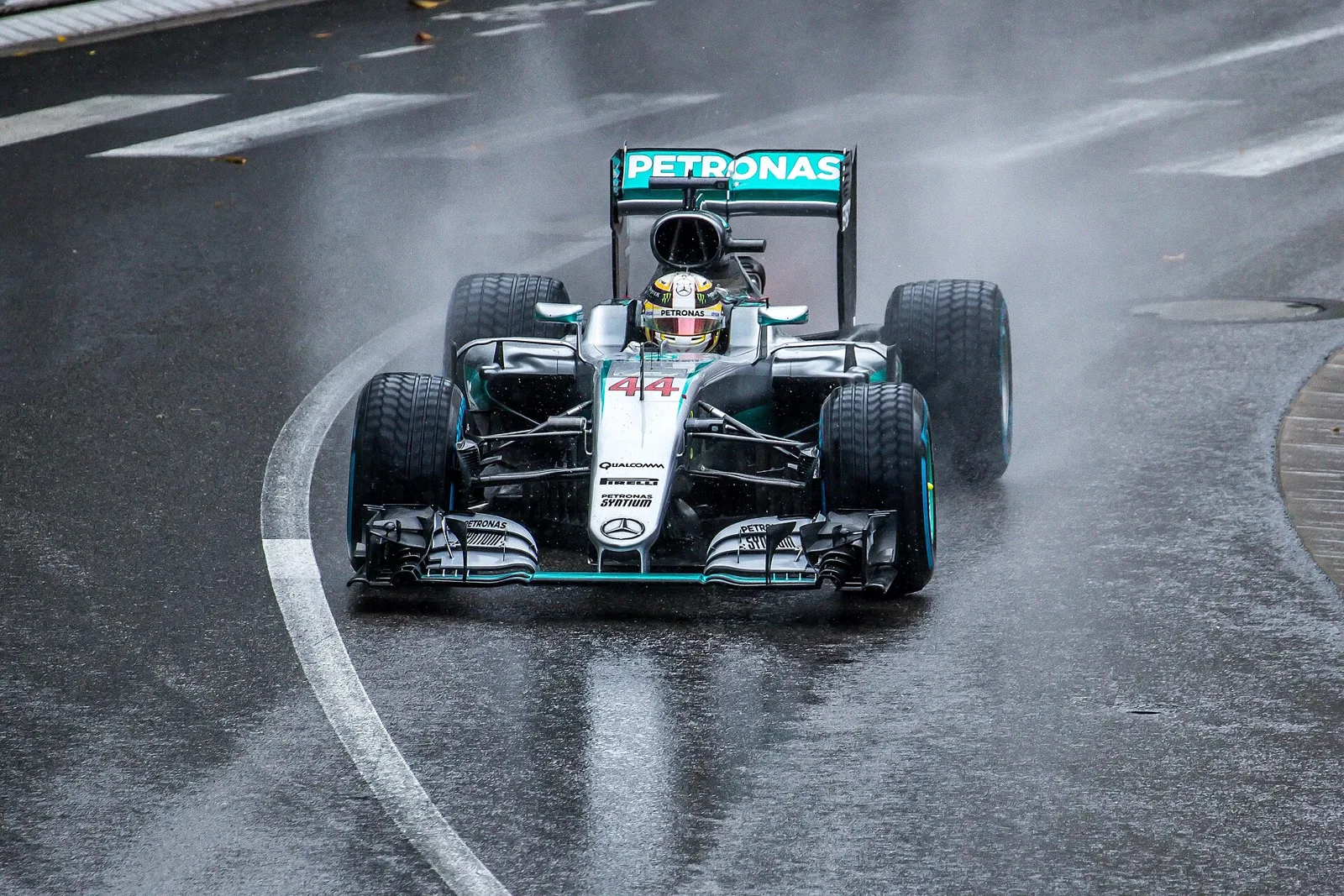
Spain was the first race in Western Europe that season, and a mid-season test was scheduled straight after it, so many teams brought their first major upgrades to Barcelona. Mercedes debuted a sharper-nosed front wing in first practice. McLaren reworked the front wing of its MP4-31, and Force India updated the VJM09 to improve airflow.
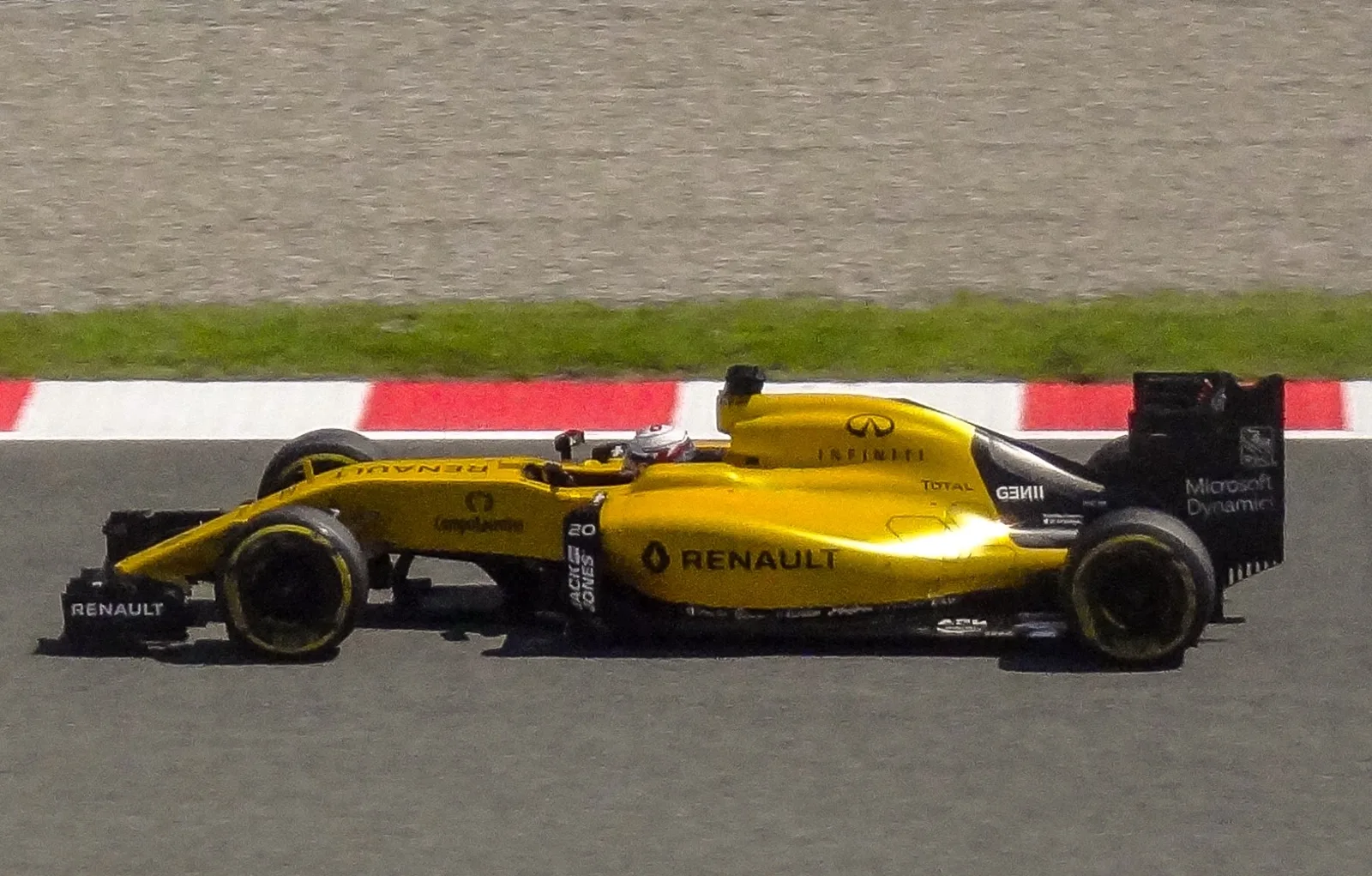
Renault gave Jolyon Palmer a new chassis, and planned a new power unit version for its works team and for Red Bull at the two-day test that followed. Sauber, unable to field a development driver for the test, skipped it. Sauber and Haas were both allowed to use a revised 2016 Ferrari engine, one the works squad had already run in Russia.
Hamilton had received a redesigned MGU-H after power unit problems in China and Russia. Mercedes could not promise the fault would stay away.
How did the championship look going in?
Nico Rosberg led the Drivers' Championship on 100 points, the maximum from the first four races. Lewis Hamilton was second with 57 points and Kimi Raikkonen third with 43. Mercedes led the constructors' table with 157 points, 81 clear of Ferrari, while Red Bull sat third, six points ahead of Williams in fourth.
Pirelli brought its hard, medium and soft tyres, and the orange-banded hard compound made its first appearance of the season. Drivers had to keep one set apiece of the two hardest tyres for the race, plus a set of soft tyres for Q3 if they got there. The remaining ten of thirteen sets were theirs to choose.
How did practice shape the weekend?
Friday's first session belonged to Ferrari, with Vettel and Raikkonen setting the pace on soft tyres. Mercedes followed on the medium tyre and logged more laps than its rivals, and both Red Bull cars came next. Valtteri Bottas was seventh for Williams, and Felipe Massa spun out at turn five at one point. Back at Toro Rosso, Daniil Kvyat could not match his teammate Carlos Sainz Jr. and ended the session half a second behind him.
Rosberg led the second session, edging Raikkonen by two and a half-tenths. Hamilton was third, more than seven-tenths off Rosberg. Raikkonen was summoned into the pit lane to look at a fuel system fault, and he rejoined after the check, while Jenson Button had an electrical issue that forced him to stop at the end of the pit lane.
Ocon made his first appearance of the season for Renault, replacing Palmer, and a tyre failed from debris before he could set a timed lap. Sergio Perez managed only nine laps after smoke came from the rear of his Force India. Palmer's own tyre failed on the start-finish straight in the second session, bringing out red flags, and Pirelli found no sign of a debris cut on the tyre.
Saturday morning's third session gave Rosberg the top spot with 1:23.078, and that benchmark remained until the session closed. Hamilton trailed by 0.126 seconds, and Vettel was two-hundredths back. Verstappen was faster than Ricciardo for the first time, and he finished fourth, with Ricciardo fifth ahead of Raikkonen.
How did qualifying set the grid?
Lewis Hamilton took pole in the final part of qualifying, the 52nd of his career, almost three-tenths of a second clear of Nico Rosberg. Ricciardo and Verstappen started third and fourth for Red Bull, with Raikkonen and Vettel behind them in fifth and sixth. Both Ferrari drivers were more than a second off Hamilton's time.
Qualifying was split into three parts lasting 18, 15 and 12 minutes, with six drivers eliminated after each of the first two. Rosberg set 1:23.002 in Q1, two-tenths of a second clear of Hamilton, and Massa was unexpectedly eliminated after a first lap seven-tenths slower than Bottas's, and he could not set another timed lap. Palmer was dropped to 17th by a late improvement from Button.
In Q2, Hamilton was six-tenths ahead of Rosberg, and Verstappen was third fastest. Kvyat was eliminated in 13th, while his teammate Sainz reached Q3 and Perez advanced as well. Hulkenberg was knocked out in eleventh, and Button and Grosjean were among those left behind him.
Q3 began with Hamilton and Rosberg first out. Hamilton's early sectors were on course for the quickest lap of the weekend until a brake lock-up at turn ten wrecked that lap and his tyres. Rosberg took provisional pole, but Hamilton's second lap on that run was almost three-tenths quicker than Rosberg's.
Bottas was the best of the rest, ahead of Sainz, Perez and Alonso. McLaren's appearance in Q3 was the first since it resumed its partnership with Honda in 2015.
How did the race unfold?
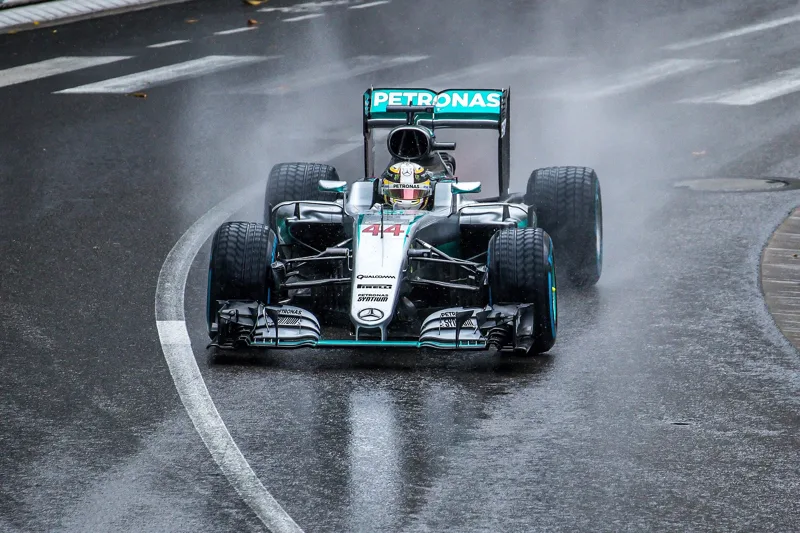
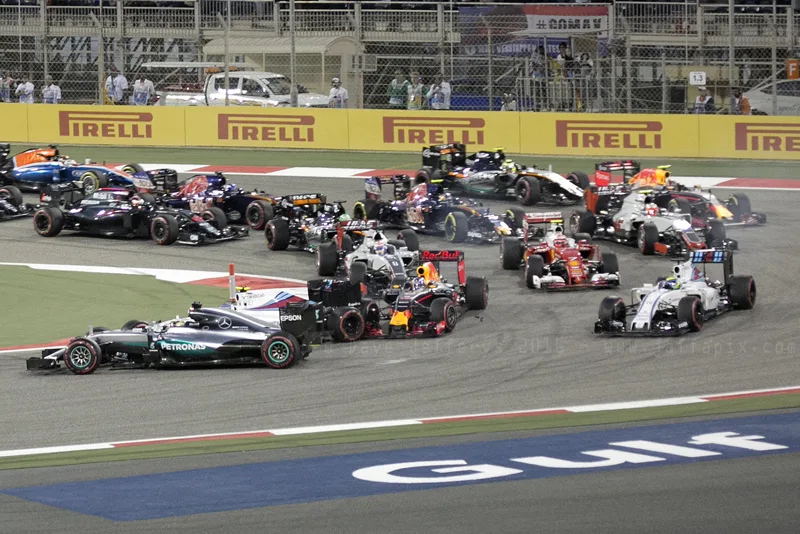
Rosberg got around the outside of Hamilton at turn one, while Raikkonen lost places after a slow getaway. Vettel passed Verstappen, but Verstappen repassed him almost immediately on the approach to turn four. Heading out of turn three, Hamilton attempted to reclaim the place from Rosberg, and the cars touched at turn four after Hamilton ran off the track and spun.
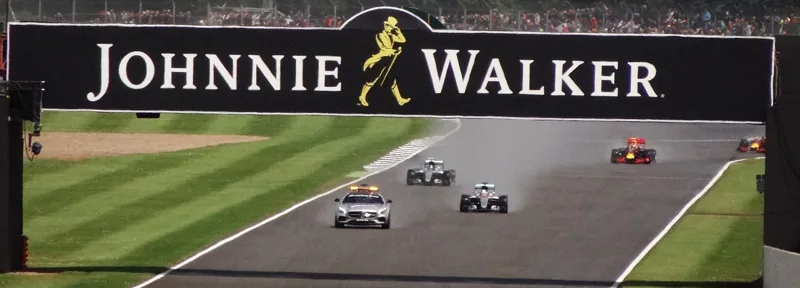
That collision ended the race for both Mercedes drivers and brought out a safety car. The safety car pulled in after lap 4, and the order behind it was Ricciardo, Verstappen, Sainz, Vettel and Raikkonen.
Vettel passed Sainz on lap eight. Raikkonen tried the same move two laps later, but he was forced off the track at turn two and completed the pass a lap afterwards at the same spot.
Sainz and Button pitted on lap 12 and Ricciardo followed a lap later, which left Verstappen in the lead. That made him the first Dutch driver to hold the lead of a race, and he stayed out until a stop of his own a lap later.
Vettel made his stop on lap 16 and emerged third behind the two Red Bulls. Nico Hulkenberg retired on lap 22 after his power unit caught fire, while Massa climbed from 18th to tenth through the field.
On lap 28 Ricciardo switched to soft tyres, and Vettel followed two laps later. Verstappen and Raikkonen ran two stops to Vettel and Ricciardo's three, and that difference shaped the closing stint. On lap 34 the two leaders were separated by 2.1 seconds, and Verstappen pitted the next time around.
Vettel made his third and final stop on lap 39, and Ricciardo stayed out for another four laps before he came in. Alonso's race at his home event came to an end on lap 47, when he stopped at turn three.
Raikkonen got into the one-second window to use the drag reduction system, but he could not get past Verstappen. By lap 57, Ricciardo had got within DRS range too, but his move at turn one on lap 60 ran wide and let Vettel back past.
Kvyat set a quickest lap that was the first for both himself and the team. Two laps from the finish Ricciardo punctured and had to pit, but he kept fourth place. On the last lap Magnussen and Palmer collided, though both finished, and Verstappen crossed the line first.
Who finished where?
| Driver | Team | Result |
|---|---|---|
| Max Verstappen | Red Bull Racing | Winner, youngest in Formula One history |
| Kimi Raikkonen | Ferrari | Second |
| Sebastian Vettel | Ferrari | Third |
| Daniel Ricciardo | Red Bull Racing | Fourth, after a puncture two laps out |
| Valtteri Bottas | Williams | Fifth |
| Lewis Hamilton | Mercedes | Retired after the turn four collision |
| Nico Rosberg | Mercedes | Retired after the turn four collision |
| Nico Hulkenberg | Force India | Retired on lap 22, power unit fire |
| Fernando Alonso | McLaren | Retired on lap 47 at turn three |
Behind Verstappen, the two Ferraris took second and third, so the Red Bull pair finished first and fourth. Ricciardo's late puncture did not cost him a place, as he kept fourth ahead of Bottas, while Mercedes finished the day without a point.
Why did the Mercedes collision matter so much?
Both Mercedes drivers retired after the turn four contact, so the team scored nothing from the race. Mercedes had not lost both cars in one race since the 2011 Australian Grand Prix, and it had gone without a point for the first time since the 2012 United States Grand Prix.
Rosberg was still in contention for the title when he left the race, and he had been ahead of Hamilton in the standings.
How did the drivers react afterwards?
At the podium interviews, Verstappen was delighted with a great race, crediting the team for a car that suited him. Raikkonen said he was happy for Verstappen but disappointed not to have won himself, and he put his failure to pass down to a shortage of downforce while he was following.
Raikkonen added that, after the poor qualifying, the team would have happily taken two podium positions. Vettel offered his congratulations, though he regretted that his alternative strategy had not paid off.
Ricciardo was devastated to finish fourth. Red Bull's decision to pit him for an extra stop, a call that eventually cost him a podium place, left him unhappy. The team explained that it had focused its strategy on Vettel, whom it saw as the biggest threat.
What records did Verstappen set?
Verstappen became the youngest ever winner at 18 years and 228 days, beating Vettel's youngest-podium record from 2008 by more than two years. He was also the youngest driver to stand on a Formula One podium, and the youngest driver to spend a lap at the front of a Grand Prix, a mark Vettel had held since the 2007 Japanese race.
He was also the first winner born in the 1990s. Verstappen became the first Dutchman to win a race, and the Netherlands became the 22nd nation to produce a winner. Verstappen also became the tenth different driver to win the Spanish race in as many editions.
His father Jos, himself a former Grand Prix driver, said he considered his son the better driver, because he had never won a race himself. Sky Sports F1's David Croft said Verstappen had shown he had everything needed to become world champion, and the French sports daily L'Equipe placed him firmly among the sport's leading young talents.