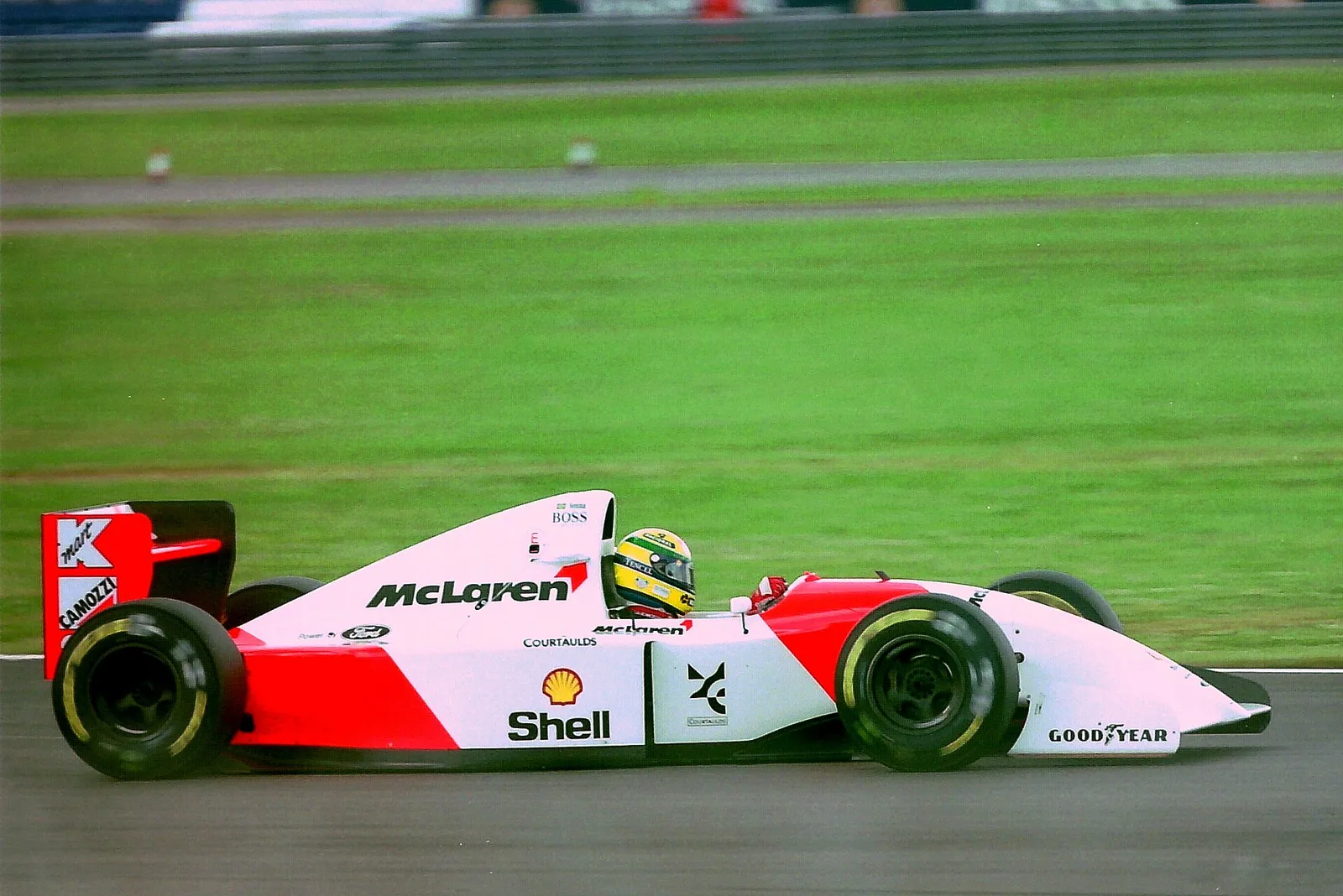
Active suspension, traction control and a customer Ford V8 that still carried Senna to five wins in a difficult season.
The McLaren MP4/8 was a 1993 Formula One car designed by Neil Oatley, with a semi-automatic gearbox, active suspension and traction control. It used a 3.5-litre Ford HBD7 V8, which was less powerful than the Renault V10 used by Williams. Ayrton Senna won five races in it and finished second in the drivers' championship.
The McLaren MP4/8 was the car McLaren ran in the 1993 Formula One World Championship, and it carried a set of electronic aids that were ahead of their time. Ayrton Senna drove it to five victories in his sixth and final season with the team, while Michael Andretti struggled to adapt. The customer Ford engine left the team short of power against Williams.
Why did McLaren run a Ford engine in 1993?
Honda ended its supply after 1992, and McLaren could not secure Renault engines, so it fell back on customer Ford V8s. Those engines were rated at about 680 hp, against 700 hp for Benetton's works Ford and 760 to 780 hp for the Renault V10s used by Williams.
Benetton was the Ford factory team under contract, so McLaren's customer engine lacked some of the technology in Benetton's unit. McLaren received the higher-specification Ford after the British Grand Prix, although an older unit stayed in Andretti's car at Belgium so that newer engines could be stockpiled for the rest of the year. Ferrari's V12, rated at 745 hp (556 kW; 755 PS), remained a strong rival.
Honda had supplied McLaren from 1988 to 1992, years in which the team dominated both championships, so losing that partnership hit hard. The Ford was lighter, but the Renault had the better power-to-weight ratio, and that mattered on the straights.
A Ford-powered car with electronic aids ahead of its time, carrying Senna to five wins in 1993.
How the MP4/8 was designed
Neil Oatley designed the MP4/8 around advanced electronics. It had a semi-automatic gearbox that could be switched to full automatic, plus active suspension, telemetry running both ways and traction control. These systems were developed with TAG, the Techniques d'Avant Garde group that held a stake in McLaren. The MP4/8 was also the first McLaren to feature barge boards, and the first Ford-powered McLaren since the MP4/1C in 1983.
Senna was impressed at first by the handling and nimbleness of the car. He knew the customer Ford V8 was underpowered next to Williams' Renault, and he wanted a deal struck round by round, worth $1 million per Grand Prix. Some observers thought the demand was a marketing ploy to keep sponsors interested, but the engine was clearly his real concern.
Benetton ran the higher-specification Ford HBA8 V8s, and McLaren's customer-grade unit could not match them until the later races. Dennis later rated the car among the finest the team had built, which suggests the chassis was never the weak point.
How did the MP4/8 perform in 1993?
Senna led the championship until after the Canadian Grand Prix, winning three of the first six races. Prost's Williams FW15C was the superior car, and he clinched the title with two races to spare. The MP4/8 scored 84 points, 73 of them from Senna, an average of 2.63 per start.
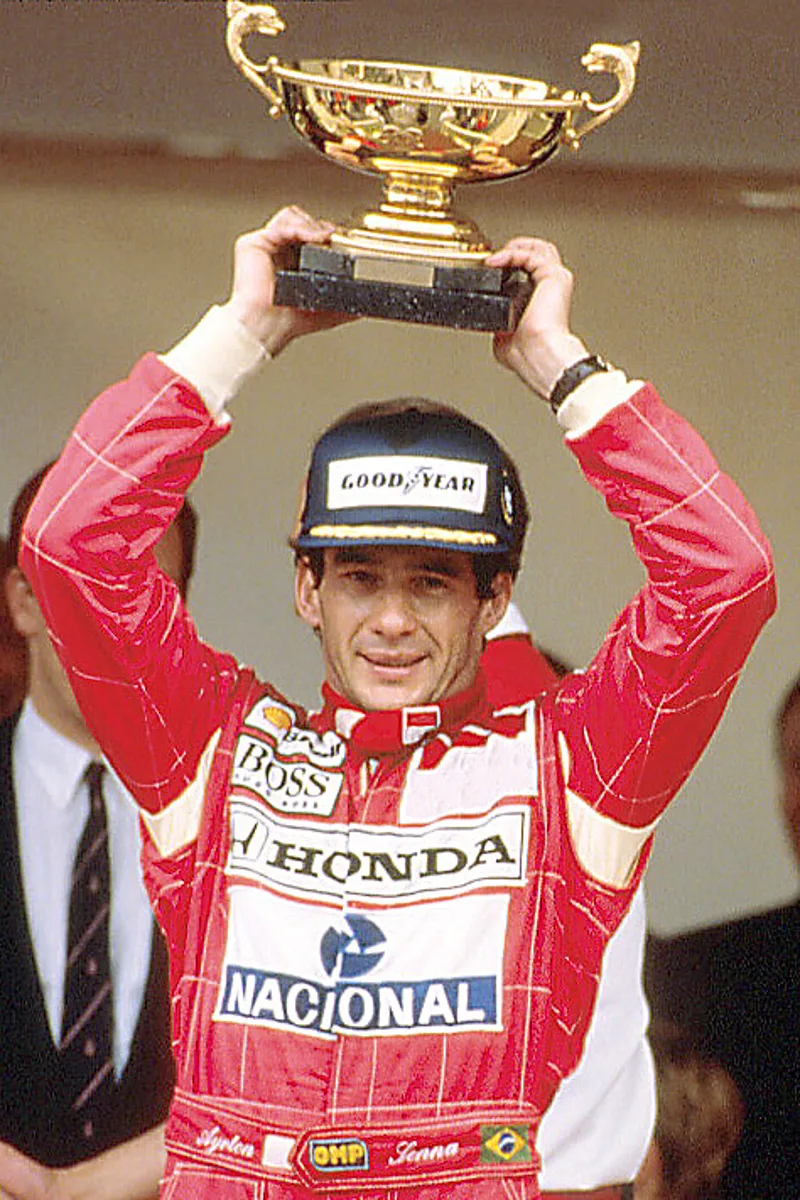
Senna's early wins came in Brazil, his second victory there, at Monaco, his sixth win in the principality, and at Donington Park in the rain-soaked European Grand Prix. Later in the season Prost took the lead for good, while Senna faded in the second half of the year. Senna then took the final two rounds, in Japan and Australia, ending with five wins and second in the drivers' championship. McLaren ended the year second to Williams among the constructors. Senna's Japanese victory came with the Ford V8 too.
Michael Andretti's difficult year
Andretti was the son of the 1978 World Champion, Mario Andretti, and had come to Formula One from CART. He scored only a few points, and a string of collisions meant he completed just three laps in his first three races. Testing limits in 1993 meant he never ran in the wet in an F1 car, and he never came to grips with active suspension or traction control, which he regarded as gizmos missing from the simpler CART cars.
Living in the United States and commuting to races also cost him test days. By mutual agreement he was released after the Italian Grand Prix, where he took third place at Monza. That remains the last podium finish by an American driver in Formula One as of 2023.
Mika Hakkinen replaced him. At Estoril Hakkinen out-qualified Senna, a rare occurrence, and he was in a competitive position against Jean Alesi's Ferrari before running too close at the final corner. He lost downforce, understeered onto the grass and hit the wall. He scored one further podium before the season ended.
What was the MP4/8B test car?
The MP4/8B was a modified MP4/8 built in 1993 to test Lamborghini's V12, which was rated at 710 bhp (529 kW; 720 PS) in its race form. Chrysler, which owned Lamborghini at the time, agreed to supply the engines after a handshake between Ron Dennis and Bob Lutz at a motor show in Munich.
The chassis needed three months of work to fit the longer, heavier V12, and for McLaren's tests the engine carried the Chrysler badge. Senna asked the engine's designer, Mauro Forghieri, for a less brutal top end and a fatter midrange. Forghieri made the changes. The engine lost 25 bhp at the top end but gained about 40 bhp over the 1993 race engine, giving roughly 750 bhp, about 70 bhp more than the customer Ford V8s.
Senna and Hakkinen ran the car at Silverstone and Estoril from 20 September, and both were impressed. Senna is also said to have phoned Dennis while the car was being tested at Estoril, urging him to consider the V12 rather than the V8. Dennis reportedly took the call in his private limousine, since he was in England then. Hakkinen said an engine blew up on the Hangar Straight at Silverstone, with debris flying past his helmet, and that the car had been pulling harder right up to the failure. Giorgio Ascanelli, chief engineer of the test team and Senna's race engineer that year, called the effort months of hard labour carried out mid-season. He said the result was longer and heavier, yet more stable and gentler on its tyres.
Senna reportedly said it would be interesting to race the Lamborghini in Japan, and he believed that, reliability aside, a McLaren-Lamborghini would at least have matched the Williams-Renaults and Benetton-Fords he was struggling to keep up with. Ian Wright, a former McLaren engineer, later argued that the V12 would have given the team the pace to win the 1993 title comfortably. He recalled that bolting the engine on did not make the car quicker at first, so extra downforce had to be added before the extra power could be used. The car never raced, and it was first shown publicly at the 2026 Goodwood festival.
What came after the 1993 season?
McLaren had planned to use Peugeot's V10 for 1994, and the MP4/9 was closely based on the MP4/8. Senna had already signed for Williams, the Peugeot engines proved unreliable, and McLaren ended the partnership after a dismal 1994 season, switching to Mercedes from 1995.
Dennis later said Senna would have stayed had McLaren signed Peugeot earlier, because he saw a works partnership as essential. Senna felt obliged to remain with Williams. Peugeot had won Le Mans in 1992 and 1993 with its endurance engine, but Senna doubted that engine could survive Formula One's stresses or match the Renault V10. Both doubts proved correct during 1994, and the development Peugeot had promised never arrived. McLaren's next victory did not come until 1997, when David Coulthard won in the MP4/12 at the Australian round.
Livery, numbers and later appearances
Marlboro branding appeared throughout, apart from the French, British, German and European rounds. Kmart and Camozzi sponsored the rear wing. After Senna's win at Donington, McLaren answered Sega's backing of Williams with a squashed hedgehog badge. The cars carried the numbers 7 and 8, which the team took from the vacated Brabham squad because it had given up its 1/2 numbers after losing the 1992 title.
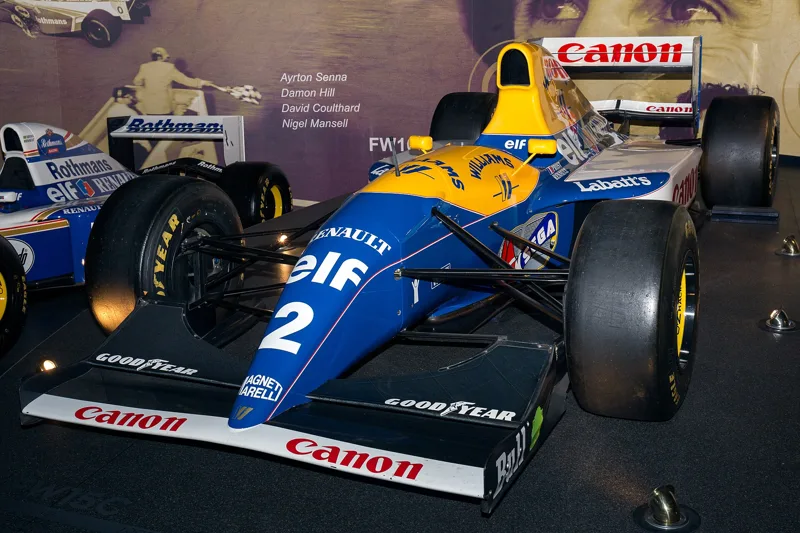
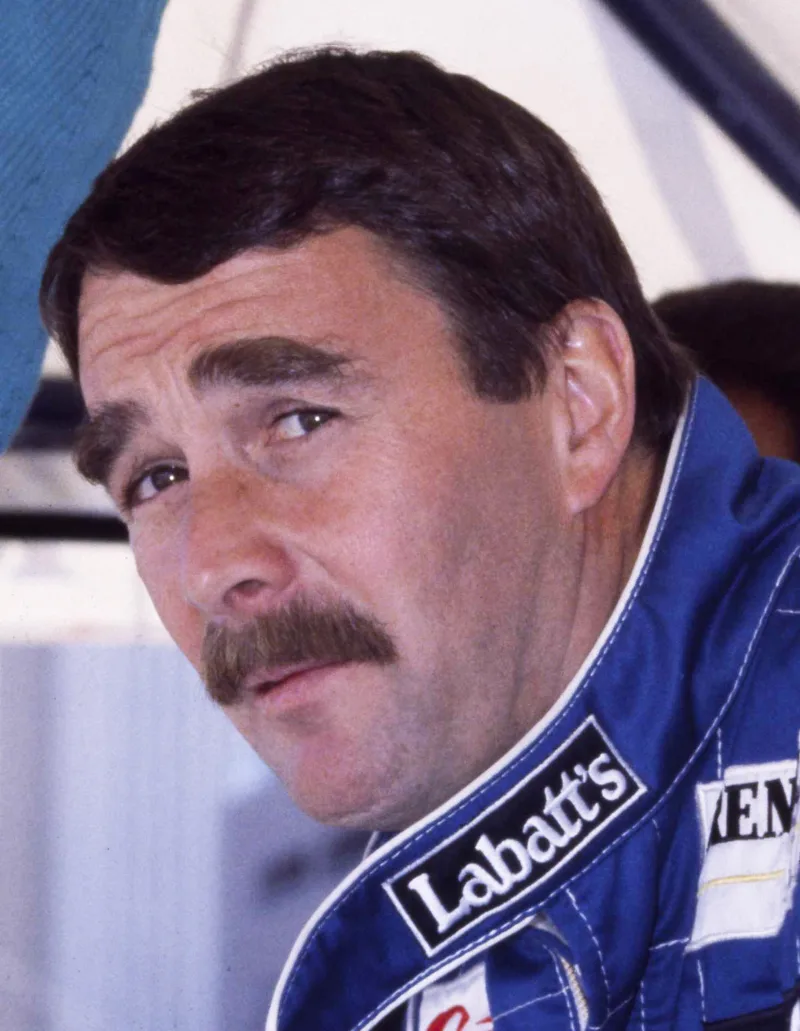
In 2023 Sebastian Vettel took the MP4/8 up the hill at Goodwood, running it beside Nigel Mansell's title-winning Williams FW14B. In 2024, at the Emilia Romagna Grand Prix, he drove Senna's car on a demonstration run in tribute to Senna and Roland Ratzenberger, who had crashed at the 1994 San Marino Grand Prix thirty years earlier. The car was also playable in the mobile racing game Asphalt 8: Airborne from January 2017.
Key figures
| Item | Detail |
|---|---|
| Season | 1993 Formula One World Championship |
| Designer | Neil Oatley |
| Engine | 3.5-litre Ford HBD7 V8, customer specification |
| Customer engine output | About 680 hp |
| Drivers | Ayrton Senna all season; Michael Andretti until Italy; Mika Hakkinen after that |
| Senna wins | Five |
| Team points | 84, of which 73 came from Senna |
| Constructors' result | Second, behind Williams |
| Test car | MP4/8B with Lamborghini LE3512 V12, 710 bhp |
| Successor | MP4/9 Peugeot, 1994 |