A sugar-cooperative sponsor, a double world champion at the wheel and a team that moved from Sao Paulo to Reading before closing in 1983.
Fittipaldi Automotive was a Formula One team founded by Wilson and Emerson Fittipaldi. It raced from 1975 to 1982, starting as Copersucar-Fittipaldi and building cars in Brazil before moving to Reading. The team scored 44 championship points across 119 Grands Prix.
Few Formula One teams have started so far from the sport's centre. Fittipaldi Automotive was built by two Brazilian brothers, funded by a sugar and alcohol cooperative and based in Sao Paulo, 10,000 km (almost 6,000 miles) from the British teams. It ran for eight seasons and 119 Grands Prix before it closed in early 1983.
Who set up the Fittipaldi team?
Wilson and Emerson Fittipaldi set up the team in 1974, with Brazilian sugar and alcohol cooperative Copersucar as its sponsor. Emerson was a double world champion, while Wilson had raced for Brabham in 1972 and 1973. The team began life in Brazil before moving to Reading in the UK.
The brothers came to Formula One by a long route. In the 1960s they ran a karting and engine tuning business at home, built Formula Vee cars and produced a twin-engined Volkswagen Beetle. Both raced successfully in Brazil before moving to Europe in the late 1960s, and by late 1973 they had decided to build a team of their own.
Copersucar's money gave the operation a strongly Brazilian identity. Mexican Jo Ramirez became team manager, Embraer provided materials and wind-tunnel time, and the design came from Richard Divila, who had worked on the family's Formula Vee cars. The first car, the FD01, was revealed in October 1974 in Brasilia, where President Ernesto Geisel attended the event at the Federal Senate.
A Brazilian team with sugar-cooperative money, a double champion at the wheel and a short life far from the British heartland.
Why was the team based in Brazil?
The team started in Sao Paulo, far from the suppliers it needed most. Brazil was too far from its engine and gearbox suppliers and lacked the component firms the UK offered, so the operation moved to Reading during 1977. The later cars were built there, in the area that became known as motorsport valley.
The experiment did not last for long. The first FD04 was built in Brazil in 1976, but the distance from its engine and gearbox suppliers proved too great. Brazil also lacked the large group of expert component makers that England had, and the Reading area supplied that gap.
What happened in the early seasons?
The opening season went badly. Wilson crashed the FD01 on lap 13 of the Argentine race, a race his brother later won in a McLaren. Wilson scored five finishes in 1975, his best a 10th at Watkins Glen, and missed the grid three times before he stepped back from driving.
Italian Arturo Merzario took the car to his home race once Wilson had fractured his hand in a practice accident at the Austrian Grand Prix. Merzario's result was no better.
The answer came in the form of Emerson, who joined from McLaren for 1976. He qualified fifth on his debut at Interlagos, the best grid position the team would ever achieve, but engine trouble ended his race in 13th. Ingo Hoffmann joined him for four races that year. Emerson scored only three points in 1976.
Emerson himself was modest about the prospects. He expected little chance of a title in the coming year, but he was confident that within one or two years the team could become a leading force in Formula One.
The 1977 season kept the same setup, and Emerson managed several fourth and fifth place finishes. Hoffmann added a seventh place at the Brazilian Grand Prix.
How did the cars change from year to year?
Each car grew out of the one before rather than starting from a clean sheet. The FD02 and FD03 arrived in 1975 with most of the original bodywork removed, the FD04 followed in 1976, and the yellow F5 came mid-season in 1977. The 1978 F5A took its ground effect ideas from Lotus.
Divila's role changed along the way. Once he left the post of technical director, the D was dropped from the designation, which is why the 1977 car became the F5. Ralph Bellamy designed the F6 for 1979, but it failed on track while the team's grasp of ground effect was still in its infancy. Officially, the Copersucar name stayed on the cars until the close of 1979, with the Fittipaldi name taking over early in 1980.
For 1980 the F7 used reworked Wolf chassis from the previous year, and its design team was led by Harvey Postlethwaite, with a very young Adrian Newey as chief aerodynamicist. The final new design, the F9, was penned by Divila and Tim Wright. It appeared at the British Grand Prix in 1982 without improving matters.
Season by season results
| Season | Main car | Highlights |
|---|---|---|
| 1975 | FD01, FD02, FD03 | Wilson Fittipaldi; five finishes, best 10th at Watkins Glen |
| 1976 | FD04 | Emerson Fittipaldi; 5th on the grid at Interlagos, 13th in the race, three points |
| 1977 | F5 | Several 4th and 5th places for Emerson; Hoffmann seventh in Brazil |
| 1978 | F5A | Second at the Brazilian Grand Prix; 17 points; seventh in the Constructors' table |
| 1979 | F6 | Ralph Bellamy's car struggled; Alex Ribeiro ran at the Imola non-championship race |
| 1980 | F7, F8 | Skol Team Fittipaldi with Keke Rosberg; both drivers took third places in the early F7s |
| 1981 | F8 | Chico Serra joined Rosberg; no points, Rosberg fourth at the non-championship South African Grand Prix |
| 1982 | F8, F9 | Serra sixth at the Belgian Grand Prix after Lauda's disqualification; final point of the team |
The 1978 second place at the Brazilian Grand Prix was the team's best race result, and Emerson's fifth on the grid at Interlagos in 1976 was its best qualifying position. The team's form fell away after 1978, and by 1981 it scored no points for the year.
Who drove for the team?
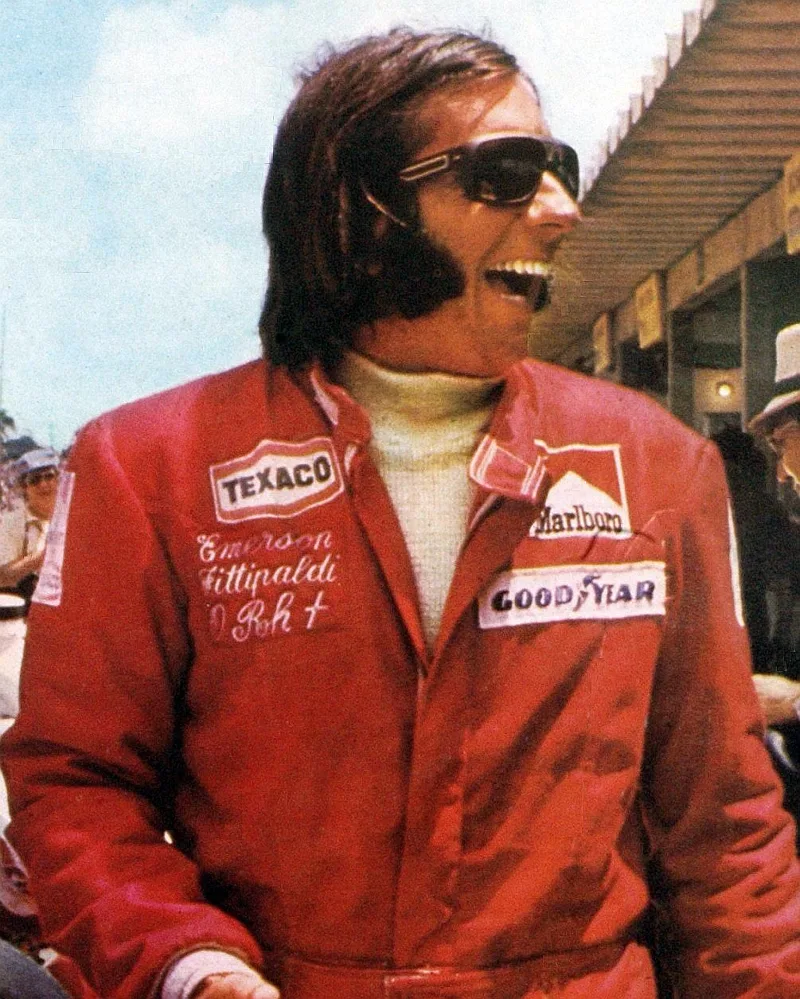
Emerson Fittipaldi was the team's main driver from 1976 to 1980, and Keke Rosberg partnered him in 1980. Chico Serra took over Emerson's seat in 1981. Wilson drove the lone car in 1975, and Ingo Hoffmann made occasional appearances as a second driver. Emerson stopped after five years with the family outfit.
Emerson was renowned for a smooth, fast style, yet his results with the team became uneven. Team manager Jo Ramirez would confront him whenever a sudden spurt of pace revealed he had been holding something back. By 1980 Rosberg felt he was long past his peak and lacked motivation.
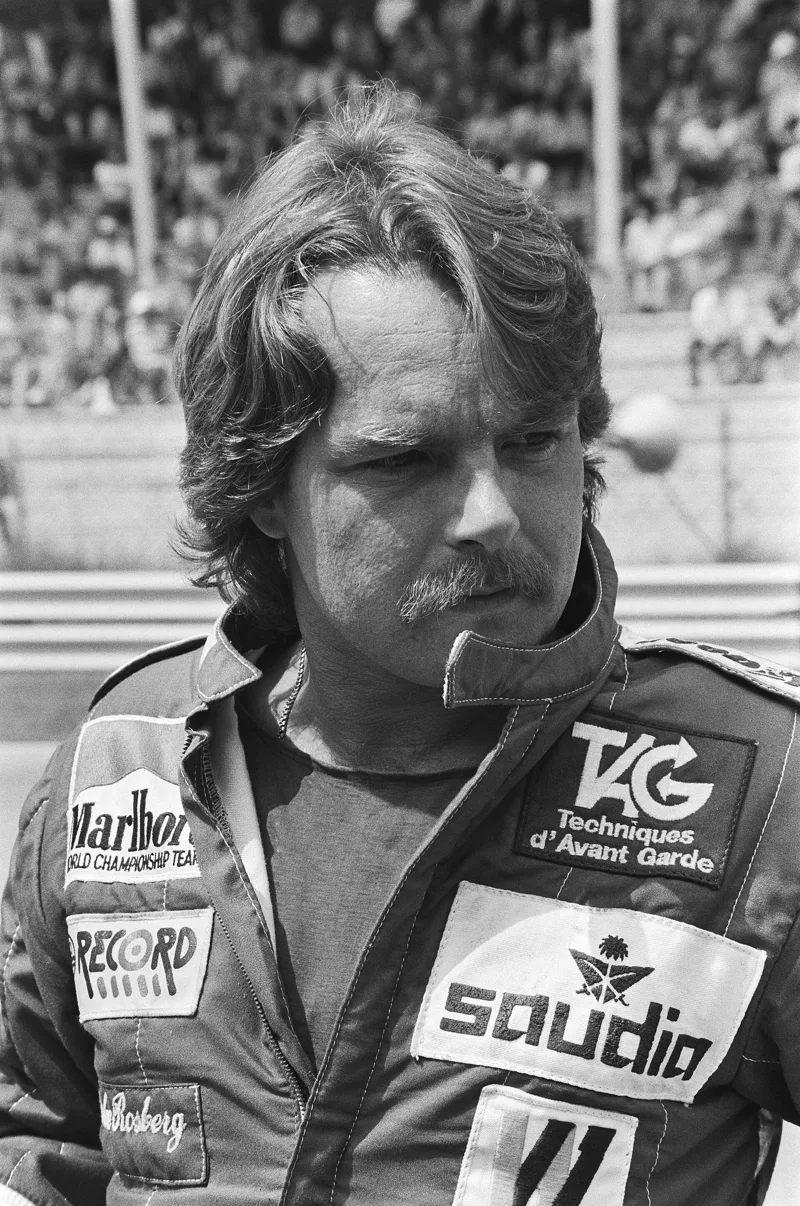
Rosberg was a young Finn who had struggled to find a competitive seat before he joined. He scored a podium at the 1980 Argentine Grand Prix in his first race with the team, but his second season produced no points at all. According to Rosberg, a pass on Emerson in his second race soured relations between the two men. He engineered his release and moved to Williams, where he went on to win the drivers championship in 1982.
Years later Emerson looked back on his last two seasons with the team as deeply unhappy. He felt he had been consumed by the team's problems. At the time, however, he put his retirement down to the deaths of Ronnie Peterson and Patrick Depailler. He stopped at the end of 1980, aged only 33.
Did the team ever win a race?
Yes, but only in the Aurora Formula One series. A Fittipaldi F5A run by RAM Racing scored the make's only race win, taking victory at Brands Hatch's Race of Champions on 15 April 1979 with Guy Edwards at the wheel. The team never won a world championship Grand Prix.
On the road Edwards was only seventh, since six world championship cars had not been entered in the Aurora series that day. His team-mate Bernard de Dryver also achieved good results, including a run of podium finishes in the series. Valentino Musetti, a British stuntman, ran an updated F5B in the 1980 Aurora UK championship, though with less success.
What were the team's later years like?
The 1979 campaign was a step back from 1978, as ground effect became crucial and the team struggled to understand it. Copersucar ended its backing at the end of that year, and the team acquired the leftovers of Wolf Racing, a near neighbour. That gave it two cars for 1980.
Skol Brasil became the backer for 1980, and the car was run as Skol Team Fittipaldi. Keke Rosberg, who had come from Wolf, drove the second car. Both drivers took third places in the early F7s before the F8 arrived.
Skol had pulled out by 1981, and the name went back to Fittipaldi Automotive. Postlethwaite moved to Ferrari at the start of the year, while Peter Warr went back to Lotus after Colin Chapman persuaded him to return. The cars were updated versions of the previous season's machinery, and the drivers struggled for points.
The team's last point came in 1982. Serra's sixth place at the Belgian Grand Prix at Zolder came only after Niki Lauda was disqualified, and the F9 failed to lift the team's form at the British Grand Prix that year.
What is the team's legacy?
Fittipaldi Automotive closed in early 1983 after the brothers struggled to raise funds for the following year. The team's life spanned eight seasons and 119 Grands Prix, and it left a lasting place in the record books as Brazil's only Formula One team.
Some of its people went on to bigger work. Postlethwaite and Newey later designed championship winning cars for other teams, while Ingo Hoffmann became a 12-time Brazilian Stock Car champion after driving a handful of races for the team.
Emerson's racing career went on in America. He returned to CART in 1984 and took the series title in 1989, the same year he won the Indianapolis 500. He won the 500 again in 1993. Serious injuries suffered at the Michigan 500 brought his CART years to a close in 1996.
Few constructors can claim that distinction, and it still sets the team apart in the sport's history.