From the 1973 Bitter CD to the Vero and the Opel-based luxury models of the 2010s, Erich Bitter's small German company kept reinventing itself.
Bitter Automotive is a German sports-luxury marque founded by Erich Bitter, which later moved production to Austria. It built the CD and SC on Opel platforms, the Holden-based Vero, and Opel luxury models, and it has used prototypes to test new ideas.
Erich Bitter Automobil GmbH, usually called Bitter, is a premium sports-luxury marque that began in Germany and later moved its production to Austria. Its cars were usually rebodied versions of other manufacturers' vehicles, and the company has been reinventing itself for more than half a century.
What is Bitter Automotive?
Bitter Automotive is the company founded by Erich Bitter, a former racing driver who became a tuner, importer and designer. He began building his own vehicles after business ventures with the Italian manufacturer Intermeccanica came to an end, and the company's identity has been built around that background.
The marque specialises in rebodying other manufacturers' vehicles. Its initial production ran from 1973 to 1989, selling cars in Europe and the United States. Several prototypes followed with hopes of low-volume production, but none reached the road until the Vero arrived in 2007.
A rebodying specialist that sold 395 CDs, lost its American deal and kept returning with new luxury cars on other makers' platforms.
Where did the Bitter CD come from?
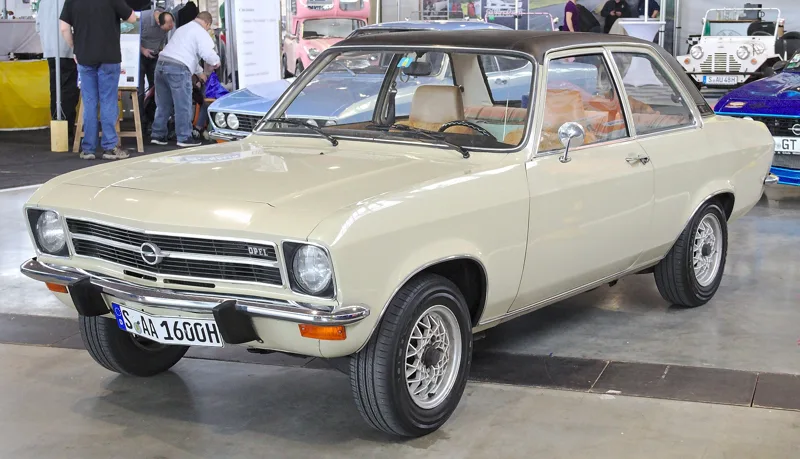
The Bitter CD was a three-door hatchback coupe with a 230 PS Chevrolet V8 of 327ci displacement, built between 1973 and 1979. It began as a prototype shown on 9 September 1969 at the Frankfurt Auto Show, as the Opel Coupe Diplomat, or CD, derived from the Opel sedan.
The design was led by Chuck Jordan, who had been Opel's design boss and later became a vice-president at General Motors, together with Opel designer Dick Ruzzin. Robert Lutz, then Opel's head of sales and marketing, was keen to produce the car and commissioned Pietro Frua to advance the concept into two road-going prototypes.
In 1971 Dave Holls, who had become Opel's design boss that July, encouraged Erich Bitter to build the CD. Bitter GmbH was formed that year to market it, and he chose a one-acre site in his home town of Schwelm, Germany, for the company.
Opel's own design team had already refined Frua's concept before production. Dave Holls and his colleagues added a small front spoiler, a larger grille, higher bumper bars and a lower side-window line that ran up across the C-pillar to the rear hatch.
Bitter did not have the capital or resources to set up his own production, so he turned to Baur GmbH in Stuttgart. The firm had a reputation for high-quality prototypes and limited-production cars for other German manufacturers. Baur also manufactured the body panels, assembled the shell and installed the Opel Diplomat's mechanicals.
Why did the CD sell so few cars?
At the 1973 Frankfurt Motor Show the CD drew strong interest, and Erich Bitter took 176 orders for the coupe. The 1973 oil crisis then led to the cancellation of most of those orders, although production still began later that year at Baur.
The target of 200 units a year was never realised. Bitter sold 395 units in total, and the purchase price in 1974 was DM 58,400. The CD's story shows how a striking design could still fail when the market turned against it.
How did the SC take the marque forward?
The SC was based on Opel's largest model of the time, the Senator, and its styling echoed the Pininfarina-designed Ferrari 365 GT4 2+2 of 1972. The coupe was first shown in 1979, although sales did not start until the spring of 1981. The convertible followed in 1981 at the Frankfurt Auto Show, and the sedan arrived in 1984 and became available in 1985.
Bitter first looked at a V8 engine, benchtesting the 2.5-litre V8 from the Lamborghini Urraco and a Holden V8. Emissions, fuel consumption and cost ruled both out. The SC instead used a fuel-injected 3.0-litre Opel six with 180 PS, which was acceptable but not quite enough for a car in its price class.
Overheating concerns ruled out a turbocharger, so Erich Bitter had the Opel tuners Mantzel increase the stroke. The result was a 3848 cc engine, known as the 3.9-litre, which appeared in 1984 and produced 210 PS while offering fifty percent more torque. The SC was built until 1989.
Who built the SC bodies?
Bitter had hoped to keep working with Karosserie Baur, but that company had won a contract to build the BMW M1 and had no capacity to spare. Bitter went instead to OCRA, a small coachbuilder near Turin. OCRA lacked the means and experience to produce bodies in series and lost the contract in early 1982, after 79 examples had been built.
The bodywork on those early cars suffered from quality problems, especially rust. Bitter then contracted with Maggiora to build the bodies, and the painted shells went to the Bitter factory in Schwelm for final assembly. As volumes rose, assembly was handed to Steyr-Puch in Graz, Austria, in 1983.
A four-wheel-drive version of the coupe was added in 1981, using a system developed by Ferguson Research. Only a handful were built.
Why did the American venture fail?
In 1984 Bitter announced at the New York Auto Show that it would enter a limited marketing agreement with GM to sell the coupe in the United States through participating Buick dealerships. GM hoped a premium European product would win back share lost to BMW, and importing Opel cars was dismissed because Opel was seen as an entry-level brand.
Fewer than a dozen Buick dealers, mostly in the New York City area, took the Bitter signage, and sales were minimal. The American side was run by Bitter Automobile of America, headquartered in Chicago and co-headed by Erich Bitter and Lee Miglin. The failure was rooted in the business model, because the market for rebodying other manufacturers' vehicles had been shrinking for decades.
The 1984 cars had been adapted for emissions rules by an independent importer, yet engine parts were overheating and the cars did not make their advertised power. For 1985 Porsche helped Bitter, fitting an oxygen sensor and a catalytic converter, and the cleaned engine developed 200 hp.
What was the Vero?
In 2007 Bitter resumed small-scale production with the Vero, which was launched at the 2008 Geneva Motor Show. It was derived from the Australian-built Holden Caprice (WM) sedan, believed to have been bought directly from Holden thanks to Erich Bitter's friendship with Holden's former chairman.
The Vero's unique restyling was claimed to have cost A$1 million and added 20-inch alloy wheels, an extended bonnet and a redesigned front bumper with a new grille. The donor car's Chevrolet V8 of 6.0 litres and 362 PS stayed unchanged, and the leather interior kept luxury fittings such as a DVD player.
The Vero sold in Germany for EUR 121,975 and was discontinued in 2012. In 2009 Bitter also showed a Vero Sport at Geneva, based on the shorter Holden Commodore (VE) SS sedan. That model was discontinued in 2012 as well.
Which Opel-based luxury models did Bitter build?
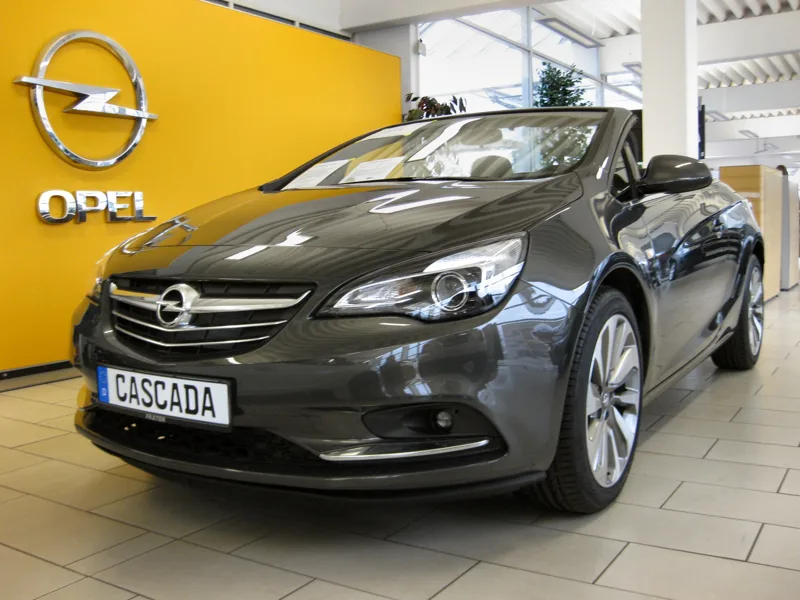
The Opel-based models repeat the CD's method, taking an existing car and turning it into a higher-priced luxury product. From 2010 to 2013 Bitter produced a luxury version of the Opel Insignia OPC as the Bitter Insignia. The company then turned to Opel's smaller models, with the Adam by Bitter in production from 2013 and the Mokka by Bitter from 2016.
The Mokka was renamed Mokka X by Bitter in late 2016 along with a facelift, in line with the Opel and Vauxhall versions. Today Bitter offers luxury versions of the Mokka and Mokka e, the Corsa GS-Line, the Grandland X and the Insignia.
What were the key models and prototypes?
Erich Bitter kept presenting studies, and some were close to production. The table lists the main production cars and the prototypes that shaped the company's story, and it shows how seldom a concept reached the road.
| Model | Status | Year |
|---|---|---|
| Bitter CD | Production car, 395 units in total | 1973 to 1979 |
| Bitter SC | Production car on the Opel Senator platform, 3.9-litre from 1984 | 1979 to 1989 |
| Bitter Blazer | One-off, Chevrolet Blazer with a Europeanized front | 1976 |
| Bitter Super Aero | Two-seat sports car on the Opel Kadett C | 1978 |
| Bitter Rallye GT | Targa-style two-seater on the Opel Manta, not built | 1984 |
| Bitter Type 3 | Five prototypes for the United States, GM withdrew | 1987 to 1988 |
| Bitter Vero | Production car on the Holden Caprice | 2007 to 2012 |
| Bitter Insignia | Luxury version of the Opel Insignia OPC | 2010 to 2013 |
| Bitter CD II | Two prototypes, never in full production | 2003 |
What were the prototypes of the 1980s and 1990s?
The Blazer of 1976 modified a Chevrolet Blazer with a new Europeanized front end. The Super Aero of 1978 was a compact two-seat sports car based on the Opel Kadett C, and the Rallye GT of 1984 was a Targa-style two-seater developed with Isdera. Bitter predicted a price of DM 40,000 for the Rallye GT but never built it.
The Type 3 of 1987 was a 2+2 convertible introduced in 1988 as the successor to the SC. Five prototypes were made, but GM withdrew its plans before production could begin, and two of those prototypes still survive. The Tasco of 1991 was a mid-engine sports car with Chrysler power, of which only two copies were made.
Each of these projects was shaped by the same constraint: a small company relying on other manufacturers for engines, platforms and funding.
The Berlina of 1994 was a four-door sports sedan with one prototype, presented at Geneva, and its series production failed because financing was not secured. The GT1 of 1998 was a two-seat, mid-engined sports car based on the Lotus Elise GT1.
What is the legacy of Bitter Automotive?
The company's legacy is built on the CD and SC, which showed that a small German firm could produce a distinctive luxury coupe on mainstream platforms. Its later Opel-based models carried that idea into a new era, even though many concepts never reached production. That habit of reworking someone else's car runs through almost everything the company has built.
The SC has also found a place in popular culture, as the subject of a sub-plot in episode 9 of season 6 of The Goldbergs. That is a small but telling reminder that the car still attracts attention decades after its production ended.