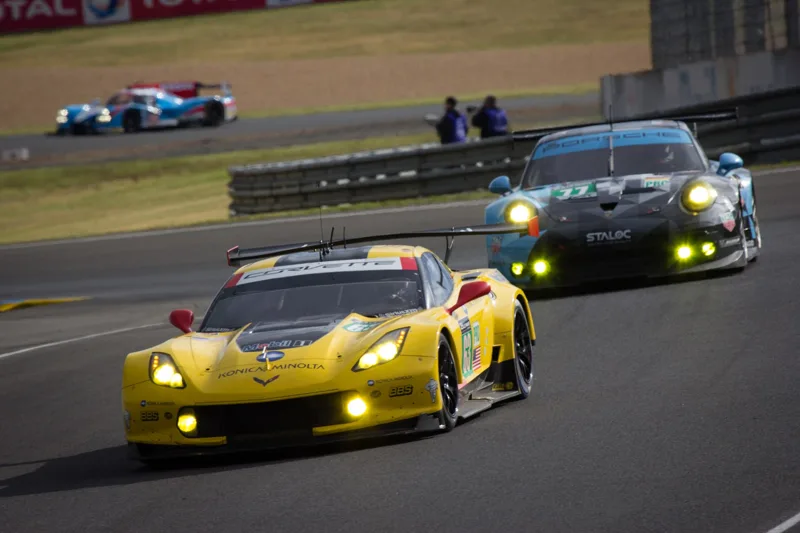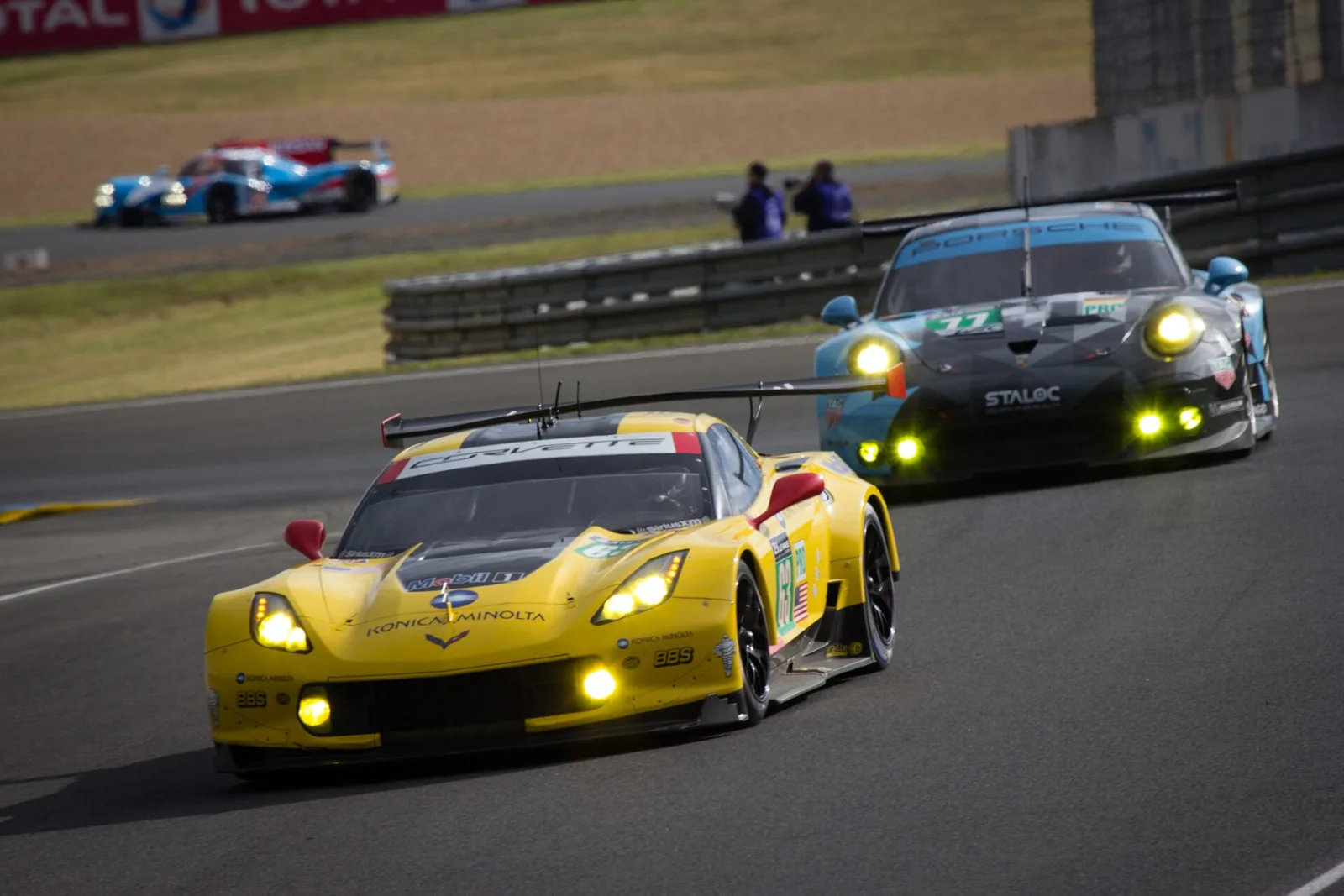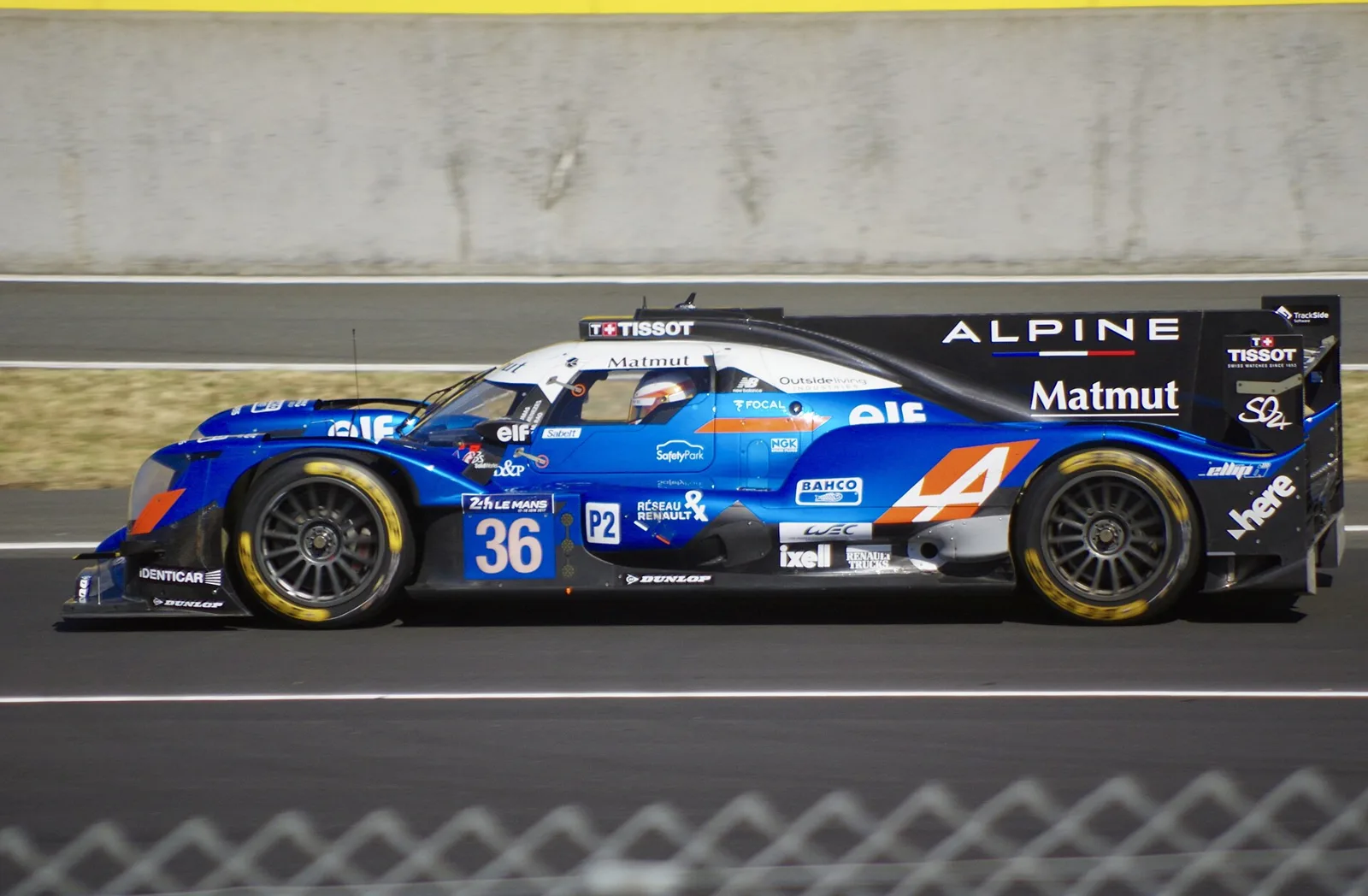
Bamber, Bernhard and Hartley took a Porsche 919 Hybrid to victory while Aston Martin and a JMW Ferrari took the GT classes.
The 85th 24 Hours of Le Mans was a 24-hour endurance race held on 17 and 18 June 2017 at the Circuit de la Sarthe. Porsche's 919 Hybrid of Bamber, Bernhard and Hartley won overall, while Jackie Chan DC Racing took the LMP2 class and Aston Martin won LMGTE Pro.
Earl Bamber, Timo Bernhard and Brendon Hartley won the 85th 24 Hours of Le Mans in a Porsche 919 Hybrid, moving ahead late in the race. The race was the third round of the 2017 FIA World Endurance Championship, held on 17 and 18 June before 258,500 spectators. It was Porsche's 19th overall win at the event.
Why was the race held on that date?
The date for 2017 was confirmed at an Automobile Club de l'Ouest press conference on 16 June 2016. It was chosen to avoid the clash of 2016, when the race coincided with the European Grand Prix, and it became the third of nine scheduled rounds in the World Endurance Championship.
The press conference took place at the Musee des 24 Heures du Mans, and the event was the 85th running at the Circuit de la Sarthe. Going into the race, Toyota's Davidson, Nakajima and Buemi led the drivers' table with 50 points, 17 ahead of Bernhard, Bamber and Hartley in second.
Toyota also headed the manufacturers' table on 69.5 points, with Porsche 7.5 behind. In the GT classes, Derani, Priaulx and Tincknell led the GT drivers' table by two points, while Ferrari held a seven-point lead over Ford in the GT manufacturers' standings.
Porsche's 919 Hybrid took the lead in the final two hours and held it to the flag.
What changed in the rules after 2016?
After 2016, when the leading car missed its final lap and went unclassified, the ACO changed the rules. The mandatory six-minute limit for the final lap gave way to graduated penalties for any lap longer than that. A car that did not complete its final lap within the fifteen-minute window was no longer automatically unclassified.
Nine dedicated slow zones were installed around the circuit, replacing the old system in which individual marshal posts marked the start and end of each zone. Earlier zones could begin in parts of the track where cars were still at high speed, and that had caused accidents. The new zones were placed so that the start of each zone sits in a slow section, where 80 km/h (50 mph) applies.
The track itself changed at the margins. The run-off at the last right-hand turn before the Corvette corner was widened, the barrier at the Porsche Curves was moved further back, and on the short straight leading into the Ford Chicane, the left-hand wall was re-angled at its entry.
The LMP2 class received a single-specification Gibson engine with more power than the 2016 cars. Its cockpits and chassis were designed to mirror the LMP1 safety rules, and four chassis makers were approved: Dallara, Ligier, Oreca and Riley.
What do the classes mean?
The field is split into four classes, each with its own rules on cars and engines.LMP1 is the top prototype class, LMP2 is the second prototype class, and the LMGTE classes are for production-based GT cars, divided into Pro for professional crews and Am for crews with amateur drivers.
Balance of performance is the tool that keeps the classes competitive. The ACO and FIA adjust weight, fuel, boost and air restrictors so that cars with different designs can run within reach of one another, and they can change those settings again after testing.
In 2017 every LMP2 car ran the same single-specification engine from Gibson, with more power than the 2016 units.
Who made up the 60-car field?
Sixty cars were entered, and the ACO announced the full list with two reserves. Of the 28 guaranteed WEC entries, 13 came from the European Le Mans Series, six from IMSA and 11 from the American Le Mans Series, and one-off entries filled the rest of the field.
The automatic invitations went to class winners from the 2016 race, to championship winners in the ELMS, ALMS and GT3 Le Mans Cup, and to two IMSA participants chosen by the ACO regardless of performance. The initial automatic entry list was published by the ACO on 23 January 2017. Invited teams could change cars from the previous year, but not their category. The 2016 GT3 Le Mans Cup champions were limited to the LMGTE Am class.
Some entries fell away before the race. RLR MSport later withdrew its LMP2 Ligier, a Proton Competition entry was not promoted from the reserve list, and that class fell to six entries once the Joest Audi team pulled out of LMP1.
Garage 56, the programme for trying out new technology at Le Mans, had begun in 2012 and was due to carry on. Welter Racing planned a three-cylinder 1.2-litre prototype run on biomethane, stored in cryogenic tanks, but funding problems meant the car was not entered.
How were the GT cars balanced for 2017?
The ACO and FIA adjusted performance in both LMGTE classes to remove sandbagging. The Ford GT gained a 20 kg minimum weight increase and lost turbocharger boost across the rev range, while the Corvette C7.R lost 1 litre of fuel capacity and gained a 0.7 mm longer air restrictor. Porsche's 911 RSR gained 10 kg and a 0.1 mm longer restrictor.
The Aston Martin Vantage gained 10 kg, with a restrictor 0.4 mm longer. In LMGTE Am, the Porsche's ballast rose by 10 kg, while the Ferrari 488 GTE's fell by 10 kg and the Aston Martin's by 5 kg.
Balance changes continued after testing. The Corvettes were slowed by a smaller air restrictor, while fuel capacity was raised for the Aston Martins, Ferraris, Fords and Porsches so that refuelling and stint lengths would line up. The LMGTE Am Ferraris also gained turbocharger boost pressure.
What did the test day show?
The mandatory test day on 4 June ran in two four-hour sessions. The morning session ran on a dirty track, and lap times improved throughout.Toyota led the morning with Nakajima's 3:20.778, while Negrao's Signatech Alpine was the only LMP2 car to lap below 3 minutes 30 seconds, at 3:29.809. Kobayashi's Toyota trailed Nakajima by nearly seven-tenths.
The second session belonged to Toyota again, with Kobayashi setting 3:18.132. Gavin missed 91 minutes with a mid-session engine change, yet still set the best LMGTE Pro lap at 3:54.701. Lamy's Aston Martin set the best LMGTE Am lap at 3:58.250.
Several incidents slowed the day. A Ligier was stranded in the Dunlop Curves gravel trap, and two cars collided at the second Mulsanne Chicane, Chatin's IDEC Sport Ligier and Lammers's Racing Team Nederland Dallara, but both continued. The session finished just under 15 minutes early after Roberto Gonzalez's Manor dropped oil on the track.
How did practice go?
Practice on 14 June gave Toyota the early running, but Jani's lap of 3:20.362 led with five minutes left. The session ran for four hours with all 60 cars on track, and Toyota led for much of it.
In LMGTE Pro, Bird's AF Corse Ferrari set the fastest lap at 3:54.832, and Lamy's Aston Martin was fastest in LMGTE Am. Christian Philippon's Corvette left the track at the Porsche Curves and hit the tyre barrier, and safety cars were needed for 75 minutes.
Roberto Lacorte's Dallara slid into the Mulsanne gravel trap and was abandoned, adding to a session that was repeatedly interrupted.
How did qualifying set the grid?
Qualifying began late on Wednesday night in clear conditions, and barrier repairs at the Porsche Curves delayed the start by 20 minutes. Three sessions decided the grid, with each team's quickest driver setting its lap time.
Porsche led the early running with a benchmark lap from Jani, and Bernhard followed with 3:19.710 in the first session. A quarter-hour later, Kobayashi, with no slower cars ahead, took provisional pole at 3:18.793, with Nakajima in second, six-tenths of a second adrift. That pole was provisional, because two more sessions remained. In that opening session, Thiim's No. 95 Aston Martin was quickest in LMGTE at 3:52.117, and Mathias Lauda was fastest in the Am class at 3:55.134.
On Thursday, Kobayashi reset the track lap record at 3:14.791, with the wind behind him on the Mulsanne Straight and against him through the Porsche Curves. The No. 8 Toyota then came to a halt at the second Mulsanne Chicane with an oil-supply fault, and its engine had to be replaced.
In LMP2, Petrov's Manor set a new class lap record of 3:25.549, while Vaxiviere's TDS Racing Oreca had earlier held provisional pole at 3:29.333. Risi Competizione's No. 82 Ferrari had its fastest lap disallowed for breaching parc ferme rules after its tyres were handled following the session.
Who won the 2017 race?
A Porsche 919 Hybrid crewed by Earl Bamber, Timo Bernhard and Brendon Hartley crossed the line first after moving ahead late in the race. For Bamber and Bernhard it was a second Le Mans victory, and for Hartley his first, while the result gave Porsche its 19th overall win in the 85th running.
Toyota's Buemi, Davidson and Nakajima started second and finished eighth in a TS050 Hybrid, the only other LMP1 car to reach the finish. The result left Bamber, Bernhard and Hartley 17 points clear of the Toyota trio at the top of the drivers' table.
The LMP2 story ran in parallel. Jarvis, Laurent and Tung won the class for Jackie Chan DC Racing in an Oreca 07-Gibson, having run at the front for close to two hours at the end, before finishing second overall. Cheng, Gommendy and Brundle, in the team's other car, finished third overall, three laps clear of the Signatech Alpine.
In LMGTE Pro, Jonathan Adam, Daniel Serra and Darren Turner gave Aston Martin the class in an Aston Martin Vantage, passing a Corvette C7.R crewed by Antonio Garcia, Jan Magnussen and Jordan Taylor in the last two laps, after that car had dropped out of contention. A Ford GT crewed by Pipo Derani, Andy Priaulx and Harry Tincknell passed the same Corvette on the final lap to claim second.
Robert Smith, Will Stevens and Dries Vanthoor took the LMGTE Am class in a JMW Motorsport Ferrari 488 GTE. Spirit of Race and Scuderia Corsa completed the class podium, so the Ferraris filled second and third.
Who won each class?
| Class | Winners | Car |
|---|---|---|
| LMP1 | Earl Bamber, Timo Bernhard, Brendon Hartley | Porsche 919 Hybrid |
| LMP2 | Oliver Jarvis, Thomas Laurent, Ho-Pin Tung | Jackie Chan DC Racing Oreca 07-Gibson |
| LMGTE Pro | Jonathan Adam, Daniel Serra, Darren Turner | Aston Martin Vantage |
| LMGTE Am | Robert Smith, Will Stevens, Dries Vanthoor | JMW Motorsport Ferrari 488 GTE |
What did the result change in the standings?
The win moved Bamber, Bernhard and Hartley to the top of the World Endurance Drivers' Championship, 17 points ahead of Buemi, Nakajima and Davidson. Porsche overtook Toyota to lead the manufacturers' table by 28.5 points, while Ford passed Ferrari for the GT manufacturers' lead with six races left.
Jarvis, Laurent and Tung moved to third in the drivers' table after their class win. The Ford trio of Derani, Priaulx and Tincknell still topped the GT drivers' table, with the Aston Martin crew moving up to second.