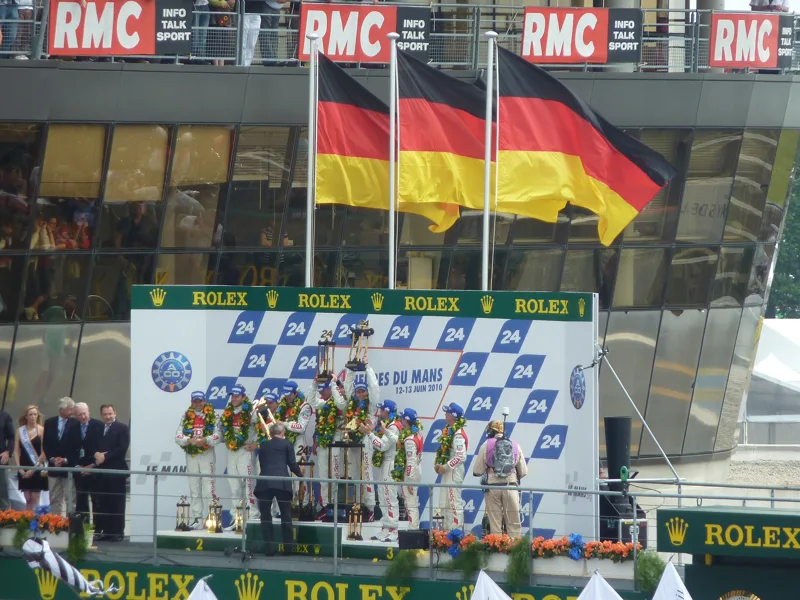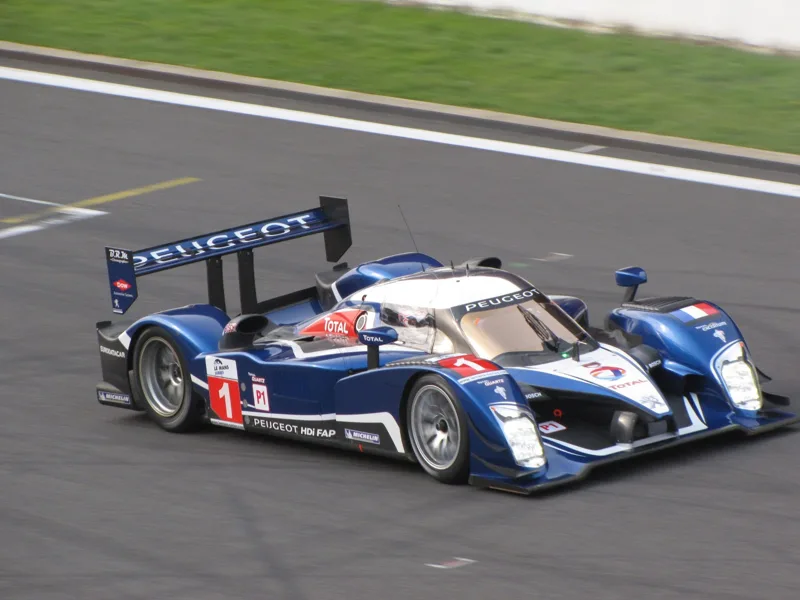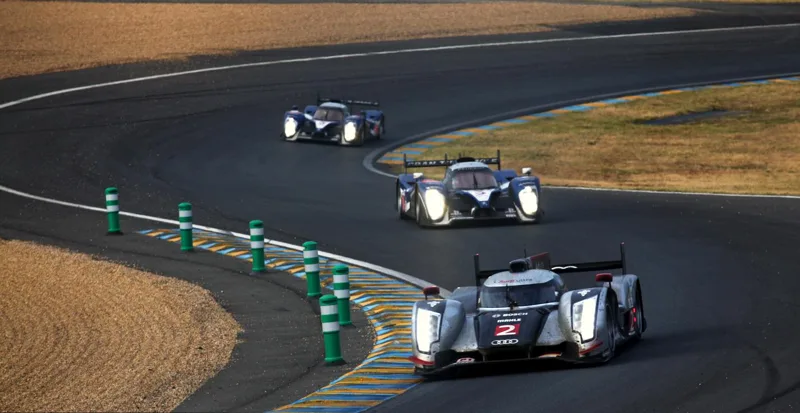
Peugeot's 908 HDi FAP took the win ahead of its own all-French squad and Audi's new R15 TDI, in a race shaped by a protest over front aero.
The 2009 24 Hours of Le Mans was taken by Peugeot, whose No. 9 908 HDi FAP covered 382 laps with Brabham, Gene and Wurz aboard. An all-French Peugeot squad was second and Audi placed third with its new R15 TDI.
The 2009 24 Hours of Le Mans was the 77th running of the race, held at the Circuit de la Sarthe on 13-14 June 2009. Peugeot's No. 9 908 HDi FAP won after 382 laps, with a second Peugeot from an all-French squad behind it and Audi's new R15 TDI third. The result came in a year when the new rules had made the diesels slower than they were in 2008.
Where and when was the 2009 24 Hours of Le Mans run?
The race was run over 13-14 June 2009 at the Circuit de la Sarthe in Le Mans, France. The Automobile Club de l'Ouest (ACO) ran the event, which began at 15:00 local time on 13 June with a signal from Fiat and Ferrari chairman Luca Cordero di Montezemolo. 234,800 spectators attended.
The ACO had planned a test day for 31 May, but cancelled it because of economic concerns. Wednesday's track session therefore became six hours of free practice, and Thursday's qualifying was the only timed running. The start ceremony also marked the 60th anniversary of Ferrari's first Le Mans victory.
Peugeot's 908 HDi FAP won after 382 laps in the third year of its programme, with Audi third in the new R15 TDI.
Who won the 2009 24 Hours of Le Mans?
Peugeot won the 2009 race with the No. 9 908 HDi FAP driven by David Brabham, Marc Gene and Alexander Wurz, which covered 382 laps. An all-French Peugeot squad finished second, and Audi took third with its new R15 TDI, which had struggled to find a good setup through the weekend.
It was the third year of Peugeot's 908 HDi FAP programme, and the win came after Audi had dominated recent years. Porsche and Ferrari also celebrated class wins. Team Essex gave Porsche its second LMP2 victory in a row, the Corvette Racing team took its first GT1 win since 2006, and the Risi Competizione Ferrari led GT2 for a second straight year.
How was the entry list built?
Automatic invitations were handed to crews who had shone at the 2008 Le Mans, or who had competed well in the American Le Mans Series, the Le Mans Series, the FIA GT Championship and the Petit Le Mans. The ACO then filled the remaining 40 places from 82 applications from 17 countries, and it named ten reserve entries.
Only 15 of the 29 automatic invitations had been accepted by 20 January 2009. The ACO published its list of 55 entries on 26 February, with 21 LMP1 cars. Audi, Peugeot and Aston Martin each fielded three of them, and nine LMP1 cars ran on diesel fuel. Mazda supplied engines to four entries, split between Lola and Pescarolo chassis.
The LMP2 class featured Team Goh, which had won in a Porsche RS Spyder, and last year's runner-up, Team Essex. In GT2, Ferrari had ten entries against Porsche's five. Withdrawals reshaped the list in spring: Gigawave Motorsport pulled out of GT1 on 31 March to focus on its Nissan GT-R programme, and the reserve list closed on 22 May.
What happened in practice and qualifying?
Practice ran on Wednesday as a six-hour free session, and rain interrupted it several times. Audi led the timesheets with Allan McNish fastest in No. 1 at 3:30.708. Qualifying took place on Thursday, and Stephane Sarrazin took pole in the No. 8 Peugeot with a lap of 3:22.888.
Sarrazin's lap beat McNish's by 0.8 seconds, and it was his third consecutive pole at Le Mans. Peugeot's other cars filled the next three places on the grid, and the privately run Pescarolo Sport Peugeot was fourth fastest. Peugeot had planned to use the session for race setups rather than chase pole, so the front row was not its main goal.
In LMP2, Casper Elgaard of Team Essex took pole at 3:37.720. In GT2, Flying Lizard Motorsports took pole at 4:03.202, less than a tenth of a second ahead of Felbermayr-Proton. Incidents were frequent. A KSM car driven by Jean de Pourtales spun at the Dunlop Chicane and hit a concrete barrier in practice, while Jean-Christophe Boullion's Pescarolo spun at Tertre Rouge in qualifying and tore off its left front fender.
How did the race unfold?
The Peugeots held a pace that the Audis struggled to match over the full distance. The No. 7 Peugeot was released too early and was struck from the side by a Pescarolo Peugeot. A small puncture grew into the destruction of its left rear end. Two of the three Audis ran off the circuit during the opening 12 hours, and the No. 2 car retired on lap 104.
The No. 1 Audi lost a lap to the leading Peugeot in the early evening, then lost seven more laps in total to the winner through further technical problems. In LMP2 the Navi Team Goh Porsche, which had qualified second overall, crashed heavily with an hour to go, which left the Team Essex Porsche free to win. In LMP1, the Lola-Aston No. 009 was excluded after its driver, Stuart Hall, collided with the LMP2 Radical No. 26, and the stewards judged his fault substantial.
Driver problems shaped other teams too. Kolles' Narain Karthikeyan dislocated a shoulder going over the pit wall before the race and was excluded. Charles Zwolsman Jr. and Andre Lotterer then covered the whole 24 hours and finished seventh in P1 and seventh overall. In GT1 the final factory outing of the Chevrolet Corvette C6.R ended well, with the No. 63 car of O'Connell, Magnussen and Garcia winning the class after Magnussen was unwell early on.
New pit rules allowed only one person with one airgun in the pits. The aim was to lower costs by pushing teams to run double or triple stints on one set of tyres, because changing them took longer. In GT2, Ferrari celebrated its 60th anniversary Le Mans win with the first four places, and the Risi Competizione No. 82 Ferrari F430 GT2 led the class.
What were the class results?
| Category | Finish | Car and crew | Notes |
|---|---|---|---|
| Overall | 1st | Peugeot 908 HDi FAP No. 9 | David Brabham, Marc Gene, Alexander Wurz; 382 laps |
| Overall | 2nd | Peugeot 908 HDi FAP | All-French driving squad, second for Peugeot |
| Overall | 3rd | Audi R15 TDI | Works Audi, new for 2009 |
| LMP2 | 1st | Team Essex Porsche No. 31 | Second consecutive LMP2 win for Porsche |
| GT1 | 1st | Corvette Racing C6.R No. 63 | First Corvette GT1 win since 2006 |
| GT2 | 1st | Risi Competizione Ferrari F430 GT2 No. 82 | Ferrari took the first four GT2 places |
Why did Peugeot protest the Audi R15?
Peugeot protested that the Audi R15 TDI's front aerodynamic elements broke ACO rules on devices that add front downforce. The ACO rejected the protest the same night, Peugeot appealed within an hour, and the appeal was left undecided until after the race. Peugeot later withdrew it, so the R15 raced on.
Peugeot had raised the issue at the 12 Hours of Sebring in March 2009, along with Aston Martin Racing and Oreca, and had been told the ACO would review the elements before Le Mans. Peugeot Sport director Olivier Quesnel hinted at a protest on 8 June, and the formal protest was filed on 10 June, just before practice began. The ACO said its own regulations let it judge whether an element's sole purpose was to create downforce. Audi said the matter lay between Peugeot and the ACO, and that its car was legal.
After the race Peugeot withdrew its appeal, citing a planned increase in communication between the manufacturers and the ACO as the reason.
Why did the 2009 race matter?
The 2009 race was a Peugeot win in the third year of its 908 HDi FAP programme, and it came after Audi had won eight of the previous ten Le Mans races. It also showed how the new rules had changed the diesel contest, and it put a formal aerodynamic dispute on the record before the start.
The event's scale was considerable, with 234,800 spectators and 55 invited cars. The one-man, one-airgun pit rule showed the ACO's intent to control costs, and it changed the way teams planned their tyre stops. Porsche's second LMP2 win in a row also showed how strong the private teams were in that class.