A California team formed in 2003 that won Porsche GT2 titles, moved to Audi and McLaren, and built a long run of GT championships with Bentley and Lamborghini.
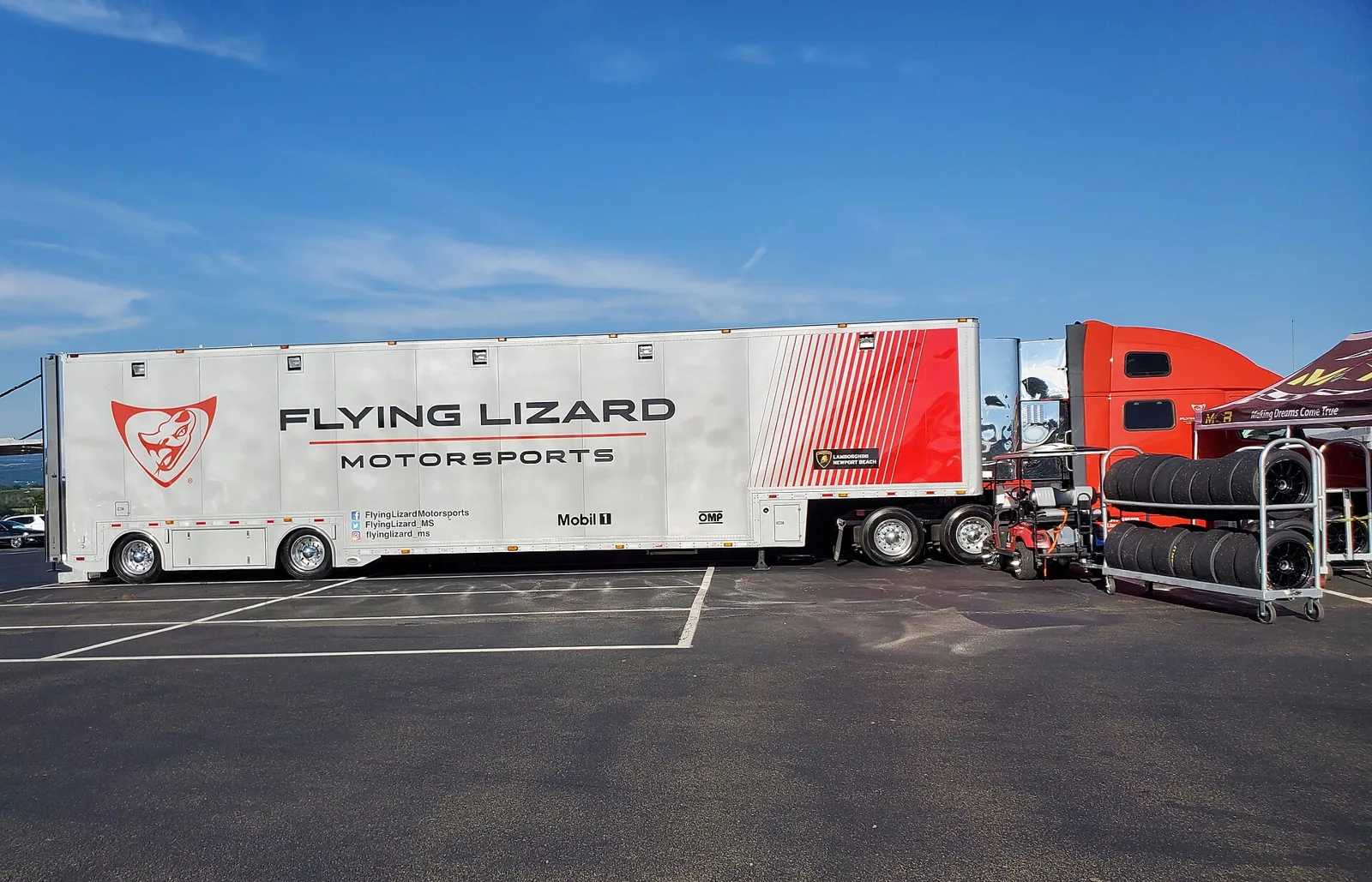
Flying Lizard Motorsports is a Sonoma, California team formed in 2003 that raced Porsche cars until 2019. It won GT2 titles in the late 2000s and has since won GT championships with Audi, McLaren, Bentley and Lamborghini.
Flying Lizard Motorsports is a motorsport team from Sonoma, California, formed by Seth Neiman in early 2003. It raced Porsche cars solely from 2004 to 2019, became a factory development partner for Porsche, and later ran customer programmes for several manufacturers. Its titles include GT2 and GT championships across the American Le Mans Series and its successor series.
What is Flying Lizard Motorsports?
Flying Lizard is a customer racing operation with a long history in sports car racing. It began in the American Le Mans Series and has since raced in GT championships in North America, with a range of partners and manufacturers over the years.
Seth Neiman ran the team for about a decade before selling it in the 2014 offseason. The team holds 14 professional team and driver championship titles as Flying Lizard Motorsport. It has also managed other teams, and it has won several titles through those partnerships, including in GT World Challenge America.
A Sonoma team that won Porsche GT2 titles, then built a long run of GT championships across five manufacturers.
How did the team begin?
Seth Neiman formed the team in early 2003. Its first programme covered a full American Le Mans Series calendar, with entries at Daytona and at Le Mans. The team raced solely Porsche cars from 2004 to 2019, which made it a staple of the Porsche racing community.
In 2004 Darren Law and Johannes van Overbeek took second in the GT2 standings for the team. The livery was designed in Farmington Hills, Michigan, before the team moved to the west coast.
How did the Porsche factory partnership work?
The team finished third in the ALMS GT2 team championship in 2005, and in 2006 it was third in the GT2 team standings. For 2007 the team took delivery of two new 997 GT3 RSRs and became Porsche Motorsport North America's development partner.
The #45 car won three times in 2007, including the Petit Le Mans. Risi Competizione edged the team for the team title, while Bergmeister and van Overbeek finished runners-up in the drivers' table.
When did the team win its first GT2 championship?
In 2008 the team expanded to three cars, and the #45 car of Bergmeister and Wolf Henzler emerged as the overall points winner. That gave Flying Lizard its first GT2 class championship.
For 2009 the team returned to two cars. The #45 car won six of the ten races, and the team took the GT2 team championship, its second in a row. Bergmeister and Patrick Long also won the GT2 drivers' championship.
How did the 2010 and 2011 seasons go?
In 2010 the team ran two cars. The #45 car, driven by Bergmeister and Long, won its class at four rounds: Long Beach, Laguna Seca, Lime Rock Park and Mosport. The team placed second in the team standings and first in the drivers' standings.
That gave the team and Bergmeister three consecutive driver championship titles. In 2011 the team moved to the second-generation 997 GT3 RSR, and it finished third in the GT team championship while Bergmeister and Long finished fourth in the drivers' standings.
What changed when Porsche ended the partnership?
In 2012 the team took delivery of two new second-generation GT3 RSRs, but it struggled to find speed and consistency with the new car. The #45 car won at Lime Rock Park, and the team also won at Mosport before being disqualified for a stall test failure.
The development of the 997 GT3 RSR ended, and the team's relationship with Porsche Motorsport North America was discontinued. On November 15, 2012, the team announced a move to the GT Challenge category.
How did the 2013 GT Challenge season go?
The team fielded two cars in what would be the final ALMS season before the series merged into the Tudor United SportsCar Championship. The team won four races in the ten-round season, including the Petit Le Mans finale.
Spencer Pumpelly and Nelson Canache Jr. finished second in the GTC drivers' championship, and the team claimed its third ALMS Teams' Championship and its first in the GTC class.
Why did the team switch to Audi?
On November 11, 2013 the team said it would join forces with Audi's customer racing arm, fielding two R8 LMS cars in the GT Daytona class of the new Tudor series. Seth Neiman and Dion von Moltke drove one car, while Nelson Canache Jr. and Spencer Pumpelly shared the other.
The season began with a last-lap battle at the 24 Hours of Daytona. The first-place car was penalised for avoidable contact, which handed the team the win, but the penalty was revoked five hours later and the team moved to second. It finished the season with four top-five finishes.
What was the McLaren and K-PAX era?
In 2015 the team teamed up with K-PAX Racing, running two McLaren 650S GT3 cars across a complete Pirelli World Challenge GT calendar. The unified effort earned four wins and eight podiums in its first season.
The championship-winning duo returned in 2017 under the K-PAX banner, with Alvaro Parente joined by Bryan Sellers. The GT championship introduced a SprintX format that year, and the team finished runner-up in the Sprint championship with five wins and ten podiums.
Kevin Estre was a front runner, winning round two at Circuit of the Americas by over 30 seconds in heavy rain. In 2016 the team managed the K-PAX programme under the K-PAX banner, and Alvaro Parente won the driver title. The full-season programme clinched the team, driver and manufacturer championships, with six wins and 12 podiums.
How did the Bentley years go?
In 2016 the Lizard group began its own customer racing programme in World Challenge, with entries at Road America, Sonoma Raceway and Laguna Seca. Andy Wilzoch earned a double podium at Road America that year.
For 2018 the operation switched from McLaren to Bentley. Works Bentley drivers Andy Soucek and Maxime Soulet shared the SprintX races that season. The Bentley team celebrated ten victories that year, rebounding from heavy crashes early in the season.
In 2020 the team completed only one race in the GT World Challenge America series, but it expanded overseas with two Bentleys in GT World Challenge Europe.
In 2019 the series became the Blancpain GT World Challenge America, and the Bentley squad earned six wins and 23 podiums. It clinched the team championship and finished second and third in the driver standings.
What did the GT America and Lamborghini years bring?
The team's 2022 Lamborghini effort expanded to four cars the following season. Separately, the team reached its 100th podium at the 2022 season opener, and its GT4 America programme earned 21 podiums and 17 victories that year. In 2023 the team earned five wins and 21 podiums in GT America, and it claimed the team and driver championship titles.
In 2021 the programme swept the championships with a pair of Lamborghini Huracan GT3 cars, finishing first and second in the driver categories. The team returned to the IMSA sphere in 2022 with the Lamborghini Super Trofeo North America series, where Slade Stewart won the driver title.
What did the Toyo Tires partnership achieve?
Flying Lizard and Toyo Tires began a tire development partnership in 2015. In the 25-hour endurance race that year, the #45 Audi R8 LMS won its class and the overall title, and the car won again in 2016 and 2017.
In 2017 the team completed 780 laps, beating an all-time record of 761. In 2018 the team won overall again, and an all-female Audi finished fourth overall in the same race.
What else did the team race?
Beyond sportscar endurance, the team entered the Pikes Peak International Hill Climb in 2018 with a McLaren 12C GT3 driven by Clint Vahsholtz. Of 77 entries, the team finished eighth overall and second in class on its debut, on a course with more than 9,000 feet of elevation change.
The team also took a new step in 2019, when it joined the rebranded GT4 America series. Michael Dinan raced a Porsche 718 Cayman GT4 Clubsport across 31 races, with Robby Foley as co-driver for the SprintX events, and the pair earned seven top-five finishes before the year ended.
In spring 2019 the team also agreed a partnership with Lamborghini Squadra Corse. It took ownership of a Lamborghini Huracan Super Trofeo Evo and opened a research and development programme at its home track of Sonoma Raceway, giving prospective racers seat time in the car.
What are the team's key results at a glance?
| Year | Series | Driver or car | Result |
|---|---|---|---|
| 2008 | GT2 | Bergmeister and Henzler, #45 | First GT2 class championship |
| 2009 | GT2 | Bergmeister and Long, #45 | Team and drivers' GT2 titles |
| 2010 | GT2 | Bergmeister and Long | Drivers' title, third consecutive |
| 2013 | ALMS GTC | Pumpelly and Canache, #45 | Third ALMS Teams' Championship |
| 2015 | Pirelli World Challenge GT | Estre, Thorne | Four wins and eight podiums in the first K-PAX season |
| 2016 | Pirelli World Challenge GT | Alvaro Parente | Driver title, with team and manufacturer titles |
| 2019 | Blancpain GT World Challenge America | Bentley squad | Team championship, six wins and 23 podiums |
| 2021 | GT America | Lamborghini cars | Pro team title and driver titles |
| 2023 | GT America | Flying Lizard Motorsports | Team and driver championship titles |
Why does Flying Lizard Motorsports matter?
Its partnerships also gave it a place in several championships at once, from endurance races to GT sprint series. Flying Lizard matters because it shows how a small Sonoma operation built a lasting record in GT racing through Porsche, Audi, McLaren, Bentley and Lamborghini programmes. Its title count and its willingness to change manufacturers give it a clear place in the North American sportscar scene.
The team's record also shows how customer racing can outlast a factory relationship. After the Porsche partnership ended in 2012, the team kept winning through other brands and partners, which made its later results a useful example of a customer operation at its best.