A Northern California road course that opened in 1969, nearly closed twice, and became a NASCAR and IndyCar fixture after a 1996 takeover and a $50 million rebuild.
Sonoma Raceway began in 1969 as Sears Point International Raceway, a road course in Sonoma, California. Speedway Motorsports owns it today, and its main road course runs 2.520 mi (4.056 km) with 12 turns. NASCAR, IndyCar and NHRA all race there.
Sonoma Raceway is an auto racing complex in Sonoma, California, that opened in 1969 as Sears Point International Raceway. It has run NASCAR, IndyCar, NHRA and sports car events, but its early years were marked by financial collapse, closures and a long fight over its operating licence. A 1996 takeover by Speedway Motorsports began a decade of major expansion that shaped the venue into its present form.
Where did Sonoma Raceway come from?
The track was first planned as the centrepiece of an entertainment complex. On 19 December 1967 Sears Point Properties filed a permit for a 2.470 mi (3.975 km) road course, backed by four Marin County businessmen. The project was called Sears Point Park, and it was approved by the Sonoma County Board of Zoning Adjustments just two days later.
The resort element was quickly abandoned, and the racing side went ahead. Groundbreaking took place on 14 August 1968 for Sears Point International Raceway, after financing problems had delayed the start by months. The original budget of $1,200,000 proved too small, and the designer later said costs far exceeded expectations.
Paving ran from 26 September to 4 October 1968. Three road course layouts were laid out, measuring 1.780 mi (2.865 km), 2.100 mi (3.380 km) and 2.500 mi (4.023 km), and the design that was finally built differed from the plans released in December 1967.
A 1969 road course that nearly went bankrupt twice, then grew into a NASCAR and IndyCar venue with a signature Chute.
How did the first track perform?
The dragstrip opened to the public on 8 March 1969 for a National Hot Rod Association event, and Don Garlits won the first Top Fuel feature a day later. The road course formally opened on 28 March for a Sports Car Club of America event. Early crowds brought criticism for heavy traffic and too little parking, and two extra parking lots were opened in response.
The first NASCAR-sanctioned race followed in June 1969, when Ray Elder won a Pacific Coast Division event. The venue hosted its first USAC Championship Car race on 4 April 1970, which Dan Gurney won. A first fatality had come earlier, on 7 September 1969, when motorcycle rider Lee Patterson hit a hay bale at turn seven.
Why did the track close so quickly?
Financial trouble arrived soon after film company Filmways bought the facility in 1969. High overhead expenses left the track losing money. By early May 1970 the president, Craig Murray, reported a loss of $300,000 within 14 months, staff cuts and a stock price that had fallen from $35 to $8.25.
Filmways cancelled all of its events on 11 May 1970 and put the facility up for sale at an asking price of $3.5 to $4 million. When no full-site buyer appeared, the price dropped to $1.5 to $1.7 million for the racetrack and parking lots alone. After two one-off races run by the San Francisco Junior Chamber of Commerce, the circuit closed for the rest of 1970 in August.
| Layout or feature | Length | Notes |
|---|---|---|
| Main road course | 2.520 mi (4.056 km) | 12 turns |
| NASCAR layout | 1.990 mi (3.203 km) | Bypasses turns five and six, the Carousel, through The Chute |
| Dragstrip | 0.250 mi (0.402 km) | Known for its uphill gradient |
| Early road course option | 2.500 mi (4.023 km) | One of three layouts paved in 1968 |
How did the track return to racing in the 1970s?
In 1971 Craig Murray formed a corporation with drivers Dan Gurney, George Follmer and Peter Revson, aiming to raise $1.5 million to buy the facility, and he held talks with NASCAR executives. The group took an option on the facility in August 1971, but the purchase that followed was made by Hugh Harn and Parker Archer, confirmed on 1 January 1973 for about $1,000,000. The site reopened for an SCCA driving school on 2 March 1973.
The new owners ran into trouble with local authorities. Environmental agencies refused major races until water and sewage systems were upgraded, and by 1974 the county had raised its requirements for spectator events. Because the track sat near the Rodgers Creek Fault, Sonoma County then refused to renew its licence to host spectator races.
Bob Bondurant, whose driving school was a tenant at the site, bought Harn and Archer's lease in June 1974 and made some repairs. Bondurant later agreed to buy the track from Filmways, and the purchase was completed in June 1979 for $1.45 million. The buyers were Black Mountain Inc., led by Bondurant, Bill Koll and Don Marsh.
How did the 1980s rescue work?
Jack Williams, a former director of track operations, led a group that bought the track in June 1981 for about $800,000, and the original name returned. Williams credited more advertising for crowds nearing 20,000 by September 1981, and by 1982 the track had regained several major events.
The facility was stabilised with a full repave, paid for by a $650,000 fundraising campaign in 1985 and completed that February. Permanent garage facilities, five bridges and additional seating followed by the end of the year. Skip Berg took control in a buyout on 24 April 1986, and the lawsuit Williams filed afterwards was settled out of court in August.
When did NASCAR's Cup Series arrive?
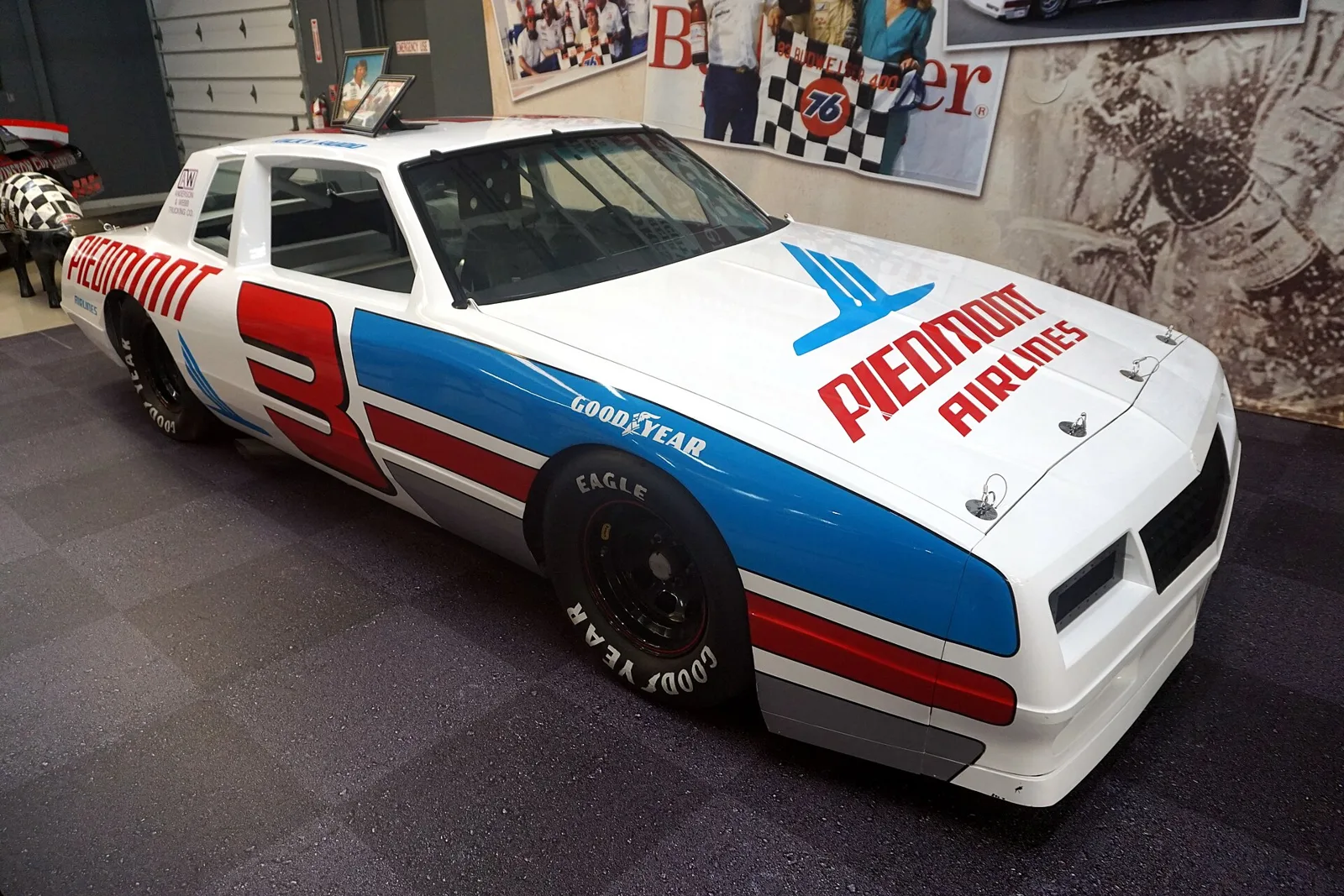
The NASCAR Cup Series debuted at the track on 11 June 1989, after the closure of Riverside International Raceway gave the schedule a spare date. The race was won by Ricky Rudd in front of a crowd of 53,000. Temporary grandstands brought in from the Phoenix Street Circuit's United States Grand Prix helped accommodate the crowd.
The race was part of a management shuffle that also saw Darwin Doll, a former Michigan International Speedway general manager, hired as general manager in December 1986 before leaving for Albuquerque in 1988. Glen Long took over and resigned in August 1991, and Steve Page became president the following month.
What did Speedway Motorsports change?
Speedway Motorsports, owned by Bruton Smith, bought the track in November 1996 for $2 million. It also secured an option to buy the entire 800-acre (320 ha) facility for $38 million. Smith announced plans for more runoff, more grandstands and a dual media and VIP building, and planned permanent seating was to rise to 40,000.
The most distinctive change was The Chute. Plans announced in October 1997 created a section that linked turns four and seven and bypassed turns five and six, the Carousel, for NASCAR races. The Chute was completed and tested in May 1998, and it was modified the following year to make turn seven a hard-braking 90-degree corner. Early reviews were mixed, and testers Rusty Wallace and Wally Dallenbach Jr. doubted that the corner would create passing.
The expansion itself was slow. A July 1998 recommendation to reject a $30 million expansion was driven by noise and traffic concerns, and the citizens group Yellow Flag Alliance opposed the work. Plans were cut from 110,000 permanent seats to 44,500, then to 35,000 by December 1999. The approved project cost $35 million, and 2,000 terrace seats were built at turn four for the 2000 Save Mart/Kragen 350.
Phase one finished in time for the 2001 Dodge/Save Mart 350, and the Chute was rebuilt with a 70-degree turn four and a longer straight. A second phase followed, with a go-kart track called the Karting Center opening in March 2002, and the entire rebuild cost $50 million. Permanent seating reached about 70,000, and the pit road was extended to take 43 cars.
How has the track changed since 2002?
On 22 June 2002 Page sold the naming rights to Infineon Technologies for 10 years and $35 million, and the venue became Infineon Raceway. In January 2003 a new layout was built for the AMA Superbike Championship, creating a 900 ft (270 m) straight after an esses bypass and shortening turn 11 by 40 ft (12 m).
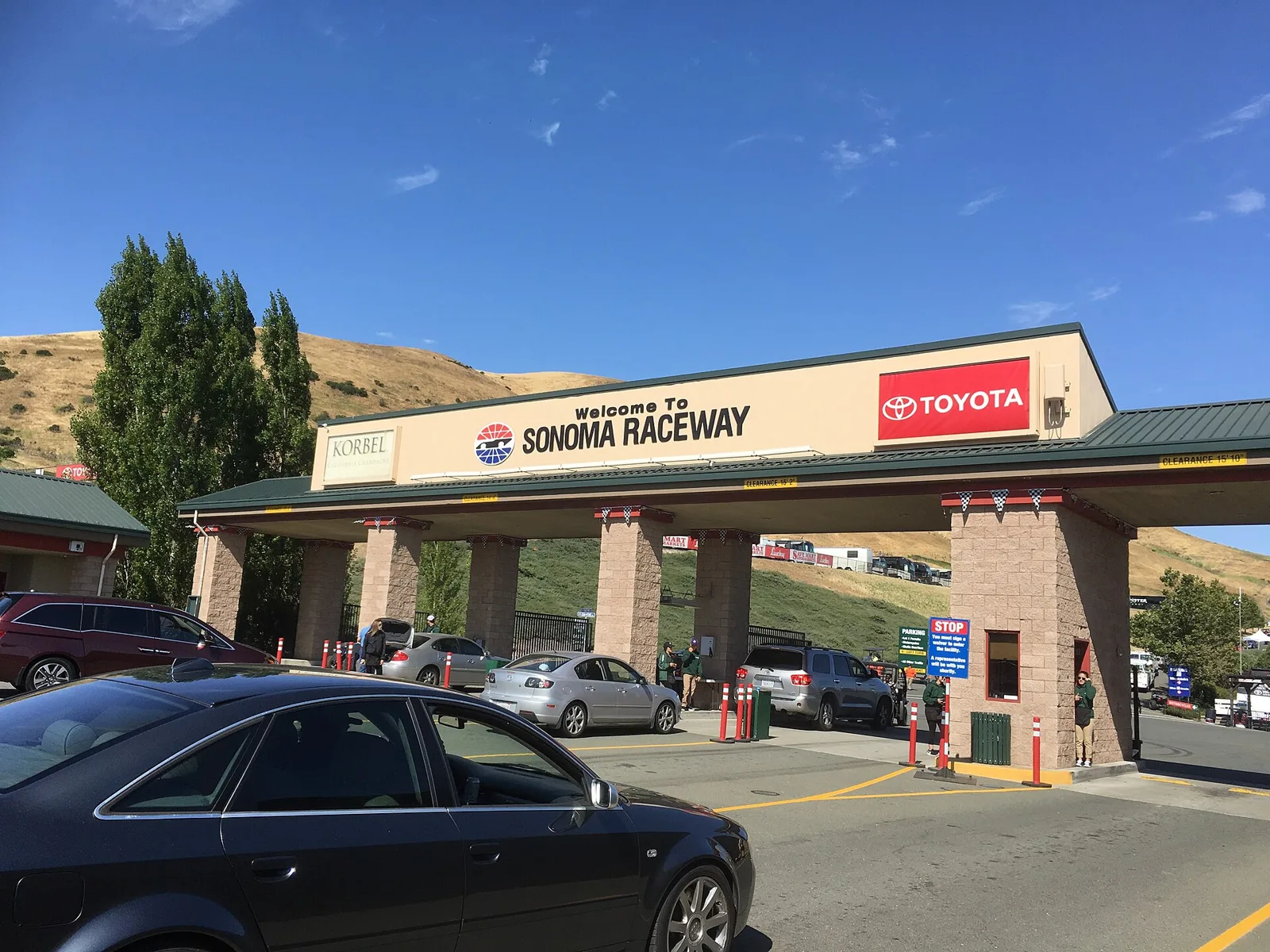
In 2010 Page arranged a project with Panasonic to install 1,652 solar panels at a cost of about $3,000,000, completed in June 2011. When Infineon declined to renew its deal in March 2012, the track was briefly called Sonoma before becoming Sonoma Raceway in December 2012. Turn 11 was extended for that year's IndyCar race, which created a third layout for the corner.
Page retired on 1 January 2021 after a 29-year reign. Jill Gregory, NASCAR's chief marketing and content officer, took over, and a luxury hospitality area called the Turn 11 Club was finished in June 2022. Gregory resigned on 19 July 2023, and Brian Flynn took over on 1 August 2023. The first complete repave in more than 20 years was completed in February 2024.
Which series race there today?
NASCAR has raced at Sonoma since 1969, and the track has hosted one Cup Series race a year since 1989, except in 2020. The current Cup race is the Toyota/Save Mart 350, supported by the Sonoma 250 for the O'Reilly Auto Parts Series and the General Tire 200 for ARCA Menards Series West.
The NHRA Sonoma Nationals has been held every year since 1988, except 2020. IndyCar debuted in 2005 and raced annually until 2018, and from 2015 to 2018 its race was the season finale. The Grand Prix of Sonoma, a sports car event, was run by IMSA from 1976 and by the American Le Mans Series from 1999 to 2005.
How many people have died at Sonoma Raceway?
Fatalities have been recorded at the track since its early years, with deaths among motorcycle riders, drag racers, kart drivers and sports car drivers. The first fatality was Lee Patterson in September 1969, and the early 1970s and 1980s brought several more.
Duane Gomez, son of the baseball pitcher Lefty Gomez, died after a motorcycle race in August 1973, and Tim K. Kuykendall died in a Formula Ford race in August 1979. In the 2000s and 2010s the deaths included motorcyclists, a multi-car incident in 2001 and two accidents in 2018, one at the dragstrip and one in a go-kart.
What events have been cancelled or never held?
The track has seen some unrealised plans. A December 1969 rock festival, which was marketed as Woodstock West and expected 300,000 people, was cancelled the day before. It was moved to Altamont Speedway, where it became the Altamont Free Concert. In February 2015 a four-day rock festival was proposed, but it was dropped two months later because of costs and the permit process.
The track was used in filming Little Fauss and Big Halsy in 1970.